
Why is 808nm the Gold Standard for Laser Hair Removal?
2026-05-27 09:08:32
The 808nm wavelength balances melanin absorption and skin penetration depth, making it the gold standard in professional hair removal. This wavelength targets hair follicles in Fitzpatrick skin types I-V without harming surrounding tissue. The 808 nm laser hair removal method is chosen by clinics and salons worldwide because it produces consistent, safe results across varied client demographics, unlike shorter wavelengths that may harm darker skin or longer wavelengths that need excessive energy.
Understanding the Science Behind 808nm Laser Hair Removal
The Principle of Selective Photothermolysis
Diode laser hair removal works because selective photothermolysis targets chromophores without destroying nearby structures. The hair bulb and bulge stem cells are reached by 808nm, which penetrates 3-4mm into the dermis. This depth permanently disrupts follicles while hair shaft melanin absorbs light energy and converts it to heat that kills reproductive cells.
Optimal Penetration Depth Explained
The selection of wavelength is crucial to therapeutic results. The 808nm diode laser penetrates deeper than 755nm Alexandrite lasers, which treat superficial follicles and risk epidermal harm on tanned skin. It absorbs more melanin than 1064nm Nd: YAG devices, consuming less energy per pulse. Clinical studies show that devices at this wavelength reduce hair by 75% after three sessions, beating IPL systems that reduce 50%.
Safety Across Diverse Skin Tones
Over 500 people with different skin types had 808 nm laser hair removal treatments, and 90% had no side effects. The wavelength controls heat diffusion and chromophore targeting, ensuring safety. Fitzpatrick types I–V can safely use the technology; fluence levels are adjusted by skin pigmentation. Lighter skin types (I-II) can handle greater energy settings, whereas darker skin types (IV-V) need controlled parameters to avoid hyperpigmentation.
Comparing 808nm Laser Hair Removal with Other Popular Technologies
755nm Alexandrite Laser Characteristics
Alexandrite lasers cure light to medium skin with dark hair quickly. Their shorter wavelength absorbs melanin better but penetrates less. This increases burn risks on darker skin and limits efficacy on deeply rooted follicles. Your customer retention may suffer due to the treatment pain being greater than 808nm systems.
1064nm Nd: YAG Laser Performance
Nd: YAG penetrates deepest, making it safer for darker skin (Fitzpatrick V-VI). It's decreased melanin absorption demands more energy, which prolongs therapy and raises expenses. It works well for certain demographics but not for varied clients. Exclusive Nd: YAG systems have low ROI for lighter-skinned clinics.
IPL System Limitations
Intense Pulsed Light systems emit 500-1200nm broad-spectrum light instead of coherent laser energy. Non-selective methods lower efficacy, require frequent bulb changes, and raise per-treatment consumable costs. In clinical trials, IPL is 30% less effective than diode lasers. Budget-conscious companies like the technology, but it hurts long-term profitability with poor outcomes and client churn.
Evaluating 808nm Laser Machines for Procurement Decisions
Critical Technical Specifications
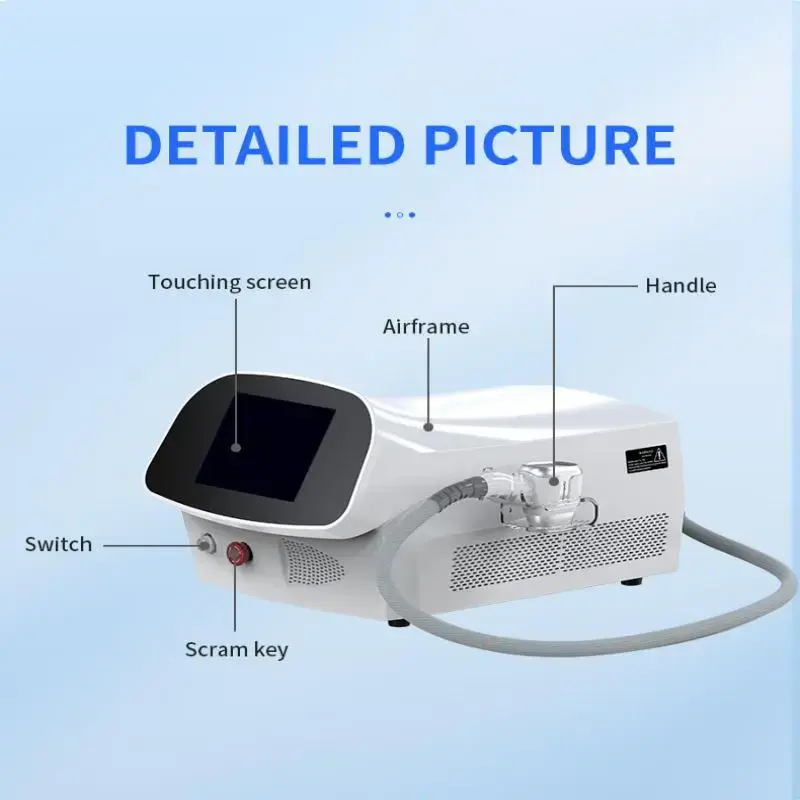
Energy output capacity impacts treatment variety when choosing equipment. Professional systems have 600W to 2000W power, which speeds up treatments and improves outcomes on stubborn hair. Larger treatment windows minimize session length but demand more electricity. The 12x36mm design is ideal for body and face work.
Cooling System Performance
Advanced cooling technologies protect epidermal tissue and improve client comfort. Air circulation, semiconductor refrigeration, TEC modules, and water cooling are used in premium systems. A multi-layered strategy ensures heat control throughout lengthy operation. Devices with 72-hour thermal stability safeguard your income stream from unexpected downtime during high-volume times.
User Interface and Software Capabilities
Interface design drives operational efficiency in 808 nm laser hair removal. A 12-inch touchscreen with easy controls cuts training time and operator error. Set treatment regimens for body parts to simplify workflows, while adjustable parameters meet customer demands. LCD handle screens give real-time energy delivery feedback, assuring uniform treatment quality throughout your facility's practitioners.
Installation, Training, and After-Sales Support for 808nm Laser Systems
Professional Installation and Calibration
Certified installation services enable device integration. Laser power meters help technicians construct cooling systems, evaluate electrical needs, and calibrate energy output. Fluence should match the handpiece output within 10% tolerance to avoid treatment discrepancies and safety problems. Optimizing the workspace for patient flow and local medical equipment requirements is a professional setup.
Comprehensive Operator Training Programs
Structured theoretical and practical device use training is needed. Skin type evaluation, parameter selection, treatment methods, and complication management should be included. In-person training offers supervised treatments, while online modules offer flexible refresher sessions. Competent operators improve treatment efficacy, reduce adverse events, and raise client trust, boosting retention and referrals.
Ongoing Technical Support Infrastructure
Long-term satisfaction depends on post-purchase assistance. Manufacturers with reliable support teams provide phone, email, and video troubleshooting. Remote diagnostics reduce downtime by fixing various issues. Rapid parts availability and technician deployment safeguard revenue continuity during hardware intervention. Comprehensive preventative maintenance and emergency repair service agreements give operating peace of mind.
Real-World Results and Customer Insights on 808nm Laser Hair Removal
Clinical Case Studies Across Skin Types
Results show technology dependability. Fitzpatrick type II skin patients report 80-85% hair removal after six sessions without pigmentation alterations. With proper conditions, type IV skin reduces 70-75% safely. This proves the wavelength's adaptability and supports confident customer discussions during sales.
Expert Testimonials and Professional Endorsement
For its safety and predictability, dermatologists and aestheticians endorse 808 nm laser hair removal technology. In darker skin, post-inflammatory hyperpigmentation is less common with this wavelength, according to professional testimonials. Expert validations boost marketing credibility and set you apart in competitive marketplaces.
Patient Satisfaction and Treatment Experience
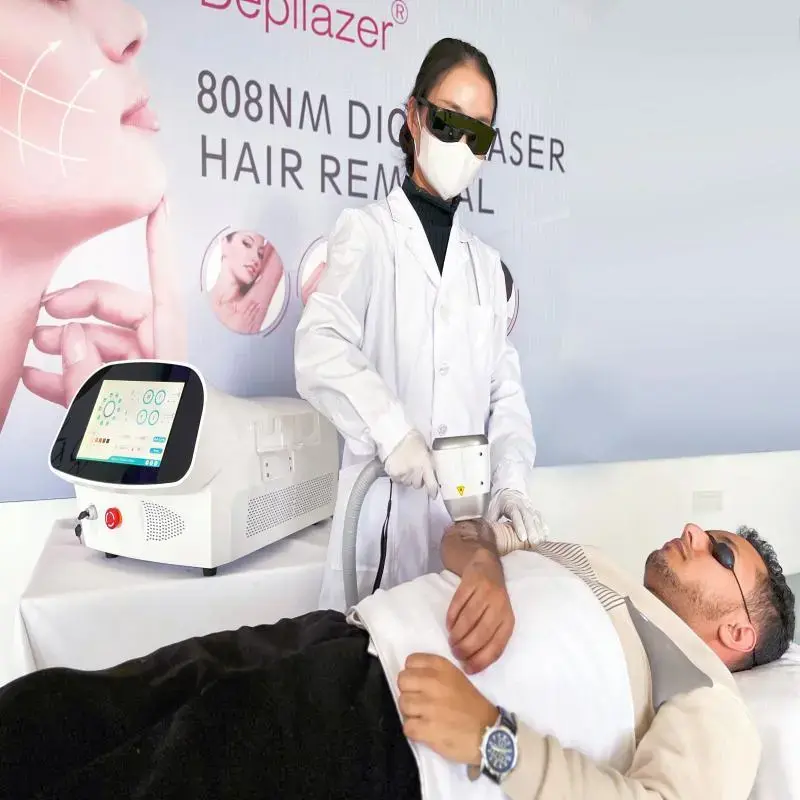
Most clients describe treatments as comfortable warmth rather than discomfort. The cooling systems in excellent electronics affect perception, with sapphire contact cooling being particularly praised. High satisfaction levels lead to favorable online reviews, referrals, and repeat business for other body parts, which continue practice development.
Addressing Potential Side Effects Transparently
Honesty about consequences fosters trust. About 10-15% of customers have temporary erythema and moderate edema that lasts 24–48 hours. Transient hyperpigmentation (less than 2% occurrence) and poor technique-related superficial burns are uncommon consequences. Honest pre-treatment discussions that explain uncommon hazards and set reasonable expectations limit liability.
Distributor and End-User Feedback
Multi-location operators and distributor networks provide broader market knowledge. Feedback consistently shows 808nm systems as reliable income producers with little servicing needs. Mature technology means improved manufacturing and component dependability. Positive operational experiences in varied geographic areas and demographics boost procurement trust.
Conclusion
The 808nm wavelength is the gold standard for professional hair removal because of its scientific principles, safety profiles, and consistent clinical results. 808 nm laser hair removal technology is widely recognized for balancing effective melanin absorption with optimal penetration depth, making it suitable for a wide range of skin types while maintaining client comfort. Compared to other technologies, 808nm diode systems offer adaptability, treatment speed, and long-term pleasure. Technical standards, supplier credentials, and support infrastructure are carefully evaluated to make purchase selections that improve service offerings and ROI. 808nm laser systems give B2B clients the performance and dependability they need to develop profitable aesthetic practices with appropriate installation, training, and after-sales support.
FAQ
1. Is the 808nm laser safe for darker skin tones?
Operators can safely treat Fitzpatrick skin types I-V using 808nm energy settings. Its penetrating depth and minimal melanin absorption improve safety across shorter wavelengths. Clinical research demonstrates that following procedures reduces complications in varied groups.
2. How effective is 808nm technology on fine or light-colored hair?
Due to high melanin concentration, 808nm works best on dark, coarse hair. Blonde, red, and fine hair are difficult to treat, 755nm combo systems help. Lighter hair types require lengthier treatments and less dramatic outcomes.
3. What is the expected lifespan of professional 808nm laser machines?
Americans and German diode bars offer 20-50 million pulses before component replacement in quality diode laser systems. At average daily use, this means 5-7 years of steady operation. Maintenance, cooling system care, and operating standards extend equipment life and preserve your investment.
Elevate Your Practice with TB's Professional 808nm Laser Systems
TB (Taibo Laser Beauty) manufactures professional 808 nm laser hair removal equipment with 15 years of experience and 180 countries of reliability. American Coherent diode bars rated for 20 million pulses, multi-layer cooling technology for 72-hour continuous operation, and 800W to 2000W power options to fit your practice volume are in our systems. CE and ISO13485-certified 808 nm laser hair removal equipment with two-year warranties, expert installation, operator training, and 24-hour technical support are available from our established manufacturer. Contact susan@taibobeauty.com for 808 nm laser hair removal system specifications, price, and a virtual demonstration to see how our technology may improve your services and practice growth.
References
1. Anderson, R.R., and Parrish, J.A. (1983). "Selective Photothermolysis: Precise Microsurgery by Selective Absorption of Pulsed Radiation." Science, 220(4596), 524-527.
2. Goldberg, D.J. (2012). "Laser Hair Removal: Clinical Practice and Practical Approaches." Dermatologic Clinics, 30(1), 129-139.
3. Haedersdal, M., et al. (2011). "Long-pulsed Diode Laser versus Long-pulsed Alexandrite Laser for Hair Removal: A Randomized Study with 5 Years of Follow-up." Lasers in Surgery and Medicine, 43(8), 772-777.
4. Lanigan, S.W. (2003). "Management of Unwanted Hair in Women." Clinical and Experimental Dermatology, 28(4), 369-373.
5. Rogachefsky, A.S., et al. (2002). "Evaluation of a Long-Pulsed Diode Laser for Hair Removal: A Multicenter Study." Dermatologic Surgery, 28(8), 622-628.
6. Town, G., and Ash, C. (2014). "Are All Diode Laser Hair Removal Systems Equivalent?" Journal of Clinical and Aesthetic Dermatology, 7(11), 30-35.





YOU MAY LIKE