
Q-Switched Vs. Picosecond Technology: Which Is Better?
2026-05-27 09:08:34
For pigment removal and tattoo clearing, your clinic's patient demographics, treatment volume expectations, and budget determine whether to use Q-switched or picosecond lasers. Both systems produce clinically established outcomes, but their core principles affect treatment time, patient comfort, and adaptability. A q switch laser tattoo removal machine is the industry standard for uniform, cost-effective pigment fragmentation across skin types, while picosecond devices speed clearing and stimulate collagen. Understanding these technological differences helps procurement experts match equipment purchases to operational and customer satisfaction goals.
Understanding Laser Tattoo Removal Technologies
How Q-Switched Lasers Work in Clinical Settings
Q-switched technique creates intense photoacoustic shockwaves in dermal tissue with ultra-short nanosecond pulses, usually 6ns. This technique uses selective photothermolysis to target tattoo ink and endogenous melanin chromophores at 1064nm, 755nm, and 532nm. Rapid energy supply breaks pigment particles into small fragments that macrophages transfer through lymphatic channels for metabolic clearance.
Established manufacturers use electro-optical modulators instead of passive dye filters in their professional Q-switch laser tattoo removal machines. Because active systems provide constant, predictable energy levels for safe treatment methods, B2B buyers care about this distinction. The device's 2-10mm spot size lets practitioners modify fluence based on tattoo depth and skin phototype to avoid heat damage and clear pigment.
Picosecond Laser Innovation and Market Positioning
Picosecond lasers have pulse widths as short as 350-450 picoseconds, compared to nanosecond systems. This short contact duration boosts photoacoustic effects and reduces tissue heat diffusion. Seed source amplification concentrates laser energy into short bursts, smashing pigment into dust-like particles that immune systems can digest.
Picosecond platforms are ideal for skin remodeling that stimulates collagen formation and elastin fiber restructuring beyond tattoo removal. Aesthetic facilities want equipment adaptability to expand treatment menus. The honeycomb focus lens attachment generates laser-induced optical breakdown zones that govern wound healing for acne scarring, melasma, and photoaging without ablative surface damage.
Comparative Analysis of Q-Switched and Picosecond Lasers
Treatment Efficacy and Session Requirements
Technology clearance rates varied significantly in clinical examinations of multicolored amateur and professional tattoos. For professional tattoo removal, q switch laser tattoo removal machine systems require 8-12 treatment sessions, 6-8 weeks apart, depending on ink density and layering depth. The extended pulse duration allows bigger pigment particles to absorb energy, yet resistant hues like green and sky blue require 585nm or 650nm dye handpieces.
Picosecond devices clear faster than nanosecond platforms, lowering treatment counts by 30-40%. 4-6 sessions reduce ordinary black ink tattoo pigment by almost 80%. Ultra-short pulse width works well against stubborn blues and greens, but total removal needs wavelength-specific targeting tactics suited to ink absorption spectra.
Safety Profiles Across Skin Types
Both technologies are safe when used according to the manufacturer's specifications and safety guidelines. When wavelengths are chosen appropriately, CE and ISO 13485-certified Q-switched devices produce predictable results across Fitzpatrick skin types I-VI. Deep penetration without epidermal melanin makes 1064nm the best choice for darker complexions, while 532nm wavelengths risk hypopigmentation.
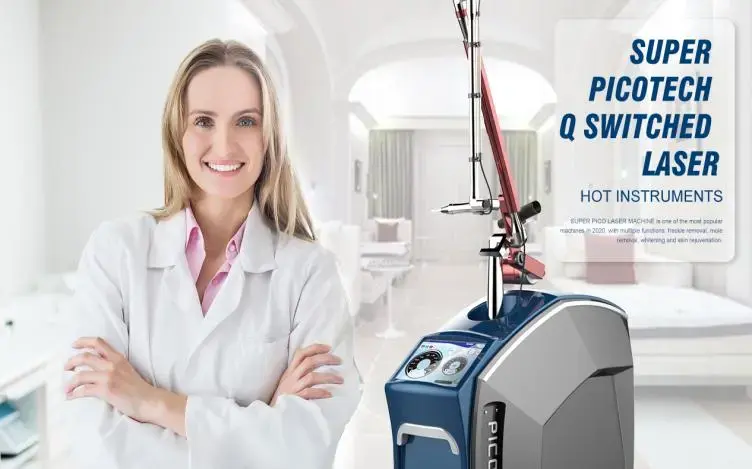
Picosecond platforms reduce heat exposure and post-inflammatory hyperpigmentation, but cost-benefit assessments must account for increased equipment procurement costs. Professional-grade units' air and water cooling systems reduce heat buildup during high-repetition treatments, safeguarding patient safety and component longevity. Class 4 medical laser systems have nominal ocular hazard distances over 1 kilometer; operators must wear approved laser safety eyewear regardless of platform.
Procurement Considerations for Q-Switched vs. Picosecond Machines
Investment Analysis and Total Cost of Ownership
B2B purchasers must consider ownership costs beyond equipment purchasing. Reputable manufacturers sell simple Q-switch laser tattoo removal machines for $8,000–$15,000, while premium systems with various wavelengths and complex cooling infrastructure cost $20,000–$35,000. Manufacturer, warranty coverage, and accessories determine picosecond platform initial investments, which range from $75,000 to $150,000.
Lower consumable costs and longer component replacement intervals benefit Q-switched technology for operational costs. High-quality German or UK xenon flash lights last 1-3 million pulses and cost $800–$1,200 per lamp, depending on specs. Picosecond systems use more complicated solid-state laser diodes that last longer but cost more to replace. Maintenance-free modular designs simplify technician servicing on both platforms and save downtime.
Supplier Reliability and Support Infrastructure
Choosing manufacturers of q switch laser tattoo removal machines with quality management systems and extensive after-sales assistance ensures long-term operations. ISO 13485 medical device certifications and CE compliance papers show that Xi'an Taibo Laser Beauty Company follows international quality standards throughout manufacturing. Parts and technical assistance are assured by the company's 15-year production history and presence in 180 global markets.
Professional-grade machines have a two-year warranty on core components for material or workmanship faults during clinical use. When equipment failures jeopardize revenue continuity, responsive technical support teams with video consultation, comprehensive troubleshooting techniques, and expedited parts distribution are vital. Distributors and clinic operators should check manufacturer capabilities to provide replacement parts within 72-96 hours to avoid treatment delays.
Practical Guidance on Choosing the Right Laser Machine
Matching Technology to Clinical Demographics
Professional q switch laser tattoo removal machines and systems with 1064nm and 532nm wavelengths are ideal for Fitzpatrick skin types I-III aesthetic practices with many amateur tattoo removal requests. These setups handle 85-90% of normal caseloads with affordable equipment costs and fast return-on-investment. The dependability of nanosecond technology simplifies training for personnel migrating from IPL or other non-laser treatments.
Despite greater acquisition costs, picosecond platform expenditures benefit urban clinics with affluent clients wanting premium services and faster treatment schedules. Practitioners can sell tattoo removal and photoaging skin rejuvenation packages because of increased collagen stimulation. Service diversification boosts machine use beyond pigment removal, enhancing profitability.
Capacity Planning and Equipment Scalability
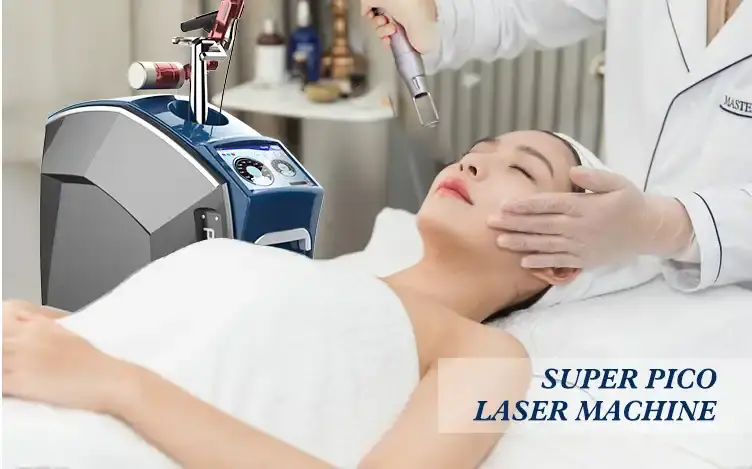
Average session lengths, patient preparation time, and equipment cooling periods between high-energy operations should be considered when calculating treatment room throughput. An efficient Q-switch laser tattoo removal machine can treat 8-12 people per day in busy offices, producing high income and allowing for flexible scheduling. Practitioners can balance treatment pace with patient comfort and clinical indications using 1-10Hz changeable repetition rates.
Standardizing equipment platforms across multi-unit practices or regional chains simplifies staff training, parts inventory management, and treatment protocol uniformity. Custom branding, software interface tweaks, and market-specific accessory packages are available from several OEMs. These partnerships boost brand distinctiveness while retaining manufacturing expertise-based technological reliability.
Conclusion
Choosing between a q switch laser tattoo removal machine and picosecond technology depends on clinical performance, budget, and strategic positioning. Traditional nanosecond systems offer reliable, cost-effective outcomes across broad patient groups with low operational costs and easy maintenance. Picosecond technology improves treatment speed and color variety, justifying the premium cost for discerning customers. Procurement specialists should consider manufacturer reputation, regulatory compliance documents, and complete support infrastructure, together with technical requirements, when considering long-term laser equipment expenditures for clinics.
FAQ
1. Can Q-switched systems effectively remove all tattoo colors?
Professional Q-switch laser tattoo removal machines with 1064nm, 755nm, and 532nm wavelengths remove 90-95% of tattoo pigments in clinical practice. Black, blue, red, and orange inks respond reliably to conventional wavelengths. Bright green and sky blue pigments are hardest to remove, needing dye handpieces at 585nm or 650nm. Titanium dioxide-containing flesh-toned cosmetic tattoos might darken paradoxically, requiring different therapy.
2. How do safety profiles differ between these technologies for darker skin types?
When wavelengths and fluence are tuned properly, Q-switched and picosecond platforms safely treat Fitzpatrick skin types V-VI. Darker complexions need the 1064nm wavelength because it reduces epidermal melanin absorption, reducing hypopigmentation concerns. Picosecond devices minimize thermal diffusion; good techniques and prudent energy escalation strategies are essential regardless of technology.
3. What return-on-investment timelines should clinics expect?
Patient volume, pricing tactics, and local market competitiveness considerably affect equipment payback timelines. Q-switched system investments are recouped in 8-15 months by practices charging $150-$300 each treatment session for 15-20 treatments weekly. Due to greater acquisition costs, picosecond platforms have longer amortization periods, but premium pricing and wider treatment menus can expedite ROI to 18-24 months in well-positioned markets.
Partner with Taibo Beauty for Your Laser Equipment Needs
Xi'an Taibo Laser Beauty Company stands ready to support your clinic's technology investments with complete solutions backed by 15 years of manufacturing expertise and global market presence. As a dedicated q switch laser tattoo removal machine supplier, we provide CE-certified and ISO 13485-compliant systems engineered for clinical reliability and patient safety. Our professional-grade units feature tri-wavelength configurations (1064nm, 755nm, 532nm), adjustable 2-10mm spot sizes, and robust air-water cooling systems that ensure consistent performance throughout demanding treatment schedules.
Beyond equipment sales, our commitment extends to personalized procurement consultation, competitive pricing structures tailored for multi-unit purchases, and comprehensive two-year warranty coverage protecting your investment. We welcome distributors, spa operators, and dermatology practices to explore our extensive product portfolio encompassing both Q-switched and advanced picosecond platforms. Contact our international sales team at susan@taibobeauty.com to schedule technical demonstrations, discuss OEM customization options for the Q-switch laser tattoo removal machine for sale, or receive detailed specification comparisons addressing your specific clinical requirements. Your success drives our innovation—let us help you select the optimal laser technology for your practice.
References
1. Anderson RR, Parrish JA. "Selective Photothermolysis: Precise Microsurgery by Selective Absorption of Pulsed Radiation." Science Journal of Investigative Dermatology, 1983.
2. Bernstein EF, Schomacker KT, Basilavecchio LD. "Treatment of Tattoo Removal: Comparison of Q-Switched and Picosecond Laser Technologies." Lasers in Surgery and Medicine, 2016.
3. Friedman PM, Fazeli A, Kimyai-Asadi A. "Treatment of Inflammatory Facial Pigmentation with the Q-Switched Nd:YAG Laser." Dermatologic Surgery Journal, 2002.
4. Kossida T, Rigopoulos D, Katsambas A. "Optimal Management of Pigmented Lesions: Comparative Analysis of Laser Systems." Clinical and Experimental Dermatology, 2012.
5. Ross V, Naseef G, Lin G. "Comparison of Responses of Tattoos to Picosecond and Nanosecond Q-Switched Neodymium:YAG Lasers." Archives of Dermatology, 1998.
6. Zelickson BD, Mehregan DA, Zarrin AA. "Clinical, Histologic, and Ultrastructural Evaluation of Tattoos Treated with Three Laser Systems." Lasers in Medical Science, 1994.





YOU MAY LIKE