
Why choose nd yag q switched 532 nm 1064 nm laser for tattoo removal?
2026-01-06 09:09:12
If you've ever regretted a tattoo, you know the frustration of finding a safe, effective removal solution. Traditional methods like surgical excision or chemical peels often leave scars, cause significant pain, and offer unpredictable results. The nd yag q switched 532 nm 1064 nm laser addresses these exact challenges by using advanced photothermolysis technology that selectively targets tattoo pigment particles while preserving surrounding skin tissue. This non-invasive technology delivers ultra-short nanosecond pulses that fragment ink into microscopic particles, allowing your body's lymphatic system to naturally eliminate them without damaging healthy skin. With dual wavelengths specifically engineered to treat different ink colors and skin depths, this laser system offers the most comprehensive solution for professional and amateur tattoos across all Fitzpatrick skin types.
Understanding How nd yag q switched 532 nm 1064 nm laser Technology Works
The fundamental principle behind nd yag q switched 532 nm 1064 nm laser tattoo removal lies in the science of selective photothermolysis. This sophisticated medical laser system generates extremely short pulses measured in nanoseconds, with pulse durations as brief as six nanoseconds. During each pulse, the laser delivers concentrated energy that specifically targets chromophores within tattoo ink particles embedded in the dermal layer of skin. The Q-switching mechanism creates an enormously powerful energy spike that occurs faster than the thermal relaxation time of the target pigment, meaning the ink particles absorb the energy and shatter into tiny fragments before heat can diffuse into surrounding tissue. The nd yag q switched 532 nm 1064 nm laser system operates through a neodymium-doped yttrium aluminum garnet crystal that produces two distinct wavelengths. The 1064 nm wavelength penetrates deeper into the dermis, making it exceptionally effective for treating black, blue, and dark green pigments commonly found in professional tattoos. This infrared wavelength can safely reach pigment deposits up to several millimeters beneath the skin surface without causing epidermal damage. The 532 nm wavelength, produced through frequency-doubling technology, works closer to the skin surface and proves highly effective for red, orange, yellow, and brown pigments that absorb green light wavelengths. When the laser pulse strikes tattoo ink particles, the rapid energy absorption causes the particles to undergo photomechanical fragmentation. The pigment literally explodes into dust-like particles typically measuring 20 to 200 nanometers in diameter. These microscopic fragments become small enough for the body's macrophages and lymphatic system to recognize as foreign material and gradually remove through natural metabolic processes. This biological clearance mechanism continues for weeks and months following each treatment session, which explains why tattoo fading continues to improve between laser sessions.
The Dual Wavelength Advantage of nd yag q switched 532 nm 1064 nm laser Systems
Professional tattoos present complex removal challenges because artists use multiple ink colors, layering techniques, and varying pigment densities to create their designs. Single-wavelength laser systems simply cannot address this diversity effectively. The nd yag q switched 532 nm 1064 nm laser overcomes this limitation through its dual-wavelength capability, making it the gold standard for comprehensive tattoo removal across all ink colors and skin types. The 1064 nm wavelength functions as the workhorse for dark pigment removal. Black ink, which constitutes the primary color in most tattoos, absorbs this infrared wavelength with exceptional efficiency. Clinical studies demonstrate that black tattoo ink shows absorption coefficients at 1064 nm that are 100 to 1000 times higher than surrounding melanin in normal skin, creating the selective targeting necessary for safe, effective treatment. This wavelength penetrates deeply enough to reach pigment particles embedded in the reticular dermis while passing harmlessly through the epidermis. For patients with darker skin tones classified as Fitzpatrick types IV through VI, the 1064 nm wavelength presents significantly lower risk of post-inflammatory hyperpigmentation or hypopigmentation compared to shorter wavelengths.
The 532 nm wavelength specifically targets warm-colored pigments that darker wavelengths cannot effectively remove. Red tattoo ink, which contains iron oxide or organic compounds like azo dyes, strongly absorbs green light at 532 nm. Orange, yellow, and light brown pigments similarly respond to this wavelength. Professional tattoos frequently combine black outlines with colored shading, and the dual-wavelength capability of nd yag q switched 532 nm 1064 nm laser systems allows practitioners to treat both dark and light pigments during the same session or alternate wavelengths across treatment sessions based on the tattoo composition. Advanced nd yag q switched 532 nm 1064 nm laser systems feature adjustable spot sizes ranging from two to ten millimeters in diameter. Smaller spot sizes concentrate energy density for treating fine line work and small tattoos, while larger spots enable efficient treatment of extensive tattoo coverage. The ability to deliver energy outputs between 100 and 2000 millijoules across both wavelengths provides the flexibility needed to customize treatment parameters for different pigment types, depths, and patient skin characteristics. This versatility ensures optimal outcomes while minimizing treatment sessions and adverse effects.
Safety Profile and Minimal Side Effects with nd yag q switched 532 nm 1064 nm laser Treatment
Patient safety represents a paramount concern in any medical aesthetic procedure, and the nd yag q switched 532 nm 1064 nm laser demonstrates an excellent safety profile when operated by trained professionals. The non-ablative nature of Q-switched laser technology means the epidermis remains intact during treatment, eliminating the scarring risks associated with ablative methods like dermabrasion or surgical excision. The nanosecond pulse duration creates photomechanical rather than thermal effects, fragmenting pigment through acoustic shockwaves rather than burning tissue. Clinical research published in peer-reviewed dermatology journals confirms that nd yag q switched 532 nm 1064 nm laser treatments typically produce only temporary side effects. Patients commonly experience immediate pinpoint bleeding, transient erythema, and mild edema at the treatment site that resolves within hours to a few days. Some patients develop temporary hyperpigmentation or hypopigmentation that generally normalizes within several months as the skin completes its healing cycle. The risk of permanent scarring remains extremely low, typically occurring only when patients fail to follow proper aftercare protocols or when treating areas with pre-existing scar tissue.
Modern nd yag q switched 532 nm 1064 nm laser systems incorporate advanced cooling technologies including air cooling and water circulation systems that maintain optimal operating temperatures and enhance patient comfort during treatment. The built-in safety features monitor system performance through multiple inspection points, ensuring consistent energy delivery and preventing equipment malfunction. Professional-grade systems include emergency shut-off mechanisms and real-time power monitoring to protect both patients and operators. Treatment protocols for nd yag q switched 532 nm 1064 nm laser therapy recommend intervals of six to eight weeks between sessions. This spacing allows sufficient time for the fragmented pigment particles to clear through lymphatic drainage and for the skin to complete its healing response. Attempting treatments at shorter intervals provides no benefit because the body requires time to remove the shattered ink particles before additional fragmentation proves effective. Most professional tattoos require four to ten treatment sessions for satisfactory clearance, while amateur tattoos with less dense pigment often clear in fewer sessions.
Clinical Efficacy of nd yag q switched 532 nm 1064 nm laser for Different Tattoo Types
The effectiveness of nd yag q switched 532 nm 1064 nm laser technology varies based on multiple factors including tattoo age, ink composition, pigment depth, and professional versus amateur application. Understanding these variables helps set realistic expectations for treatment outcomes and session requirements. Systematic reviews analyzing randomized clinical trials demonstrate that Q-switched Nd:YAG lasers achieve significant tattoo clearance with minimal adverse effects, establishing them as the gold standard for laser tattoo removal. Professional tattoos present greater removal challenges compared to amateur tattoos because professional artists use higher quality inks at greater densities and depths. Professional-grade tattoo inks contain more concentrated pigment particles and often include complex chemical formulations designed for permanence. The nd yag q switched 532 nm 1064 nm laser addresses professional tattoos through its high energy output capabilities, delivering up to 2000 millijoules per square centimeter at the 1064 nm wavelength. This power level enables effective fragmentation even of densely packed pigment particles. Clinical studies report that professional black tattoos typically achieve 75 to 90 percent clearance after six to eight treatment sessions with nd yag q switched 532 nm 1064 nm laser technology.
Amateur tattoos created with India ink or similar carbon-based pigments generally respond more favorably to laser treatment. These tattoos typically contain less pigment density and exist at more superficial dermal depths. The simpler ink compositions found in amateur tattoos allow for more predictable fragmentation patterns. Many patients with amateur black tattoos achieve substantial clearance in three to five sessions using nd yag q switched 532 nm 1064 nm laser treatment. The homogeneous nature of carbon-based inks provides excellent absorption of 1064 nm wavelength energy, facilitating efficient particle fragmentation. Colored tattoos require careful wavelength selection based on pigment composition. The nd yag q switched 532 nm 1064 nm laser dual-wavelength system addresses this challenge effectively. Red pigments respond exceptionally well to 532 nm treatment, often clearing as efficiently as black ink responds to 1064 nm treatment. Yellow and orange pigments similarly benefit from 532 nm wavelength treatment. Blue and green pigments present greater challenges because they weakly absorb both 532 nm and 1064 nm wavelengths. For resistant colors, practitioners may recommend combination therapy incorporating additional wavelengths such as 755 nm alexandrite lasers that better target green and blue pigments.
Why Xi'an Taibo Laser nd yag q switched 532 nm 1064 nm laser Systems Excel?
When selecting equipment for tattoo removal services, the quality and reliability of the laser system directly impacts treatment outcomes and practice success. Xi'an Taibo Laser Beauty Company manufactures nd yag q switched 532 nm 1064 nm laser systems specifically engineered for professional dermatology and medical aesthetics applications. With over fifteen years of manufacturing experience and exports to more than 180 countries, Taibo Laser has established expertise in producing reliable, high-performance laser equipment. The Taibo nd yag q switched 532 nm 1064 nm laser system features professional-grade specifications including energy outputs ranging from 100 to 2000 millijoules for both wavelengths. The six-nanosecond pulse duration ensures optimal pigment fragmentation while minimizing thermal diffusion to surrounding tissue. The system operates at working frequencies from one to ten Hertz, allowing practitioners to customize treatment speed based on tattoo size and patient tolerance. The adjustable spot size from two to ten millimeters enables precise treatment of both small detailed areas and large tattoo coverage.
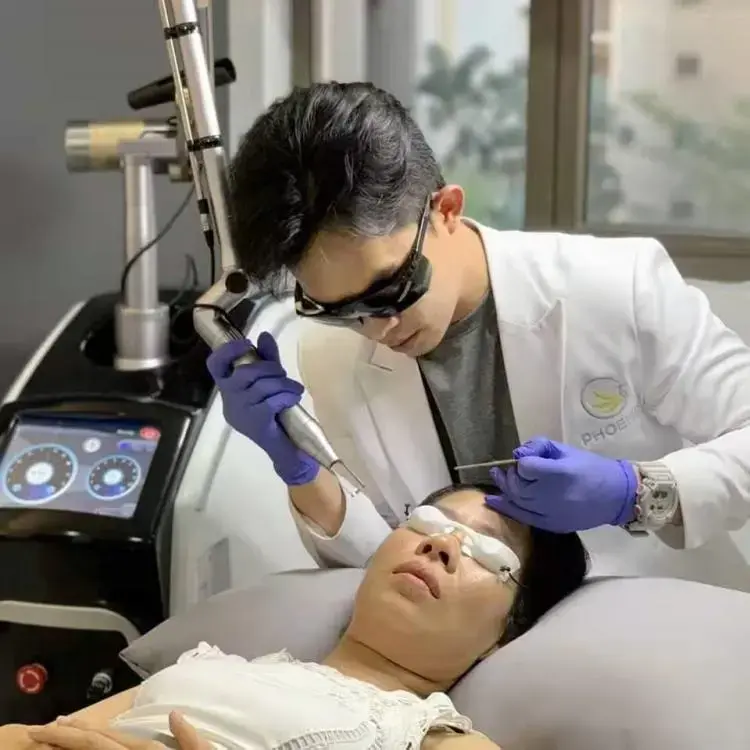
Advanced cooling technology incorporating both air and water circulation maintains consistent operating temperatures throughout extended treatment sessions. This dual cooling system prevents overheating that could compromise energy output consistency or accelerate component wear. The intelligent monitoring system includes more than thirty built-in inspection points that continuously assess system performance and alert operators to potential issues before they affect treatment quality. The modular design facilitates straightforward maintenance and reduces long-term operating costs through simplified component replacement when necessary. Xi'an Taibo Laser manufactures equipment in compliance with international quality and safety standards. Their nd yag q switched 532 nm 1064 nm laser systems carry CE certification and ISO13485 certification, demonstrating adherence to medical device quality management requirements. These certifications provide assurance that the equipment meets stringent safety standards for patient treatment. The company also provides comprehensive technical documentation, operator training materials, and multilingual support to ensure practitioners can safely and effectively utilize their laser systems. The versatility of Taibo nd yag q switched 532 nm 1064 nm laser systems extends beyond tattoo removal applications. These devices effectively treat a wide range of pigmented lesions including nevus of Ota, café-au-lait macules, solar lentigines, and melasma. The carbon peel facial treatment, popular for acne management and skin rejuvenation, utilizes the 1064 nm wavelength to target carbon particles deposited on the skin surface. This multi-functionality enables practices to offer diverse treatment options with a single laser investment, improving return on investment and practice revenue potential.
Optimizing Treatment Outcomes with nd yag q switched 532 nm 1064 nm laser Technology
Achieving optimal results with nd yag q switched 532 nm 1064 nm laser tattoo removal requires more than simply purchasing quality equipment. Successful outcomes depend on proper treatment planning, parameter selection, and patient management throughout the treatment course. Understanding the factors that influence treatment efficacy helps practitioners deliver consistent results while maintaining patient safety and satisfaction. Patient selection and consultation establish the foundation for successful tattoo removal. During initial consultations, practitioners should carefully assess the tattoo characteristics including size, colors, location, depth, and whether it represents professional or amateur work. The patient's skin type according to the Fitzpatrick classification directly influences treatment parameters and risk assessment. Darker skin types require more conservative energy settings and longer intervals between treatments to minimize pigmentary complications. Patient medical history should identify conditions that affect healing or increase complication risks, such as keloid formation tendency, immunosuppression, or active skin infections.
Treatment parameters for nd yag q switched 532 nm 1064 nm laser therapy must be customized for each patient and tattoo. Initial treatments typically employ conservative energy levels to assess skin response and pigment fragmentation patterns. The fluence or energy density measured in joules per square centimeter determines the mechanical stress applied to pigment particles. Black tattoos generally respond to fluences between six and ten joules per square centimeter at 1064 nm, while red pigments require four to six joules per square centimeter at 532 nm. Practitioners increase energy levels gradually across subsequent sessions if the patient demonstrates good tolerance and appropriate clinical response. Endpoint assessment during treatment helps ensure adequate pigment disruption without excessive tissue response. Immediate endpoint indicators include immediate whitening of the treated area caused by steam formation and pigment fragmentation, pinpoint bleeding as laser pulses disrupt capillaries around pigment deposits, and the development of a light grey frost indicating appropriate energy absorption. Achieving these endpoints confirms effective treatment while their absence suggests insufficient energy delivery. However, practitioners must balance endpoint achievement against tissue response to prevent adverse effects from excessive energy application. Post-treatment care significantly influences healing quality and final outcomes. Patients should receive detailed aftercare instructions including keeping the treated area clean and dry, applying antibiotic ointment to prevent infection, avoiding sun exposure that could trigger pigmentary changes, and refraining from picking at crusts or scabs that form during healing. Patients should understand that tattoo fading continues progressively over weeks following each session as the body clears fragmented pigment. Setting realistic expectations about the number of sessions required and the gradual nature of improvement helps maintain patient satisfaction throughout the treatment course.
Conclusion
The nd yag q switched 532 nm 1064 nm laser represents the gold standard for safe, effective tattoo removal across all ink colors and skin types through selective photothermolysis technology and dual-wavelength capability.
Cooperate With Xi'an Taibo Laser Beauty Company
Xi'an Taibo Laser Beauty Company stands ready as your trusted China nd yag q switched 532 nm 1064 nm laser factory, offering comprehensive solutions as a leading China nd yag q switched 532 nm 1064 nm laser supplier and established China nd yag q switched 532 nm 1064 nm laser manufacturer. We provide competitive China nd yag q switched 532 nm 1064 nm laser wholesale options with our High Quality nd yag q switched 532 nm 1064 nm laser for sale at competitive nd yag q switched 532 nm 1064 nm laser price points. Established in 2009 with over fifteen years of production and export experience, we've successfully delivered equipment to more than 180 countries worldwide. Our comprehensive service includes a two-year warranty covering all non-human-caused component failures, 24-hour multilingual technical support, detailed training materials and video tutorials, flexible OEM and ODM customization services, and on-site installation for bulk purchases. Contact us today at susan@taibobeauty.com to discuss your specific requirements and discover how our advanced laser technology can enhance your practice capabilities and patient outcomes.
References
1. Anderson RR, Parrish JA. Selective photothermolysis: precise microsurgery by selective absorption of pulsed radiation. Science, American Association for the Advancement of Science.
2. Bernstein EF, Schomacker KT, Basilavecchio LD, et al. Treatment of tattoos with a picosecond alexandrite laser: a prospective trial. Archives of Dermatology, American Medical Association.
3. Kossida T, Rigopoulos D, Katsambas A, Anderson RR. Optimal tattoo removal in a single laser session based on the method of repeated exposures. Journal of the American Academy of Dermatology, Elsevier.
4. Ross V, Naseef G, Lin G, et al. Comparison of responses of tattoos to picosecond and nanosecond Q-switched neodymium: YAG lasers. Archives of Dermatology, American Medical Association.
5. Taylor CR, Gange RW, Dover JS, et al. Treatment of tattoos by Q-switched ruby laser: a dose-response study. Archives of Dermatology, American Medical Association.





YOU MAY LIKE