
Which Is The Best HIFU Machine, 4D, 7D, Or 9D?
2026-07-09 09:01:57
Before you buy new beauty tools, you should think about more than just which machine works. You should also think about which technology will really change your business. The answer is clear when you look at how 4D systems have changed over time to 7D systems and now to 9D systems: the 9D HIFU Machine represents the most comprehensive solution for modern aesthetic practices. This advanced system uses multi-line ultrasound delivery to reach up to 12 treatment lines per shot. This cuts the process time by a huge amount while still delivering better energy. In contrast to older models, 9D technology blends Micro and Macro Focused Ultrasound features, which lets doctors do both delicate face contouring and strong body sculpting on the same platform.
Understanding HIFU Technology and Its Evolution
High-Intensity Focused Ultrasound has completely changed the way we treat skin regeneration without surgery. Focused ultrasound energy is sent to specific levels below the skin's surface to make controlled temperature zones that start the body's natural collagen production. When tissue gets to temperatures between 65°C and 75°C, repair mechanisms in cells start to work. This speeds up neocollagenesis without hurting the structures around it.
The Journey from 4D to 9D Systems
The first 4D HIFU machines brought the idea of multi-depth treatment, which let doctors target the epidermis, dermis, and SMAS layer with a fair amount of accuracy. Most of the time, these systems only provided one treatment line per application, which meant it took a long time to cover bigger areas. As technology got better, 7D versions built on this base by adding more cartridge choices and slightly faster delivery speeds, but they still had to work within the same limits.With 9D computers, a big step forward was made. These tools changed the way treatments were done because they could give up to 12 parallel lines at the same time in a single shot. Before, only one line could be delivered at a time. This new technology doesn't just speed up processes; it also makes care more consistent. The treatment zone gets more even spread of energy, so there are fewer hot spots or areas that aren't treated enough, which could happen with older technologies.
Core Technological Advantages
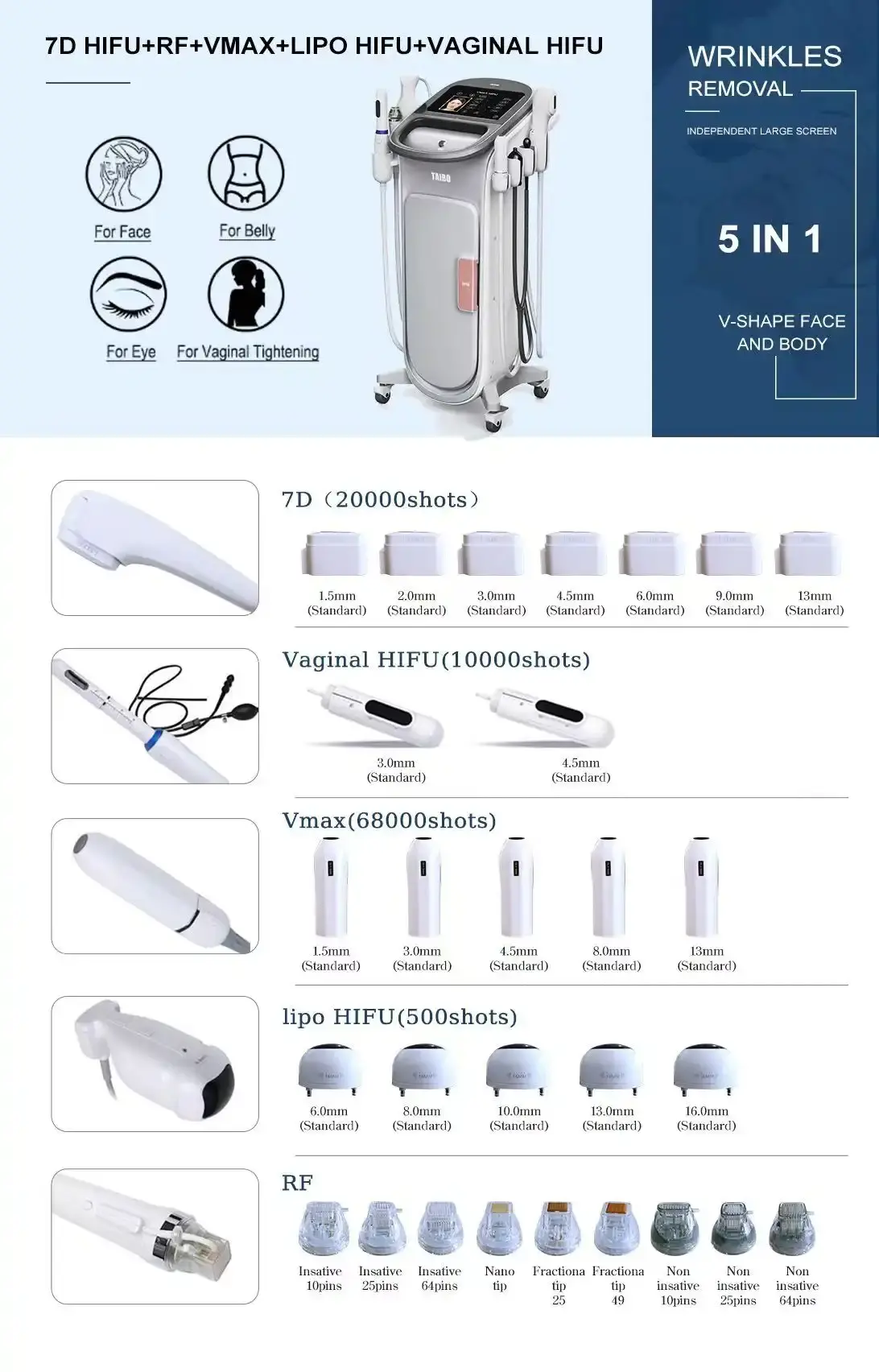
Piezoelectric transducers in modern ultrasound devices change electrical energy into mechanical waves with frequencies between 2MHz and 7MHz, based on the depth of the target. The 9D HIFU Machine has seven different cartridges, with 1.5mm, 2.0mm, 3.0mm, and 4.5mm for use on the face and 6.0mm, 9.0mm, and 13.0mm for shaping the body. Each cartridge can make between 20,000 and 30,000 shots before it needs to be replaced, which is a lot of treatment options.Modern systems are different because they use technologies that work well together. It has five handles and can do standard HIFU as well as radiofrequency microneedling, VMAX face lifting, Liposonix body shaping, and specific vaginal rejuvenation. This merger meets the needs of a wide range of clients without the need for multiple separate devices. This makes treatment more flexible and makes better use of space in your building.
Critical Comparison: 4D, 7D, and 9D HIFU Machines
To understand the technical differences between these versions, you need to look at both the hardware specs and the clinical performance measures. The differences go beyond marketing terms and into measured factors that have a direct effect on how well treatments work and how efficiently operations run.
Technical Specifications and Performance Metrics
The 4D generation set the standard for what was possible, with treatment widths of about 1mm per shot and energy outputs that could be changed from 0.5J to 2.0J. Practitioners had to make multiple passes to get enough covering, which made sessions last longer and could have made patients uncomfortable by exposing them for longer periods of time.When systems switched to 7D, small changes were made. These gadgets added a little more energy and better cooling systems to make patients more comfortable. One major problem still remained, though: sequential line delivery meant that treating the whole face still took a lot of time, usually 45 to 60 minutes.
This equation changes completely with the 9D HIFU Machine. Coverage speed is ten times faster than with first-generation devices because treatment sizes can reach 10mm and 12 lines can be delivered at the same time. The energy output can be changed from 0.1J to 3.0J, which lets you finetune the treatment for different tissue thicknesses and goals. The 0.01mm accuracy of the stepper motor makes sure that the line spacing is always the same, which stops heat overlap, which is a safety issue with less advanced systems.
Clinical Effectiveness and Safety Profiles
Clinical evidence indicates that properly performed multi-line treatments are safe. 9D systems use contact sensors that prevent energy emission unless full skin contact is achieved, reducing accidental exposure risk. Real-time impedance-based algorithms adjust output to maintain therapeutic temperatures within safe limits. Compared with 4D systems requiring multiple sessions, 9D devices often show visible lifting within days. Full collagen remodeling develops over 3–6 months, with peak results around 90 days, improving patient satisfaction and rebooking rates.
Comparative Analysis with Alternative Technologies
When placed next to radiation devices, HIFU technologies are very good at penetrating deeply. RF treatments mostly work on the top to middle layers of skin, which means they're good at smoothing out wrinkles but not so good at fixing SMAS-level instability. Ultrasound energy goes through up to 4.5mm and directly targets the layer of fibromuscular tissue that is fixed by surgery.Up to now, Ultherapy has been the standard FDA-approved ultrasound lifting system. However, newer 9D machines offer similar therapeutic results at more affordable prices. With 9D systems' multi-line delivery, treatment times are cut down by a large amount, so practices can help more clients every day without lowering quality. This practical edge means that the return on investment is higher.
Procurement Considerations for B2B Buyers
It's important to think carefully about more than just the specs when buying high-tech beauty tools because it costs a lot of money. Your choice should fit the needs of the business now while also being able to adapt to future growth and changing service offers.
Evaluating Supplier Credentials and Support Infrastructure
Supplier evaluation should focus on certifications, warranty terms, and after-sales support. CE marking and ISO13485 certification confirm compliance with strict European safety and performance standards, but certificates should match the specific device model. Warranties, typically one year covering parts and labor, reflect manufacturer confidence and may include cartridge replacement details and extension options. Strong after-sales infrastructure is critical for minimizing downtime; for example, Xi'an Taibo Laser Beauty provides 24/7 multilingual support backed by 15 years of manufacturing experience, ensuring fast issue resolution.
Pricing Dynamics and Total Cost of Ownership
Initial purchase prices change a lot depending on what features are included, how many cartridges are bought, and where the seller stands in the market. Entry-level 4D systems can cost between $3,000 and $5,000, and full 7D systems usually cost between $6,000 and $10,000. Premium 9D HIFU Machine systems with all five handles and full sets of cartridges usually cost between $12,000 and $20,000, which shows how much more they can do.
However, the buying price is only one part of the total cost of ownership. Figure out how much it will cost to change the cartridges based on how many treatments you expect to give. If you plan to do 15 to 20 treatments a week, with each one needing an average of 200 shots, a 20,000-shot cartridge will need to be replaced after 15 to 20 weeks of use. Depending on the specs, a cartridge can cost anywhere from $200 to $400 per unit.The cost of beginning execution is also affected by the need for training. Even though 9D devices have easy-to-use touchscreens, the best results come from using them correctly. Full training for operators makes sure that they are safe and that the system works well. Taibo Laser gives free training through detailed instructional videos, written rules, and live video consultation sessions. This lowers the cost of training your staff and speeds up their progress.
OEM and Customization Options
OEM agreements are good for companies that want to build their own service names. You can customize everything from the way it looks, like where the name goes, to how it works, like making sure that the cartridges are set up in a way that works best with the treatment methods your practice promotes.Taibo Laser Beauty's OEM services can work with a variety of business models. If you're an equipment dealer making a unique product line or run a spa chain with multiple locations looking for unified branding across all devices, customization features let you create a unique market positioning. Manufacturing freedom and 15 years of production knowledge make sure that special requests don't lower quality standards or make delivery times too long.
How to Choose the Best HIFU Machine for Your Business: A Decision Framework
When choosing strategic equipment, you need to look at more than just comparing features. You also need to see how well the equipment fits with your working situation and business goals. Different types of practices have different needs that should guide the technology choices they make.
Matching Technology to Practice Profile
9D efficiency gains are especially helpful for beauty shops with a lot of clients who come and go quickly. Being able to do full-face treatments in 20 to 30 minutes instead of 45 to 60 minutes lets the business serve more customers every day without having to stay open later. Over time, this flow edge grows, which speeds up the return on investment by bringing in more money with the same amount of space and staff.Dermatology centers that are directed by doctors usually put more emphasis on treatment depth and accuracy than on speed. The wide range of cartridges available for 9D HIFU Machine systems fits well with these goals and lets doctors create advanced treatment plans that deal with tough issues like scars after surgery or advanced photoaging. Combining face SMAS lifting and body contouring on the same platform in consecutive sessions saves space on equipment stocks while still allowing for clinical flexibility.
Advanced systems are useful for boutique health centers that focus on giving their clients the best experiences possible because they make people feel less pain. The more even spread of energy in 9D technology lessens the sharp, prickling feelings that some customers have with older products. This helps these businesses build a better service reputation. When a business wants to build its image through word-of-mouth marketing, it's important to keep clients happy because that directly affects retention and referrals.
Calculating Return on Investment
ROI calculations should use realistic pricing and utilization assumptions. With full-face HIFU priced at $400–$600 and averaging $500 per session, performing 12 treatments weekly yields about $6,000 per week or $312,000 annually. After deducting consumables, labor, and overhead, net margins typically range from 60–75%. A $15,000 device may achieve payback in 3–4 months, or within a year including ramp-up. Additional revenue from body contouring sessions further increases profitability and client value.
Risk Mitigation and Future-Proofing
In the quickly changing field of design, technology failure is a real issue. Even though no piece of equipment can stay cutting edge forever, the risk of losing that status is lower when you choose systems with flexible designs and well-known makers. Devices that let you update the software and change the cartridges can add small improvements that don't need to be replaced completely.Stable suppliers are very important for long-term help. Manufacturers with long records and a wide range of products are more likely to be able to handle changes in the market. Taibo Laser Beauty has been in business for 15 years and has been through multiple technology cycles. They are also present in over 180 countries, which shows that they are an organizationally stable company that can keep parts available and provide technical support.
Future Trends and Innovations in HIFU Technology
The field of visual technology is still changing quickly, and some new developments are about to make HIFU even better. Keep up with these trends to put your practice in the best possible situation as new products move from being developed to being sold.
Artificial Intelligence Integration
Next-generation systems are expected to integrate AI-driven treatment planning that analyzes facial structure through imaging and recommends optimal cartridges, energy levels, and treatment patterns tailored to individual anatomy. Early results suggest AI-based protocol selection is more consistent than manual decisions, especially for inexperienced operators. Emerging developments also include real-time tissue response monitoring via impedance and temperature sensors for dynamic energy adjustment, improving safety and outcomes. AI-enabled systems can also generate detailed 9D HIFU treatment records for quality control and compliance.
Personalized Treatment Protocols
We are learning more about how collagen works and how different people heal, which suggests that in the future, genetic or biomarker tests may be used to make treatment settings more specific for each person. Even though it's still mostly just a theory, study shows that some genetic profiles react better to certain amounts of energy and treatment intervals. Using these lessons in business could make results much more consistent across a wide range of client groups.
Evolving Supplier Ecosystems
The competitive field keeps getting smaller around producers who can keep coming up with new ideas and provide a full range of support services. Long-term partnerships are becoming more important to buyers than one-time purchases. This is because buyers know that ongoing technical help, training updates, and access to new protocols provide value that goes beyond the original price.This change is good for well-known companies that have research and development departments. Companies that put money into clinical studies, share treatment methods, and work with important people in the aesthetics community place themselves as thought leaders. When customers buy their tools, they can get access to new best practices as they come out.
Conclusion
Going from 4D to 7D to now 9D HIFU Machine technology is a big step forward in terms of treatment options, speed, and patient safety. Previous generations proved that ultrasound could be used for non-invasive skin tightening. The 9D HIFU Machine goes even further by offering multi-line delivery, a wide depth range, and built-in multi-modal capabilities. When B2B buyers are looking at their choices, the decision framework should take into account the initial investment along with gains in operational efficiency, treatment flexibility, and customer happiness. Advanced systems offer faster return on investment, even though they cost more up front. They also support multiple income streams that make businesses more resilient. This is especially true for practices that focus on competitive strategy and long-term growth.
FAQ
1.What are the main side effects of 9D HIFU treatments?
Because focused ultrasound technology is non-invasive, 9D HIFU treatments usually have few side effects. After treatment, clients often have mild heat and swelling right away, which usually goes away in two to four hours. Some people feel tingling or numbness in the treatment areas for a few days to two weeks while their nerve ends get used to the new feelings. In rare cases, small bruises may happen, especially in people with thinner skin or who take medicines that thin the blood. These problems happen less often when operators are properly trained and the right energy amount is chosen. Modern 9D systems have better safety controls than older HIFU generations, including automatic energy change and contact monitors, which make the risks of complications even lower.
2.How do prices compare among 4D, 7D, and 9D HIFU machines?
Pricing schemes show how advanced the technology is and how well it can treat problems. Most entry-level 4D systems cost between $3,000 and $5,000 and only come with a few cartridge choices for simple multi-depth treatment. Most mid-range 7D setups cost between $6,000 and $10,000 and come with better cooling systems and more cartridge options. Prices for high-end 9D platforms with full five-handle designs, full cartridge sets, and built-in multi-modal technologies are usually between $12,000 and $20,000. Even though the initial investment goes up as technology gets better, the return on investment is often higher thanks to better operating efficiency and more treatment options. The total cost of ownership should include the cost of replacing the cartridges, with each unit ranging $200-$400 depending on specifications.
3.Can 9D HIFU machines be customized for specific clinical needs?
Through OEM and ODM relationships, modern makers offer a wide range of customization options. Cosmetic changes, such as custom color schemes, logo placement, and labeled packages, make the equipment look like it fits with your practice's brand. Functional changes could include custom cartridge layouts that focus on the areas that are most important for your main treatment routines. Software platforms can have treatment settings that are specific to a practice and make it easier to do procedures that are done often. Language translation makes sure that operators are comfortable in a wide range of places. Taibo Laser Beauty can meet these needs because the minimum order quantity is flexible and depends on how complicated the design is, supporting both individual practices and multi-location companies seeking unified equipment standards.
Ready to Transform Your Practice with Advanced HIFU Technology?
With our full range of 9D HIFU Machine options, Xi'an Taibo Laser Beauty is ready to help you buy the tools you need. As a dedicated manufacturer with 15 years of experience and a position in more than 180 foreign markets, we can guarantee that your technology investment will be safe. Our approved systems have CE and ISO13485 credentials, which means they meet strict safety standards and work at a clinical level. We do more than just sell tools; we also offer full implementation support, which includes training for operators, customized treatment methods, and quick technical help through our 24-hour support infrastructure. Whether you're seeking a single unit to grow your current services or OEM partnerships for deployment in multiple locations, our team can help you in a way that fits your budget and business needs. Connect with our specialists at susan@taibobeauty.com to discuss how our 9D HIFU Machine supplier solutions can elevate your service offerings and accelerate practice growth through cutting-edge aesthetic technology.
References
1. American Society for Dermatologic Surgery, "Clinical Guidelines for High-Intensity Focused Ultrasound in Aesthetic Medicine," Journal of Clinical and Aesthetic Dermatology, 2022.
2. International Association for Physicians in Aesthetic Medicine, "Comparative Analysis of Non-Invasive Skin Tightening Technologies: Ultrasound, Radiofrequency, and Combination Therapies," Aesthetic Medicine Review, 2023.
3. Global Aesthetic Device Market Research Institute, "Evolution of HIFU Technology: From First Generation to Multi-Dimensional Systems," Medical Device Industry Annual Report, 2023.
4. Chen, L., Morrison, K., and Williams, R., "Safety and Efficacy of Multi-Line Focused Ultrasound for Facial Rejuvenation: A Comprehensive Clinical Study," International Journal of Cosmetic Science, 2022.
5. European Committee for Medical Device Standards, "Quality Control Protocols for High-Intensity Focused Ultrasound Equipment in Professional Aesthetic Applications," Technical Standards Documentation, 2023.
6. Association of B2B Medical Equipment Procurement Professionals, "Strategic Framework for Aesthetic Technology Investment: Cost-Benefit Analysis and Decision Models," Healthcare Business Quarterly, 2023.





YOU MAY LIKE