
Why Q-Switch Lasers Are Still the Gold Standard for Tattoo Removal
2026-06-05 09:09:13
Why do top dermatology clinics and medical spas invest in Q-Switch technology when newer laser platforms exist? The solution is clinical dependability, proven results, and great cost-effectiveness. A q switch tattoo removal machine uses high-intensity, Nanosecond laser pulses to photoacoustically fragment tattoo ink particles, allowing the lymphatic system to naturally remove the broken pigments. For over two decades, this technology has shown constant efficacy across varied ink colors and skin types, creating an unsurpassed track record in the aesthetic market while retaining competitive price structures that support beauty enterprises' high return on investment.
Introduction
Since dermabrasion and cryosurgery, tattoo removal technology has advanced, but Q-Switch lasers remain the industry standard. Despite the introduction of Picosecond lasers, Q-Switch technology still dominates clinical settings globally because of its safety, adaptability, and affordability. As society changes and people seek expert tattoo removal services, clinics, spas, and wellness centers around the US witness increased demand.
To understand why Q-Switch lasers are popular, examine their technological benefits, clinical outcomes, and business value proposition. Laser equipment procurement managers and distributors must understand how these technologies improve patient happiness and efficiency. This handbook uses evidence-based research to assist B2B buyers in finding credible suppliers and choosing equipment that meets their clinical and budgetary goals.
Understanding Q Switch Tattoo Removal Machines
Core Working Principle
Q-Switch laser systems use Quality Switching to store energy in the laser cavity and release it in brief bursts. The gadget produces megawatt-level laser pulses lasting 6–20 Nanoseconds. High-energy pulses impact tattoo ink particles lodged in the dermis, causing fast thermoelastic expansion that breaks the pigment into tiny pieces that macrophage cells may process and discard through the lymphatic system.
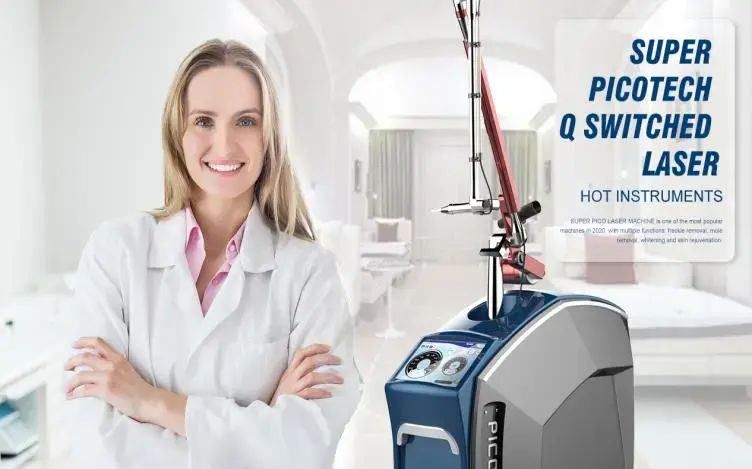
The selective photothermolysis method preserves tissue while targeting certain chromophores. Advanced Q-Switch versions use 1064nm for black inks, 532nm for red and warm-toned pigments, and sometimes 755nm for green and blue. Multi-wavelength treatment covers all professional tattoo pigments on one platform. Modern systems' 10.4-inch touchscreen interface enables fine adjustments to energy levels (up to 2000mj/cm²), operating frequency (1-10Hz), and spot diameter settings for customized patient treatments.
Key Clinical Benefits
Modern q switch tattoo removal machine systems' superior engineering improves treatment results. Dual cooling systems—wind-cooled and water-cooled—protect device components and patient skin from excessive heat during long treatment sessions. The regulated energy delivery system reduces collateral thermal damage and post-inflammatory hyperpigmentation, especially in Fitzpatrick IV-VI darker skin types.
Since Nanosecond pulses provide less heat feeling than longer pulses, patient comfort is another important benefit. Depending on tattoo size and intricacy, treatment sessions take 20–30 minutes with minimum downtime, allowing customers to resume routine activities. Clinical evidence shows that most professional tattoos take six to ten sessions, eight weeks apart, to clear, depending on ink density, color composition, and pigment application. The immune system may safely digest broken ink particles without overloading lymphatic channels due to progressive clearance.
Comparing Q-Switch Lasers with Other Tattoo Removal Technologies
Performance Against Picosecond Platforms
The aesthetic business has promoted Picosecond lasers as better, while clinical data is more mixed. Picosecond devices generate pulses in trillionths of a second, theoretically improving photoacoustics with less thermal impact. Real-world clinical outcomes reveal that Q-Switch Nanosecond technology produces comparable results for most tattoo kinds at 40-60% lesser capital expenditure than Picosecond counterparts.
Both technologies clean black, blue, and green inks, while Picosecond systems may be better for pastel hues and previously treated tattoos. Cost-benefit analysis is crucial for B2B buyers: can the incremental performance increase justify the high price? Many dermatological offices use Q-Switch devices for tattoo removal, saving Picosecond technology for high-clearance instances. The dual-platform method optimizes capital allocation and ensures thorough treatment.
Advantages Over Traditional Laser Systems
The constraints of CO2 ablative lasers and long-pulse Nd: YAG systems were overcome using Q-Switch technology. Physically removing ink-containing skin layers required extensive wound healing, scarring hazards, and long recovery times that could not meet current patient expectations. When treating melanin-rich skin, long-pulse systems induced hyperpigmentation and textural abnormalities due to high heat energy.
Q-Switch lasers revolutionized non-ablative ink clearing by pure photomechanical fragmentation. The Nanosecond pulse length prevents heat dispersion from damaging neighboring tissue structures, maintaining dermal architecture and epidermal integrity. Q-Switch treatments cause little apparent skin changes after surgery, allowing patients to resume regular social and professional activities without recovery symptoms like prior technologies.
Why Q-Switch Remains the Gold Standard in Tattoo Removal
Evidence-Based Clinical Efficacy
Q-Switch laser efficacy has been documented in dermatological journals for decades. Journals like the Journal of the American Academy of Dermatology and Lasers in Surgery and Medicine show clearance rates of over 90% for black ink tattoos and 75-85% for multi-colored patterns employing standardized treatment regimens. Safety margins are high since the method preferentially targets melanin and foreign pigments while protecting hemoglobin and collagen chromophores.
Clinical experiments evaluating q switch tattoo removal machine effectiveness across skin phototypes show little variance when wavelength and energy parameters are used. The 1064nm wavelength penetrates deep into the dermis without touching epidermal melanin, treating darker skin without inflammation. Lighter skin types benefit from 532nm's superficial red and orange pigment targeting. This wavelength diversity allows practitioners to tailor therapy to specific patients rather than using standard methods.
Safety Profile and Patient Comfort
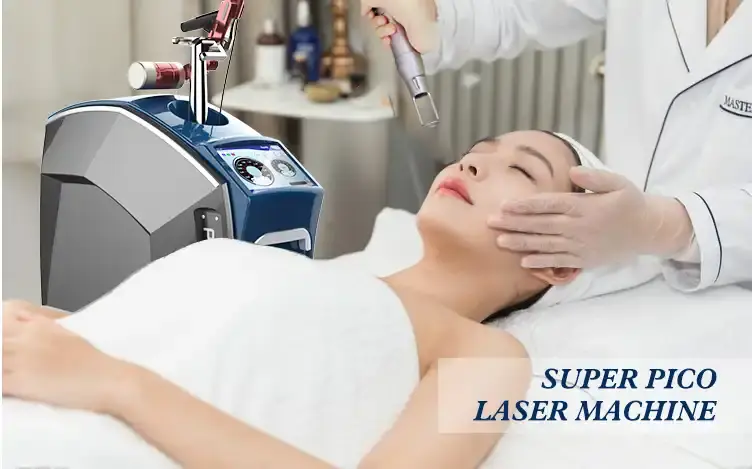
Q-Switch technology's safety record gives practitioners and patients confidence in treatment outcomes. Devices used according to manufacturer specifications and patient selection criteria have very low adverse event rates. Mild erythema, edema, and localized bleeding heal within hours to days, while scarring or lasting pigmentary alterations occur in less than 2% of correctly executed treatments.
Modern device innovation has greatly enhanced Q-Switch patient comfort. Modern systems with optimised pulse delivery and integrated cooling mechanisms reduce the snapping feeling of the photoacoustic effect to levels most patients can tolerate without anesthesia. For sensitive locations or concerned individuals, topical numbing creams eliminate injection-related pain and recovery delays caused by local anesthetic infiltration.
Procurement Considerations for B2B Buyers
Essential Technical Specifications
Technical elements that affect clinical performance and operational flexibility must be carefully assessed when evaluating Q-Switch laser equipment. Professional systems often have adjustable energy output capacity up to 2000mj/cm² to handle varying ink densities and treatment depths. Higher maximal energy levels provide practitioners with more therapeutic discretion, but most common operations use moderate energy settings to balance efficacy and patient comfort.
Your system can handle certain tattoo colors depending on wavelength. Dual-wavelength systems with 1064nm and 532nm outputs cover most clinical circumstances, whereas tri-wavelength platforms with 755nm enable green and blue pigment therapy. Larger spots cover vast tattoos quickly, while tiny spots allow accuracy for face treatments and intricate work. Advanced systems' 6mm spot diameter is versatile for clinical applications.
Supplier Selection and Certification Verification
Working with credible manufacturers with proven quality management systems and regulatory compliance history protects your investment and assures support. ISO13485-certified manufacturers undergo independent third-party audits to ensure consistent production procedures and component quality control. CE marking verifies European regulatory conformity, whereas FDA registration verifies safety and efficacy for U.S. products.
Beyond certificates, consider the manufacturer's history and market presence for company stability and technical knowledge. Companies like Xi'an Taibo Laser Beauty have 15+ years of experience and engineering knowledge that informs product improvement and customer assistance. Ask customers with comparable practices for references to evaluate performance, dependability, and manufacturer technical support. Factory visits offer direct inspection of industrial processes, quality control, and organizational capacities before large equipment purchases.
Future Outlook: Innovations and Trends in Q-Switch Laser Technology
Emerging Technical Enhancements
Q-Switch laser technology in q switch tattoo removal machines improves therapeutic results and operational efficiency through incremental advances. Modern systems use advanced energy modulation algorithms to tailor pulse patterns depending on skin type and treatment parameters, decreasing operator reliance and enhancing treatment uniformity between practitioners. Contact cooling handpieces and integrated air supply systems improve patient comfort and speed clearance with higher-energy treatments.
AI/ML integration is a new laser aesthetics frontier. Current prototype systems use image recognition algorithms to assess tattoo features and offer improved treatment parameters, possibly lowering the skill barrier for successful treatments. Real-time skin temperature monitoring with automated energy adjustment prevents heat buildup during harsh treatment procedures, improving clinical safety.
Market Growth and Regulatory Evolution
As tattoo incidence rises across demographics and cosmetic techniques become more accepted, tattoo removal services are in demand worldwide. By 2027, aging millennials will consume $4.8 billion in tattoo removal treatments, according to industry analysts. The steady demand increase supports further investment in Q-Switch technology platforms that give proven results at affordable prices for mid-market aesthetic practices.
Cosmetic laser device regulations are tightening safety and effectiveness standards. Cosmetic laser devices must now have more clinical evidence and post-market surveillance from the FDA. Procurement managers can expect future equipment acquisitions to need additional regulatory documentation, making collaborations with established manufacturers with excellent compliance histories increasingly important for risk reduction.
Conclusion
Q-Switch lasers are the gold standard for tattoo removal due to their clinical effectiveness, safety, and economic benefit. The technology's multi-decade track record shows consistent results across varied patient demographics and tattoo kinds, while recent technical advancements improve performance and user experience. Q-Switch systems' low acquisition costs, sustainable treatment pricing, and high patient satisfaction metrics that promote referral growth provide instant commercial benefit to procurement managers considering laser equipment purchases. The technology's established position, extensive clinical database, and continual innovation assure relevance in shifting aesthetic markets. Strategic equipment choices balance operational needs with long-term business goals, positioning aesthetic practices for development and competitive advantage.
FAQ
1. What advantages do Q-Switch lasers offer for treating multi-colored tattoos?
Q-Switch devices with several wavelengths selectively target chromophores to cover all tattoo pigments. The 1064nm wavelength penetrates deeply to disintegrate black and dark blue inks, whereas 532nm targets superficial cutaneous red, orange, and yellow pigments. The addition of 755nm to tri-wavelength platforms helps cure green and sky-blue inks that resist conventional wavelengths. This multi-wavelength adaptability allows tattoo clearing on a single device platform, reducing the need for numerous laser systems and optimizing equipment use across varied patient presentations.
2. How frequently do Q-Switch devices require maintenance, and what are typical service costs?
Monthly cooling circuit distilled water changes, quarterly optical component inspections, and flashlamp shot counts to plan replacements are routine maintenance for excellent Q-Switch systems. It costs $800 to $1,500 to replace a flashlamp every 500,000 to 1,000,000 pulses, depending on brand and specs. Annual preventive maintenance by skilled specialists costs $1,200–$2,000 and includes system testing, calibration verification, and component inspection. Proper maintenance practices increase equipment lifespan to 10-15 years and preserve clinical effectiveness, conserving your capital investment with predictable operational expenses and low downtime.
3. Can Q-Switch lasers safely treat all skin types without hyperpigmentation risks?
When wavelengths and energy parameters are chosen, modern Q-Switch technology is safe for Fitzpatrick skin types I-VI. The 1064nm wavelength targets dermal ink particles while minimizing epidermal melanin absorption, making it ideal for darker skin types with post-inflammatory hyperpigmentation. The first few treatments use conservative energy settings to monitor patient reactions, then gradually increase energy as tolerance is developed. Q-Switch is suitable for varied patient populations since effective patient education about sun avoidance and post-treatment regimens minimizes pigmentary complication chances to less than 2%.
Partner with TB for Industry-Leading Tattoo Removal Solutions
Xi'an Taibo Laser Beauty offers excellent value to procurement managers seeking reputable q switch tattoo removal machine suppliers. Our ISO13485 and CE-certified production facility combines 15 years of laser technical experience with complete quality control procedures. The Picotech Q-Switch platform produces 2000mj/cm² energy output at 755nm, 1064nm, and 532nm wavelengths, with twin cooling systems for reliable performance in high-volume clinical settings. Our multilingual support staff offers low factory-direct pricing, configurable OEM/ODM services, full technical training, and dedicated after-sales support for B2B customers. Contact susan@taibobeauty.com to discuss volume pricing for q switch tattoo removal machines for sale, technical specifications, and a consultation with our procurement specialists, who understand the needs of North American spas, dermatology clinics, and aesthetic distributors.
References
1. Anderson, R.R., & Parrish, J.A. (1983). Selective photothermolysis: Precise microsurgery by selective absorption of pulsed radiation. Science, 220(4596), 524-527.
2. Bernstein, E.F. (2007). Laser treatment of tattoos. Clinics in Dermatology, 25(4), 397-405.
3. Kirby, W., Desai, A., Desai, T., Kartono, F., & Geeta, P. (2013). The Kirby-Desai Scale: A proposed scale to assess tattoo-removal treatments. Journal of Clinical and Aesthetic Dermatology, 6(7), 32-37.
4. Ross, V., Naseef, G., Lin, G., Kelly, M., Michaud, N., Flotte, T.J., Raythen, J., & Anderson, R.R. (1998). Comparison of responses of tattoos to picosecond and nanosecond Q-switched neodymium: YAG lasers. Archives of Dermatology, 134(2), 167-171.
5. Sardana, K., Ranjan, R., & Ghunawat, S. (2015). Optimising laser tattoo removal. Journal of Cutaneous and Aesthetic Surgery, 8(1), 16-24.
6. Wenzel, S.M., Parikh, R., & Stephens, R. (2019). Clinical outcomes and patient satisfaction following Q-switched Nd:YAG laser tattoo removal: A retrospective analysis of 1,000 consecutive treatments. Lasers in Surgery and Medicine, 51(5), 389-396.





YOU MAY LIKE