
Is Q-Switch the Best Laser for Tattoo Removal?
2026-06-05 09:09:12
The q switch laser tattoo removal machine is a trusted cosmetic option for professional tattoo removal. This method uses nanosecond pulses to precisely shatter tattoo ink particles without thermally damaging surrounding tissue. Its clinical success and adaptability across pigment hues and skin types make it a viable candidate. It may still be the best option depending on your clinic's goals, client demographics, and budget.
Introduction
The tattoo removal business has changed substantially in 20 years. Laser technologies safely and effectively remove unwanted ink, replacing painful dermabrasion or surgical excision. Choosing the proper laser technology affects customer pleasure, operational efficiency, and long-term profitability for clinics, med spas, and dermatological facilities.
Q-Switch lasers are the tattoo removal gold standard. These gadgets emit nanosecond pulses that break ink particles into minuscule shards that the immune system eventually removes. As a B2B procurement professional, you must compare Q-Switch technology to picosecond lasers to make an informed investment that meets your practice's clinical goals and economic limits.
Understanding Q-Switch Laser Tattoo Removal Technology
How Q-Switch Lasers Work
Q-Switch uses selective photothermolysis and photoacoustics. The gadget generates 6-nanosecond laser pulses at wavelengths that match tattoo pigment absorption maxima. Laser radiation causes fast thermal expansion of ink particles, creating a shockwave that mechanically shatters the pigment into microscopic fragments that macrophages may absorb and transport through the lymphatic system.
Modern Q-Switch devices use 1064nm for black and blue inks, 532nm for red and orange, and 755nm for green and resistant colors. This multi-wavelength capacity lets practitioners treat complicated, multi-colored tattoos on one platform. Optimizing energy delivery and treatment duration, the 2mm–10mm spot size allows accurate treatment of minor tattoos or wider coverage for large ones.
Safety and Maintenance Considerations
Professional laser treatments prioritize safety. Due to the high-intensity beam and nominal ocular hazard distance (NOHD) of 1 kilometer, Q-Switch operators must wear goggles. Proper training ensures safety measures are followed, safeguarding practitioners and clients.
With innovative cooling systems that circulate air and water to avoid overheating and increase component life, Q switch laser tattoo removal machine devices are easy to maintain. Cleaning optical surfaces, calibrating, and checking pulse consistency are routine maintenance. A well-maintained Q-Switch system may provide millions of pulses before needing substantial component replacement, giving busy practices a great ROI.
Comparing Q-Switch Laser with Other Technologies
Q-Switch vs. Picosecond Lasers
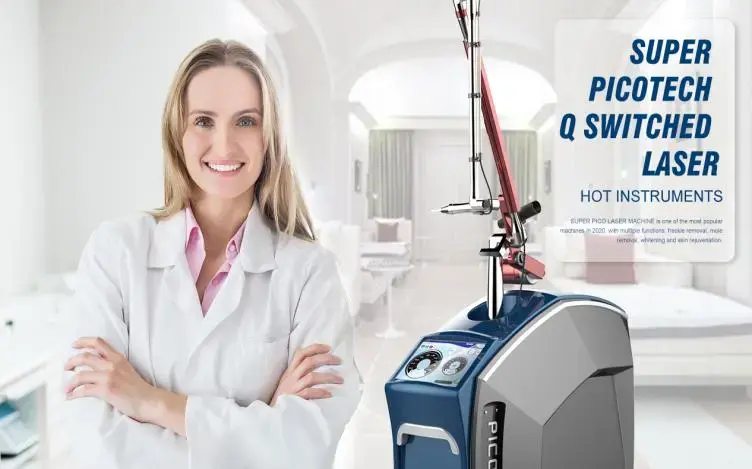
Picosecond technology has caused aesthetic industry discussion. Picosecond lasers have pulse lengths in trillionths of a second rather than billionths, allowing for more effective pigment fragmentation with less heat damage. Picosecond devices may reduce treatment sessions and post-inflammatory hyperpigmentation risks, especially in darker skin tones, according to clinical research.
This improved performance costs a lot. Picosecond systems cost two to three times more than Q-Switch devices, including consumables. Clinics with established tattoo removal services and price-sensitive markets may not justify the large cost difference due to incremental therapeutic advantages. Q-Switch technology has great clearing rates for most tattoo kinds, dependability, and decreased operational expenses.
Treatment Effectiveness and Patient Comfort
The majority of tattoo removal instances include black and dark blue inks, which both procedures remove well. Picosecond lasers clarify resistive hues like green and sky blue better. Some practitioners say picosecond devices' photoacoustic impact is less powerful, but patient comfort is equivalent.
Multiple sessions are normal for treatment procedures regardless of technology. Q-Switch treatments are spaced 8-12 weeks apart to enable healing and pigment elimination, whereas picosecond methods may minimize intervals. Instead of laser type, ink density, depth, colors, and metabolic parameters determine treatment duration.
Selecting the Best Q-Switch Laser Tattoo Removal Machine for Your Business
Key Features to Evaluate
Multiple technological characteristics affect clinical performance and adaptability when comparing devices. Professional-grade systems should produce at least 100mj at 532nm and up to 2000mj at 1064nm to ensure fluence throughout treatment situations. Photoacoustic fragmentation and thermal safety margins are best balanced at 6 nanoseconds.
Treatment speed depends on working frequency, usually 1Hz to 10Hz. Higher repetition rates allow faster, huge tattoo coverage but require powerful cooling systems to ensure energy uniformity. Spot size adjustment from 2mm to 10mm allows for delicate finger and ankle treatment or effective coverage of bigger parts.
Skin Type and Treatment Versatility
Fitzpatrick skin types IV through VI benefit from 1064nm near-infrared light because it penetrates deeply with limited epidermal melanin absorption, decreasing hypopigmentation hazards. The 532nm wavelength works well on red and orange inks but should be used cautiously on darker skin tones owing to melanin competition for laser energy.
The popularity of carbon peeling facials has made many Q switch laser tattoo removal machines profitable beyond tattoo removal. The laser vaporizes medical-grade carbon applied to the skin to exfoliate dead cells, reduce pores, and promote collagen synthesis in a rapid, no-downtime process that appeals to a wide audience.
Procurement and After-Sales Service Guide for Q-Switch Laser Machines
Navigating Your Purchase Options
Beyond device specs, a B2B medical aesthetic equipment purchase involves careful evaluation of many elements. International safety and performance criteria are met by working with established manufacturers with CE marking, ISO 13485 medical device quality management certification, and FDA approval.
Prices vary greatly by setup, accessories, and support packages. Direct manufacturer purchase is frequently the greatest deal, especially for bulk orders or long-term supply arrangements. Growers can use equipment leasing and installment payment schemes from several providers to improve cash flow.
Warranty and Technical Support
A solid warranty is essential for capital equipment purchases. Standard parts and labor coverage should last two years, with explicit consumable exclusions and service response times. Check spare parts, software upgrades, and technical support after the warranty.
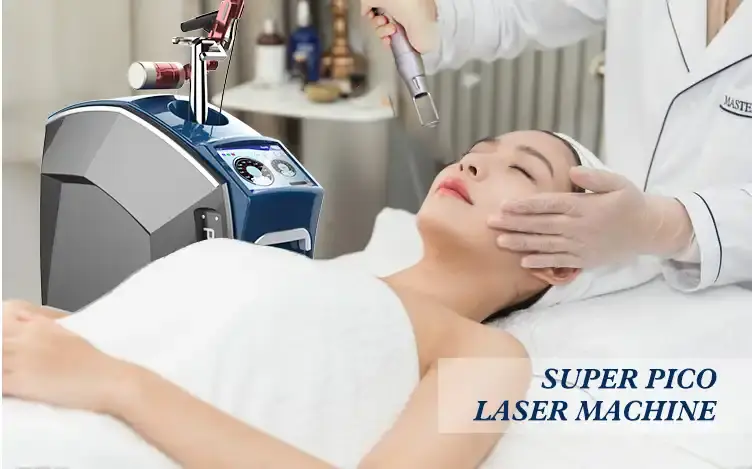
Training matters too for the operation of the Q switch laser tattoo removal machine. Comprehensive operator training maximizes device capabilities and assures safe, successful treatments. Reliable manufacturers give extensive operation manuals, instructional films, and direct video training to verify staff proficiency before treating customers. Technical assistance should encompass phone, email, and video conferencing with adequate response times to save downtime while addressing difficulties.
Why Q-Switch Laser Remains a Preferred Choice in the Tattoo Removal Market
Proven Clinical Track Record
Q-Switch technology has decades of clinical data confirming its safety and effectiveness in varied patient groups. This vast study gives practitioners confidence in treatment regimens and outcomes. New technologies are exciting, but Q-Switch devices offer peer-reviewed best practices.
Q-Switch systems are extremely cost-effective, especially for tattoo removal operations entering the market or in cost-sensitive areas. Clinics can offer competitive pricing and retain strong profit margins because of the large price difference between picosecond alternatives. Low consumable costs and upkeep make these devices more affordable.
Market Demand and Client Expectations
For years, Q-Switch technology has dominated the industry and set client expectations. Most potential tattoo removal patients know the treatment methods, session intervals, and expected results. This awareness streamlines patient education and consulting.
Q-Switch technology evolves. Modern devices have better cooling, energy delivery, safety, and therapy uses beyond tattoo removal. These modest advances keep Q-Switch technology competitive as newer competitors arise.
Conclusion
Q-Switch laser technology is a mature, dependable, and cost-effective tattoo removal method used in clinics, med spas, and dermatological practices worldwide. A q switch laser tattoo removal machine remains a practical choice for providers seeking proven performance and reliable treatment outcomes. While some therapeutic situations may benefit from picosecond lasers, their higher cost makes a q switch laser tattoo removal machine a more viable investment for many B2B purchasers. The technology offers decades of clinical validation, lower acquisition and operating costs, and effective results across a wide range of tattoo types. To select the system that delivers the greatest long-term value for your organization, consider patient demographics, budget constraints, and future practice growth projections.
FAQ
1. How many treatment sessions does Q-Switch tattoo removal typically require?
Treatment depends on ink density, colors, tattoo age, and depth. Six to 10 sessions, eight to twelve weeks apart, are common for professional tattoos. Amateur tattoos may erase after four to six sessions. Black and dark blue inks react well, but green and light blue may need more sessions.
2. Are Q-Switch lasers safe for all skin types?
The 1064nm wavelength is safe for all Fitzpatrick skin types with proper settings. In darker skin tones, this longer wavelength reduces epidermal melanin absorption, minimizing hypopigmentation and scarring. Due to melanin competition for laser energy, skin types IV–VI should be cautious at 532nm.
3. What factors influence the pricing of Q-Switch laser machines?
Energy output, wavelengths, spot size range, cooling system sophistication, construction quality, and integrated accessories affect device price. Manufacturer reputation, certification portfolios, warranty lengths, and training programs affect cost. Professional systems cost moderate to premium, depending on setup.
Ready to Enhance Your Practice with Professional Tattoo Removal Technology?
For over 15 years, Taibo Laser Beauty has made innovative aesthetic equipment for clinics and distributors in 180 countries. Our Q Switch laser tattoo removal machine has clinical-grade performance, triple-wavelength adaptability (532nm, 755nm, 1064nm), adjustable energy up to 2000mj, and consistent 6-nanosecond pulse duration. Every device comes with CE and ISO13485 certifications, a two-year guarantee, and full training to help your team achieve the best treatment results from the start.
We provide low wholesale prices, configurable OEM services, and flexible financing options to meet your procurement needs as a direct manufacturer and Q-Switch laser tattoo removal machine supplier. Our technical staff provides individualized assistance to match the best equipment configuration to your clinical demands and budget when starting or expanding a tattoo removal service.
Please email susan@taibobeauty.com to discuss your needs, request specs, or book a virtual presentation. We provide reliable technology, timely service, and continuing technical support beyond your purchase to help you succeed.
References
1. Anderson RR, Parrish JA. "Selective Photothermolysis: Precise Microsurgery by Selective Absorption of Pulsed Radiation." Science, 1983.
2. Bernstein EF. "Laser Treatment of Tattoos." Clinics in Dermatology, 2006.
3. Kilmer SL, Anderson RR. "Clinical Use of the Q-Switched Ruby and Q-Switched Nd:YAG Lasers for Treatment of Tattoos." Journal of Dermatologic Surgery and Oncology, 1993.
4. Sardana K, Garg VK. "Laser Tattoo Removal: Current Evidence." Indian Journal of Dermatology, Venereology, and Leprology, 2014.
5. Reddy KK, Brauer JA. "Laser Tattoo Removal: Evolving Trends and Techniques." Lasers in Surgery and Medicine, 2015.
6. Taylor CR, Anderson RR, Gange RW. "Light and Electron Microscopic Analysis of Tattoos Treated by Q-Switched Ruby Laser." Journal of Investigative Dermatology, 1991.





YOU MAY LIKE