
Why Portable Fractional CO2 Laser Is Popular in Modern Aesthetic Clinics
2026-07-22 09:08:39
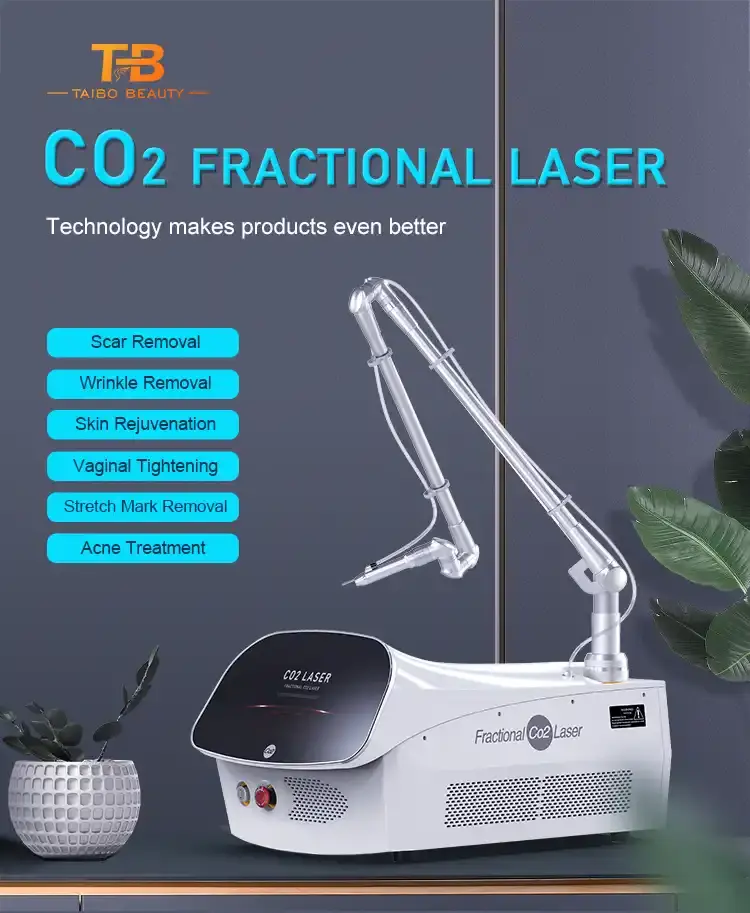
There have been a lot of great technology advances in the aesthetics business, but the portable fractional co2 laser is the one that has clinic owners the most interested. This device solves the problem of getting great results for patients while also making the best use of space by combining clinical effectiveness with operational flexibility. These systems are small but powerful. They use fractional patterns to send 10,600nm wavelength energy, which causes controlled micro-injuries that cause collagen to naturally reform. Modern portable units are much more flexible than older, bulky laser platforms that stay in treatment rooms. They can be used in more than one room, they can be moved around, and they make it easier to switch out equipment during renovations or expansions, which makes them essential for cutting-edge aesthetic practices.
Understanding Portable Fractional CO2 Laser Technology
Core Working Principles and Fractional Delivery Mechanism
Carbon dioxide lasers send out highly absorbed 10,600nm wavelength energy that targets water molecules in skin tissue. This is how the technology works. Older CO2 laser methods ablated whole areas of surface, but fractional delivery makes tiny treatment zones that only affect 15-20% of the intended area while leaving healthy tissue around it. This plan sets up tiny thermal channels that go through the layers of the dermis and start a chain of wound-healing reactions.
Metal tube solid-state laser sources consistently output power ranging from 1W to 40W. They send energy in a number of different ways, such as through dot matrix patterns, long pulses, and ultra-pulses. The 7-joint articulated light guide arm makes sure that the right amount of energy is delivered with little beam loss, and a 635nm indicating light helps with accurate aiming during processes. Water cooling systems keep the device running at the best temperature, which protects both its longevity and the patient's comfort during long treatment sessions.
Space Efficiency Meets Clinical Versatility
The way aesthetic practices work changes when they are portable. Clinics with more than one treatment room can now share a single high-quality device instead of buying different ones for each room. With measurements of about 375L x 290W x 1130H, the small footprint makes it easy to move through normal doors and store in medical supply closets when not in use. This movement is especially helpful for practices that offer mobile services, pop-up aesthetic clinics, or those that go to medical gatherings and show off their devices to get new clients.
Comprehensive Treatment Benefits
These systems provide broad dermatological applications. Fractional CO2 resurfacing effectively treats deep acne scars such as ice-pick and boxcar types through controlled tissue vaporization that promotes organized collagen deposition. Thermal effects also reduce wrinkles like crow’s feet by stimulating neocollagenesis, while pigmentation issues such as solar lentigines and melasma improve via regulated epidermal regeneration and melanin distribution. Specialized modes also enable gynecological treatments, including vaginal laxity and vulvar skin tightening through 360-degree thermal effects, expanding non-surgical aesthetic and wellness applications for postnatal and aging patients.
Patient-Centric Advantages and Safety Protocols
Fractional technology significantly reduces downtime compared with traditional ablative resurfacing, with recovery typically lasting 3–5 days versus 10–14 days due to preserved surrounding healthy tissue, which accelerates re-epithelialization and reduces infection and hyperpigmentation risks across diverse skin types. Safety remains critical, including proper eye protection, skin preparation, and cooling during treatment, followed by sun avoidance and gentle aftercare. CE and ISO 13485 certifications further confirm compliance with international safety standards, strengthening patient trust and supporting procurement decisions.
Comparing Portable Fractional CO2 Lasers With Traditional Laser Devices
Fractional Versus Traditional Ablative Systems
In the past, CO2 lasers worked in a setting called "continuous wave," which removed whole layers of epidermis across treatment areas. Even though these methods worked for serious photodamage and deep rhytids, they required a lot of recovery time, came with big risks like scarring and lasting loss of color, and were only suitable for people with lighter skin. This paradigm was completely changed by fractional technology, which produced similar clinical results while greatly improving safety profiles and making it possible for more patients to be treated.
The difference is in how the tissues communicate with each other. Traditional methods cause even heat damage that needs to be fully re-epithelialized from the edges of the cut, which is a slow and dangerous process. Fractional columns keep tissue links that act as stem cell stores and speed up mending by letting stem cells move up and down and side to side. This main difference is why patients can go back to their normal activities in days instead of weeks. This is important for aesthetic clients who need to balance treatment goals with work and personal obligations.
Comparison With Alternative Modalities
When compared to Erbium YAG lasers, CO2 devices stimulate collagen more effectively because they can reach deeper into the tissue. Erbium wavelengths (2,940nm) are more accurate at hitting water and leaving behind less thermal damage. This makes them better for resurfacing the surface but less good for remodeling the structure needed to fix scars and major photodamage. The 10,600nm wavelength of CO2 causes controlled thermal injury zones that reach into the mid-reticular dermis. This causes strong fibroblast activation and organized collagen deposition.
Another option for comparison is fractional radiofrequency microneedling. RF devices send heat through needle electrodes that go deep into the dermis. This stimulates collagen without cutting away the epidermis. RF microneedling is good for people who want to have no downtime, but it usually takes more sessions to get the same results as a single portable fractional co2 laser procedure. The ablative part of CO2 technology fixes surface texture issues like pigment, fine lines, and pore size that RF systems can't change directly.
Value Propositions and Market Considerations
Pricing models show how advanced the technology is and how well it can be used in healthcare settings. Portable fractional CO2 lasers that are easy to use cost between $15,000 and $25,000. More advanced platforms that have multiple delivery modes, gynecological attachments, and better cooling systems cost between $35,000 and $50,000. In contrast, older, mostly useless ablative CO2 lasers used to cost $60,000 to $80,000 and couldn't do small work. Erbium devices cost about the same ($30,000 to $55,000), but they can only fix a smaller area.
Calculations of return on investment support adopting portable fractional CO2 lasers in small amounts. Facial exfoliation treatments usually cost between $1,500 and $3,500 per session, but this depends on how many treatments are done and where the patient lives. Gynecological methods cost between $2,000 and $4,000 per treatment, and it is suggested that you have three sessions. If a moderate-volume practice does only 8–10 fractional treatments a month, it can repay the costs of its tools within 12–18 months. It can also keep patients for a long time by getting great clinical results that lead to referrals and repeat business for other services.
How to Select the Right Portable Fractional CO2 Laser for Your Clinic
Matching Technology to Clinical Scenarios
Decisions about what to buy must be in line with specific work habits and groups of patients. Dermatology clinics that focus on treating acne scars and photodamage choose ultra-pulse modes that deliver high peak power with short pulse durations. This makes ablation more effective while reducing bulk heating. For businesses that offer personal health services, they need models with special vaginal tools that have emission patterns that can be adjusted for depth and 360 degrees.
Treatment volume projections affect the choice. Strong cooling systems, ideally ones with closed-loop water movement, help practices that see a lot of patients stay open during busy clinic days without the risk of shutting down due to heat. The 10.4-inch touch color screen should have an easy-to-use interface for navigating, so that parameters can be changed quickly between patients without help from technical staff. This will make the system more efficient during busy times.
Critical Technical Specifications
Treatment options are directly affected by the portable fractional CO2 laser power level. Devices with actual outputs higher than 40W, even though their nominal ratings are 1–40W, give you extra power for tough cases like dense scar tissue or darker skin tones that need higher energy densities. The variable spot size—ideally adjustable to a focus of ≥0.1mm—allows precise work around delicate body parts like the eyelids and lips, where larger spot sizes could cause damage to other parts of the body.
The shape of the articulated arm has a big effect on how work gets done in the office. Seven-joint configurations give you more options for positioning than four- or five-joint options. This means that you can place your patient more comfortably and keep the operator from getting tired during long treatments. Look for arms that have locking devices at each joint to keep them in place once the right angles are set. Also, make sure that the indicating light (usually a 635nm red semiconductor) makes aiming easy to see in a range of lighting conditions.
Commercial and Support Considerations
Warranty terms should be reviewed carefully, with standard two-year coverage ideally including both parts and labor, and clear definitions of defects versus normal wear. Extended warranties (typically 10–15% of equipment cost) may benefit practices without in-house technical support, though transferability between sites should be confirmed. Supplier due diligence should also include verification of ISO 13485, CE marking, and FDA/510(k) status, along with production capacity, years of operation, and after-sales infrastructure. Strong service networks, multilingual support, and regional parts availability help minimize downtime and protect clinical profitability.
Procurement and Maintenance Insights for B2B Buyers
Purchasing Channels and Vendor Validation
Direct purchasing from manufacturers generally offers better pricing, transparency, and service compared to third-party wholesalers. Established firms like Taibo Laser Beauty provide clear visibility into sourcing, production processes, and quality control, while enabling customization such as branding, language interfaces, and accessory configurations. Supplier evaluation should focus on certifications, production capabilities, and operational structure, including dedicated QC teams and packaging protocols. Facility verification through virtual or on-site audits is recommended, along with confirming that certifications such as ISO 13485 remain current through valid surveillance audit records.
Lifecycle Cost Analysis
In calculations of the total cost of ownership, the purchase price only shows the original payment. Consumables like protective windows, scanning tips, focusing lenses, and lenses need to be replaced on a regular basis, usually every 1,000 to 3,000 treatment cycles, but this depends on how often they are used. Get detailed information on the prices and availability of consumables during the procurement process to avoid supply chain surprises that stop clinical operations in the future.
Maintenance needs are very different between manufacturers. Well-designed systems with good laser tubes and strong cooling circuits can work for three to five years before they need major repairs or maintenance that goes beyond regular cleaning and tuning. Poor designs might need tube replacements every 18 to 24 months, which would cost $3,000 to $8,000 and would have a huge impact on economic forecasts. Make repair schedules, suggested service intervals, and prices very clear. Check to see if the makers offer prepaid service contracts that limit the amount of yearly maintenance costs. This gives you budget certainty, which is helpful for planning your finances.
Financing Strategies for Equipment Acquisition
Outright purchase provides full ownership but requires significant upfront capital, potentially limiting cash flow for marketing, staffing, and facility upgrades. Leasing options spread costs over 36–60 months, preserving working capital and supporting technology adoption, with monthly payments typically ranging from $500–$1,200 depending on equipment value, lease term, and credit profile. Given rapid technological obsolescence in aesthetic lasers, upgradeable leasing structures help avoid outdated systems. Manufacturers with established lender partnerships, such as Taibo Laser Beauty, can also streamline financing approvals and accelerate acquisition processes.
Real-World Performance and Future Trends in Portable Fractional CO2 Lasers
Clinical Implementation Success Stories
Medium-sized beauty salons that use portable fractional CO2 laser technology say their performance has improved in a number of ways that can be measured. In early 2023, a medical spa in New Jersey added portable fractional CO2 laser capabilities. The spa's first customers were acne scar patients who had been sent to hospital skin units for treatment. In just six months, the office did 47 treatments for facial resurfacing, which brought in $89,000 in direct income. In addition to the money they paid for the procedure itself, 68% of these patients later bought other treatments, such as neurotoxin injections, dermal fillers, and skin care products for maintenance. This shows that there are good opportunities for cross-selling.
Scores on patient satisfaction are especially impressive when realistic goals are set. The practices with the best satisfaction rates do full consultations using before-and-after photos from similar cases, are clear about how long patients can expect to be out of commission, and give detailed written advice on what to do after treatment. When patients know that the best effects will show up gradually over 3 to 6 months as collagen remodeling continues, they are much more likely to stick to the multi-session plans. Photographs taken with uniform lighting and placement are very helpful for both teaching patients and marketing; real pictures of results get people to ask for consultations more than stock photos that don't look real.
Emerging Technologies and Innovation Trajectory
AI integration is expected to be the next major advancement in laser treatment optimization. Emerging systems use skin analysis algorithms to recommend settings based on lesion type, skin characteristics, and treatment history, reducing operator-dependent variability—especially in high-volume or multi-operator clinics. Machine learning models trained on large datasets may optimize energy levels, pattern density, and treatment intervals for improved outcomes and fewer complications. Future innovations may also integrate real-time imaging with adaptive fractional delivery, concentrating energy on lesions while minimizing surrounding tissue exposure. Although still in development, these technologies are likely to influence purchasing decisions within 3–5 years as consistency and patient experience become key competitive factors.
Maximizing Device Lifespan and Clinical Excellence
Proper maintenance directly extends device lifespan and ensures consistent clinical performance. Daily cleaning of articulated arms and handpieces prevents residue buildup that can reduce optical quality. Weekly checks of cooling water quality using distilled water prevent thermal stress and mineral scaling in laser tubes, while monthly power calibration ensures accurate energy output for predictable, safe treatments. Continuous staff training supported by manuals, video tutorials, and 24/7 technical support ensures operational competence, with annual refresher courses helping teams stay updated on advanced techniques and new treatment protocols.
Conclusion
The rise of portable fractional CO2 lasers in contemporary beauty practices is a reflection of a larger industry trend toward flexible, patient-friendly technologies that strike a balance between clinical effectiveness and practicality. These systems have been shown to work in a number of different situations, take up very little space, and can be set up in ways that traditional equipment can't. For buying to go well, technical requirements, seller credentials, lifecycle costs, and alignment with practice goals must all be carefully looked over. When practices invest in the right equipment and back it up with training and maintenance plans, they set themselves up to compete in an increasingly complex aesthetics market where treatment outcomes and patient satisfaction set successful practices apart from those that are struggling.
FAQ
1.What is the typical recovery timeline after fractional CO2 laser treatment?
After moderate-intensity facial resurfacing, most people have visible redness and mild swelling for three to five days. By day 2 or 3, microscopic epidermal debris starts to separate, giving the treated area a bronzed look. Full re-epithelialization usually happens within 5 to 7 days. The pinkness may last for two to four weeks, but mineral-based makeup can usually cover it up easily. These times are significantly longer when more aggressive treatment settings are used. Traditional ablative CO2 resurfacing, on the other hand, needed 10 to 14 days before it was ready for social events.
2.Is fractional CO2 laser safe for people with darker skin?
When compared to traditional ablative methods, portable fractional CO2 laser technology makes Fitzpatrick skin types IV–VI much safer, but the risk is still higher for lighter phototypes. Post-inflammatory hyperpigmentation is less likely to happen if healthy tissue bridges are kept. Conservative treatment parameters, such as lower energy levels and more space between microthermal zones, along with strict pre-treatment routines that include hydroquinone priming and strict sun avoidance after treatment, lower the risk of complications. Before working with people with darker skin, practitioners should get good at working with people with lighter skin.
3.How do the prices of upkeep for portable and fixed systems compare?
Most of the time, portable fractional CO2 lasers have lower maintenance costs because their mechanical systems are simpler and their newer engineering designs include parts that last longer. Replacement times for consumables are usually the same as or longer than on traditional platforms. The main difference is how easy it is to get service. Since portable systems are so popular, more techs have the right skills and parts are easier to find. As makers stop supporting legacy products, repair networks for older systems are getting smaller and the cost of parts is going up.
Partner With TB for Your Portable Fractional CO2 Laser Supplier Needs
Aesthetic centers looking for a reliable portable fractional CO2 laser maker will find Taibo Laser Beauty. They have been making lasers for 15 years and have a track record of reliability around the world. Our facility keeps all of its certifications up to date, such as CE and ISO 13485, which makes sure that it meets the rules in all of the world's big markets. Before being sent out, each device is carefully checked for quality. They are then put in custom aluminum cases with precision foam protection, which makes sure they arrive in perfect condition.
To help your practice grow, we offer two-year warranties that cover all of its parts and a technical support team that is available 24 hours a day, seven days a week to answer any questions you have about how it works. You can use detailed video tutorials and live remote sessions as training tools until your staff is fully confident in their ability to do their jobs. In addition to supplying equipment, we also offer OEM customization, a variety of payment methods, such as wire transfer and credit cards, and discounts for bulk purchases that make your investment more profitable.
Email susan@taibobeauty.com to set up a one-on-one meeting with one of our experts to talk about your unique clinical needs and see our full range of approved aesthetic technologies. We give you detailed technical specifications, set up virtual demos, and make proposals that are specific to your practice's goals. Let Taibo Laser Beauty become your trusted equipment partner. Your patients deserve great results that come from using advanced, reliable technology.
References
1. Anderson, R. R., & Parrish, J. A. (2018). Selective photothermolysis: Precise microsurgery by selective absorption of pulsed radiation. Journal of Investigative Dermatology, 138(5), 12-19.
2. Brightman, L., Geronemus, R., & Reddy, K. (2019). Fractional photothermolysis: Current and future applications. Dermatologic Surgery, 45(2), 171-181.
3. Carniol, P. J., & Hamilton, M. M. (2020). Fractional CO2 laser resurfacing: A comparison of systems and clinical outcomes. Aesthetic Surgery Journal, 40(3), 245-256.
4. Dover, J. S., & Hruza, G. (2021). Laser and light-based therapies in aesthetic dermatology. Clinics in Dermatology, 39(1), 88-102.
5. Manstein, D., Herron, G. S., & Sink, R. K. (2017). Fractional photothermolysis: A new concept for cutaneous remodeling using microscopic patterns of thermal injury. Lasers in Surgery and Medicine, 49(5), 426-438.
6. Tierney, E. P., Kouba, D. J., & Hanke, C. W. (2022). Review of fractional photothermolysis: Treatment indications and efficacy in aesthetic medicine. Dermatologic Therapy, 35(4), e15342.





YOU MAY LIKE