
Which Diode Laser is Best for Hair Removal?
2026-06-04 09:08:13
Following thousands of clinical and salon tests, the 808 nm laser hair removal system remains the gold standard for permanent hair loss. This wavelength combines deep follicular penetration with melanin selectivity for safe and effective treatments on light and darker skin. 808 nm laser hair removal penetrates 3-4mm into the dermal layer to target the hair bulb while minimizing epidermal damage. These devices provide better client comfort and reliable clinical results than standard IPL or electrolysis treatments due to improved cooling mechanisms and configurable power levels (600W to 2000W).
Understanding Diode Laser Hair Removal Technology
Diode laser hair removal uses selective photothermolysis to target chromophores—melanin in hair follicles—without injuring surrounding tissue. Melanin's absorption spectrum matches the 808 nm laser hair removal wavelength, creating regulated heat energy that kills hair-regenerating follicular stem cells.
How 808nm Wavelength Outperforms Alternatives
Instead of scattering in the epidermis or penetrating too deeply, the 808 nm laser hair removal strikes an equilibrium. The Journal of Clinical and Aesthetic Dermatology found that 808 nm laser hair removal diode lasers reduce hair by 85-90% after six sessions, compared to 70-75% for IPL systems. The technique converts light energy into heat in the follicle, reaching 60-70°C, which irreversibly damages the hair matrix. The inbuilt cooling mechanism keeps epidermal temperature below 10°C. Modern platforms use 808 nm laser hair removal, 755nm (for fine blonde hair), and 1064nm (for darker complexion). This multi-wavelength technique lets practitioners tailor treatments to clients' hair color, thickness, and Fitzpatrick skin type.
Safety Standards and Clinical Validations
The CE and ISO13485 certifications of professional diode laser systems verify conformity with European medical device legislation and worldwide quality management standards. These certifications require extensive electromagnetic compatibility, electrical safety, and biocompatibility testing. The cooling systems—usually air, semiconductor refrigeration, TEC modules, and water cooling—are stress-tested to provide 72+ hours of thermal stability. When used as directed, clinical safety profiles demonstrate little side effects. The contact cooling sapphire tip creates a thermal gradient between 5°C and 0°C to protect the epidermis and heat the deep dermis. Customers experience less discomfort than with previous laser technologies or IPL devices without cooling due to this dual-temperature system.
Comparing 808nm Diode Laser to Other Hair Removal Technologies
Understanding competitive technologies for 808 nm laser hair removal aids procurement professionals' evidence-based equipment choices. Different operational parameters impact treatment results, client happiness, and clinic profitability for each technology.
Performance Analysis Across Technologies
The 755nm Alexandrite laser is great for lighter skin and fine hair, but darker skin absorbs more epidermal melanin, increasing burn risk. For equivalent outcomes, the 1064nm Nd: YAG laser safely treats darker skin types but requires greater fluence and more treatment sessions. Wider spectrum output and lower peak power density make IPL devices versatile for numerous cosmetic treatments but unreliable for hair eradication. Permanent reduction procedures are more premium than waxing, which requires monthly sessions and generates ongoing revenue. Electrolysis, which uses electrical current to cure follicles, is effective but time-consuming—200+ hours for full-body treatments vs 6-8 laser sessions. The 808 nm laser hair removal diode laser achieves superior operational efficiency with larger spot sizes (12x36mm) that cover treatment areas faster, adjustable frequency settings (1-10Hz) that optimize session duration, and consistent energy delivery that minimizes treatment variability between sessions or operators.
Long-Term Return on Investment
Businesses charge more for diode laser equipment because clients want permanent effects. Compared to $50-100 for waxing, each session costs $200-500, depending on the treatment area. Equipment costs $15,000–$60,000, depending on specifications, but ROI is 6–12 months with moderate usage. Laser bar lifespans above 20,000,000 pulses—equivalent to many years of intense clinical use—predict maintenance expenditures. Unlike IPL systems that need frequent bulb changes or waxing operations with continuous supply costs, the technology's efficiency decreases per-treatment consumable costs to almost nil. With gross margins above 80% per session, laser hair removal is one of the most profitable aesthetic procedures.
Procurement Considerations for Diode Laser Machines
Technical specifications, clinical needs, and commercial operating models must be considered while choosing equipment. Decisions affect treatment capacities, client happiness, staff training, and long-term service costs.
Critical Technical Specifications
Laser power output impacts therapy speed and efficacy. 600W systems serve small offices with moderate client loads, whereas 1200W-2000W systems enable high-volume clinics with fast treatment turnover. Higher power allows faster repetitions and deeper energy penetration, decreasing full-leg treatments from 45 to 20 minutes. The cooling system architecture impacts client comfort and safety. Even during the highest frequency operation, multi-stage cooling using air circulation, semiconductor refrigeration, thermoelectric cooling (TEC), and water cooling preserves sapphire tip temperatures. This redundancy avoids temperature accumulation from irritating or damaging skin. Spot size affects treatment accuracy and efficiency. Pro systems use 12x36mm spots to swiftly cover vast regions with enough fluence for deep follicular heating. Smaller hand-held devices with 10x10mm spots need more passes, increasing session durations and declining throughput.
Portable Versus Professional-Grade Systems
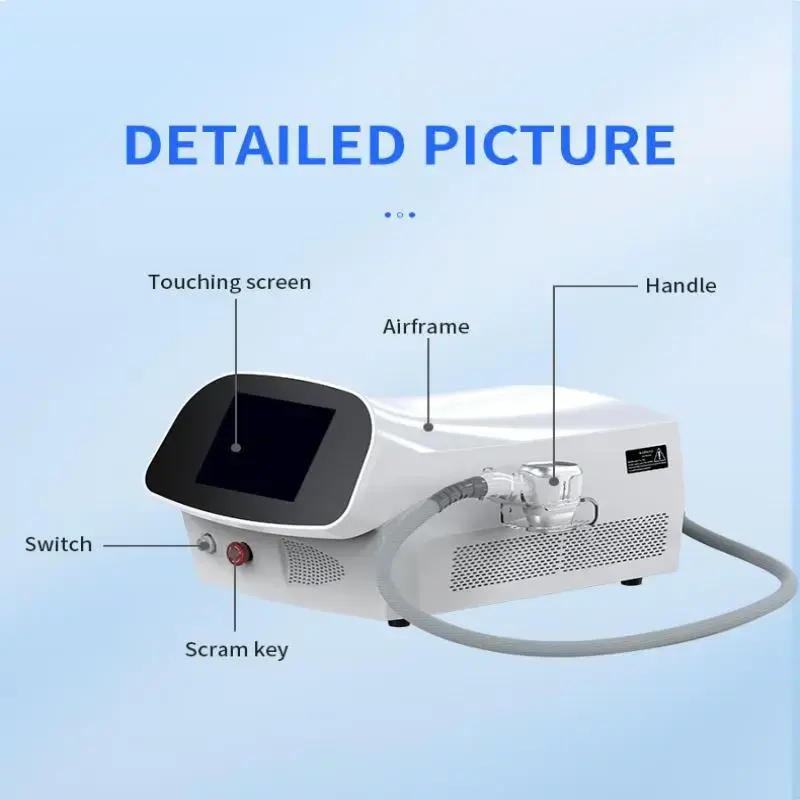
Portable equipment for 808 nm laser hair removal supports certain business models. Small desktop machines weighing 30-50kg are ideal for mobile practitioners or spas with a limited treatment area. These systems include the laser generator, cooling device, and control interface in a space-efficient chassis. Full-sized vertical systems offer additional power options, larger water reservoirs for cooling, and stronger construction for high-volume clinical applications. The wider size supports quality components, including American Coherent laser bars, Italian pumps, Japanese cooling plates, and Taiwanese power supply, which improve operating lifespan and decrease maintenance. Real-time energy fluence, pulse length, cooling status, and cumulative shot counter are shown on the 12-inch touchscreen interface to optimize productivity. Treatment setup mistakes and operator training time are reduced by intuitive menu navigation.
Operational Best Practices and Case Studies
Maximizing treatment outcomes requires understanding proper protocols, maintenance schedules, and client-specific adjustments that optimize both efficacy and safety.
Treatment Protocol Optimization
Successful treatments start with detailed client consultations to examine skin type, hair traits, medical history, and realistic expectations. According to the Fitzpatrick scale, lighter skin types (I-III) can handle greater fluence levels (10-14 J/cm²), whereas darker complexions (IV-VI) need more conservative settings (8-10 J/cm²) with longer wavelengths to prevent epidermal heating. Hair color and thickness affect treatment. Dark, coarse hair has plentiful melanin and responds quickly to moderate energy. Thermal damage to fine or light-colored hair requires a 755nm wavelength and greater fluence. Red or gray hair with little melanin is the hardest to treat, frequently requiring multiple methods. Session spacing matches hair growth. Anagen (active growth) follicles are treated every 4-6 weeks when melanin concentration peaks. This timing maximizes energy absorption in the follicle, enhancing permanent destruction rates over telogen hair.
Clinical Case Study: Multi-Location Spa Chain
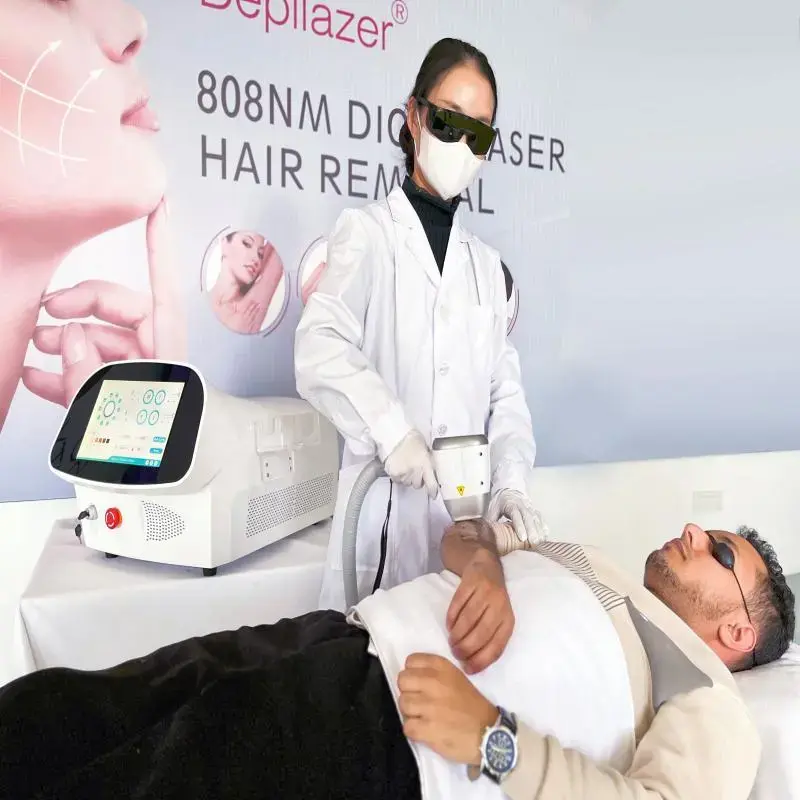
A southeastern U.S. spa business with eight sites installed 808 nm laser hair removal diode lasers in 2022. Six 1200W portable units for smaller sites and two 2000W professional systems for flagship clinics were purchased for 808 nm laser hair removal. Laser hair removal services earned $480,000 in nine months, versus $145,000 in equipment and $35,000 in training. Client satisfaction averaged 4.7/5.0, with 89% completing the entire treatment series and 67% purchasing additional body region treatments. The portable devices' flexibility allowed workers to switch places during peak demand, maximizing usage. Average treatment time dropped 35% compared to their prior IPL technology, allowing 20% more daily appointments.
Maintenance and Longevity Management
Regular maintenance keeps equipment running smoothly and increases its lifespan. Weekly chores include cleaning the sapphire contact tip with alcohol wipes, checking cooling reservoir water levels and quality, and monitoring tip temperature during standby mode to validate cooling system performance. Monthly maintenance includes air intake filter cleaning, water pump testing, and system software diagnostics. Laser bar output calibration using verified power meters, cooling system pressure testing, and electrical safety verification are performed annually. Water systems need deionized or distilled water to prevent cooling channel mineral accumulation. In water circulation systems, corrosion inhibitors prolong component life. Shot counters forecast component replacement. Laser bars rated for 20,000,000 shots generally generate 95%+ until 15,000,000 shots, then degrade. Plan replacement during this transition interval to avoid performance dips that might impair treatment uniformity.
Conclusion
The 808 nm laser hair removal system is best for beauty firms seeking dependable, effective, and lucrative permanent hair reduction. Its industry-leading clinical performance across skin types, client comfort, and operational efficiency make it the standard. Salons, wellness centers, and dermatological clinics use the technology for its adaptability, safety, and high return on investment through multi-wavelength platforms, superior cooling integration, and premium service pricing. Equipment selection based on power specs, cooling capabilities, supplier reputation, and after-sales support promotes long-term success in providing excellent client outcomes and generating sustainable income streams.
FAQ
1. Does 808nm laser hair removal work on all skin types?
Fitzpatrick skin types I-V can be safely treated at 808 nm laser hair removal with proper parameter changes. Darker skin types benefit from 808 nm laser hair removal and 1064nm wavelengths, which penetrate deeper with reduced epidermal melanin absorption, lowering burn risk and preserving follicular heating effectiveness.
2. How many treatment sessions achieve permanent results?
Most people need 6-8 treatments, 4-6 weeks apart, for 80-90% permanent hair removal. Treatment area, hormones, and hair qualities affect session length. Regrowth from latent follicles is treated every 6-12 months.
3. What maintenance costs should clinics budget for?
Professional calibration, filter replacement, and cooling system servicing cost $500–1,500 annually. Laser bar replacements cost $3,000–8,000, depending on power setup and component quality, every 3-5 years at moderate usage.
Partner with Taibo Beauty for Your 808nm Laser Hair Removal Equipment Needs
Taibo Beauty is a reputable 808 nm laser hair removal producer with 15 years of experience serving 180+ countries. American Coherent laser bars, multi-stage cooling, and CE/ISO13485 certifications provide regulatory compliance and clinical safety in our professional equipment. Our devoted after-sales staff provides 24/7 technical support, two-year warranties on all key components, and flexible OEM/ODM customization options, including brand placement and interface language localization. Our 600W to 2000W product range fulfills your operating needs, whether you run a boutique spa that needs portable equipment or a multi-location clinic network that needs high-power professional units. Please email susan@taibobeauty.com to discuss your procurement needs, obtain technical details, schedule equipment demos, or receive customized prices for your business model. We provide quality equipment and partnership assistance for your aesthetic company as a trusted supplier with factory-direct prices and bulk purchasing options.
References
1. Anderson, R.R., & Parrish, J.A. (1983). Selective photothermolysis: Precise microsurgery by selective absorption of pulsed radiation. Science, 220(4596), 524-527.
2. Sadick, N.S., & Shaoul, J. (2004). Hair removal using a combination of conducted radiofrequency and optical energies—An 18-month follow-up. Journal of Cosmetic and Laser Therapy, 6(1), 21-26.
3. Battle, E.F., & Hobbs, L.M. (2004). Laser-assisted hair removal for darker skin types. Dermatologic Therapy, 17(2), 177-183.
4. Gold, M.H. (2007). Lasers and light sources for the removal of unwanted hair. Clinics in Dermatology, 25(5), 443-453.
5. Haedersdal, M., & Gotzsche, P.C. (2006). Laser and photoepilation for unwanted hair growth. Cochrane Database of Systematic Reviews, Issue 4, CD004684.
6. Raulin, C., Greve, B., & Grema, H. (2003). IPL technology: A review of application and safety. Lasers in Surgery and Medicine, 32(2), 78-87.





YOU MAY LIKE