
Where to buy diode laser hair growth machines
2026-07-28 08:58:09
If a business wants to buy diode laser hair growth machines, they should look for certified manufacturers with a history of exporting and clinical-grade equipment. Professional tools that use Low-Level Laser Therapy (LLLT) at a wavelength of 650nm can be bought directly from the maker, from authorised dealers, or from companies that specialise in medical equipment. Companies that have been around for a while, like Xi'an Taibo Laser Beauty Company, offer complete solutions that are CE and ISO13485 certified and come with factory warranties and technical support that is specifically designed for beauty salons, dermatology clinics, and wellness centers.
Understanding Diode Laser Hair Growth Machines
Low-level laser therapy is a big step forward for professional clinics that want to restore hair without surgery. These tools are very different from thermal hair removal lasers in how they work. Instead of using heat to kill hair cells, they use light to wake them up.
The Science Behind 650nm Wavelength Technology
The 650nm red light wavelength goes through the scalp tissue three to five millimetres deep to reach the papilla of the hair shaft, which is where growth starts. This specific wavelength goes straight to the mitochondria in follicle cells, which makes them make more Adenosine Triphosphate (ATP). Hair cells move from the resting Telogen phase to the active Anagen growth phase with the help of metabolic processes that are powered by ATP. Radiant exposures between 0.12 and 0.36 J/cm² temporarily increase blood flow to the scalp by up to 55%. This brings in important nutrients and gets rid of waste products that slow down the hair growth, such as DHT (dihydrotestosterone). Studies have shown that this improved microcirculation makes the conditions perfect for hair shaft repair and thickness improvement. Individual hair width can grow by up to 25%.
Safety Standards and Regulatory Compliance
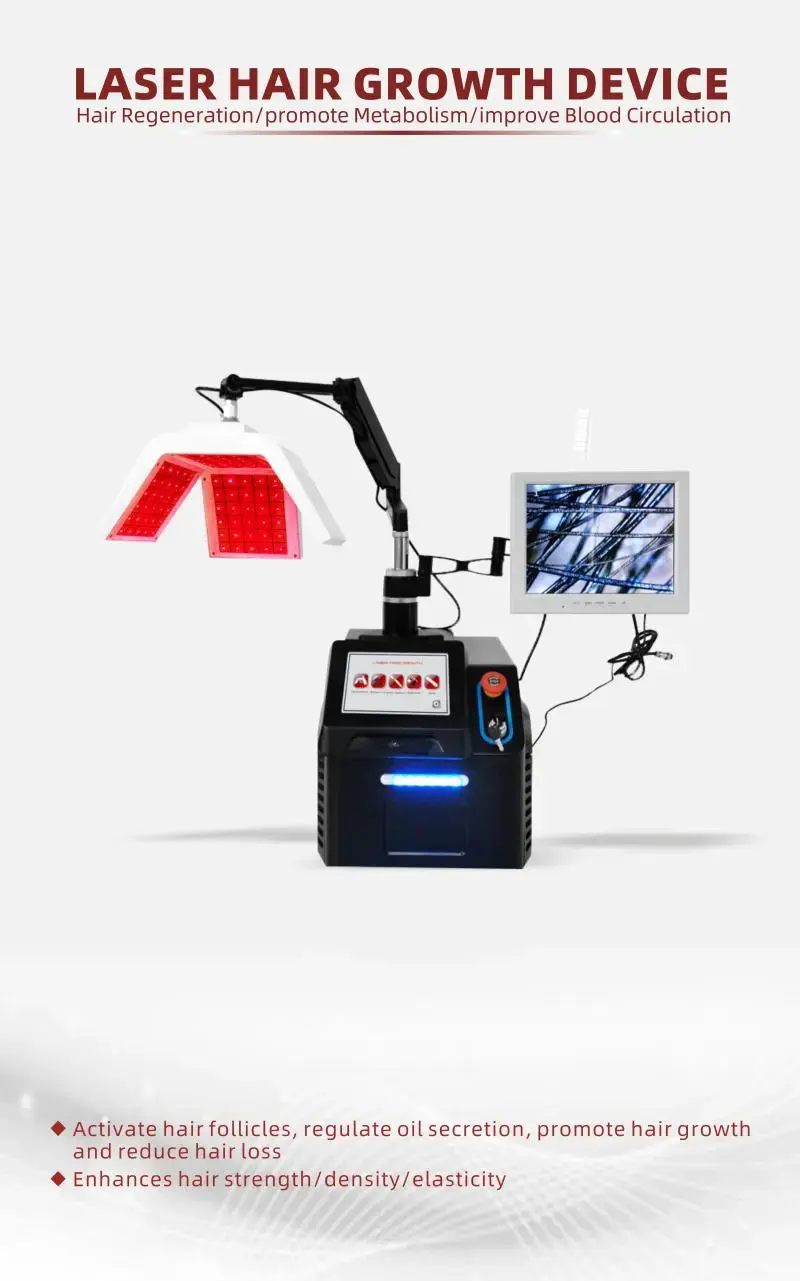
To keep both professionals and customers safe, hair restoration tools must meet strict international safety standards. Laser Safety Class 3R devices, according to IEC 60825-1, have limited power levels that don't heat up and don't affect melanin. This means that they are safe for all Fitzpatrick skin types I through VI, without the risk of hyperpigmentation or burns. IEC 60601-1 compliance for medical electrical equipment ensures electrical safety during long-term clinical use. Advanced models have a 262-piece laser array that covers the whole scalp evenly. These models are powered by 200W systems that keep the 10MW output per diode constant. Errors in operation are avoided by built-in safety features such as emergency stop buttons, temperature control systems, and skin contact sensors. The CE and ISO13485 certifications show that the products were made with quality control and biocompatibility testing in mind. This is important paperwork for clinic insurance and licensing needs.
Market Overview – Types and Options of Diode Laser Hair Growth Machines
There are a lot of different technologies on the market for hair restoration devices, and each one has its own professional uses and business methods. When buying managers know these differences, they can choose tech that fits with the services they offer.
Professional-Grade Versus Consumer Devices
When it comes to power output, treatment coverage, and how long they last, professional clinical systems of diode laser hair growth machine are very different from home-use devices. Consumer laser combs or handheld units usually have between 5 and 12 laser diodes that only cover a small area of the scalp. This means that the patient has to be willing to do it themselves for long periods of time. These portable gadgets work well for retail sales, but they don't bring in much money for professional offices. Professional machines have treatment heads with 100 to 400+ laser diodes arranged in a hemispherical shape that cover the whole scalp in 15-20 minute sessions that you can do without using your hands. Commercial-grade equipment has 262 lasers set up in a way that treats the frontal, temporal, head, and crown areas all at the same time. These systems can handle a lot of patients at once and can work nonstop for more than 12 hours, which is very important in busy clinics. The articulating arms and movable gantry design make it possible to precisely place the beam so that it is delivered perpendicularly, reducing reflection losses that lower the efficiency of the treatment.
Comparing LLLT Technology with Alternative Approaches
IPL (Intense Pulsed Light) systems send out a wide range of light that doesn't stick together and spreads out on the skin's surface without going deep into the hair follicles. IPL can get rid of hair by targeting melanin, but it doesn't have the consistent wavelength precision needed to stimulate hair follicles. LED-based caps are a middle ground option, but they don't produce coherent light with enough energy density to reliably reactivate follicles. It has been shown over and over again in clinical validation studies that coherent laser light has better results. This is because the intensity stays the same as the waves move through the tissue. New technologies allow dual-mode operations that provide both Continuous Wave (CW) for maximum dose delivery and Pulsed Wave (PW) to stop tissue adaptation while improving cellular signalling pathways.
Key Manufacturer Considerations
There are makers in Asia, Europe, and North America, and each one offers a different level of technical sophistication and help after the sale. Chinese companies like Xi'an Taibo Laser Beauty Company have been making products and exporting them to more than 180 countries for 15 years, making them reliable OEM partners for white-label solutions. European companies often focus on high-quality materials and advanced software tools, while North American companies look at ways to get FDA approval and how to connect their products to practice management systems that are already in place. People who work in procurement should look at a manufacturer's research and development (R&D) capabilities, availability for factory inspections, stock of replacement parts, and technical support teams that speak more than one language.
How to Choose the Right Diode Laser Hair Growth Machine for Your Business
To choose the right equipment, you need to look at your business model, the types of patients you see, and your growth projections. The framework for making decisions should weigh the original investment in cash against the long-term ability to make money and run the business efficiently.
Assessing Clinical Requirements and Patient Volume
As a speciality service, dermatology clinics that treat androgenetic alopecia need devices that can handle 8 to 15 patients per day with little downtime. The 200W power capacity allows for continuous operation without thermal degradation, which changes the wavelength, so treatment parameters stay the same even when people are busy. Wellness centers that offer hair regrowth as an extra service along with other treatments may choose smaller, more compact designs. Medical spas that want to use combination therapy protocols should look for systems that work with PRP (Platelet-Rich Plasma) or microneedling. Laser therapy makes topical growth factors more effective by increasing their absorption. For hair transplant clinics to provide the best post-surgery care, they need devices that reduce shock loss and speed up graft integration during the crucial two to four week recovery window.
Critical Technical Specifications
In addition to the main specs of diode laser hair growth machine, a number of technical factors affect how well patients do and how long the equipment lasts. Make sure that the devices you're using emit at exactly 650nm ±10nm. Wavelength drift can change how deeply the energy goes into tissue and how well it stimulates ATP. The energy density (fluence) that is sent must be within the therapeutic window of 3-6 J/cm². If the density is too low, there is no biological effect, but if the exposure is too high, photo-inhibition happens, which stops follicle activity. Not only total failure points should be included in diode lifespan rates, but also LM-80 accelerated ageing data that shows lumen depreciation graphs. Professional industrial diodes with a life span of 10,000 to 20,000 hours keep their power above 70% for the whole time they are in use. The 200X skin detection feature lets you look at the state of your head in real time, so you can change the treatment parameters based on how each patient responds.
Evaluating Supplier Credibility and Support Infrastructure
Your relationship with the company that sells you tools goes far beyond the initial buy. A normal one-year manufacturer guarantee should cover all parts, such as laser diodes, control systems, and mechanical assemblies. This will protect your investment. Check to see if there are choices for additional warranties that cover more than one year. When technical problems happen, the framework for after-sales help is very important. Suppliers with 24-hour, international technical support teams keep tools from breaking down, which has a direct effect on sales. It's easier to train your staff if the manufacturer gives you detailed operation manuals, training videos, and live video consultations for onboarding. When buying in bulk, make sure you can get on-site installation and staff training to make sure everything is set up correctly and that the best treatment protocols are followed. With OEM customisation options, you can set your service apart by using branded equipment and custom colour schemes. This is especially useful for franchises with more than one location.
Where to Buy: Trusted Channels and Procurement Strategies
Finding reliable sources and negotiating good terms are what separate smart equipment purchases from mistakes that cost a lot of money. Smart procurement mixes doing your research with building smart relationships with suppliers.
Direct Manufacturer Partnerships
When you buy directly from well-known makers, you avoid the markups that distributors add, and you can get professional help and make changes that fit your needs. Xi'an Taibo Laser Beauty Company is a great example of the benefits of having direct relationships with manufacturers. They offer factory tours to make sure the quality of their products, OEM/ODM services to make their products fit your brand, and direct communication with their engineering teams. Their building, which opened in 2009, has separate production offices for each line of products, as well as quality inspection teams and combined research and development (R&D) capabilities. Direct access to manufacturers lets you negotiate large purchases with tiered price structures. Orders of 5–10 units usually get 15-20% discounts, and orders of 20 units or more may get 25–30% discounts. When you buy from a factory directly, you can choose how to pay. You can use bank transfers, credit agreements, or payment plans based on milestones for big orders.
Evaluating Online B2B Marketplaces
Platforms like Alibaba, Made-in-China, and Global Sources bring together many suppliers, making it easier to compare prices and look over product details. These platforms offer services to verify suppliers, protect transactions, and combine shipping choices. Buyers should be careful when evaluating sellers, though, and should give preference to those with Trade Assurance, verified business licenses, and clear export records. Ask for certifications like ISO13485 quality management certificates, CE conformity declarations, and test results that are special to the product. Video factory tours through platforms help buyers be sure of a company's manufacturing skills before they buy. Even though marketplaces are convenient, they might not offer as much direct technical help or customisation as ties with a single maker.
Strategic Procurement Planning
Creating an all-encompassing buying strategy of diode laser hair growth machine lowers both the original cost of purchase and the total cost of ownership. Procurement managers should look at the guarantee terms of different providers. Standard coverage is one year, but makers who are sure of their products' quality offer two-year warranties on all of their parts. Leasing options, seller financing programs, and partnerships with specialised medical equipment lenders are all types of financing that can be used to buy medical equipment. These arrangements keep working capital safe and allow equipment to be used right away. When planning to buy in bulk, you should think about more than just unit savings. You should also think about spare parts packages, bundling consumables, and multi-device service deals. Language customisation services make sure that your employees can use the equipment correctly by translating the interface and giving you instructions in the language you choose.
Conclusion
To buy laser hair restoration systems that work, you need to carefully look at the technical specs, the manufacturer's reputation, and the long-term support infrastructure. Professional-level tools with uniform 650nm wavelength technology, large laser arrays with more than 260 diodes, and strong 200W power sources give clinical results that are worth the money spent. When it comes to competitive price, customisation options, and expert help, direct manufacturer links with well-known companies are the best. Give more weight to sellers who can show they have been making things for at least 15 years, have a lot of export paperwork, and have a lot of certifications, such as CE and ISO13485. By choosing the right equipment and forming strategic partnerships with suppliers, you can set up your practice to take advantage of the growing hair restoration market and offer treatments that are backed by evidence, which will keep patients coming back and bring in more money over time.
FAQ
1.What is the typical price range for professional-grade systems?
Prices for commercial devices with 200 or more laser diodes range from $8,000 to $25,000, depending on the features, where the manufacturer is from, and what accessories come with the device. Fully certified equipment from Chinese manufacturers costs between $8,000 and $15,000. On the other hand, equipment from European and North American brands costs between $18,000 and $25,000. Buying in bulk cuts the cost per unit by a lot, which makes expanding to more locations more cost-effective.
2.How quickly can patients expect visible results from treatments?
For treating androgenetic alopecia, clinical guidelines usually say to do two to three sessions a week for three to six months. Within 6 to 8 weeks, patients usually notice less hair, and by 12 to 16 weeks, they can see changes in density. Responding differently depends on the stage of hair loss, age, and other methods being used at the same time.
3.Are these devices safe for all patients?
Low-level laser treatment doesn't use heat and is safe for all kinds of Fitzpatrick skin because it doesn't cause burning or changes in skin colour. Unlike pharmaceutical interventions, this technology doesn't have any systemic side effects. Some things that shouldn't be done are open head infections, photosensitivity disorders, and pregnancy, though the proof of harm is still just a theory.
Partner with Taibo for Premium Laser Hair Growth Solutions
Taibo Beauty is ready to help your hair regrowth business with professional-grade tools that are backed by 15 years of making the best products. As a specialist in diode laser hair growth machines, we offer full solutions, such as our flagship 262-laser system with a precise 650nm wavelength, 200W of power, and built-in 200X skin detection technology. Our ISO13485-certified plant makes sure that quality control is always the same, and CE paperwork makes it easier to follow the rules in both North American and European markets. We know that B2B buyers need more than just tools. They also need relationships that will help them succeed by giving them responsive technology teams, 24/7 multilingual support, and customisation services like OEM branding to make their practice stand out.
Email Susan at susan@taibobeauty.com to talk about bulk pricing, extended warranties, and installation help that is tailored to your needs. Our procurement specialists give you clear quotes, thorough comparisons with other manufacturers, and flexible payment terms that keep your working capital safe. Taibo's experience making diode laser hair growth machines means you'll get equipment that gives you clinical results, reliable operation, and a strong return on your investment, whether you're starting your practice's first hair restoration service or expanding its capacity across multiple locations. You can look at our full catalogue of products and schedule your personal appointment today by going to taibolaserbeauty.com.
References
1. Avci, P., Gupta, G.K., Clark, J., Wikonkal, N., & Hamblin, M.R. (2014). Low-level laser therapy for hair growth: mechanisms and efficacy across androgenetic alopecia and alopecia areata. Lasers in Surgery and Medicine, 46(8), 582-598.
2. Lanzafame, R.J., Blanche, R.R., Bodian, A.B., Chiacchierini, R.P., Fernandez-Obregon, A., & Kazmirek, E.R. (2013). The growth of human scalp hair mediated by visible red light laser and LED sources in males. Lasers in Surgery and Medicine, 45(8), 487-495.
3. Jimenez, J.J., Wikramanayake, T.C., Bergfeld, W., Hordinsky, M., Hickman, J.G., Hamblin, M.R., & Schachner, L.A. (2014). Efficacy and safety of a low-level laser device in the treatment of male and female pattern hair loss: a multicenter, randomized, sham device-controlled, double-blind study. American Journal of Clinical Dermatology, 15(2), 115-127.
4. Gupta, A.K., Mays, R.R., Dotzert, M.S., Versteeg, S.G., Shear, N.H., & Piguet, V. (2019). Efficacy of non-surgical treatments for androgenetic alopecia: a systematic review and network meta-analysis. Journal of the European Academy of Dermatology and Venereology, 33(11), 2112-2125.
5. Friedman, S., & Schnoor, P. (2017). Novel approach to treating androgenetic alopecia in females with photobiomodulation: low-level laser therapy. Dermatologic Surgery, 43(6), 856-867.
6. Shukla, S., Sahu, K., Verma, Y., & Rao, K.D. (2010). Low level laser therapy in treatment of androgenetic alopecia: mechanisms of action and clinical applications. Indian Journal of Dermatology, Venereology and Leprology, 76(3), 252-256.





YOU MAY LIKE