
What Is a Portable Fractional CO2 Laser and How Does It Work?
2026-05-06 10:06:13
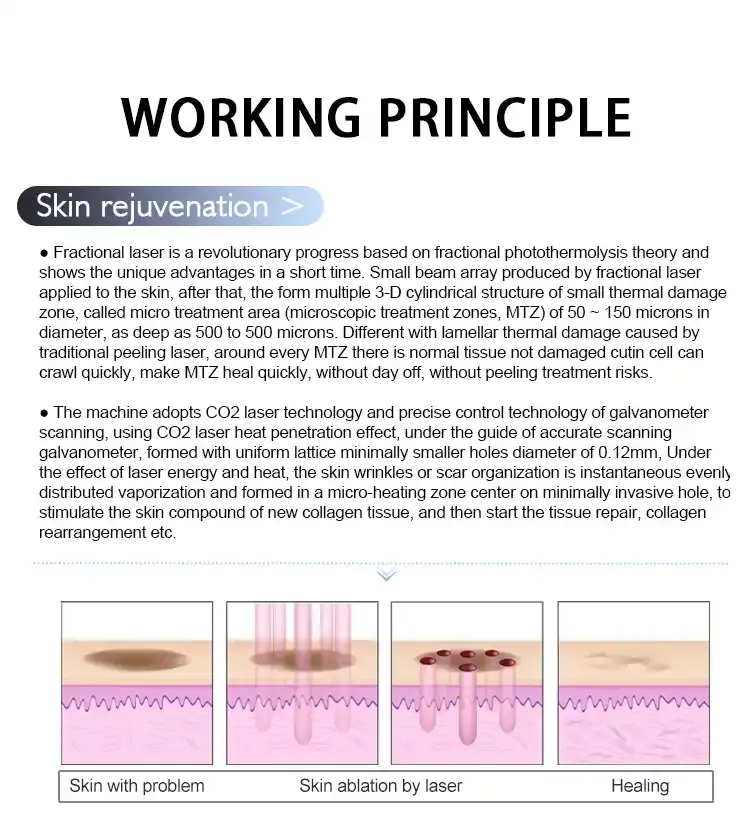
A portable fractional co2 laser is a small, high-precision beauty tool that works at the 10,600nm range and provides controlled ablative cleaning and collagen stimulation to help skin look younger. These devices are not like big old systems; instead, they use advanced metal tube solid-state laser technology and put it on a mobile base, splitting the beam into tiny channels called Micro-Thermal Zones. This fractional method only affects 15–20% of the skin's surface. It leaves the surrounding tissue alone to speed up mending and encourage neocollagenesis. This makes it perfect for treating acne scars, wrinkles, and loose skin in a variety of professional settings.
Understanding Portable Fractional CO2 Lasers
What Sets Portable Systems Apart from Traditional CO2 Lasers
The main improvement is the ability to move around while still performing at a professional level. Traditional CO2 lasers need their own treatment rooms and a lot of floor space, which makes them less useful for offices with multiple locations or mobile beauty services. Portable systems get around this problem by putting a solid-state laser with a metal tube that produces 1–40W of power into a small body that has a 7-joint flexible light guide arm. This design keeps the quality of the beam while making it easy for practitioners to move tools between treatment rooms. This makes the best use of resources without lowering the accuracy of the output.
Core Technology Behind Fractional Ablation
The laser's wavelength is 10.6μm, which is a range that tissue water molecules can easily absorb. When the beam is set up in fractional mode, it splits into hundreds of tiny columns that can go through material up to 4 mm thick. Each column makes a controlled thermal injury zone about 0.1 mm across. This zone evaporates tissue and forms heat around the edges that activates fibroblasts. The water cooling system keeps the device from getting too hot, and the different output modes—such as dot matrix, long pulse, super pulse, and specialized gynecological settings—let you tailor the treatment to different body parts and levels.
Primary Clinical Applications
These devices are used for both medical and cosmetic portable fractional co2 laser purposes by practitioners. Photodamage, fine lines, and uneven texture can all be fixed by resurfacing your skin. It does this by removing old epidermis layers and starting dermal rebuilding. Scar repair methods use controlled collagen reorganization to treat scars from acne, surgery, and pregnancy. The technology can also be used for gynecological beauty. The 10,600nm frequency works on the vaginal mucosa to form tiny thermal pathways that tighten tissue and encourage fibrocyte regeneration. This means that pelvic floor problems can be treated without surgery.
Advantages and Limitations of Portable Fractional CO2 Lasers
Operational Benefits Over Conventional Models
Portability changes how clinic work gets done. Multi-suite practices don't have to buy different devices for each site because they can move equipment quickly. This saves money on capital costs per treatment room. The 10.4-inch tablet makes it easier to change parameters, and the small size helps urban medspas meet their revenue-per-square-foot goals. The energy economy also gets better. Newer closed interior circulating water cooling systems use less power than older air-cooled or external chiller-dependent units, which lowers the cost of running the device over its lifetime.
Treatment Precision and Patient Comfort
When compared to fully ablative methods, partial emission lets the dermis change quickly and with less downtime. Instead of the 10–14 days of healing that come with traditional resurfacing, patients usually only have to deal with redness and light peeling for 5–7 days. The preserved tissue bridges between micro-thermal zones speed up the process of re-epithelialization. The device's pulse width can be changed from 0.1ms to 100ms, which lets doctors adjust the depth of thermal injury to fit each patient's skin type and treatment goals while still being safe.
Safety Considerations and Common Side Effects
Even with new safety measures, proper training is still very important. Some common short-term effects are:
- Erythema that lasts 3–7 days after treatment and goes away on its own
- Mild edema in the treatment areas for 24 to 48 hours
- Temporary hyperpigmentation risk for Fitzpatrick skin types IV–VI if they don't follow the right pre-treatment procedures
- Rare infection potential if you don't follow the post-care guidelines
Before buying something, operators must make sure that it has CE and ISO 13485 certifications. This makes sure that the gadget meets international safety standards. The 635nm red semiconductor aiming light makes it easier for workers to see exactly where to treat, which cuts down on mistakes and improves accuracy between sessions.
Comparing Portable Fractional CO2 Lasers with Other Technologies
Performance Against Traditional CO2 Systems
When procurement managers compare movable units to floor-standing models, they often question whether or not the power flow is enough. Modern portable fractional CO2 laser systems with a real output of 40W are just as clinically successful as many older units for normal purposes. The difference shows up when the systems are used continuously. Hospitals that do a lot of deep ablations in a row may want higher-capacity systems, while med spas like the freedom of portable units. Portable systems are usually 30–40% cheaper than traditional tower setups. This means that practices that see a modest number of patients can get a better return on their investment.
Fractional CO2 Versus Radiofrequency and Microneedling
Each healing method fills a different need. Radiofrequency portable fractional CO2 laser devices heat large areas of skin without actually cutting it. This causes a slight tightening of the skin with no downtime, but it takes more sessions to see effects. Although microneedling makes artificial channels that help products get deeper into the skin and boost collagen production while a wound heals, it can't get rid of surface sores or evaporate tissue. Fractional CO2 is better for healing uneven textures, deep scars, and pigmented tumors where the surface needs to be remodeled because it blends ablative tissue removal with thermal activation. Clinics usually have more than one type of treatment available. For example, CO2 lasers are used for intense repairs, while RF or microneedling are used for routine care.
Market Positioning and Investment Analysis
According to the latest market data, portable fractional CO2 devices are a moderately priced option that strikes a balance between clinical usefulness and ease of use. The starting costs for these lasers will be much cheaper than those for high-end surgical lasers, and the treatment costs will be about the same as those for traditional resurfacing. The ability to operate in more than one mode, including gynecological uses, opens up new income streams beyond facial aesthetics and increases the rate at which equipment is utilized. Clinics say that adding these devices to established practices with existing patient groups usually pays for itself in 12 to 18 months.
Procurement Insights: Selecting the Right Portable Fractional CO2 Laser
Critical Technical Specifications
When considering portable fractional CO2 laser providers, buyers should look at a number of factors. The laser's consistent wavelength (10.6μm with a tolerance of 0.1 μm) ensures that the tissue contact is reliable. Actual power output is more important than stated specs. For example, devices that say they are 40W should be able to maintain output under clinical load without changing their temperature. The number of articulated arm joints affects how flexible the positioning is. Systems with 7 joints are better at moving around face features than systems with 5 joints. Screen size and interface design affect how well operators can do their jobs on days with a lot of work. For multi-parameter changes, the 10.4-inch touchscreen is the bare minimum that works well.
Evaluating Manufacturer Credentials and Support
Manufacturers that have been around for a while and have CE and ISO 13485 certifications show that they follow international standards for quality management. Taibo Laser Beauty was established in 2009 and has been making products for more than 15 years. They meet this standard and have a history of exporting to more than 180 countries. When purchasing managers look at different sources, they should check to see how mature the production facilities are. For example, having separate teams for quality control, packaging, and customer service after the sale shows that the operations are more complex than just putting things together. OEM/ODM skills show technical depth and allow customization to meet the needs of specific markets.
Warranty Coverage and Service Agreements
A full two-year guarantee that covers non-consumable parts should be normal. The insurance should clearly cover things like replacing the laser tube, problems with the cooling system, and broken computer parts. Check the service reaction methods as well as the length of the warranty. Manufacturers that offer technical help 24 hours a day through a variety of channels (video calls, remote diagnostics, email) reduce the amount of time that equipment is unavailable. Training options are also important. Suppliers who offer thorough operation videos, on-site training for large purchases, and ongoing education on new protocols add real value throughout the lifespan of the device.
Real-World Results and Case Studies
Clinical Efficacy Documentation
The results of treating acne scars show that the skin's structure and depth get better over time. Dermatology offices say that scars get 40–60% less deep after 3–4 fractional CO2 sessions, spaced 4–6 weeks apart. The scars keep getting better during the 6-month collagen rebuilding phase. Photographs show that the skin's texture has been finetuned, pores have become less noticeable, a portable fractional CO2 laser and the skin tone is more even. These results are similar to those of standard CO2 lasers, which proves that the compact system works for common dermatological conditions.
Comparative Performance Data
When professionals compare portable fractional systems to clinic-based towers, they find that patient happiness scores are about the same when procedures are properly matched to device capabilities. The main difference is operational freedom, not clinical results. Portable units work best in practices that need to move their equipment around or serve more than one site, while fixed installations work best in high-volume specialty centers. User feedback stresses how important it is to get the right training, no matter what kind of gadget it is, because small differences in technique have a bigger effect on results than changes in power output between 30W and 40W.
Gynecological Aesthetics Applications
A lot of people who work in the beauty industry are interested in the specific vaginal strengthening mode. The precise 10,600nm frequency on mucosal tissue causes controlled thermal effects that tighten the tissue right away. Over the next few weeks, as collagen remodels, long-lasting changes in elasticity will happen. Practitioners say that patients are very open to the non-surgical method because it causes little pain during 20-minute sessions and lets patients quickly get back to normal activities. This app makes the device useful for more than just facials, which increases investment returns by offering a wider range of services.
Conclusion
Portable fractional CO2 lasers bring together clinical performance and operating freedom in a way that makes sense for modern beauty practices. These machines use modern fractional technology to give you professional-grade polishing results while also helping you deal with space issues and service issues at multiple locations. When making a purchase choice, technical specs and maker support infrastructure should be weighed against each other. Certified sellers with a long-term market presence and full after-sales promises should be given the most weight. The investment should be thought about by practices that want to offer more dermatological services, make more money through gynecological beauty, or make better use of tools in multiple treatment areas without affecting patient results.
FAQ
1. What distinguishes fractional from non-fractional CO2 lasers?
The laser beam is split into tiny treatment zones by fractional systems. Between the ablated columns, links of healthy tissue are left. Compared to non-fractional (fully ablative) modes that remove whole layers of skin, this design speeds up mending and shortens recovery time. Non-fractional treatments have more noticeable effects after just one session, but they need longer recovery times (10–14 days vs. 5–7 days for fractional methods).
2 How long does typical recovery take after treatment?
Most people have heat that they can see for 3 to 7 days. On days 4 through 6, the treated micro-columns flake off, causing slight flaking. In 7–10 days, the epithelium grows back completely, but the effects get better over the next 3–6 months as collagen continues to change shape. Downtime depends on how intense the treatment is. Lighter settings let you put on makeup the same day, while active methods require you to stay away from people for several days.
3. What should procurement managers prioritize when purchasing?
Check for regulatory certifications (CE, ISO 13485), make sure the real power output fits clinical needs, and look at the manufacturer's support system, such as the terms of the warranty, the training offered, and how long it takes for technical help to get back to you. Look at the total cost of ownership, which includes things like repairs, replacement parts, and ways to get better features after the original purchase price.
Partner with TB for Advanced Portable Fractional CO2 Laser Solutions
Xi'an Taibo Laser Beauty Company stands as a certified portable fractional CO2 laser manufacturer with 15 years of production expertise and global distribution to over 180 countries. Our metal tube solid-state systems deliver 40W+ actual output through 7-joint articulated arms, backed by CE and ISO 13485 certifications, ensuring regulatory compliance across major markets. The two-year warranty covers all non-consumable components, while our 24-hour technical support team provides video training, remote diagnostics, and on-site installation for bulk orders. We offer OEM/ODM customization, multiple payment methods including bank transfer and trade assurance, and professional packaging ensuring safe delivery worldwide. Contact susan@taibobeauty.com today to discuss your clinic's specific requirements, request detailed specifications, or schedule a consultation with our procurement specialists to explore how our certified systems can enhance your treatment portfolio and improve operational efficiency.
References
1. Anderson RR, Parrish JA. "Selective photothermolysis: precise microsurgery by selective absorption of pulsed radiation." Journal of Investigative Dermatology 1983; 51(3): 387-390.
2. Manstein D, Herron GS, Sink RK, et al. "Fractional photothermolysis: a new concept for cutaneous remodeling using microscopic patterns of thermal injury." Lasers in Surgery and Medicine 2004; 34(5): 426-438.
3. Hantash BM, Bedi VP, Kapadia B, et al. "In vivo histological evaluation of a novel ablative fractional resurfacing device." Lasers in Surgery and Medicine 2007; 39(2): 96-107.
4. Alexiades-Armenakas M, Dover JS, Arndt KA. "The spectrum of laser skin resurfacing: nonablative, fractional, and ablative laser resurfacing." Journal of the American Academy of Dermatology 2008; 58(5): 719-737.
5. Saedi N, Petelin A, Zachary C. "Fractionation: a new era in laser resurfacing." Clinics in Dermatology 2013; 31(1): 27-32.
6. Tierney EP, Eisen RF, Hanke CW. "Fractionated carbon dioxide laser treatment of photoaging: prospective study in 45 patients and review of the literature." Dermatologic Surgery 2011; 37(10): 1279-1290.





YOU MAY LIKE