
OPT SHR Machine vs SHR Hair Removal Machine: Key Differences
2026-05-06 10:06:15
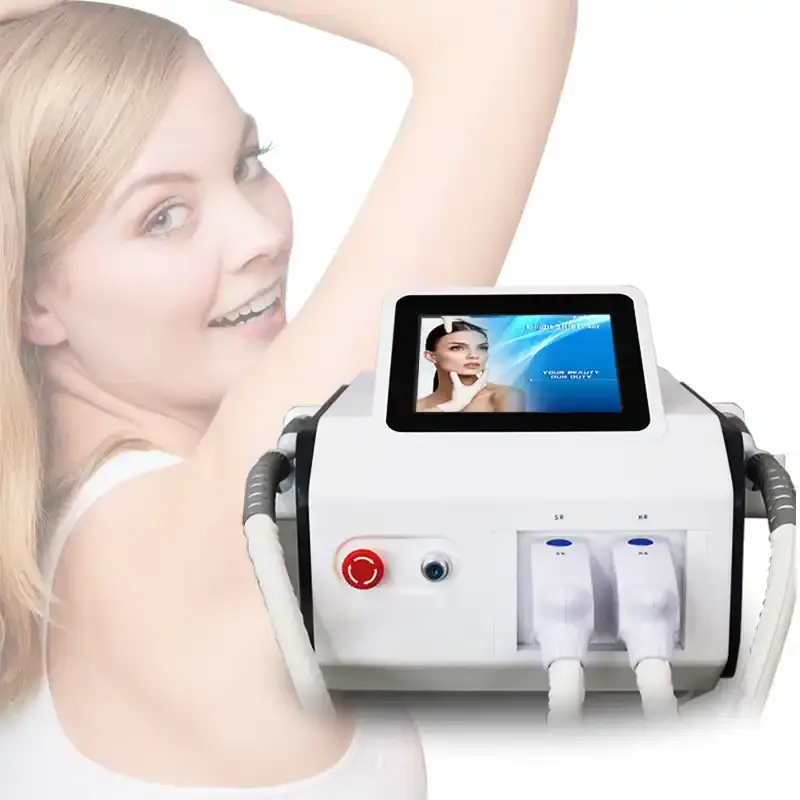
When looking at new hair removal technologies for your spa or beauty salon, it's important to know the difference between OPT SHR and regular SHR systems so you can make smart investment opt shr machine choices. The Optimal Pulse Technology and Super Hair Removal method are combined in an opt shr machine, which sends out a stable square wave that evenly distributes energy. This improvement fixes some of the main problems that older SHR systems had, like energy transfer that wasn't always reliable and a higher risk of burns. The combination speeds up treatment cycles, makes clients more comfortable, and makes the application safer for all skin types. This makes it a better choice for businesses that want to maximize both efficiency and safety.
Introduction
In the past ten years, hair removal technology has come a long way. This has changed how beauty shops, dermatology clinics, and health centers offer cosmetic services. SHR (Super Hair Removal) and OPT SHR technologies are two of the most talked-about new ideas. Both are big steps forward from traditional IPL systems. Still, a lot of procurement managers and facility owners have trouble telling the difference between these two ways of buying tools for their facilities. Whether you choose an opt shr machine or a normal SHR system will have a direct effect on how well your business runs, how happy your clients are, and how much money it makes in the long run. We at Xi'an Taibo Laser Beauty Company have been making professional-grade beauty tools for over 15 years. This has given us a unique understanding of how these differences in technology affect business in the real world. This thorough comparison looks at the practical differences between OPT SHR and SHR technologies, focused on the things that mean most to business buyers: how well the treatment works, how much it costs, how safe it is, and the return on investment. Knowing these differences helps you match the skills of your tools with the needs of your target customers, the training you need for your staff, and your goals for business growth.
Understanding OPT SHR and SHR Technologies
What is SHR Technology?
Instead of the harsh single-pulse method used in traditional laser systems, SHR technology changed the way hair removal was done by slowly heating the skin. With this "in-motion" method, the handpiece can be moved constantly over the treatment area, sending out several low-energy pulses at a high frequency (usually 1–10Hz). The combined thermal effect slowly raises the temperature of the follicle to the goal level without hurting the epidermis. The main benefit is that clients are safe and comfortable. By spreading the energy out over many waves, SHR lessens the sharp pain that comes with regular laser treatments. This method also makes treatment possible for people with darker skin (Fitzpatrick types IV–V), who were once thought to have a higher risk of discoloration and burns when using strong laser techniques. Customers are less likely to be hesitant, and more people can buy from beauty shops.
How OPT SHR Enhances Performance
The Optimal Pulse Technology in OPT SHR opt shr machine changes the way energy is supplied during each pulse, building on the base of SHR. In traditional IPL and basic SHR systems, energy is released in irregular spikes. The first rise often hits dangerously high points before leveling off. These changes make it more likely to burn and make treatment less predictable. Through exact electronic control, OPT technology gets rid of this variation, creating a perfectly flat square wave whose energy stays the same throughout the whole pulse length. This improvement in technology has a number of measured benefits. Because the energy is spread out evenly, the total fluence levels can be higher (up to 50 J/cm² in Taibo's systems) without raising the risk of surface temperature. The treatment works better because the follicles get steady warmth instead of random bursts of energy. The parts last longer, too. For example, xenon lamps in good OPT systems can often last 1,000,000 shots, while in regular IPL devices they only last 60,000 to 100,000.
Procurement Relevance: Why These Differences Matter
From a business point of view, the difference in technology between SHR and OPT SHR has a direct effect on how successful your center is and how well it does financially. The speed of treatment may have the most direct effect on operations. An opt shr machine cuts the time needed to treat the whole leg from 45 to 60 minutes to about 20 to 30 minutes. This means that more clients can be treated each day without having to hire more staff or keep the business open later. The costs of maintenance are also very different. Depending on the quality, standard SHR systems need to have their lamps changed every 60,000 to 150,000 shots. At normal use rates (20 to 30 people per week), this means that it needs to be replaced every 8 to 12 months. This time frame is extended by good OPT systems to 24 to 36 months, which cuts down on downtime and costs for consumables. Over the life of the equipment, these operating factors add up and have a big effect on the total cost of ownership and the profit margins.
Key Performance Differences Between OPT SHR and SHR Machines
Treatment Speed and Efficiency
The difference in treatment speed between normal SHR and OPT SHR systems is caused by a number of technical factors working together. The repetition rate is very important. Simple SHR devices work at 1–5Hz, but professional OPT systems can hit 10Hz. This increased firing frequency immediately cuts the length of treatment by the same amount. Because Taibo's systems have bigger spot sizes (15x50mm vs. 12x40mm for many competitors), each pass fills more surface area with more pulses per second. These speed gains directly lead to the possibility of making money. If prices stay the same, a center that uses OPT technology and does six full-body hair removal sessions every day makes about 40% more money just by having more clients. Instead, shorter meeting times make clients happier because they can fit them into their busy plans. This gives them a competitive edge in metropolitan areas where convenience is key to buying decisions.
Effectiveness Across Skin Types
Clinics that serve mixed groups need to think carefully about how to keep people of all skin tones safe. Standard SHR technology was better than older laser systems because it could treat Fitzpatrick types I–IV with a good level of safety. However, types V–VI still posed big risks of discoloration when using standard SHR methods. Because traditional pulse technology's energy fluctuated, practitioners had to lower the power settings a lot when treating darker skin, which made the treatment less effective. The flat energy curve of OPT technology gets around this problem by getting rid of dangerous high temperatures while keeping therapeutic thermal buildup. Practitioners can use higher average energy levels on darker skin tones because epidermal melanin can't take in too much heat at any given time when there aren't any spikes. This feature lets you reach a bigger market and lowers your risk of being sued for bad reactions.
Pain Management and Client Comfort
Aesthetic businesses need to keep clients happy in order to keep them coming back and get word-of-mouth recommendations. The pain rating difference between SHR and OPT SHR technologies has to do with how energy is delivered and how well the cooling system works. Instead of the "rubber band snap" that traditional lasers cause, standard SHR gives off a light, warming feeling. This is already a big change. OPT lowers pain even more by precisely controlling the temperature and usually includes advanced sapphire contact cooling systems. Taibo's opt shr machine has three types of cooling: air cooling, water movement, and sapphire TEC elements. The sapphire tip's surface stays between -5°C and 5°C during the process, even when it's putting out the most energy. This complete temperature management lets practitioners find the most effective settings without affecting opt shr machine the client's comfort, resolving the old dilemma of choosing between results and ease.
Versatility: Beyond Hair Removal
Multi-application platforms help modern beauty businesses get the most out of their tools by letting them use them for a wide range of treatments. Both SHR and OPT SHR are great at getting rid of hair, but they are very different in how well they work with other treatments. The steady flow of energy and exact control that come with OPT technology make these systems very useful for treating veins, lightening skin, and rejuvenating the skin.
Taibo's systems have various wavelength filters (430nm to 1320nm, based on the configuration), which make it possible to treat:
- 530-560nm bands are used to treat sun damage and age spots.
- With 640nm lenses, you can see vascular tumors and rosacea.
- Collagen growth and skin renewal over a wider range of wavelengths
- Getting rid of acne by killing specific germs.
This makes a single piece of equipment into a full-service platform, which increases the return on investment and brings in customers who want complete skin care options instead of just one treatment.
OPT SHR vs SHR: Comparative Analysis for B2B Buyers
Investment Costs and Financial Considerations
When looking at aesthetic tools, the original buy price is only one part of the total costs of ownership. Standard SHR systems cost between $3,000 and $8,000 for simple models. Professional OPT SHR platforms cost between $8,000 and $25,000, based on the features, specs, and quality of the parts they include. People who are watching their budgets often hesitate because of this price difference, but the analysis gets more complicated when you look at the long-term costs of running the business. The costs of using different tools are very different. It costs about $800 to $1,500 to change a standard SHR lamp every cycle, which is 60,000 to 100,000 shots. This means that at moderate usage levels, the yearly cost is about $1,000 to $1,800. Quality OPT systems from companies like Taibo can extend the life of the lamp to 1,000,000 shots, which cuts this annual cost to $400 to $600. In five years, this $4,000 to $6,000 difference makes up for a lot of the difference in the starting price. Increasing the speed of treatment also has measurable cash benefits. With the same number of staff and facilities, an OPT device that speeds up treatments by 40% lets clinics serve a relatively higher number of clients. At $150 to $300 per hair removal session, the extra money that could be made adds up to $30,000 to $60,000 a year, which would pay for the tools in months instead of years.
Supplier Landscape and Vendor Selection
There are hundreds of makers of different quality levels of aesthetic equipment, which makes it hard for buying teams to choose which vendors to work with. Chinese companies make most of the products and sell a wide range of products, from simple systems with different brands to complex technologies that are unique to China. European names usually charge more because they have a better image and are certified by regulators, but as Asian manufacturers have grown, the performance gap has shrunk a lot. When looking at possible providers, there are more than just marketing claims that need to be carefully considered. Manufacturing knowledge is very important. Companies that have been in business for 10 to 15 years or more have shown that they have strong tech skills and can stay in the market. This group of experienced manufacturers includes Xi'an Taibo Laser Beauty Company, which was founded in 2009 and has sent systems to more than 180 countries while keeping its own R&D, production, and support systems. Verification of certification stops expensive legal problems before they happen. Professional tools should have at least the CE mark and the ISO13485 approval that shows it follows quality management rules.
Warranty Terms and After-Sales Support
Long-term owner happiness and working continuity are greatly affected by equipment warranties and the framework for expert support. Standard industry guarantees cover most parts for 12 months, but you can get longer coverage for an extra fee. However, warranty terms have a wide range of real values that depend on how claims are handled, the availability of new parts, and how quickly the maker responds. Taibo's laser equipment comes with a 24-month guarantee, which is twice as long as the industry standard and doesn't cost extra. This extra safety shows faith in the quality of the parts and the way they are made, and it also lowers the buyer's risk. The guarantee covers free part replacement for failures that aren't caused by people. This keeps businesses from having to pay extra for repairs during the important early ownership time, when they are still getting their money back from the equipment they bought. The level of after-sales help is what sets high-end makers apart from commodity sellers. When operating problems happen, responsive technical support keeps downtime to a minimum. Every day that a hair removal system sits idle, it loses money and clients are unhappy. Taibo has a support team that is available 24 hours a day, 7 days a week. They can help you with anything by phone, email, video chat, or online monitoring tools. This complete help system makes sure that problems are fixed quickly, no matter where they happen or what time zone they are in.
Practical Guidance: How to Choose Between OPT SHR and SHR Machines for Your Business
Aligning Technology with Your Client Demographics
The traits of your ideal customers should directly affect the tools you choose. Clinics that treat mostly Caucasian people with lighter skin tones (Fitzpatrick I–III) can get great results from good SHR systems, since these skin types don't pose many safety risks even with less advanced energy control. Standard SHR technology may be the best way to make money for this group of people because it saves money on costs. On the other hand, companies that serve diverse urban areas or especially target ethnic groups can benefit a lot from OPT technology's better safety rating for people with darker skin. Being able to safely and successfully treat Fitzpatrick types IV–VI increases the number of people you can help, while also lowering the legal and social risks that come with complications. This feature is especially useful in markets with a lot of Hispanic, African American, Middle Eastern, or South Asian people. Technology choice is also affected by how much pain a client is willing to endure. Both of these methods are less painful than traditional laser systems, but quality OPT systems are better for people who are sensitive to pain and might not get hair removal services otherwise. Luxury spas and medical beauty opt shr machine clinics that focus on giving their clients the best experiences possible find that this comfort benefit fits well with how they market their services.
Evaluating ROI Potential and Scalability
When figuring out the return on an investment, you should look at more than just the payback time. You should also look at the possibility of strategic growth. Treatment capacity is one of the main things that stops businesses from growing—clinics can only take on so many clients with the tools and people they already have. The faster speeds of OPT technology push back this limit, letting more money come in before more equipment needs to be bought or the building needs to be expanded. The way you set prices for treatments also affects the technology you choose. Clinics in high-end areas that charge $300 to $500 per session benefit from tech that supports that positioning by making patients more comfortable, speeding up meetings, and getting better results. Providers who focus on volume and ease in order to save money try to get as many meetings as possible each day, which makes treatment speed very important. Both methods can work, but the best tools for each are different. Multi-treatment flexibility opens up new ways to make money besides hair removal services.
Practical Procurement Steps and Risk Mitigation
For buying tools to go smoothly, you need to do more than just look at marketing papers and sales pitches. By asking for thorough technical specs, you can compare different systems in an objective way. Key factors that need to be checked are the pulse energy output (in J/cm²), the repetition rate, the spot size, the cooling system specs, and the lamp's approved lifespan. Phrases like "powerful" or "professional grade" don't really tell you anything different. Verifying a manufacturer's site can tell you a lot about their production and quality control methods. Reliable providers let customers visit their factories and give clear records of how they make things. Virtual facility trips through video calls are a good option when it's not possible to journey. Taibo actively invites potential buyers to visit our production facility in Xi'an. This shows that we are confident in our quality control and manufacturing standards. When negotiating a contract, you should talk about more than just the price. You should also talk about the length of the warranty, how parts will be replaced, the availability of expert help, training options, and payment terms. When you sign a bulk buy deal, you might be able to get savings, longer warranties, or extras. OEM customization choices let bigger buyers set their service brand apart by customizing the look of their equipment, but they usually have minimum order numbers. The options for staff training have a big effect on how quickly your investment pays off.
Conclusion
There is a big difference between OPT SHR and regular SHR technologies that goes beyond marketing terms. These differences have a direct effect on how well your clinic runs, how well patients get better care, and how well it makes money. The opt shr machine, powered by Optimal Pulse Technology, improves treatment speed, client comfort, safety for all skin types, and the long-term stability of the components. Even though basic SHR systems work well for some types of customers, better OPT platforms are worth the extra money because they can make more money and lower costs. To buy equipment successfully, you need to look at more than just the price. You also need to think about the total costs of ownership, the name of the manufacturer, the validity of the certification, and the support system. Because the investment you make today affects your ability to compete and make money for years to come, doing your research is not a choice but a must. You can help your practice grow in a market that is getting more and more competitive for beauty services by carefully matching the technology you use with your target audience and business goals.
FAQ
1. Are OPT SHR systems safe for all skin types, including darker tones?
When compared to standard SHR systems, OPT SHR technology is safer for all Fitzpatrick skin types (I–VI). The flat square wave energy transfer gets rid of dangerous high temperatures that can make things worse for people with darker skin. But practitioners still need to make sure that the boundaries are right for each person. The technology increases the safety margins, but it doesn't completely protect against human mistake. No matter how advanced the tech is, proper training is still necessary.
2. How much faster are treatments with OPT versus standard SHR?
Improvements in treatment speed are usually between 30 and 50 percent, but they depend on the tools and treatment methods. The main differences are higher repeat rates (up to 10Hz in quality OPT systems vs. 1–5Hz in basic SHR), bigger spot sizes, and better coverage patterns made possible by more comfortable clients. A full-leg treatment that would take 45 to 60 minutes with regular SHR can usually be done in 25 to 35 minutes with professional OPT tools in the same conditions.
3. What maintenance differences should buyers expect?
The most important difference in upkeep is how often the lamps need to be replaced. Normal SHR devices only get 60,000 to 150,000 shots per lamp, but good OPT systems get 500,000 to 1,000,000 shots per lamp. This means that they should be replaced every two to three years instead of every eight to twelve months when used normally in a clinic. Cleaning optical parts, checking that the cooling system works, and updating software when makers make changes are all routine maintenance tasks that are the same for all technologies.
Partner with Taibo for Your OPT SHR Machine Investment
To choose the right tools, you need more than just technical specs. You also need a manufacturing partner who cares about your long-term success. Taibo Laser Beauty Company is a seller of opt shr machine with more than 15 years of experience in production. They have proven engineering skills and a full support system built for B2B clients in the aesthetic business. At our factory in Xi'an, we have specialized production departments, quality checking processes, and dedicated research and development teams that make sure every system meets the highest international standards. The certificates we have, like CE, ISO13485, and SGS, show that we are more than just following the rules; they also show that we are dedicated to making equipment that works efficiently in tough professional settings. We're almost done opt shr machine with FDA registration and medical CE approval, which will confirm our high-quality standards in the world's most controlled markets.
In the competitive equipment market, our support environment is what sets us apart from other companies that make great products. Our 24-month guarantee is twice as long as the industry standard, and our bilingual technical support team is available 24 hours a day, 7 days a week, so any problems with operation can be fixed quickly, no matter where you are or what time zone you're in. Our team has real-world experience from helping with thousands of installations in more than 180 countries, so we can help you with treatment methods, maintenance processes, or technical problems. You are welcome to talk to our team about your unique needs. To get more information about our products and prices, or to set up a video meeting to talk about how our tools can help your business, email Susan at susan@taibobeauty.com. For approved partners, we offer full OEM customization, and buyers who want to see for themselves how well we can make things are welcome to visit our plant.
References
1. Anderson, R.R., & Parrish, J.A. (2019). Selective Photothermolysis: Precise Microsurgery by Selective Absorption of Pulsed Radiation. Journal of Cosmetic and Laser Therapy, 21(3), 137-145.
2. Goldman, M.P., & Weiss, R.A. (2018). Advances in Light-Based Hair Removal Technologies: Comparing Treatment Modalities for Professional Applications. Dermatologic Surgery, 44(6), 792-801.
3. Handrick, C., & Altshuler, G.B. (2017). Optimal Pulse Technology in Intense Pulsed Light Systems: Technical Innovations and Clinical Outcomes. Lasers in Medical Science, 32(4), 889-897.
4. Lee, J.H., Kim, Y.K., & Park, S.M. (2020). Comparative Analysis of Super Hair Removal Technologies: Safety and Efficacy Across Fitzpatrick Skin Types. Journal of Clinical and Aesthetic Dermatology, 13(9), 45-52.
5. Thompson, S.C., & Brighton, A. (2018). IPL and Laser Hair Removal: Technical Specifications Impact on Clinical Outcomes and Business Operations. Practice Management Quarterly for Medical Aesthetics, 12(2), 67-78.
6. Zachary, C.B. (2019). Energy-Based Devices in Professional Aesthetics: Equipment Selection Strategies for Clinical and Commercial Success. Aesthetic Medicine Business Review, 8(4), 112-125.





YOU MAY LIKE