
What are the benefits of Diode laser Hair Growth Machine?
2026-06-29 08:59:40
The diode laser hair growth machine delivers transformative advantages for professional beauty and dermatology practices seeking clinically proven, non-invasive hair restoration solutions. This advanced technology harnesses low-level laser therapy at 650nm wavelength to stimulate dormant hair follicles, enhance scalp circulation, and promote natural regrowth without surgical intervention. Unlike traditional methods, these devices offer safe, painless treatments with measurable results—stopping hair loss in up to 85% of patients while increasing hair shaft thickness by 25%. Understanding these benefits helps procurement professionals make strategic equipment investments that elevate service offerings and client satisfaction.
Introduction
Millions of people around the world lose their hair, which means that there is a big need for successful restoration methods in the medical and beauty industries. The diode laser hair growth machine is a huge step forward in non-invasive hair regrowth. It combines precise laser wavelengths with therapeutic benefits that have been shown to work. For people who work in business-to-business buying, like purchasing managers, clinic owners, spa owners, and distributors, knowing about these perks is important for making smart choices about where to buy products and how to build partnerships.
Over the last ten years, the science behind low-level laser therapy has changed a lot. Clinical tests show that certain wavelengths can get into the head tissue and wake up cells in the hair follicles. This guide gives people in the industry the basic information they need to know about technology, as well as useful benefits and buying factors. This gives businesses the confidence they need to choose and use high-quality laser therapy equipment.Professional-grade devices stand out because they have higher-quality parts, steady output, and follow all the rules. As the market for hair restoration grows around the world, clinics and salons that use this technology will be at the top of non-surgical treatment choices. Buying approved tools not only expands treatment options, but it also helps businesses stand out in markets that are getting more and more competitive.
Understanding Diode Laser Hair Growth Technology
The diode laser hair growth machine uses certain wavelengths, usually between 650 and 680nm, to wake up hair follicles that are dormant and help them come back naturally. This photobiomodulation process is very different from ablative laser hair removal methods. The 650nm frequency goes through the scalp's surface without making it hot, so it doesn't hurt while starting the metabolism of cells in the follicle structures.
How Photobiomodulation Works
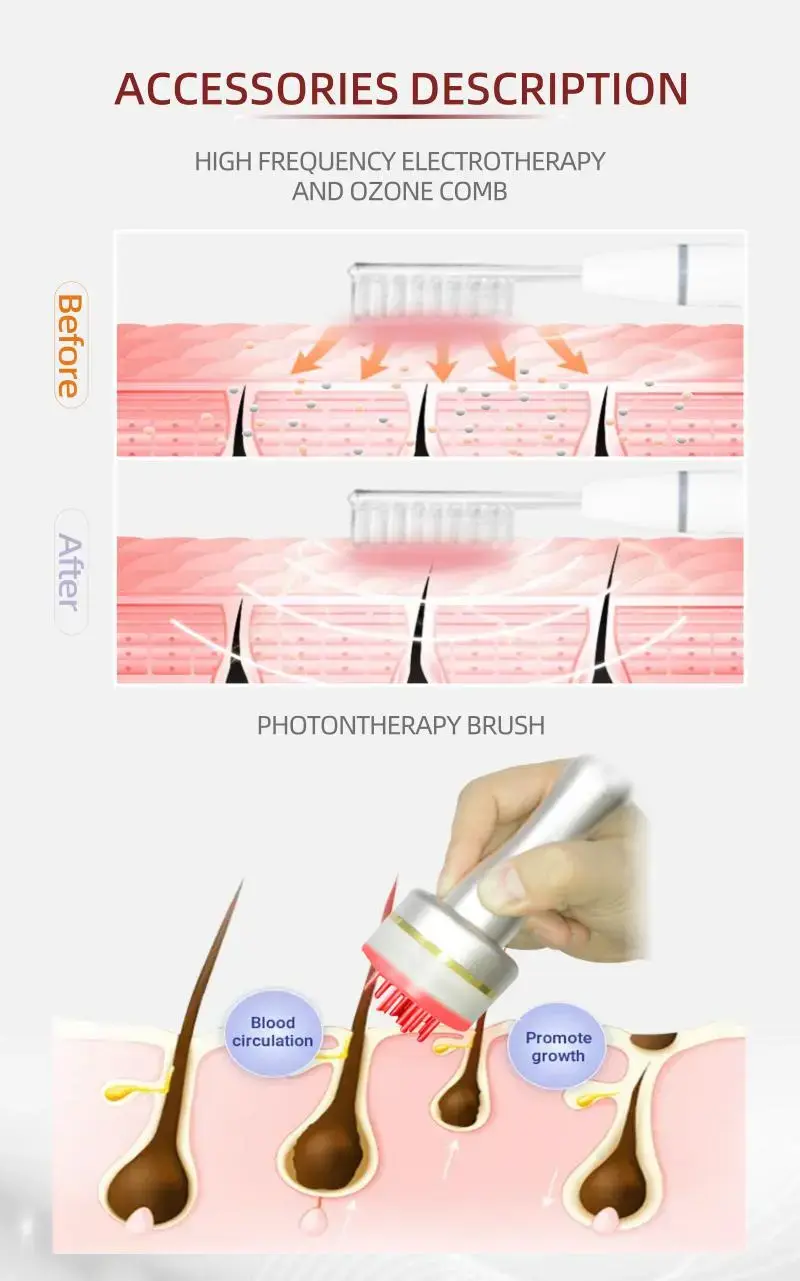
When a 650nm range laser light hits head tissue, it increases blood flow. Studies have shown that treated areas can get better by up to 55%. This increased blood flow brings important nutrients, like adenosine triphosphate (ATP), straight to the follicles and gets rid of dangerous cellular waste products, like dihydrotestosterone (DHT). ATP is the fuel for cells and powers metabolic processes that heal damaged follicles and make them strong enough to make hair shafts.Coherent light output is what makes the technology work. Professional diode lasers send focused photon streams with a constant energy density, while LEDs spread light over a wider range of wavelengths. This accuracy makes sure that medicinal doses reach the right depths of tissue where the follicles are, usually between 3 and 6 J/cm² for the best stimulation without photo-inhibition effects.
Clinical Evidence Supporting Efficacy
Several studies that were reviewed by experts in the field show that low-level laser treatment can help with androgenetic alopecia and pattern baldness. Studies in dermatology journals show that regular treatment methods can lead to measured increases in hair count, density, and shaft diameter. Professional devices with 262 laser diodes cover the whole head, making sure that the treatment is spread evenly over all damaged areas.Most scientists agree that treatment rounds of two to three times a week for a few months, each lasting fifteen to twenty minutes, are the best way to go. Patients usually see their first changes within 12 to 16 weeks, and they continue to get better as they use it for longer. With this evidence-based method, clinics can give clients reasonable goals and show their professionalism by using treatment plans that are backed by science.
Key Benefits of Diode Laser Hair Growth Machines
Businesses in the dermatology and aesthetics fields can benefit from professional diode laser hair growth machines in a number of ways. These benefits go beyond health results and include things like improved business efficiency, happier clients, and the chance to make more money. These gadgets are useful additions to treatment plans because of the following main benefits:
1. Effective Follicle Stimulation and Natural Regrowth: Targeted photobiomodulation wakes up inactive follicles, which is the main treatment benefit. Devices with 262-piece laser arrays that work at a frequency of 650nm cover the whole head. Clinical data shows that 85% of treated patients stop losing hair, and the width of each hair shaft increases by up to 25%. This big change makes effects that can be seen and measured that boost client confidence and encourage them to keep going to treatment.
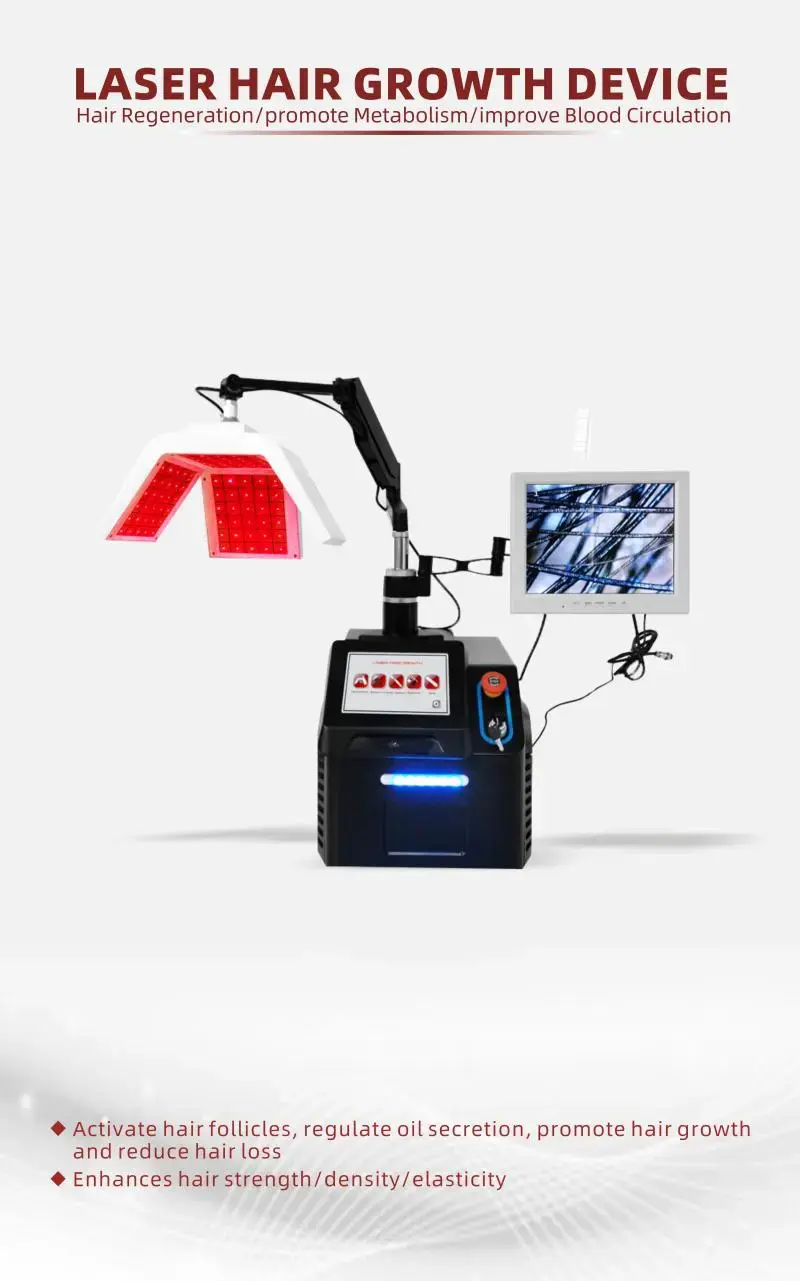
2. Safe, Non-Invasive Treatment Profile: Laser therapy has low risks compared to surgery or medicine. Because the technology doesn't heat up, it doesn't hurt the head tissue or other structures nearby. There are no needles, cuts, or systemic medicines used in the treatments, so there are no worries about scarring, infections, or drug problems. Built-in safety features, such as skin recognition sensors that can magnify up to 200 times and temperature control systems, make sure that the machine works consistently and reliably on a wide range of patients.
3. Versatile Professional Applications: These devices can be used to treat hair loss on their own, but they also work better when mixed with other treatments. Laser treatment is especially helpful after a donation because it reduces swelling, speeds up mending, and lowers the risk of shock loss in newly transplanted grafts. Clinics that use combination procedures with microneedling or PRP shots say the effects are better because the head is more permeable, which makes topical treatments work better. Because of this, practices can make complete service packages that meet the wants of many clients at the same time.
4. Strong Return on Investment: Buying professional-grade gear is a smart investment that pays off in the long run. Treatment sessions usually cost a lot because the technology is so advanced and the treatments work so well. The CE and ISO13485 standards for the device's durability mean that it will work reliably for years with little upkeep. The 200W power output and 10MW per laser specification ensure stable performance over thousands of treatment rounds, protecting the value of the investment over longer operating lifetimes.
Comparing Diode Laser Hair Growth Machines with Alternative Solutions
Knowing what other treatment choices are out there helps people who buy things figure out where the diode laser hair growth machine fits in with other services they offer. There a lot of different hair regrowth methods on the market, and each one works in different ways and is best for different situations.
Diode Lasers vs. LED Light Therapy
Both systems use phototherapy, but there are important differences in how they work and how well they help patients. Diode lasers give off consistent, monochromatic light at an exact 650nm range. This lets the energy go deeper into tissues and be more focused. LED panels give off a wider range of wavelengths with less power, which means they can reach deeper layers of skin and last longer for the same effects.Sessions with professional diode systems usually last between 15 and 20 minutes, while sessions with LED devices might last between 30 and 45 minutes to cover the same area. The higher power output of laser diodes (10MW per source) means that photons can be absorbed more efficiently in target follicles. This productivity benefit cuts down on chair time, which means more patients can be treated each day and more money can be made for busy offices.
Professional vs. Consumer-Grade Devices
The difference between professional and home-use tools has a big effect on how well treatments work and how the business is positioned. Professional systems are built to last and use medical-grade parts that are meant to work continuously for multiple daily sessions. Commercial devices can be used every day for 10 hours or more and still keep their frequency stable and output constant, which are important qualities that consumer units that work sometimes can't match.Modern clinical equipment has advanced features like power sets that can be changed, full safety systems, and ergonomic forms that make them easier for practitioners to use. The 200W power standard lets all 262 laser diodes work at the same time, covering the whole scalp in a way that handheld market devices can't. Premium service prices are reasonable for practices that offer professional-grade treatments and get great results that keep customers coming back and get them to refer others.
The Procurement Perspective: Buying and Supplying Diode Laser Hair Growth Machines
When buying strategic tools, it's important to carefully look at the skills of the seller, the product specs, and the support infrastructure for the diode laser hair growth machine. Not only do choices about procurement affect the original investment, but they also affect the long-term success of operations and the level of customer satisfaction.
Essential Certifications and Quality Standards
Choosing a product is based on how well it meets regulatory requirements. With CE approval and ISO13485 recognition, you can be sure that the way medical devices are made meets international standards. These qualifications show that the product meets the performance standards, safety rules, and quality control methods needed for professional clinical use.Reputable makers keep records of testing and approval by a third party. When evaluating a provider, ask for copies of the certifications to make sure you know the current state and the scope of the work. Equipment that isn't properly certified puts practices at risk of liability and possible fines from the government that are much higher than any initial cost saves from choices that aren't certified.
Warranty and After-Sales Support Infrastructure
Full warranty protection keeps your equipment purchases safe from flaws in the making process and broken parts. Professional-grade devices should come with guarantees that cover parts and work for problems that aren't caused by the user for at least one year. Options for longer warranties offer extra safety for businesses that put a high value on reducing risk and planning their budgets ahead of time.In addition to the guarantee terms, you should carefully look at how the provider can help you. Technical support teams that are quick to respond and offer thorough operating training, fixing advice, and quick replacement of parts keep service going. Manufacturers that give help 24 hours a day show that they care about their partners' success and know what busy beauty practices need to run their businesses.
Pricing Considerations and Bulk Purchase Opportunities
Prices for equipment vary a lot depending on how much is ordered, how it needs to be customized, and how it is paid for. The price for a single unit is usually the same as the retail price, but there are volume savings for orders that are placed in bulk for multiple places or by a distributor. Businesses that want to give more services at more than one location should work out package prices that lower the cost per unit while making sure that all sites have the same equipment specifications.Being able to change how you pay is another way to negotiate. Suppliers that accept a variety of payment methods, such as bank transfers, credit plans, and phased payment schedules, make it easier for businesses that are handling how to allocate capital across multiple goals to buy what they need. Clear price structures with no secret fees or required extra purchases show that a seller is honest and lay the groundwork for long-term relationships.
Implementing Diode Laser Hair Growth Machines in Your Business
Successful technology integration includes more than just buying a diode laser hair growth machine. It also includes training staff, planning a marketing strategy, and improving business processes. Approaching execution in a planned way will increase the number of adoptions and shorten the time it takes to get a return on investment.
Staff Training and Operational Protocols
Full training for operators makes sure that the device is used safely and effectively from the start. Training classes should cover how to set up the tools, choose the treatment parameters, use the safety features, and do routine upkeep. Staff can get comfortable using the devices before they treat real clients by practicing with them in real life.Setting up uniform treatment methods makes sure that all practitioners and treatment sessions are the same. Write down the settings, session lengths, and treatment frequency rules that are suggested for each type of hair loss based on clinical data and manufacturer suggestions. Consistent methods cut down on variation, improve results, and make quality assurance tracking easier.
Marketing Strategies and Client Education
When introducing new treatment options, it's important to communicate in a way that teaches and builds trust in the service. Make marketing tools that explain the science behind low-level laser therapy, as well as the results that can be expected and the length of time needed for treatment. Before-and-after pictures from clinical studies can be used (with the right permissions) to show potential clients what the results look like.Digital marketing tools like practice websites, social media sites, and email ads are effective ways to reach current clients and bring in new ones. Content marketing with blog posts, video reviews, and educational webinars makes practices look like reliable sources of information and builds trust with people who are looking into hair restoration choices. Professional products are set apart from consumer-grade ones by highlighting gadget certifications, clinical proof, and practice knowledge.
Market Growth Opportunities
The market for cosmetic treatments keeps growing as more people want non-invasive operations and as demographics change. In developed markets, the demand for hair regrowth products is driven by an aging population, while younger people are looking for preventative treatments before they lose a lot of hair. This growing client base opens up possibilities for businesses that can help people of all ages and with a range of treatment goals.Combination treatment methods look like very promising ways to help growth. When you combine laser treatments with other services, like scalp micropigmentation, PRP therapy, or nutritional counseling, you can make full plans that deal with hair loss from many directions. Bundled service packages raise the average deal value and improve results by using treatment methods that work better together.
Conclusion
Professional diode laser hair growth machines are very useful for beauty salons, medical clinics, and health centers that help people who need to grow their hair back. The technology blends strong clinical proof with operational benefits such as high patient satisfaction rates, safe treatments, and efficient sessions. For service options to work, equipment with a 650nm wavelength standard, high-density laser arrays, and the right approvals is needed.By thinking about a supplier's credentials, warranty coverage, and support system when making strategic purchasing choices, you can protect your investments and make sure your business will be successful in the long run. Adoption rates are highest and income growth is fastest in practices that offer thorough training programs and create focused marketing strategies. As non-invasive beauty treatments continue to grow in popularity, businesses that invest in laser therapy tools will be able to take advantage of the sector's steady growth.
FAQ
1.Is low-level laser therapy safe for all skin types?
Clinical study shows that people with all kinds of skin tones and types are very safe around it. The 650nm frequency doesn't make heat, so there are no risks of thermal damage or changes in pigmentation that can happen with ablative laser treatments. Built-in safety features, such as skin recognition sensors, change the output automatically based on the touch conditions, adding another layer of protection.
2.How quickly do patients see results from treatment?
Treatment times depend on how much hair loss there is and how each person responds. Most patients start to feel better within 12 to 16 weeks of regular treatment, which includes going to two to three sessions a week as suggested. As follicles go through growth stages and shaft width rises over the next 6 to 12 months, enhancement keeps happening.
3.What maintenance do professional devices require?
Professional equipment doesn't need much upkeep besides cleaning the treatment surfaces regularly and checking the electricity connections every so often. Laser diodes have long working lifetimes that are measured in thousands of hours. They rarely need to be replaced during standard warranty terms. Manufacturers should give thorough upkeep plans and instructions during the initial training to make sure that devices work at their best for as long as they are used.
Partner with TB for Proven Laser Hair Growth Solutions
Taiwan Laser Beauty (TB) is a reliable company that has been making diode laser hair growth machines for more than 15 years and has sold them all over the world. Our factory-direct method gets rid of markups from middlemen and makes sure that quality control is maintained throughout the whole manufacturing process. The laser hair growth system has 262-piece laser arrays, a precise 650nm range, and a 200W power output, which gives it the scientific performance that beauty salons need.The full range of support services we offer includes thorough training programs, quick technical help, and a guarantee that protects your investment in tools. We work with health centers, dermatology clinics, and beauty shops in more than 180 countries to build relationships based on high-quality goods and great service. Contact our team at susan@taibobeauty.com for full product specs, cost information for diode laser hair growth machine providers, or to set up equipment demos. Find out how TB's approved laser therapy options can help you provide better hair restoration services and grow your business.
References
1. Avci P, Gupta GK, Clark J, et al. Low-level laser therapy for hair growth: mechanism and efficacy. Lasers in Medical Science, 2014, 29(4): 1217-1228.
2. Jimenez JJ, Wikramanayake TC, Bergfeld W, et al. Efficacy and safety of a low-level laser device in the treatment of male and female pattern hair loss: a multicenter, randomized, sham device-controlled, double-blind study. American Journal of Clinical Dermatology, 2014, 15(2): 115-127.
3. Lanzafame RJ, Blanche RR, Bodian AB, et al. The growth of human scalp hair mediated by visible red light laser and LED sources in males. Lasers in Surgery and Medicine, 2013, 45(8): 487-495.
4. Gupta AK, Mays RR, Dotzert MS, et al. Efficacy of non-surgical treatments for androgenetic alopecia: a systematic review and network meta-analysis. Journal of the European Academy of Dermatology and Venereology, 2018, 32(12): 2112-2125.
5. Hamblin MR, Demidova TN. Mechanisms of low level light therapy for hair growth. Photomedicine and Laser Surgery, 2006, 24(2): 158-160.
6. Darwin E, Heyes A, Hirt PA, et al. Low-level laser therapy for the treatment of androgenic alopecia: a review. Lasers in Medical Science, 2018, 33(2): 425-434.





YOU MAY LIKE