
Best 40k cavitation radio frequency machines for small business use
2026-06-29 08:59:39
When searching for the best 40k cavitation radio frequency machines for small business use, you're investing in dual-action technology that combines ultrasonic fat disruption with radio frequency skin tightening. These devices deliver non-invasive body contouring solutions that meet growing client demand while requiring minimal recovery time. The 40k frequency penetrates deeper into subcutaneous fat layers compared to higher frequency alternatives, making these machines particularly effective for treating stubborn adipose deposits on abdomen, flanks, thighs, and arms. This combination positions them as versatile revenue generators for spas, wellness centers, and aesthetic clinics operating with limited space and budgets.
Introduction
The beauty industry has shifted toward non-surgical fat-reduction solutions. Ultrasonic cavitation using radio frequency is suitable for small businesses. This tutorial shows how these high-tech devices may improve your menu and provide quantifiable outcomes that keep consumers coming back. Before purchasing equipment, procurement personnel with budgets under $10,000 must grasp technical parameters, safety profiles, and operational criteria.Small firms must maximize every office square foot due to limited treatment rooms and marketing funds. Instead of using different instruments for fat loss, cellulite, skin strength, and lymph drainage, the correct device should handle many issues at once. This extensive purchasing guide covers technological fundamentals, compares systems, and highlights the finest current options from beauty equipment industry leaders.
Understanding 40k Cavitation Radio Frequency Technology
The Science Behind 40kHz Ultrasonic Cavitation
Ultrasonic cavitation at 40kHz pops fat cell fluid bubbles using low-frequency sound waves. These bubbles grow and shrink until they explode and destroy adipocyte membranes. It reaches 1.5 to 3 cm deeper than 80kHz frequencies, which largely operate on the top layers of fat, hence 40kHz is vital for deep skin penetration. Mechanical disruption breaks triglycerides into glycerol and free fatty acids in the interstitial space, according to clinical trials. The liver and lymphatic system need these fatty acids for metabolism.Patients frequently experience a high-pitched ringing during therapy. Ultrasound waves enter the inner ear via bones. This sound indicates that the device is operating properly at the optimum frequency. Operators should discuss this projected sensation during evaluation to calm customers.
Radio Frequency Technology for Collagen Stimulation
The multipolar electrode radio frequency portion sends regulated heat energy into the skin and subcutaneous tissues at 1–5 MHz. Volumetric heating to 40°C–45°C contracts collagen fibers immediately and activates fibroblasts to make new collagen over the following several weeks. This combo works well for treating places where decreasing fat alone may cause loose skin, which is common in persons over 35 or who have lost a lot of weight.Impedance feedback devices in quality systems adjust energy output depending on tissue resistance readings in real time. Hotspots that hurt or harm the epidermis are prevented. These safety measures distinguish professional gear from consumer gear without sophisticated tracking.
Clinical Benefits and Safety Profile
Research released in journals of aesthetic medicine shows that after a set of 6–8 treatments, the diameter decreases by an average of 2–4 cm. Because it is non-invasive, there are no risks of surgery, no need for anesthesia, and no long recovery time, which are problems that clients have with traditional liposuction. Some things that shouldn't be done are pregnancy, pacemakers, metal implants in the treatment area, and liver problems that make it hard for the body to process released fatty acids.Devices with CE and ISO13485 certifications have been through a lot of safety tests. This gives procurement workers proof of compliance, which protects them from risk and gives clients peace of mind about their safety. These approvals show that the methods used to make the devices meet international quality standards for medical devices and that the devices always work within certain limits.
Comparing 40k Cavitation Radio Frequency with Other Technologies
40k Versus 25k Cavitation Systems
Lower frequency 25k cavitation makes bubbles that are bigger and more violent, which some operators think helps break down fat cells even more for 40k cavitation radio frequency. However, the trade-off is that there will be more noise during treatment, which could make sensitive clients feel worse. The 40kHz standard has become the standard because it strikes a good balance between efficiency and client comfort, providing dependable results without causing too much acoustic noise. The treatment plans for both frequencies are the same, and each body area usually needs two to three 20- to 30-minute rounds.
Cryolipolysis Comparison
Cryolipolysis freezes fat cells to cause controlled death. It needs special cooling panels and takes 35 to 60 minutes per area to treat. These systems work well, but they usually cost between $50,000 and $75,000, which is too much for many small businesses. Comparable fat loss can be achieved with cavitation systems at a much lower cost, but they need to be done over a period of weeks instead of just once like cryolipolysis. A client's choice usually depends on how well they can handle feeling cold versus ultrasonic sound.
Laser Lipolysis Considerations
Laser-assisted lipolysis melts fat using heat, but these systems usually need tumescent anesthesia and slightly invasive fiber placement, which makes them more like surgery than real non-invasive options. Cavitation stops tissue entry completely, so there is no chance of getting an infection and you can go back to your normal routines right away. This difference is very important for small businesses that can't keep up with surgery standards or hire doctors to do invasive treatments.
Best 40k Cavitation Radio Frequency Machines for Small Businesses in 2026
Taibo Laser 40K Cavitation Vacuum RF System
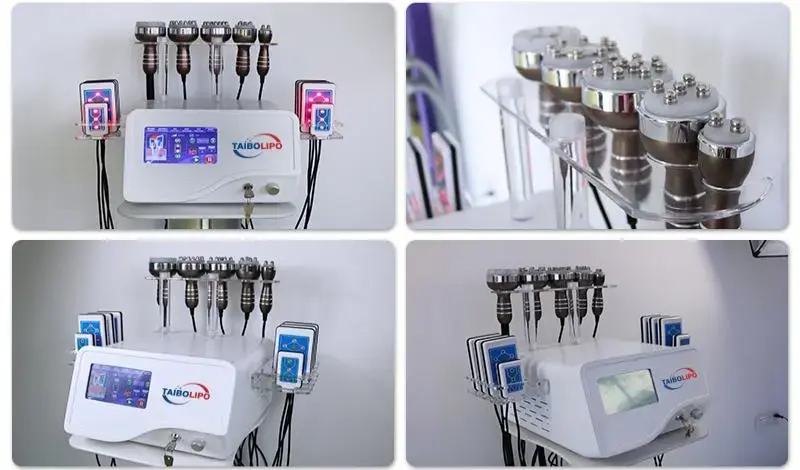
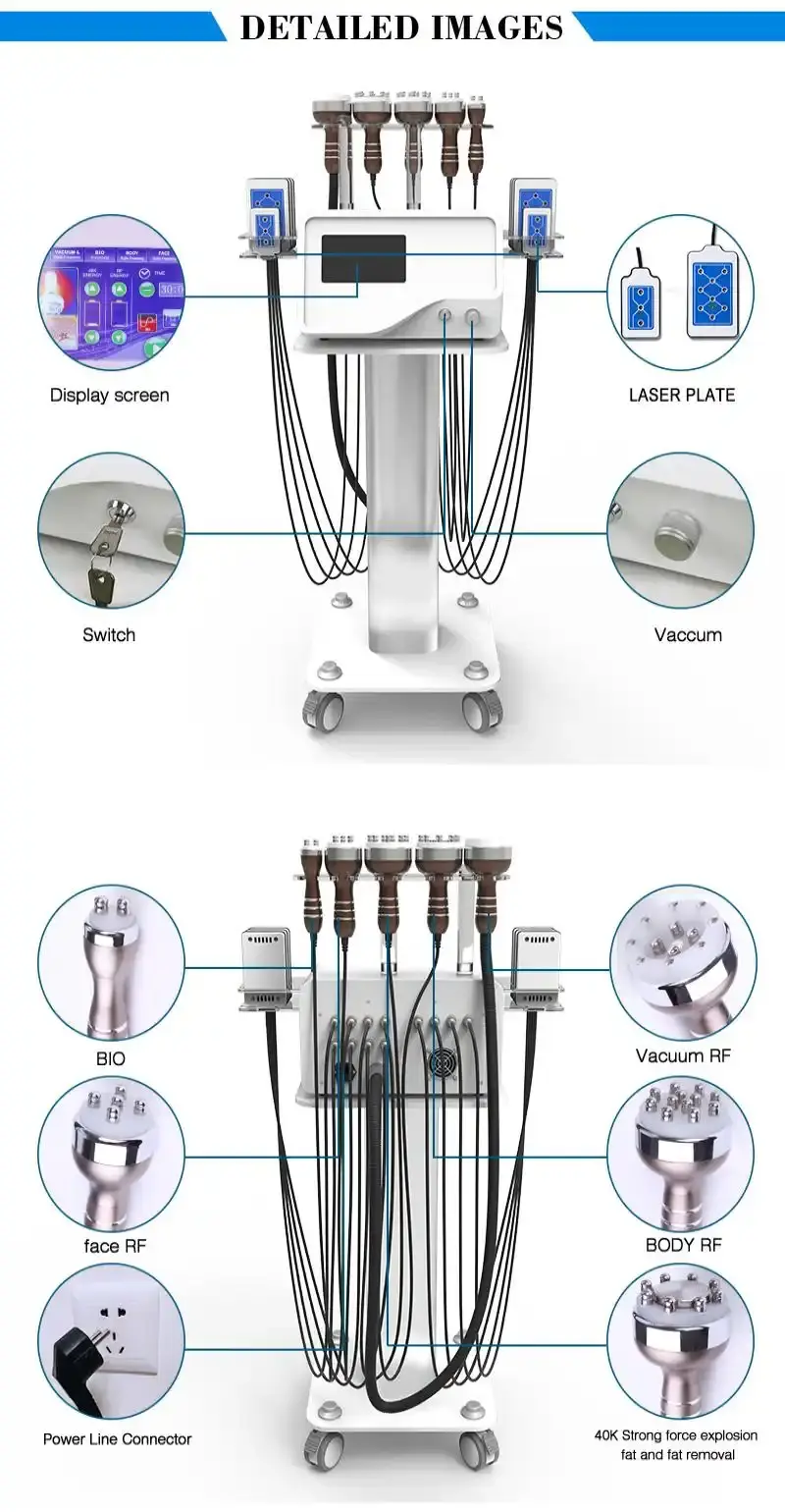
The Xi'an Taibo Laser Beauty Company makes a complete system with a 630-650nm diode laser, 40kHz cavitation, vacuum suction, and multipolar radio frequency all built into a single 150W base. The 8.4-inch color touchscreen makes it easier to use, and staff can quickly choose from pre-programmed routines or change settings to meet the needs of each client. With measurements of 45x35x55cm and a weight of 25 kg, the device is light enough for mobile practitioners to use while also being sturdy enough to show clients that it is professional.Adding vacuum force improves lymphatic flow and lets RF go deeper into tissue by bringing it closer to the electrodes. With this four-technology mix, you can improve circulation, reduce fat, change the texture of cellulite, and tighten skin all at the same time, without having to buy any extra tools. This system is a good buy for clinics that want to offer body contouring services because it has CE and ISO13485 certifications and a one-year guarantee from the maker. Taibo has been making things for 15 years and has exported to more than 180 countries. This gives them supply chain stability that younger companies can't match.
Specifications Comparison Table
Knowing the differences in technical terms helps buying teams figure out which specs are most important for their business model and the customers they want to attract. Here is a summary of the main differences between the two:
| Specification | Taibo 40K System | Typical Market Alternative A | Typical Market Alternative B |
|---|---|---|---|
| Cavitation Frequency | 40kHz | 40kHz | 25kHz |
| RF Poles | Multipolar | Bipolar | Tripolar |
| Additional Technologies | Vacuum + Diode Laser | Vacuum only | None |
| Power Output | 150W | 120W | 180W |
| Screen Interface | 8.4" Touchscreen | 7" Touchscreen | Physical buttons |
| Warranty Period | 1 year | 6 months | 1 year |
| Certifications | CE, ISO13485 | CE | CE |
| Approximate Investment | Mid-range | Budget | Premium |
The best choice relies on the size of the treatment area, the comfort of the staff, and whether you need to be able to treat the face as well as the body. Devices with both body and facial handpieces give you more service choices without having to buy more equipment. Just make sure your staff knows how to do facial protocols, which need more precise parameter settings.
How to Choose the Right 40k Cavitation Radio Frequency Machine for Your Business
Assessing Your Client Demographics
When it comes to beauty services, small businesses that do well usually focus on certain groups of customers instead of trying to serve everyone the same way for 40k cavitation radio frequency. A spa that caters to women who have recently given birth needs gadgets that can help with diastasis recti and loose belly skin. The RF part is especially important for this. A health club for fitness fans might focus on cavitation strength for areas of fat that won't go away no matter how much you exercise or eat. Figuring out who your main customers are will help you decide which technical specs are worth spending more on and which ones are just nice to have.The area also affects the choice of tools. To stay competitive, medical spas in cities may need more advanced platforms that use more than one technology. On the other hand, places in the suburbs or the country may do better with simple systems that focus on reliability over technological complexity. Your pricing strategies should be based on how you place yourself in the local market. For example, high-end neighborhoods can afford higher per-session fees that cover the cost of new tools, while value-conscious markets need lower overhead to keep prices competitive.
Evaluating Total Cost of Ownership
The purchase price is only one part of how much the tools really costs. Figure out how much ultrasound gel (about 50 ml per body session), new electrode pads, and any unique cartridges or disposable elements you will need. When it comes to high-volume practices, energy use is important. For example, a 150W system that runs for six hours a day uses about 0.9kWh of energy, which at average business power rates costs $40 to $50 a month.The terms of the warranty have a big effect on the costs of ownership. A strong one-year guarantee that covers both parts and work gives you budget peace of mind, while limited warranties that don't cover certain parts or require return shipping can add up to extra costs you didn't expect. Check to see if guarantee repair can be done on-site, if the item needs to be sent back to the maker, or if local authorized techs can do the work. International companies with well-established delivery networks, such as Taibo, usually set up area service to keep equipment downtime to a minimum.
Supplier Vetting and OEM Capabilities
When you buy something you'll use for a long time, it's important that the manufacturer is stable. Companies that have been around for 15 years or more have business plans and products that have been improved through multiple versions of technology. The fact that Xi'an Taibo Laser has been around since 2009 and is now producing in three separate areas shows that the company is mature in its manufacturing and can provide ongoing support.As your business grows and you think about making your own brand of tools, OEM and ODM services become more useful. Customization options from suppliers, ranging from simple name placement to full enclosure remake and software interface changes, allow businesses to grow in the future. Even if you don't need these features right away, making sure they exist will make sure that your relationship with your source can grow as your business does.
Best Practices for Using 40k Cavitation Radio Frequency Machines
Treatment Protocol Optimization
For cavitation treatments to work, the client needs to be properly prepared and their expectations need to be managed. To improve the transfer of ultrasonic waves and help the lymphatic system process released fatty acids, clients should drink enough water before sessions—about 64 ounces in the 24 hours before treatment. Post-treatment drinking is still very important; you should drink at least 32 ounces of water in the hours after each session.Treatments are usually given once a week so that the body has time to process what happened between rounds. If you schedule things more quickly, your liver could get too many triglycerides, and if you wait more than 10 days, the combined effects might be lessened. Most protocols call for six to eight original treatments, followed by maintenance sessions once a month to keep the effects. Take baseline measures and pictures of your progress to show clients that you're making progress and that their investment is worth it.
Operator Training Requirements
Even though cavitation systems look simple, using them correctly has a big effect on the results and the safety of the client. During ultrasound application, operators must keep the probe moving so that long periods of energy buildup don't happen and hurt or bruise the skin. RF wires need to be in constant touch with the right conductive medium. If they aren't, they cause uneven heating and less collagen activation.Manufacturers who offer full training are different from suppliers who only give out basic working instructions. Your staff will get the most out of the device if they have access to video lessons, live virtual training sessions, and technical support reps who know how to use aesthetic apps. Taibo's promise to keep teaching workers until they are proficient shows the level of support that safeguards your equipment investment.
Maintenance and Longevity
Regular repair keeps devices working well and makes them last longer for 40k cavitation radio frequency. Clean the sides of the handpiece after each treatment with disinfectants that are safe for ultrasonic transducers. Harsh chemicals can damage the acoustic coupling. Check wires for wear often, especially near connection places where stress builds up from being bent over and over. Professional servicing once a year is good for most systems. Technicians check the accuracy of the frequency output, adjust temperature monitors, and make sure that electrical safety rules are followed.When to change parts depends on how often they are used, but ultrasonic transducers should work at their best for about 1,500 to 2,000 treatment hours before their output starts to drop dramatically. Quality makers keep new parts for equipment in stock for 5 years or more after the purchase. This ensures long-term use, which cheaper options from uncertain sources can't promise.
Conclusion
When looking for the best cavitation tools for your small business, you need to weigh your short-term budget needs against your long-term working needs. When you mix 40kHz ultrasonic cavitation with multipolar radio frequency, you get a treatment that can address all of your clients' most common cosmetic worries. Systems from well-known companies like Xi'an Taibo Laser come with the certifications, warranties, and technical help that are needed to make body shaping services that last.By investing in new technology in a smart way, your business will be able to meet the growing demand for non-invasive fat loss treatments and set itself apart from rivals who only offer manual treatments or old technologies. The key is to really know your target market, check the credentials of your suppliers, and make sure that your operators get the right training so that they can use technology to get reliable results for clients that lead to referrals and return bookings.
FAQ
1.Is 40k cavitation radio frequency safe for all skin types?
Ultrasonic cavitation and radio frequency technologies don't depend on the color of the skin, so they can be used on all Fitzpatrick skin types. They also don't have the risks of darkening that come with some laser treatments. The main safety concerns are related to a person's basic health, not their skin. For example, people who have pacemakers, metal implants in treatment areas, are pregnant, or have liver problems need to get different treatments. When advice screening is done right, it finds problems with the treatment before it starts.
2.How often does equipment require professional servicing?
Professional care once a year is enough for most small businesses, but practices that see 15 or more clients a week may benefit from service meetings every six months. Daily care chores include cleaning the handpiece and visually inspecting the cables, which can be done quickly between clients. Manufacturers like Taibo that offer technical support 24 hours a day, 7 days a week can help fix small problems online, saving professional service calls for replacing parts or making sure the calibration is correct.
3.What warranty terms should small businesses expect?
Professional beauty tools must have at least one year of full coverage, which protects against manufacturing flaws and component breakdowns under normal working conditions. Some high-end makers offer extended warranties or service plans that cover regular maintenance. Find out if the warranty covers the costs of sending the item back, getting a new one, and a repair call. When compared to manufacturers who need foreign return shipping for fixes, suppliers who keep regional service networks up and running have less equipment downtime.
Partner with a Trusted 40k Cavitation Radio Frequency Supplier
Xi'an Taibo Laser Beauty Company, a 40k cavitation radio frequency supplier, sells professional-grade cavitation systems in 180 countries. They have been making them for 15 years and have been proven to work reliably. Our 40K Cavitation Vacuum RF Machine blends four technologies that work well together in a single base. This means that small businesses can treat a wide range of problems without having to buy a lot of different devices. We set the stage for successful body contouring services with CE and ISO13485 certifications, a full one-year insurance, and specialized technical support. Our OEM services can grow with your business by customizing tools to fit your changing brand personality. Email us at susan@taibobeauty.com to talk about your unique needs and find out how partnering with the right tools can help your beauty business grow faster.
References
1. Zelickson, B.D., et al. "Cryolipolysis for Noninvasive Fat Cell Destruction: Initial Results from a Prospective Study." Lasers in Surgery and Medicine, 2009.
2. Fatemi, A., and Kane, M. "High-Intensity Focused Ultrasound Effectively Reduces Adipose Tissue." Seminars in Cutaneous Medicine and Surgery, 2009.
3. Brown, S.A., et al. "Ultrasound Cavitation: A New Treatment Option for Localized Fat Reduction." Aesthetic Surgery Journal, 2014.
4. Mulholland, R.S., et al. "Radio Frequency Energy for Non-Invasive Skin Tightening." Aesthetic Plastic Surgery, 2011.
5. Sasaki, G.H., et al. "The Science and Clinical Applications of Acoustic Wave Therapy in Aesthetic Medicine." Journal of Cosmetic Dermatology, 2017.
6. Shiffman, M.A., and Di Giuseppe, A. "Body Contouring: Art, Science, and Clinical Practice." Springer-Verlag Berlin Heidelberg, 2010.





YOU MAY LIKE