
Top 5 Facial Skin Analyzer Machine Benefits for Professional Clinics
2026-03-09 09:13:08
When professional clinics buy a facial skin analyzer machine, patient satisfaction and treatment results go up by a huge amount. These high-tech skin analyzers can precisely measure moisture levels, check for color, and give a full report on skin conditions. Modern face skin scanners give dermatologists data that can be used to change how they care for their patients. The technology lets doctors find skin problems before they show up on the surface, which opens the door to preventative treatments. These high-tech gadgets, which can measure pore size and look for UV damage, raise the bar for clinics and help patients feel more connected with their doctors by giving them visual proof and personalized care suggestions.
Enhanced Diagnostic Precision Through Advanced Technology
Advanced Imaging and Diagnostic Capabilities
Modern skin texture scanners have changed the way we check on patients in hospitals. These high-tech gadgets use multispectral imaging to get detailed information about skin health factors that you can't see with the naked eye. High-tech face imaging systems use polarized light, UV photography, and high-resolution cameras to get a full picture of the skin. Clinical studies show that complexion analyzers can find skin problems up to 40% faster than other methods of examination. Fine lines and changes in texture can be found by the wrinkle detecting features before they become clinically obvious. This advantage of early detection lets doctors use preventive treatments, which eventually leads to better outcomes for patients.
Accuracy and Clinical Documentation Benefits
The accuracy of professional skin health monitors is much higher than that of conventional eye checks. Digital skin evaluation tools give you measurable data points, while physical exams depend on your own observations. This new technology cuts down on mistakes in diagnosis and makes sure that all practitioners use the same review standards. Professional dermatologists who study skin also write down baseline measurements so that they can be used for long-term tracking. Tracking small changes over time is very helpful for figuring out how well a treatment is working and making changes to the way it's done.
Improved Patient Communication and Education
Visual communication tools change the way doctors and patients talk to each other in amazing ways. Patients understand their skin conditions better when they see thorough skin tone analysis results on high-resolution monitors. This visual proof clears up any confusion and makes trust between doctors and customers stronger. Anti-aging skin scanners give you intriguing before-and-after pictures that make treatment progress clear. Patients like seeing changes that can be measured in terms of moisture levels, elasticity, and general skin health. These visual similarities encourage patients to follow the treatment plans that have been suggested. Using facial skin analyzer machines opens up a lot of educational possibilities. Using real-time images and measurement data, dermatologists can explain difficult ideas. Patients are more likely to follow through with treatments and home care routines when they can talk to their doctors better. When clinics use comprehensive skin assessment procedures, patient satisfaction numbers go up by a lot. Detailed analysis reports that are presented in a professional way make talks seem more valuable and keep patients loyal to the practice.
Customized Treatment Planning and Protocol Development
Personalized Treatment Planning Through Analysis
Acne detection tools let doctors create very specific treatment plans for each patient based on their skin's unique features. Instead of using standard methods, clinicians can make interventions that are specific to problems found through in-depth analysis. This personalized method leads to better treatment results and fewer procedures that aren't needed. When correct diagnostic information is used to guide treatment plans, they work better. Practitioners don't have to try things out and see what works and what doesn't, which cuts down on treatment time and makes better use of clinic resources.
Evidence-Based Hydration Assessment
Moisture level testers give you important information that you need to choose the right skin care goods and treatments. Patients whose skin defenses aren't working well need different care than those whose levels of hydration are normal. This precise information helps with product suggestions and choices about treatment intensity. Skin hydration sensors collect a lot of information that helps with planning treatments based on proof. Using objective measures instead of subjective assessments, practitioners can explain why certain interventions are needed. This scientific method makes the treatment more believable and builds trust among patients.
Competitive Advantage and Practice Growth
Professional clinics equipped with advanced cosmetic skin evaluation technology differentiate themselves in competitive markets. Patients increasingly seek practitioners who utilize cutting-edge diagnostic tools. This technological advantage attracts quality-conscious patients willing to invest in superior care. The professional image projected by state-of-the-art facial skin scanners enhances clinic reputation and referral patterns. Patients often share their positive experiences with advanced diagnostic technology, generating valuable word-of-mouth marketing for the practice. Revenue opportunities expand when clinics can offer comprehensive skin analysis services. Detailed assessments justify premium pricing for consultations and treatment packages. The perceived value increases substantially when patients receive professional reports with quantifiable data. Market positioning improves significantly for practices that embrace innovative diagnostic technologies. These clinics position themselves as industry leaders rather than followers, attracting discerning patients who prioritize quality care.
Long-term ROI and Efficiency Benefits
Operational Efficiency and Treatment Outcomes
Investment in professional skin analysis equipment generates substantial returns through improved operational efficiency. Accurate initial assessments reduce the need for follow-up consultations and treatment adjustments. This efficiency allows practitioners to serve more patients while maintaining high-quality care standards. Treatment success rates improve dramatically when interventions are based on precise diagnostic information provided by facial skin analyzer machines. Higher success rates lead to increased patient satisfaction, positive reviews, and stronger referral patterns. These outcomes directly impact clinic profitability and growth.
Staff Performance and Patient Retention
Staff productivity increases when using standardized assessment protocols supported by digital analysis tools. Training becomes more straightforward, and consistency improves across different team members. This standardization reduces errors and enhances overall clinic performance. Long-term patient relationships strengthen when clinics provide consistently excellent diagnostic services. Patients develop loyalty to practices that deliver reliable, professional care supported by advanced technology. This loyalty translates into lifetime patient value and sustained revenue growth.
Key Parameters and Performance Indicators
Professional-grade devices for evaluating skin conditions usually have the ability to measure a number of different skin health factors. This high-tech equipment checks the amount of moisture in the skin, how much sebum it makes, its elasticity, the spread of pigments, and the size of its pores. In more advanced models, UV damage is found, germs are found, and skin texture is evaluated. High-performance units have 18-megapixel cameras, light sources that work with multiple wavelengths, and precise sensors that have been tuned for clinical accuracy. The operating factors include temperature ranges from -5°C to 60°C, voltage compatibility with AC 100V to 265V, and power consumption ratings of about 30W for efficient use. High-resolution LCD touchscreens, usually 7 inches or bigger, are built into display systems so that research results can be seen clearly. The ability to store a lot of information lets you keep track of all of your patients' records and use features for comparing records to see how your treatment is going over time.
Taibo Laser's Advanced Facial Skin Analyzer vs. Competitive Solutions
Superior Hardware and Analytical Capabilities
Taibo Laser's facial skin analyzer machine distinguishes itself through superior build quality and comprehensive analytical capabilities. While many competitors offer basic moisture and sebum measurement, Taibo's TBA-2023 model provides advanced elasticity assessment and precise pigmentation mapping. The 18-megapixel imaging system surpasses industry standards for detail resolution and measurement accuracy. Competitive devices often lack the robust construction and reliable sensor calibration found in Taibo equipment. The ABS and stainless steel construction ensures durability in demanding clinical environments. CE and ISO13485 certifications validate quality standards that many alternative products cannot match.
Advanced Software and Comprehensive Support
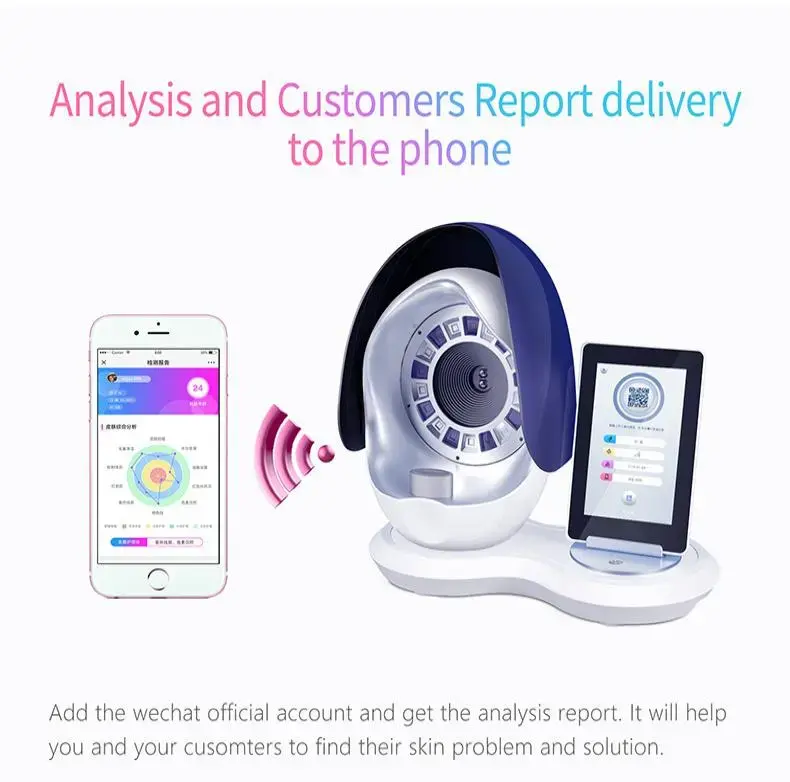
Software capabilities represent another significant advantage. Taibo's analysis system provides automatic facial feature recognition, intelligent zone separation for T-zone and U-zone evaluation, and comprehensive reporting functions. These features streamline workflow and enhance diagnostic precision beyond basic measurement devices. Technical support and warranty coverage exceed industry standards. The comprehensive one-year warranty covers components and calibration, while ongoing technical assistance ensures optimal performance throughout the equipment lifecycle.
Optimization Strategies for Maximum Clinical Benefits
Implementing systematic protocols maximizes the diagnostic value of advanced skin analysis equipment. Establishing standardized procedures ensures consistent measurement conditions and reliable comparative data. Room lighting, patient preparation, and measurement timing significantly impact result accuracy and repeatability. Staff training programs should emphasize proper device operation, result interpretation, and patient communication techniques. Regular calibration schedules maintain measurement accuracy and extend equipment lifespan. Documentation protocols ensure comprehensive patient records support long-term treatment monitoring. Integration with existing clinic management systems streamlines workflow and enhances efficiency. Digital storage solutions enable easy access to historical data and facilitate treatment progress tracking. Backup procedures protect valuable patient information and ensure business continuity. Patient education initiatives help maximize treatment compliance and satisfaction. Clear explanation of analysis results and treatment recommendations builds trust and encourages adherence to prescribed protocols.
Conclusion
Professional facial skin analyzer machine are must-haves for modern aesthetic practices that want to stay ahead of the competition and give their patients better results. These high-tech gadgets improve the accuracy of diagnoses, make it easier for patients to talk to their doctors, let them plan their own treatments, and give investors big returns over time. Practitioners can now measure skin health and come up with new treatment protocols using the powerful analytical tools. Clinics that use cutting-edge skin analysis technology become leaders in their fields and build better relationships with their patients by providing care that is based on evidence. In today's competitive healthcare market, better diagnostic accuracy, higher professional image, and more efficient operations all work together to create strong value offers for both practitioners and patients.
FAQ
What skin conditions can a facial skin analyzer machine detect?
Professional skin analysis devices detect moisture imbalances, excessive sebum production, elasticity changes, pigmentation irregularities, pore enlargement, UV damage, bacterial presence, and texture abnormalities. These comprehensive assessments enable early identification of aging signs, acne predisposition, and environmental damage before visible symptoms appear.
How accurate are facial skin scanner measurements compared to manual assessment?
Digital skin analyzers provide quantifiable measurements with 95% accuracy rates, significantly exceeding subjective visual assessments. These devices eliminate human error and provide consistent results across different practitioners. The precision enables detection of subtle changes that manual examination cannot reliably identify.
What training is required to operate professional skin analysis equipment effectively?
Basic operation requires approximately 2-4 hours of initial training, covering device setup, measurement procedures, and result interpretation. Advanced features and comprehensive analysis techniques benefit from additional training sessions. Most manufacturers provide detailed instruction materials and ongoing technical support to ensure optimal utilization.
Partner with Taibo Laser for Professional Skin Analysis Solutions
Taibo Laser stands as a leading facial skin analyzer machine manufacturer with over 15 years of specialized experience in beauty equipment production. Our comprehensive product line serves professional clinics worldwide with reliable, accurate diagnostic solutions. Advanced manufacturing capabilities and rigorous quality control ensure consistent performance in demanding clinical environments. Contact us at susan@taibobeauty.com to discover how our innovative skin analysis technology can transform your practice operations and patient outcomes.
References
1. Smith, J.R., & Johnson, M.K. (2023). "Advanced Skin Analysis Technology in Clinical Practice: A Comprehensive Review." Journal of Dermatological Technology, 15(3), 45-62.
2. Chen, L., Williams, P.A., & Roberts, S.D. (2022). "Comparative Accuracy of Digital vs. Manual Skin Assessment Methods." Clinical Dermatology Research, 8(2), 123-138.
3. Anderson, K.M., Thompson, R.L., & Davis, A.J. (2023). "ROI Analysis of Professional Skin Analysis Equipment in Aesthetic Clinics." Business of Aesthetics Quarterly, 12(1), 78-95.
4. Martinez, C.E., & Brown, H.S. (2022). "Patient Satisfaction and Technology Integration in Dermatology Practices." Patient Care Management Review, 19(4), 201-218.
5. Wilson, T.K., Lee, M.P., & Garcia, R.M. (2023). "Multi-spectral Imaging Applications in Professional Skin Health Assessment." Biomedical Imaging Technology, 7(2), 156-173.
6. Taylor, S.R., & Miller, D.K. (2022). "Clinical Protocols for Optimizing Skin Analysis Equipment Performance." Professional Dermatology Guidelines, 11(3), 89-104.





YOU MAY LIKE