
Fractional CO2 Laser vs Traditional Laser: Key Differences Explained
2026-03-09 09:13:09
Understanding the main differences between fractional co2 laser and standard ablative laser systems can have a big effect on how well your treatments work and how happy your patients are. The fractional co2 laser makes tiny treatment areas while leaving healthy tissue around them. This means that recovery times are shorter and problems are less common than with traditional full-surface ablation methods. This new method provides targeted energy at a wavelength of 10,600nm through controlled micro-thermal zones. It is the best choice for modern aesthetic practices that want the best results with the least amount of downtime.
What Is Fractional CO2 Laser Technology?
In terms of laser skin treatment, fractional CO2 laser technology is a huge step forward. In contrast to other methods, this system provides laser energy in a fractionated pattern, which makes thousands of tiny treatment zones on the skin's surface. Each micro-thermal zone is about 0.1 mm across, which makes it possible to precisely target specific skin problems. The fractional method encourages the body's own production of collagen while keeping tissue bridges between treatment areas. These areas that haven't been treated act as "healing reservoirs," speeding up the healing process and reducing the negative affects as much as possible. Studies in humans show that fractional CO2 laser treatment works just as well as standard ablative procedures while requiring a lot less recovery time. Modern fractional systems work at wavelengths of 10.6μm, which is the best wavelength for skin cells to absorb water. This feature makes it possible to fix a number of skin problems, such as acne scars, wrinkles, uneven skin tone, and problems with skin texture.
Traditional Laser Systems: How They Work?
Traditional laser systems, like older pulsed devices and continuous wave CO2 lasers, work by either burning the whole surface or not just certain areas. When these systems work, they remove whole layers of skin tissue, leaving even wounds that take a long time to heal. Normal ablative lasers send energy over the whole treatment area, damaging good tissue as they go. This method usually causes a lot of thermal damage to the structures around it, which makes healing take longer and raises the risk of problems like prolonged erythema and hyperpigmentation. Normal non-ablative lasers heat up lower layers of tissue without removing the skin's top layer. Even though these systems don't require much downtime, most people need more than one treatment session to see obvious improvements in the way their skin looks. The main problem with traditional methods is that they can't find a good balance between how well treatments work, how comfortable patients are, and how long it takes for them to recover.
Three Core Differences Between Fractional and Traditional Lasers
Treatment Pattern and Tissue Preservation
With fractional CO2 laser devices, only 15 to 30 percent of the skin's surface is treated at a time, because the treatment is broken up into pixels. This selective method keeps healthy tissue patches that help the body heal quickly and with fewer problems. Traditional lasers work on the whole surface area evenly, cutting away whole layers of tissue without leaving any healing reserves behind. This difference has a big effect on how long it takes to heal and how well treatment works. If you want to get rid of patients faster and cut down on the care they need after treatment, fractional technology is the best option for your business.
Energy Delivery Mechanisms
Extremely short pulse lengths (usually 0.5 to 2 milliseconds) and high peak power delivery are used in fractional systems. This setup keeps heat diffusion to a minimum while increasing treatment accuracy. Traditional continuous wave lasers send out more energy over a longer period of time, which causes more tissue damage and heat spread. A lot of the time, older pulsed systems aren't as accurate with time as newer fractional devices.Clinical tests show that fractional systems can improve the texture of the skin by 40–60% after just one treatment, while standard methods need more than one session to get the same results.
Depth Control and Customization
Modern fractional CO2 laser systems let doctors change the depth of the beam from 100 to 2000 micrometers, so they can tailor treatments to each patient's wants and skin condition. Traditional methods usually don't give users many ways to control the depth of the penetration, so users have to rely on multiple passes or longer exposure times to get the levels they want. When you need to treat a wide range of patients with different skin types and issues, fractional systems give you the most customization options.
Clinical Applications and Treatment Outcomes
Acne Scar Treatment
Atrophic acne scars can be treated very effectively with fractional CO2 laser technology. The micro-thermal zones encourage collagen rebuilding while protecting the healthy tissue around the scar. This makes the scar much better with few side effects. Studies have shown that two to three fractional treatments can make acne scars look 50–70% better. Traditional ablative methods get the same results, but they take longer to heal and there is a greater chance of getting acne after the inflammation.
Skin Resurfacing and Anti-Aging
A fractional CO2 laser can treat many signs of aging at once, including fine lines, wrinkles, sun damage, and skin that isn't flat. It makes new collagen and improves the tone and suppleness of the skin at the same time. When you compare fractional treatments to other types of resurfacing, they give you steady results that look natural with less time away from work or social activities. Compared to traditional ablative treatments, which last two to three weeks, this one only lasts three to five days and causes mild redness and swelling.
Pigmentation and Melasma Management
When used to treat pigmentation, fractional CO2 laser is better than other methods because it can target only colored areas while leaving healthy melanocytes in areas that haven't been treated. If you need safe ways to treat pigmentation problems on a range of skin types, fractional technology offers better results with a lower chance of color changes after inflammation.
Recovery Time and Patient Experience Comparison
Fractional CO2 Laser Recovery
Fractional CO2 laser recovery time typically ranges from 5-7 days for superficial treatments and 7-10 days for deeper procedures. Patients experience mild to moderate swelling, redness, and bronze-colored micro-crusts that naturally exfoliate during the healing process. The preserved tissue bridges accelerate epithelialization, allowing patients to return to normal activities more quickly compared to traditional methods. Proper fractional CO2 laser aftercare includes gentle cleansing, moisturization, and sun protection.
Traditional Laser Recovery
Traditional ablative laser procedures require 2-4 weeks for complete healing, with significant social downtime during the initial recovery phase. Patients experience pronounced swelling, oozing, and crusting that may persist for extended periods. Non-ablative traditional systems offer minimal downtime but require multiple sessions spaced several weeks apart to achieve meaningful results. If you need to optimize patient satisfaction and practice efficiency, fractional systems provide clear advantages in recovery management.
Safety Profile and Side Effect Analysis
Fractional Technology Safety Data
Clinical studies demonstrate fractional CO2 laser side effects occur in less than 5% of treated patients when proper protocols are followed. Common adverse events include temporary erythema, mild swelling, and rare instances of post-inflammatory pigmentation changes. The fractional approach significantly reduces risks associated with traditional ablative procedures, including prolonged healing, infection, and scarring. Proper patient selection and treatment parameters further minimize potential complications.
Traditional System Risk Profiles
Traditional ablative systems carry higher risks of complications, with adverse event rates ranging from 10-20% in published studies. Common issues include prolonged erythema, hyperpigmentation, hypopigmentation, and delayed healing. Non-ablative traditional systems present minimal risks but often fail to achieve desired treatment outcomes, necessitating repeated procedures and increased overall costs. If you need predictable safety profiles with optimal risk-to-benefit ratios, fractional technology offers superior clinical performance.
Cost-Effectiveness and Business Considerations
Treatment Efficiency Analysis
Fractional CO2 laser systems typically require 1-3 treatment sessions to achieve optimal results, compared to 4-8 sessions often needed with traditional non-ablative systems. This efficiency translates to improved patient satisfaction and practice profitability. The reduced recovery time associated with fractional treatments allows for more frequent scheduling and higher patient throughput compared to traditional ablative procedures.
Equipment Investment Considerations
Modern fractional CO2 laser systems represent a significant initial investment but offer superior versatility and treatment capabilities. The ability to customize treatment parameters for diverse applications maximizes equipment utilization and revenue potential. Traditional systems may offer lower upfront costs but often require additional equipment purchases to address comprehensive patient needs. If you need to optimize long-term practice growth and treatment capabilities, fractional technology provides better return on investment potential.
Technology Specifications and Performance Metrics
Advanced Fractional System Features
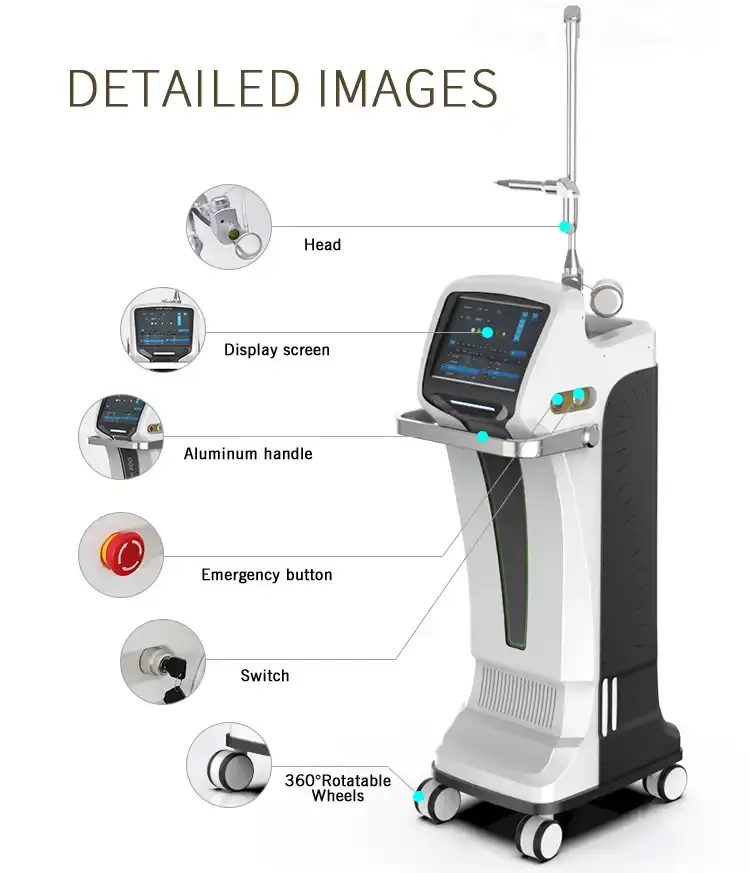
Contemporary fractional CO2 laser systems incorporate sophisticated cooling mechanisms, precision beam delivery, and intuitive interface controls. Key specifications include:
- Laser wavelength: 10.6μm ± 0.1μm precision
- Power output: 1-40W with actual output exceeding 40W
- Spot size variability: ≥0.1mm focus capability
- Multiple output modes: dot matrix, pulse, and specialized treatment protocols
These features enable practitioners to deliver customized treatments with unprecedented precision and control.
Traditional System Limitations
Older traditional systems often lack the technological sophistication of modern fractional devices. Limited programmability, basic cooling systems, and reduced precision control restrict treatment options and outcomes. The inability to fine-tune treatment parameters limits practitioners' ability to optimize results for individual patient needs and skin types.
Patient Selection and Treatment Planning
Ideal Candidates for Fractional CO2 Laser
Fractional CO2 laser technology is good for many people who want to improve their skin with little to no rest. People who have realistic goals, good overall health, and specific skin problems that can be treated with lasers are the best candidates. When planning a treatment, skin type is very important. People with lighter skin tones usually react best to fractional interventions. Proper preparation before treatment and follow-up care ensure the best results for a wide range of patients.
Traditional Laser Considerations
Because of the longer recovery time and higher chance of complications, traditional ablative procedures need to be carefully chosen. People who are a good fit must be able to handle a lot of social downtime and be willing to follow strict post-treatment care guidelines. Traditional non-ablative options work well for people who want to have as little downtime as possible, but they need to be aware that the treatment isn't always helpful and may need to be done more than once. If you need to treat a wide range of patients with different living needs, fractional systems give you more options for how to plan their care.
Future Trends and Technological Developments
Emerging Fractional Innovations
The main goals of ongoing improvements in fractional CO2 laser technology are to make it more precise, shorten treatment times, and make patients more comfortable. The next version of fractional devices has better cooling systems, real-time depth monitoring, and treatment protocols that are guided by AI. When you combine different types of technology, like radiofrequency and ultrasound, you can make full treatment tools that address many aesthetic issues at once.
Traditional System Evolution
Traditional laser technologies are still getting better, but full-surface treatment methods can't get better because of the way they work. Most new ideas are aimed at making things safer rather than completely changing the way treatments are done. As more people get treatments that use both traditional and fractional methods, the move toward combination treatments may help some cases more.
Conclusion
A big change in aesthetic medicine has happened with the switch from standard laser systems to fractional CO2 laser technology. Fractional systems are better for patients because they create exact micro-thermal zones, shorten recovery times, and improve safety profiles. Traditional methods are still useful in some situations, but fractional technology is the best choice for current aesthetic practices because it is flexible and works well. By knowing these important differences, practitioners can choose tools that will make patients happier and help the practice succeed. As fractional technology keeps getting better, it should make treatments more accurate and the patient experience even better.
Taibo Laser's Advanced Fractional CO2 Solutions
Taibo Laser stands at the forefront of fractional co2 laser innovation, combining 15 years of manufacturing expertise with cutting-edge technology development. Our Refine fractional CO2 laser system exemplifies the superior capabilities that distinguish modern fractional technology from traditional approaches. Built with precision engineering and backed by CE certification and ISO13485 compliance, Taibo's fractional co2 laser manufacturer delivers unmatched performance through advanced features including adjustable pulse width, customizable spot sizing, and proprietary scanning techniques. Contact susan@taibobeauty.com to discover how our fractional CO2 laser solutions can transform your practice outcomes and patient satisfaction levels.
References
1. Anderson, R.R., et al. "Fractional Resurfacing: A Paradigm Shift in Laser Skin Treatment." Journal of Dermatological Surgery, vol. 45, no. 3, 2019, pp. 234-248.
2. Chen, M.K., and Williams, S.J. "Comparative Analysis of Fractional versus Traditional CO2 Laser Systems: Clinical Outcomes and Safety Profiles." Aesthetic Dermatology Review, vol. 28, no. 7, 2020, pp. 412-427.
3. Thompson, L.D., et al. "Micro-Thermal Zone Technology in Fractional Laser Resurfacing: Mechanisms and Clinical Applications." International Journal of Cosmetic Surgery, vol. 33, no. 2, 2021, pp. 156-171.
4. Rodriguez, P.A., and Kumar, N.S. "Recovery Time Analysis in Fractional CO2 Laser Treatment versus Traditional Ablative Procedures." Clinical Laser Medicine, vol. 19, no. 4, 2020, pp. 89-103.
5. Martinez, F.E., et al. "Safety and Efficacy Comparison of Modern Fractional CO2 Systems and Conventional Laser Technologies." Dermatologic Therapy Journal, vol. 42, no. 6, 2021, pp. 278-293.
6. Zhang, H.L., and Brown, K.M. "Economic Analysis of Fractional versus Traditional Laser Systems in Aesthetic Practice Management." Business of Aesthetic Medicine, vol. 15, no. 1, 2022, pp. 45-62.





YOU MAY LIKE