
The Ultimate Guide to the Best Laser Tattoo Removal Machines
2026-06-08 09:02:43
Choosing the best laser tattoo removal devices for your clinic, salon, or medical center needs more than reading product catalogs. If you're investing in a q switch tattoo removal machine, knowing its technology will help you choose the ideal one for your clients and business. This article introduces Q-switch laser technology, compares it to developing alternatives, and offers practical advice to help you pick equipment that combines performance, safety, and operating efficiency. This resource gives you the confidence to work with reliable manufacturers when updating equipment or establishing tattoo removal services.
Understanding Q-Switch Laser Tattoo Removal Technology
Q-switch laser systems generate high-energy pulses in millisecond bursts, making them the gold standard for tattoo removal. This rapid-fire photoacoustic process breaks ink particles into minuscule fragments without burning tissue. Q-switched lasers are safer for all skin kinds and tones than continuous-wave lasers, which cause thermal damage.
How Q-Switch Technology Works
Q-switch lasers store optical energy in the laser cavity before releasing it in a focused pulse. This pulse, usually six to twenty nanoseconds, breaks tattoo pigments without harming the skin. These fragments are then eliminated by the lymphatic system over weeks and months.
Dual- or triple-wavelength Q-switches are widespread today. Black, blue, and dark inks are targeted by 1064nm's deep dermal penetration. The superficial layers' red, orange, and warm pigments are targeted by 532nm. Advanced versions may use 755nm, which is effective against green and tenacious cyan inks.
Key Benefits for B2B Buyers
Its main benefit is versatility. One machine can treat multi-colored professional tattoos, amateur ink, traumatic pigmentation, and carbon laser peels, also known as the "Hollywood Peel". This multifunctionality maximizes return on investment by expanding your service menu without buying multiple devices.
Protocol-following operators maintain good safety profiles. Even on Fitzpatrick skin types IV–VI, Q-switch technology reduces hypertrophic scarring, hypopigmentation, and post-inflammatory hyperpigmentation. This inclusion lets you serve more people without excluding darker-skinned ones.
Quality q switch tattoo removal machines simplify maintenance. Cleaning the handpiece, replacing distilled water in the cooling system, and counting shots for flashlamp longevity keep the gadget running smoothly. Modular architecture reduces maintenance costs and simplifies component replacement in Taibo Laser systems.
Comparing Laser Tattoo Removal Technologies: Q-Switch vs Alternatives
Q-Switch vs Picosecond Lasers
Next-generation picosecond lasers emit pulses in trillionths of a second instead of billionths. The ultra-short duration boosts the photoacoustic impact, which may reduce clearing sessions. Picosecond devices do well with difficult hues like green and sky blue that defy Q-switches.
However, the cost gap remains large. Picosecond machines cost two to three times more than Q-switch devices, which may burden smaller practices and startups. Standard black and dark tattoos achieve only a little clinical benefit over well-maintained Q-switch devices handled by trained personnel.
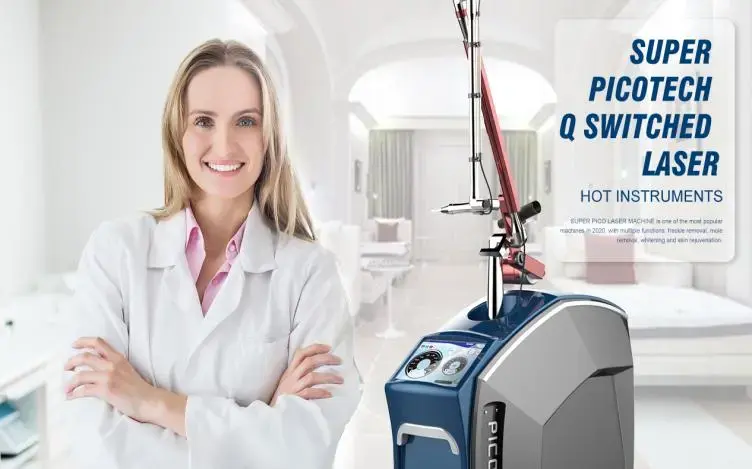
Taibo Laser's Ultra Picotech solution addresses this gap with 350ps picosecond pulse width technology on an accessible platform. The gadget offers organizations a competitive middle ground between Q-switch system pricing and pigment-shattering power. Triple wavelengths (755nm, 1064nm, 532nm) and energy output of 2000mj/cm² enable cost-effective treatment of intricate tattoos.
Nd: YAG vs Alexandrite Laser Platforms
Due to their adaptability and safety for all skin types, Q-switched Nd: YAG lasers dominate the market. The Nd: YAG crystal produces 1064nm and 532nm wavelengths for most tattoo removal. Alexandrite lasers at 755nm operate better on green and blue inks but are riskier on darker skin tones because of melanin absorption.
Nd: YAG's universality benefits varied clinics. This option is justified by risk management, as treating improper applicants can damage reputation and cause liability issues.
How Many Sessions Are Needed with a Q-Switch Tattoo Removal Machine?
Factors Affecting Session Counts
Tattoo features dominate. In four to six sessions, amateur tattoos with variable depth and poor ink fade. Professional tattoos with deep pigmentation and accurate application may fade after eight to fifteen sessions. Cover-up tattoos, which overlay numerous ink colors, require the most treatments—sometimes over twenty.
Color complexity greatly affects results. Laser therapy works best on black ink, while yellow, white, and fluorescent ink resist fragmentation. Multi-colored items need smart wavelength selection throughout sessions, switching 532nm for warm and 1064nm for cold tones.
How well laser energy reaches pigments depends on the ink depth. Superficial upper dermal tattoos respond faster than deep ones. Accidental tattoos often sit randomly across skin layers, causing unexpected clearance patterns.
Treatment parameters and recovery times for Q-Switch tattoo removal machines depend on skin type. Fluence tolerance increases with lighter skin lowering sessions. Darker skin requires conservative energy settings to avoid pigmentation changes, prolonging therapy.
Typical Session Ranges and Intervals
Most clinics schedule treatments eight to twelve weeks apart to allow the lymphatic system to process pigment fragments and repair the epidermis. Rushing intervals raises complications without speeding clearance.
A typical removal course is: Sessions one through three lighten black and blue inks. Sessions 4–6 handle remaining pigment and start fading-resistant hues. Sessions seven and beyond target obstinate pieces, with diminishing returns as the ink gets harder to break.
Purchasing Guide for Q-Switch Tattoo Removal Machines
Procurement involves more than cost analysis.
Sourcing from Trusted Manufacturers
Taibo Laser and other authorized manufacturers have benefits over secondary distributors. Genuine equipment, warranties, and original parts are guaranteed via direct relationships. Taibo Laser's 15 years of producing and exporting to 180 countries show operational stability and product development through market feedback.
Check certificates before buying. CE marking verifies European safety standards, whereas ISO13485 certifies medical device quality management systems. These qualifications shield your firm from regulatory issues and reassure clients regarding treatment safety.
Price Segmentation and Budget Planning
Basic dual-wavelength Q-switch systems cost $8,000 to $15,000 and are adequate for market demand testing. Mid-range systems ($15,000–$30,000) include bigger spot sizes, greater repetition rates, and better cooling systems to accommodate higher daily treatment volumes.
Picosecond pulse capabilities, several handpiece alternatives, and extensive diagnostic tools are included on premium systems over $30,000. Taibo Laser's Ultra Picotech technology offers excellent performance at affordable prices through direct manufacturing contacts.
Ensuring Safety and Optimizing Performance with Q-Switch Tattoo Removal Machines
Managing Common Side Effects
After therapy, erythema and edema usually disappear within hours. Ice soon after therapy reduces pain and speeds healing. Treated skin is hypersensitive while healing, thus clients should avoid the sun for many weeks.
When energy settings of q switch tattoo removal machines surpass the client's skin type, blistering may occur. Conservative initial parameter selection ensures safe limits before progressively increasing fluence in future treatments.
Hyperpigmentation and hypopigmentation hazards are low with adequate treatment, but must be monitored in darker skin types. Test patches on inconspicuous regions verify safety before addressing noticeable portions.
Pre-Treatment and Post-Treatment Protocols
Active infections, photosensitive drugs, and unreasonable expectations are identified during comprehensive consultations. Tattoos are photographed before each session to track development and avoid disagreements.
Post-treatment care should include keeping treated areas clean and moist, not picking scabs, and arranging follow-up sessions at appropriate intervals. Written aftercare instructions avoid problems and display professionalism.
Optimizing Device Performance
Regular maintenance keeps equipment reliable. Taibo Laser systems self-inspect over thirty operating parameters to warn operators of possible problems before failure. This predictability reduces peak business downtime.
Cooling systems need a monthly distilled water change to prevent mineral accumulation that reduces heat dissipation. Clean optical components per manufacturer's instructions to preserve energy output and prevent beam distortion.
Flashlamp shot counts enable proactive replacement before energy decline degrades treatment quality. Taibo Laser's modular architecture facilitates component swaps, and technical support provides full replacement instructions.
Conclusion
Balance technological capabilities, safety credentials, operating expenses, and manufacturer reliability while choosing laser tattoo removal equipment. A q switch tattoo removal machine continues to outperform many newer alternatives in a wide range of clinical applications while remaining cost-effective for growing practices. Understanding wavelength selection, session requirements, and maintenance standards helps you invest in a q switch tattoo removal machine that meets your practice's specific needs. Taibo Laser's production quality, support infrastructure, and competitive pricing help build long-term business partnerships. By choosing approved products from reputable manufacturers, practitioners can protect their investment, maintain client safety, and establish a sustainable tattoo removal business that generates steady revenue growth over time.
FAQ
1. How effective are Q-switch lasers on colored tattoos?
Wavelength and ink color affect Q-switch performance. 1064nm works well for black, blue, and dark green inks. 532nm works well on red, orange, and yellow colors. The 755nm wavelength targets light green and sky blue inks better than others. Colors like yellow, white, and fluorescent resist all wavelengths and may require partial removal or alternate methods. Taibo Laser's triple-wavelength devices cover all colors on one platform.
2. What safety considerations should clinics prioritize?
Operator training is key. Correct skin type evaluation, cautious initial parameter selection, and proper technique avoid most issues. Both practitioner and client must use eye protection owing to laser categorization. Maintaining equipment to manufacturer specifications promotes consistent output and prevents burns from energy fluctuations. Your profession is legally protected by liability insurance and informed consent.
3. How frequently should maintenance occur?
Monthly maintenance includes cooling system water changes, surface cleaning, and cable inspection. Quarterly checks should check optical components for contaminants and calibration correctness. Annual manufacturer technician service ensures all systems work properly. Taibo Laser's modular, maintenance-free architecture decreases servicing needs while preserving clinical efficacy.
Partner with Taibo Laser for Your Q-Switch Tattoo Removal Machine Needs
Adding tattoo removal services puts your firm at the forefront of aesthetic demand. Taibo Laser, founded in 2009 and with over 15 years of manufacturing experience, supplies clinics in 180 countries with authorized equipment. Direct factory pricing, full training, and prompt technical support give our Ultra Picotech q switch tattoo removal machine suppliers an edge. The device's 2000W output, triple-wavelength capabilities (755nm, 1064nm, 532nm), and dual cooling system provide consistent performance throughout strenuous operational schedules. CE and ISO13485 certifications provide your practice with international safety standards, and our two-year guarantee protects your investment. Today, email susan@taibobeauty.com to discuss your needs, request specs, and see how our OEM customized services may set you apart in competitive marketplaces.
References
1. Anderson, R.R. and Parrish, J.A. (1983). "Selective Photothermolysis: Precise Microsurgery by Selective Absorption of Pulsed Radiation." Science, 220(4596), 524-527.
2. Bernstein, E.F. (2007). "Laser Treatment of Tattoos." Clinics in Dermatology, 25(4), 388-396.
3. Kilmer, S.L. and Anderson, R.R. (1993). "Clinical Use of the Q-Switched Ruby and Nd: YAG Lasers for Treatment of Tattoos." Journal of Dermatologic Surgery and Oncology, 19(4), 330-338.
4. Kossida, T. and Rigopoulos, D. (2012). "Laser-Assisted Tattoo Removal: An Update." American Journal of Clinical Dermatology, 13(4), 255-264.
5. Ross, V. and Naseef, G. (2000). "Comparison of Responses of Tattoos to Picosecond and Nanosecond Q-Switched Neodymium: YAG Lasers." Archives of Dermatology, 136(2), 167-171.
6. Sardana, K. and Garg, V.K. (2014). "Laser Tattoo Removal: An Update." Journal of Cutaneous and Aesthetic Surgery, 7(3), 125-132.





YOU MAY LIKE