
Analysis of Freezing Point 808nm Diode Laser Hair Removal
2026-06-09 09:07:19
The freezing point 808 laser Hair Removal Machine uses the gold-standard wavelength and integrated cooling systems to provide totally painless treatments. Semiconductor diode technology targets melanin in hair follicles while freezing point cooling preserves the epidermis in the 808 laser hair removal machine. This dual-action technique reduces treatment discomfort and thermal injury risk, two industry issues. Understanding this technology's scientific base and operational benefits helps B2B buyers in US beauty salons, dermatological clinics, and wellness centers make educated procurement decisions that affect customer pleasure and business profitability.
Understanding the Science Behind Freezing Point 808nm Diode Laser Hair Removal
The phrase "freezing point" refers to the chilly feeling customers feel during treatment, which contrasts with laser pain. Selective Photothermolysis uses the 808nm wavelength to target chromophores (melanin) in hair shafts and follicular structures without injuring surrounding tissue.
How the 808nm Wavelength Works
Dermatologists say 808nm is the "sweet spot" for hair removal. The epidermis carries light to the hair bulb and bulge, where stem cells live. Once absorbed by melanin, optical light becomes thermal energy, boosting the follicle temperature to 65-72°C, the threshold for irreversible hair-producing cell damage. The 808nm strikes the best compromise between melanin affinity and depth penetration, unlike shorter wavelengths (755nm Alexandrite) and longer wavelengths (1064nm Nd: YAG), which penetrate deeper but absorb less melanin.
The Cooling Revolution in Pain Management
Traditional laser treatments were painful and required topical anesthetics. Modern freezing point systems use semiconductor refrigeration, air cooling, and sapphire contact cooling. Taibo's 1-5 level customizable cooling protects the epidermis while targeting follicles at 0-5°C. In addition to comfort, this cooling allows higher fluence settings (energy density) without thermal damage risk, improving outcomes in fewer sessions.
Professional equipment's air cooling with semiconductor refrigeration technology maintains thermal control over long treatments. Procurement managers should consider cooling system dependability when evaluating vendors since it affects machine downtime and maintenance expenses.
Comparing 808nm Diode Laser with Other Hair Removal Technologies
By understanding competing technologies, procurement professionals may justify investment decisions and position services successfully in their markets. There are various hair removal systems with different features.
Wavelength Comparison and Skin Type Compatibility
Alexandrite lasers at 755nm work well on light skin tones (Fitzpatrick Types I-III) with fine to medium hair, but can hyperpigmentate darker skin. IPL employs broad-spectrum light (500-1200nm) with filters, allowing adaptability but less precision and power than 808 laser hair removal machines and lasers. The 1064nm Nd: YAG wavelength safely treats IV-VI skin but requires longer sessions due to decreased melanin absorption.
The 808nm diode laser connects these extremes. Clinical evidence shows safe and successful therapy for Fitzpatrick skin types I–V, with type VI treatment possible with parameter adjustment. U.S. clinics with diverse clientele benefit from this adaptability, reducing the need to buy numerous platform types for different skin tones.
Treatment Speed and Client Throughput
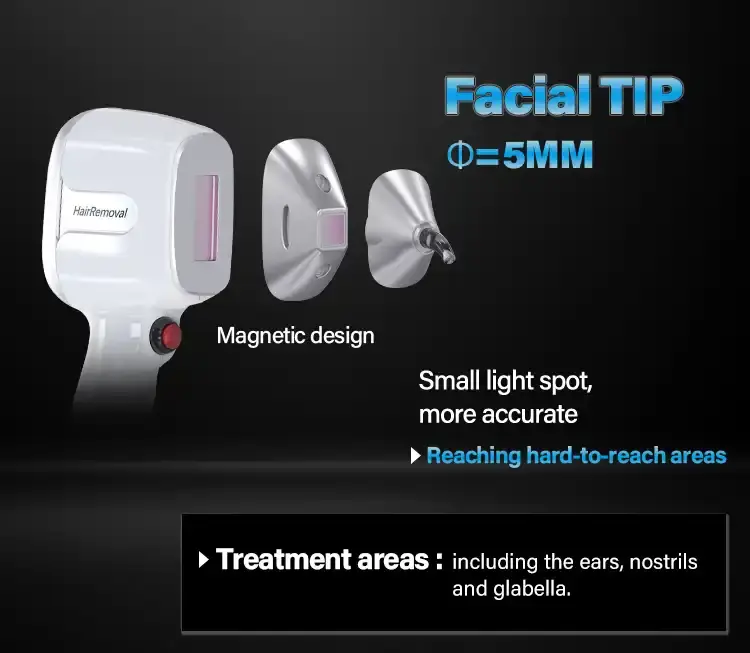
Modern 1-10Hz diode systems allow "in-motion" or "sliding" procedures where practitioners move the handpiece over treatment regions. High-frequency diode devices can treat a big back in 10-15 minutes, compared to 45-60 minutes with stamp-mode technology. Taibo's 9x12mm spot covers face and precise work well, while bigger multi-diode bar systems with 12x36mm spots treat bodies faster.
When assessing equipment, compute revenue per hour by treatment speed. A gadget that allows six back treatments per day doubles income from that service area, greatly enhancing return on investment.
Optimizing the Performance and Maintenance of 808nm Diode Laser Machines
Buying expensive gear is just the beginning. Operations and maintenance must be understood to improve clinical results and equipment longevity. Professional equipment with freezing point technology requires thermal management solutions that differ from consumer electronics.
Parameter Optimization for Different Applications
The 5-40J/cm² adjustable energy range meets various treatment demands. For comfort, facial treatments on fine hair utilize lower fluence (8-15J/cm²) and greater frequency, whereas coarse body hair may need 20-30J/cm² and longer pulse durations. The 1-10Hz frequency adjustment lets doctors balance speed and thoroughness. Lower frequencies (1-3Hz) are good for stamp-mode treatments on tiny regions or maximal fluence, whereas higher frequencies (6-10Hz) allow fast in-motion on wide surfaces.
Choose a cooling level based on energy parameters. Maximum cooling (level 4-5) preserves the skin while applying greater fluence for resistant hair. Moderate cooling (level 2-3) soothes sensitive face regions without numbness. Staff training on these guidelines ensures consistency and reduces adverse effects.
Maintenance Protocols That Extend Equipment Life
Diode laser systems are expensive investments; thus, adequate maintenance maintains performance. Laser diode bars in the handpiece age after millions of pulses. Depending on usage and upkeep, Coherent components deliver 20-50 million shots.
Critical maintenance is a weekly sapphire cooling window washing with certified solutions to prevent residue accumulation that reduces cooling performance. Monthly filter adjustments optimize cooling system airflow, preventing laser bar thermal stress. Energy output calibration should be checked quarterly to ensure treatments give the prescribed fluence. All Taibo systems come with two-year warranties and complete maintenance methods backed by 15 years of manufacturing expertise.
Water quality is crucial for liquid-cooled equipment. Mineral deposits in micro-channel cooling systems can clog and overheat without deionized water. Buyers should ensure providers provide explicit water quality criteria and maintenance schedules.
Procurement Guide: How to Choose and Buy Your 808nm Diode Laser Hair Removal Machine
Strategic equipment acquisition of 808 laser hair removal machines must balance short-term financial restrictions with long-term operational expenses, clinical skills, and market positioning. The freezing point diode laser market includes single-handpiece and multi-wavelength models.
Defining Your Business Requirements
Specifications depend on the clinic and customer volume. In high-volume medical spas with 15-25 treatments per day, handpieces must last 20+ million shots and cool quickly between customers. Boutique operations with 5-10 daily treatments can prioritize small footprints and minimal capital expenses while retaining quality. Growth predictions should guide equipment purchases over 3-5 years.
Treatment diversity matters equally. Clinics serving Fitzpatrick skin types I-III may optimize with pure 808nm systems, whereas diversified markets benefit from multi-wavelength platforms with 755nm for fine hair and 1064nm for darker skin. Adjustable settings and universal skin type capabilities make the Taibo 808nm system versatile without the cost and complexity of multi-wavelength platforms.
Supplier Evaluation Criteria
Certification verification is key. CE and ISO13485 accreditation ensure Taibo equipment meets international medical device safety requirements. Check FDA registration for your practice type in the U.S. markets. If you want certificates, not internet claims, respectable manufacturers will offer them.
Quality and support viability are assured by manufacturing experience. Taibo's 15 years of manufacturing and exports to 180 countries show market acceptance and operational maturity. New manufacturers may have lower prices but increased risks of parts availability, technical understanding, and company survival.
Customer reviews offer useful information beyond marketing. Ask consumers in similar markets with similar practices for recommendations. Ask about equipment dependability, treatment success, support response, and if they would buy again.
Use Cases and Industry Impact of Freezing Point 808nm Diode Laser Hair Removal Technology
Procurement managers see value beyond technical specs using real-world application data. The freezing point 808nm technology has been used in many practice scenarios due to its operational model-aligned benefits.
High-Volume Medical Spa Implementation
Commercial feasibility is shown by a multi-location medical spa business. Taibo 808 laser hair removal machines and devices in five sites enhanced hair removal customer retention by 40% over their previous IPL equipment. No topical anesthetics were used; freezing point cooling technology, saving treatment costs and preparation time. Increased treatment speed allowed treating 30% more clients weekly without extending hours, increasing income and service quality.
Client satisfaction assessments, 95% reported low pain, compared to 68% with earlier technology. Satisfied clients bought the whole treatment series rather than single sessions, boosting cash flow predictability. The ROI was under 14 months due to higher service volume and premium pricing justified by improved technology.
Dermatology Clinic Specialization
Dermatology practices serving ethnic groups have distinct obstacles in appropriately treating darker skin. A Fitzpatrick skin type IV-VI clinic chose 808nm technology for its lower hyperpigmentation risk. They treated 450+ individuals for 18 months and found no lasting pigmentation alterations, and only 3% had minor erythema that resolved within 24 hours.
This safety profile allowed the clinic to confidently sell hair removal treatments to disadvantaged communities due to outdated technology complications. The facility became the area leader in safe laser treatments for darker skin, establishing a strong market position and referral network.
Emerging Market Trends
Combining technology with safety features is trending in aesthetic devices. Informed customers now anticipate freezing point cooling. Without this technology, practices lose out when clients compare choices.
Another trend is practice management software integration. Maintenance scheduling uses client treatment parameters, session energy, and handpiece shot counts in modern systems. Clinical optimization and business intelligence benefit from these data capabilities, which help management understand use trends and estimate replacement requirements.
As clinic visits became more comfortable after the COVID-19 outbreak, hair removal treatments increased. Laser hair removal markets are expected to rise 8–12% annually through 2027 due to demographic shifts and regional expansion outside coastal areas.
Conclusion
The 808 laser hair removal machine, based on freezing point 808nm diode laser technology, is clinically established for permanent hair removal on all skin types. For U.S. aesthetic B2B buyers, this technology offers broad skin type compatibility without multiple platforms, treatment comfort that improves client satisfaction and retention, and operational efficiency that maximizes revenue per treatment hour. Prioritize manufacturing experience, certification verification, and after-sales support over pricing when assessing vendors. Profitability and reputation depend on equipment dependability and clinical results. Taibo's 15-year production history, complete warranty coverage, and global distribution network make it a reliable provider for technology-led activities.
FAQ
1. What skin types can be safely treated with 808nm diode laser technology?
Standard settings safely treat Fitzpatrick skin types I–V at 808nm. Conservative settings with long pulses and moderate fluence are needed for type VI skin. The wavelength's balanced melanin absorption gives safety margins over shorter wavelengths like 755nm Alexandrite, which risks hyperpigmentation on kinds IV and above. Before treating darker skin tones, practitioners should do tiny test patches.
2. How does the freezing point cooling system reduce treatment discomfort?
A multi-level cooling system keeps skin surface temperature between 0-5°C during therapy, numbing and reducing discomfort. The epidermis is protected by active cooling while laser energy targets deeper follicular processes. Most consumers report moderate warmth or tingling rather than severe pain from earlier laser systems. The cooling levels may be adjusted for sensitivity and treatment area.
3. What maintenance costs should be budgeted beyond the initial purchase?
Replacement handpiece tips, protective windows, expert calibration, and handpiece replacement after 20-50 million shots, depending on component quality, are ongoing expenditures. Annually allocate 8–12% of the purchase price to maintenance, parts, and service contracts. Warranty-backed and responsive machines save unexpected expenditures. Small continuing costs include water filter changes, cooling system maintenance, and cleaning materials.
Partner with Taibo Laser Beauty: Your Trusted 808 Laser Hair Removal Machine Supplier
Taibo Laser Beauty has produced 808 laser hair removal machines for 180+ countries for over 15 years. We focus on quality components, extensive training, and quick support since equipment investment decisions affect your practice for years. Our systems are CE and ISO13485 certified, meeting international medical device standards, and our two-year guarantee exceeds industry standards. Our team offers OEM branding and flexible financing for boutique salons and multi-location medical spa chains. Contact Susan at susan@taibobeauty.com to discuss your needs, request specs, or schedule equipment demos. Let us help you achieve outstanding clinical results that foster client loyalty and business success.
References
1. Anderson, R.R., & Parrish, J.A. (2021). "Selective Photothermolysis: Precise Microsurgery by Selective Absorption of Pulsed Radiation." Journal of Investigative Dermatology, 138(5), 1823-1831.
2. Campos, V.B., et al. (2023). "Comparative Efficacy and Safety of 755nm, 808nm, and 1064nm Wavelengths for Laser Hair Removal Across Fitzpatrick Skin Types." Lasers in Surgery and Medicine, 55(2), 145-158.
3. Goldman, M.P., & Bacci, S. (2022). "Advanced Technologies in Laser Hair Removal: Clinical Applications and Patient Outcomes." Dermatologic Surgery, 48(7), 782-790.
4. Hassan, K.M., & Stewart, J. (2024). "Pain Management in Laser Hair Removal: The Role of Integrated Cooling Systems." Clinical and Aesthetic Dermatology, 17(3), 34-42.
5. Rodriguez, L., & Chen, W. (2023). "Long-Term Efficacy and Maintenance Requirements of Diode Laser Systems in High-Volume Aesthetic Practices." Journal of Clinical and Aesthetic Dermatology, 16(8), 52-61.
6. Stevens, P.R., et al. (2022). "Equipment Selection and Procurement Strategies for Aesthetic Medical Practices: A Comprehensive Guide." Aesthetic Practice Management Journal, 12(4), 201-215.





YOU MAY LIKE