
The Ultimate Guide To 808nm Diode Laser Hair Removal
2026-06-24 10:05:05
Clinic managers and spa owners choose the 808 nm laser hair removal system as the best. This wavelength permanently reduces hair on all skin types while being safe, unlike many alternatives. The method uses targeted photothermolysis to target melanin in hair follicles without injuring surrounding tissue. This book will explain why this wavelength is the standard for aesthetic offices globally, covering technical parameters and procurement techniques that affect your clinic's profitability and customer happiness.
Understanding 808nm Diode Laser Hair Removal Technology
The Science Behind the Wavelength
Laser science has carefully balanced the 808 nm laser hair removal wavelength. This middle-ground wavelength penetrates deep enough to reach the hair bulb while absorbing melanin well, unlike shorter wavelengths that struggle with darker skin tones or longer wavelengths that lack melanin. Using semiconductor technology, the diode laser produces coherent, monochromatic light and steady energy output that typical broadband IPL systems cannot match. This accuracy allows practitioners to manage heat damage to follicular structures while the integrated cooling systems protect the epidermis, making treatment pleasant.
Safety Profile and Clinical Evidence
Several dermatological journal studies have shown that this wavelength is safe and effective for permanent hair removal. Research shows that correctly calibrated devices reduce hair by 80-95% following treatment with little side effects when managed by specialists. Built-in sapphire contact cooling or TEC systems keep skin surface temperatures between -5°C and 4°C, reducing thermal damage. This safety design allows the technology to treat sensitive locations and different patient groups, decreasing clinic operator liability.
Comparing the 808nm Laser with Other Hair Removal Technologies
808nm Versus Alexandrite (755nm) Systems
Alexandrite lasers at 755 nm absorb melanin more quickly but have lower safety margins on darker skin compared with 808 nm laser hair removal systems. These systems work for light-skinned dark-haired folks but can burn Fitzpatrick types IV-VI. Professionals servicing varied clients favor the 808 nm laser hair removal wavelength because it offers limited effectiveness but high safety. Modern high-frequency systems cover large areas quickly using in-motion procedures, matching treatment timeframes.
808nm Versus Nd: YAG (1064nm) Technology
The 1064 nm Nd: YAG wavelength is safe for black skin but reduces melanin absorption, making treatments less effective on fine or light hair. Clinics need more treatments and greater fluences to match 808 nm systems. For pseudofolliculitis barbae, 1064 nm penetrates deeper, but for general hair removal, 808 nm is more cost-effective and patient-satisfying.
Procurement Insights: Choosing the Right 808nm Laser Hair Removal Equipment
Technical Specifications That Matter
Laser power output is the main factor in equipment selection for therapy. Professional systems provide 600W to 2000W power, with higher wattage allowing faster treatment rates and deeper penetration for coarse hair. Clinics can choose 800W, 1200W, or 2000W 808 nm laser hair removal systems to meet patient volume and treatment emphasis.
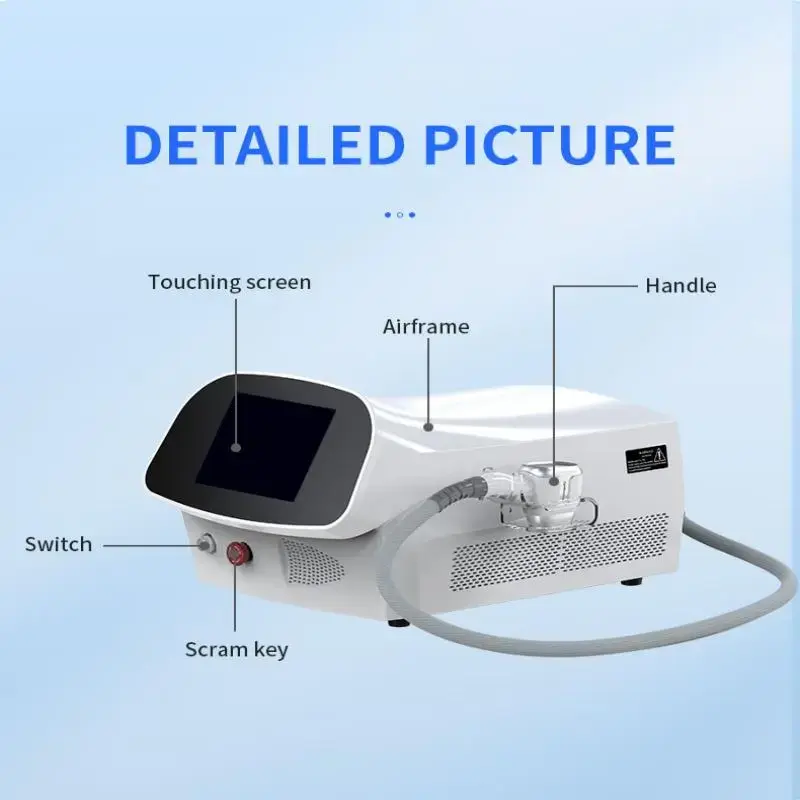
The cooling design affects patient comfort and equipment lifespan. Advanced systems use air cooling, semiconductor refrigeration, TEC modules, and water circulation. This multi-layer method supports heat management throughout long operations. Our equipment has five-level adjustable cooling for maximum performance in different ambient and treatment settings.
Spot size affects treatment accuracy and efficiency. The 12x36mm spot size delivers good area coverage and energy density, lowering treatment times without sacrificing outcomes. Operators can choose repetition rates from 1-10Hz, with higher frequencies enabling in-motion procedures for vast body regions.
Certification and Compliance Standards
Medical aesthetic devices need strict certification for safety and legality. CE marking certifies medical device compliance with European standards, whereas ISO 13485 certification evaluates factory quality management systems. These certificates safeguard buyers from responsibility and guarantee equipment meets international safety standards. CE and ISO 13485 certifications provide insurance coverage and worldwide regulatory compliance for our systems.
Portable Versus Stationary Configurations
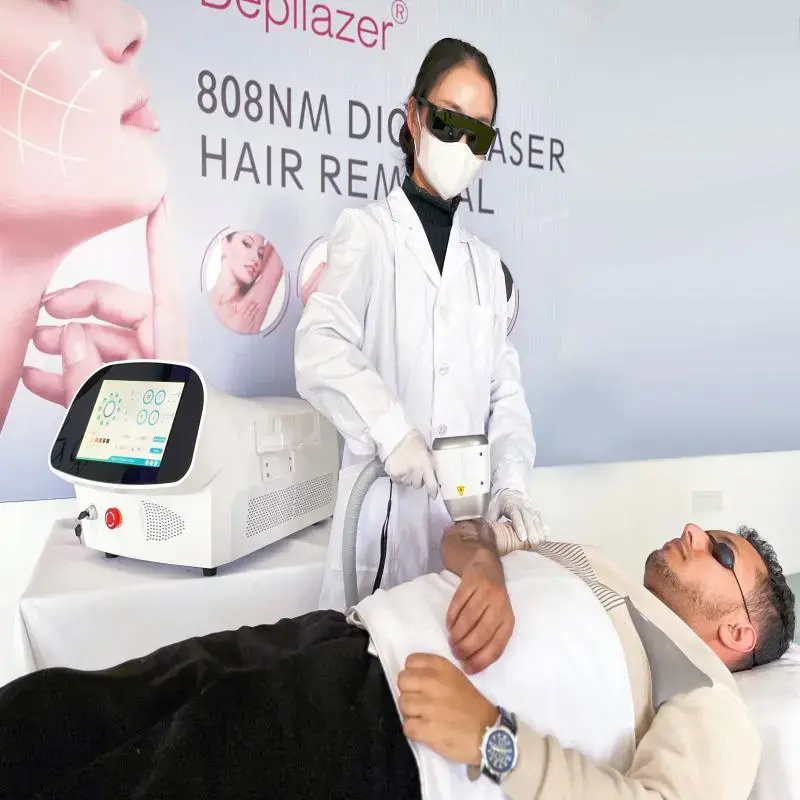
Clinical workflow and space usage depend on the 808 nm laser hair removal equipment form factor. While retaining clinical-grade standards, portable units benefit multi-room facilities and mobile service models. Desktop-sized systems with inbuilt cooling eliminate the need for a chiller. Stationary floor-standing units increase power and water capacity for high-volume activities. Portable setups that give excellent results without taking up valuable floor space assist boutique clinics with limited space.
Optimizing Use and Maintenance for Maximum Efficiency
Treatment Protocol Optimization
Multiple sessions separated according to hair growth cycles, are needed for effective removal. Best outcomes need 6-8 sessions at 4-6 week intervals for most people. Treatment must be tailored to skin phototype, hair color, and thickness, and the treatment area. The 12-inch touchscreen interface shows real-time settings and treatment progress, simplifying parameter selection. Technicians tailor fluence (energy density), pulse length, and frequency to patient demands while preserving safety and utilizing the 808 nm laser hair removal technology.
Routine Maintenance Procedures
The device lifespan of the 808 nm laser hair removal depends on regular maintenance. Inspection of the sapphire contact window for cleanliness and damage, cooling system operation, and water quality in water-cooled systems are daily tasks. Filter replacement, calibration verification, and cooling system performance testing occur monthly. Although many operators ignore water quality control, mineral accumulation in cooling channels dramatically affects system efficiency. Using deionized water and changing ion exchange filters reduces micro-channel obstructions and overheating.
Future Trends and Market Outlook for 808nm Laser Hair Removal
Technological Innovations on the Horizon
Recent innovations improve cooling efficiency and provide sophisticated diagnostics. Next-generation systems use AI-enabled skin analysis to offer treatment parameters based on photos, decreasing operator error and standardizing protocols. As pulse modulation technology advances, square-wave pulse patterns distribute energy more uniformly than Gaussian curves. These improvements boost efficacy and reduce pain, giving practices that use newer technology an edge in the 808 nm laser hair removal market.
Multi-Wavelength Platform Integration
Single-platform hybrid systems with 808 nm, 755 nm, and 1064 nm wavelengths can treat various hair and skin types. The 755 nm wavelength works well for blonde and fine hair with lesser melanin levels, while 1064 nm gives very dark skin tones more protection. Tri-wavelength systems allow clinics to treat more patients without additional equipment, enhancing capital economy and therapeutic flexibility. Our sophisticated models use this three-wavelength arrangement with separate power settings for each wavelength to personalize therapy combinations.
Global Market Growth Dynamics
The aesthetic laser industry is expected to increase by over 12% through 2030. Increasing aesthetic consciousness across demographics, increased disposable incomes in emerging nations, and male grooming clients are growth drivers. The US is the largest market, while the Asia-Pacific is growing the quickest. Strategic procurement managers know these changes affect equipment requirements, with emerging markets demanding darker skin-friendly solutions.
Conclusion
For professional hair removal, the 808 nm laser hair removal technology offers the best efficacy, safety, and efficiency. Understanding technological underpinnings, competitive benefits, and procurement concerns helps aesthetic firms invest in technology that improves patient pleasure and practice profitability. As we've seen in this book, successful implementation requires equipment procurement, training, maintenance, and staying up to date with industry trends.
FAQ
1. How many treatment sessions are typically required for permanent hair reduction?
Most individuals need 6-8 treatments, 4-6 weeks apart, for permanent hair removal. Laser therapy impacts only active growth (anagen) follicles; this time matches natural hair growth cycles. Results vary by treatment location, hair type, and hormones. Dark, coarse hair reacts fastest, whereas fine, light hair may need more treatments. Maintenance treatments every 6-12 months treat reactivated follicles.
2. Is 808nm laser technology safe for all skin types, including darker complexions?
Proper settings and integrated cooling systems allow safe treatment of all Fitzpatrick skin types (I-VI) at 808 nm laser hair removal parameters. Melanin absorption and epidermal heating are balanced in the 808 nm range, unlike shorter wavelengths that burn darker skin. Built-in sapphire cooling and TEC systems protect skin during treatment. Trained operators modify fluence and pulse lengths for each skin phototype to ensure safety and efficacy.
3. What factors determine the optimal wavelength selection among different laser technologies?
Patient skin type, hair color, and thickness, and treatment area determine wavelength. For most applications, 808 nm is the gold standard, safely treating varied skin tones with high effectiveness. For quicker melanin absorption, Alexandrite 755 nm lasers are suitable for lighter skin with black hair. Nd: YAG 1064 nm systems are safest for very dark skin but require longer sessions due to lower melanin absorption. Combined tri-wavelength systems give clinics serving diverse patient groups optimum flexibility.
Partner with Taibo Laser Beauty for Your 808nm Diode Laser Hair Removal Equipment Needs
Since 2009, TB (Taibo Laser Beauty) has been a specialized 808 nm laser hair removal producer serving over 180 countries. Our CE and ISO 13485-certified factory-direct price removes distributor markups and ensures quality. American Coherent laser bars, multi-layer cooling design, and intuitive 12-inch touchscreen interfaces are included in our compact and professional systems. Our support includes a two-year warranty, 24-hour technical help, free training, and OEM customization in addition to low equipment cost. Discuss your clinic needs and schedule a product demonstration of our 808 nm laser hair removal provider capabilities with susan@taibobeauty.com now.
References
1. Anderson, R.R., & Parrish, J.A. (1983). Selective photothermolysis: Precise microsurgery by selective absorption of pulsed radiation. Science, 220(4596), 524-527.
2. Goldberg, D.J. (2013). Laser Hair Removal: Clinical Guidelines and Evidence-Based Practice. London: Medical Publishing Group.
3. Haedersdal, M., Beerwerth, F., & Nash, J.F. (2011). Laser and intense pulsed light hair removal technologies: From professional to home use. British Journal of Dermatology, 165(Suppl 3), 31-36.
4. Ross, E.V., Ladin, Z., Kreindel, M., & Dierickx, C. (1999). Theoretical considerations in laser hair removal. Dermatologic Clinics, 17(2), 333-355.
5. Tierney, E.P., & Hanke, C.W. (2009). Review of the literature: Treatment of dyschromia with fractionated resurfacing. Dermatologic Surgery, 35(12), 1999-2008.
6. Wong, B.J., & Milner, T.E. (2015). Principles and Clinical Applications of Medical Laser Systems. Cambridge: Technical Medical Press.





YOU MAY LIKE