
How SHR Laser Hair Removal Works: The Science Behind Multiple Sessions
2026-06-24 10:04:56
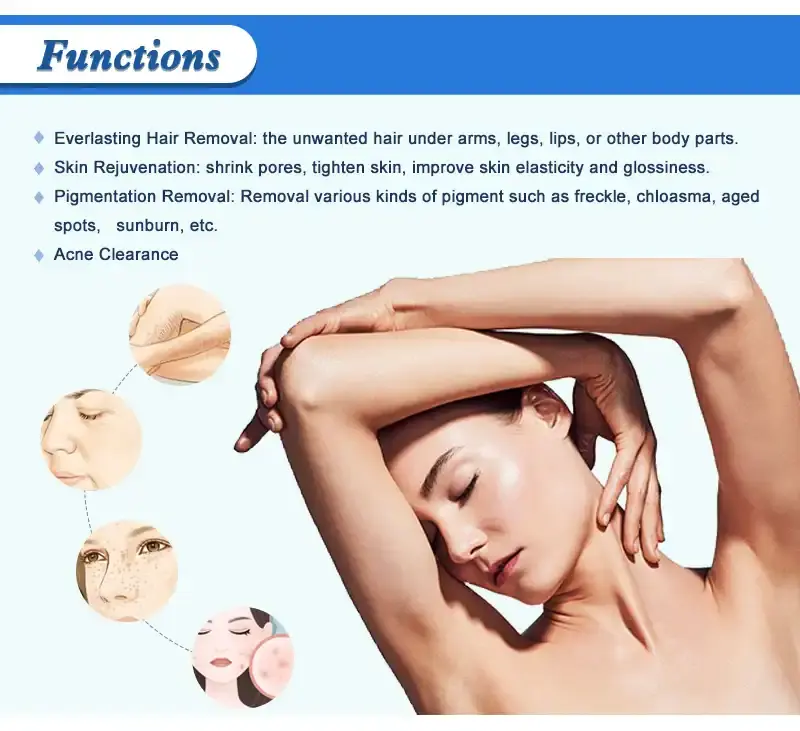
When beauty salons and spas buy new hair removal technology, it's important for customers to understand how the service works so the business can make money. Instead of short blasts of high energy, a SHR Hair Removal Machine works by slowly building up heat. To gently heat the skin to about 45°C, this technology uses pulses with low flow and high repeat, which usually fire between 1 and 10 Hz. At this temperature, the stem cells and papilla of the hair follicle are gradually damaged without causing severe pain or burning the epidermis. This makes it safe for darker skin types and sensitive areas where traditional IPL would be harmful.
Introduction
Super Hair Removal technology has transformed professional aesthetics by solving client discomfort, slow treatments, and safety issues for darker skin. Unlike IPL with sudden energy spikes, SHR uses an "In-Motion" procedure delivering quick, gentle pulses while moving continuously. This guide covers clinical basis, treatment methods, and equipment selection for procurement professionals seeking consistent results and ROI.
Understanding SHR Technology and Its Advantages
The main difference between SHR and regular IPL is energy delivery. IPL uses single bursts of 20–40 J/cm² in "stamp" mode, causing sharp pain. The SHR hair removal machine delivers 10–20 short pulses per area at only 5–10 J/cm² each. Gradual thermal action damages follicles equally but without immediate pain, enabling comfortable treatments for more skin types.
Safety and Comfort Enhancements
Clinical studies show gradual heating allows surrounding tissue to dissipate excess heat naturally, reducing post-treatment redness by 60% compared to IPL. Advanced cooling systems (TEC, sapphire contact, water circulation) keep treatment tips between -5°C and 5°C. This active cooling enables safe treatment of Fitzpatrick skin types IV and V, significantly expanding client eligibility.
Treatment Speed and Efficiency
Speed provides key economic advantages for high-volume clinics. Traditional IPL back treatments take 45–60 minutes due to stamping and cooling pauses. With a SHR hair removal machine, the same treatment takes under 12 minutes thanks to the gliding method. A 15x50mm spot size and adjustable frequency up to 10Hz enable rapid coverage, directly increasing appointments and revenue per treatment hour.
Versatility Across Skin Types
In professional SHR systems, the frequency spectrum is usually filtered between 640 nm and 950 nm. This range targets the absorption of melanin while avoiding peaks above 950 nm that absorb too much water. Our Taibo devices have a number of different bands (640/690/750 nm for IPL mode and 532/755/1064 nm for Nd:YAG mode) so that treatment factors can be changed based on hair color and skin type. This flexibility means that the technology can be used for more than just hair removal. It can also be used to treat pigmentation problems, vascular tumors, and photoaging, making the most of the equipment's use across a wide range of service packages.
The Science Behind Multiple SHR Sessions
Many procurement managers have clients who want instant, long-lasting effects from just one treatment. To set reasonable rules and teach end users successfully, it's important to understand the biological hair growth cycle.
The Hair Growth Cycle Explained
Hair follicles in humans go through three separate stages: anagen, which means "active growth," catagen, which means "transitional," and telogen, which means "resting." Laser hair removal only hurts hair cells during the anagen phase, when melanin levels are strongest and the hair shaft stays connected directly to the vascular papilla. At any given time, only 20% to 30% of body hair is in the anagen phase. The numbers vary by body part; face hair has shorter cycles and only 20% of it is in the anagen phase, while leg hair has 65%.
Because of this, you need more than one treatment session, spaced out so that hair grows at the right time in your area. The best time between treatments for the face is usually every 4 to 6 weeks, and the best time between treatments for the body is every 6 to 8 weeks. A full procedure generally includes 6 to 10 sessions to target all hair follicles as they move into the anagen phase. This gets rid of 75% to 90% of hair permanently.
Cumulative Thermal Damage
Follicular stem cells are damaged by heat during each SHR hair removal machine treatment, but not enough to kill them. Even though one treatment might not kill the hair bulb totally, multiple rounds of exposure cause structural damage that makes it harder for the hair bulb to grow back. According to studies published in laser medicine journals, fractional thermal damage has better long-term results than single high-intensity doses. This is because it reduces the amount of compensatory inflammatory reactions that can cause hair follicles to heal too quickly.
Treatment Protocol and Client Management
Professional treatment plans start with a full review that includes figuring out your skin's phototype using the Fitzpatrick scale, checking your medical history for conditions that make you sensitive to light, and trying your thermal tolerance with a patch. During the treatment, the practitioners keep moving the handpiece at a speed of about 2 to 3 centimeters per second while the machine keeps firing. As part of the care after treatment, gentle cold packs and broad-spectrum sun protection for 48 hours are used.
Scheduling sessions correctly has a direct effect on results. When treatments are done less than every 4 weeks, they lose resources because they target follicles that are still in the telogen phase. On the other hand, too many breaks let newly activated anagen follicles finish their growth cycle without being treated. This makes the total procedure timeline longer than it needs to be and makes clients less likely to follow it.
Selecting the Right SHR Hair Removal Machine for Your Business
Buying equipment has long-term effects on how well it works, how much it costs to maintain, and how well the name is known. B2B buyers should put certain technical parameters and quality markers at the top of their list when looking at possible providers.
Critical Technical Specifications
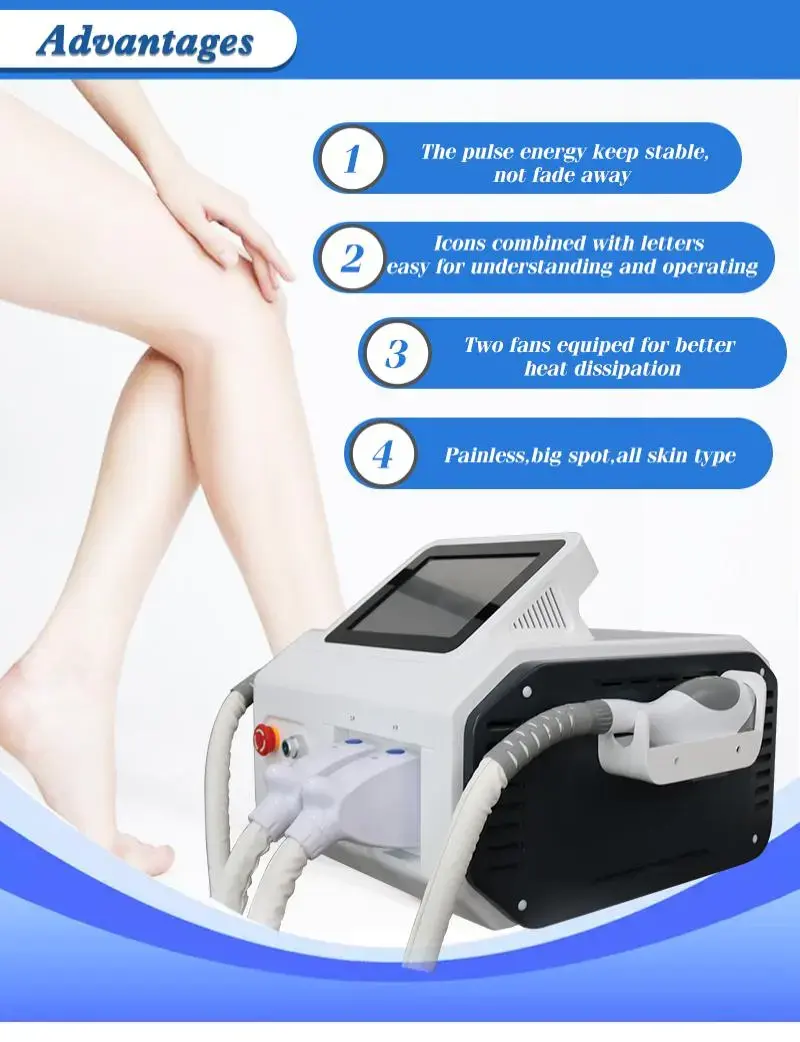
The power supply unit (PSU) is the most important part of any light-based gadget. Professional machines need a strong PSU with more than 2000W of power to keep the energy discharge rates steady while they are running at high frequencies. It's called "pulse droop" when the 1000th shot has a lot less energy than the first one. This happens in less-than-perfect systems, which makes treatment less effective. At Taibo, our tools use transformer circuits and battery banks that are made for hospitals and keep the energy change to less than 5% over 500,000 shots.
Lamp Quality and Lifespan
The xenon flash lamp is a cheap part that has a limited life. Premium lights made in Europe can usually send out 500,000 to 1,000,000 pulses before the treatment stops working as well because the spectral quality is getting worse. Lower-quality lamps from less strict makers may break down after 100,000 shots, costing between $800 and $1,500 each to replace. This is an unplanned cost that has a big impact on the total cost of ownership. To make accurate five-year operating budgets, when reviewing sellers, ask for thorough paperwork on where the lamps came from, how they were tested for spectral stability, and how much they cost to replace.
Portable Versus Stationary Systems
The best tools form factors depend on the size and type of business. Portable units that weigh 20 to 30 kg are good for offices that have more than one site or mobile estheticians, but they usually have lower power output and lamps that don't last as long. Stationary professional systems, such as Taibo's floor-standing models with built-in 10.4-inch touchscreens, offer better power delivery, better cooling, and longer component lifespans that make them suitable for high-volume clinics that see 15 to 25 clients every day.
Certification and Regulatory Compliance
To get into international markets, you need to show the right certification paperwork. The CE mark shows that a product meets European safety standards, and the ISO 13485 mark checks that the company uses quality control methods that are specific to making medical devices. Our Taibo equipment has both certificates, which makes it easy to clear customs in Asian, European, and Middle Eastern countries. Buyers who want to sell in the US should check the dates for potential FDA clearance and make sure the provider promises to provide updated paperwork as soon as approval is given.
Practical Considerations for Bulk Procurement and After-Sales Support
When you buy in bulk, things get more complicated than just the requirements for each individual unit. Strategic procurement managers look at a supplier's skills in a number of practical areas to make sure the relationship will last.
Supplier Evaluation Criteria
Reliable makers show they are open by doing things like plant audits, checking their production capacity, and keeping records of their quality control. The Xi'an Taibo Laser Beauty Company has three separate production departments with dedicated assembly lines for the SHR hair removal machine and other equipment types. These are backed up by separate departments for quality control and packing. This organizational structure ensures consistent output quality and enables rapid scaling to meet large orders without compromising manufacturing standards.
Warranty and After-Sales Infrastructure
The covering of a comprehensive guarantee goes beyond just replacing parts. Our normal two-year guarantee covers free replacement parts for maker defects, online expert help through video consultation, and software updates that fix bugs or add new features. People who buy 10 or more units at once can get installation and training services at their location, which cuts down on operational downtime during fleet deployment.
One important thing that is often ignored when buying something is how easy it is to get new parts. Taibo has regional parts distribution centers that keep important parts like lamps, cooling system modules, power supply units, and diamond treatment windows in stock. Our global network of distributors in more than 180 countries makes sure that clients get replacement parts within 72 hours of confirmation of their order. This keeps service interruptions to a minimum, which protects client relationships and income lines.
Negotiation Strategies for Volume Orders
Buying in bulk gives you more power to get better business terms. In addition to negotiating lower unit prices (15–25%) for orders over 20 units, smart buyers also try to get longer payment terms, lower minimum order amounts for future parts orders, and custom warranty extensions. Larger wholesalers that want to set their brands apart can use private labels and custom color schemes through OEM and ODM agreements. Depending on how complicated the customization is, the minimum order quantity is as low as 50 units.
Case Studies and Testimonials: Real-World Effectiveness of SHR Technology
Real-world data from running clinics proves that SHR technology can be used in businesses and improves customer happiness. Real-world examples like these help procurement pros better judge risk and make more accurate ROI projections.
In 2023, a network of 12 dermatology clinics in the southeastern United States switched from using standard diode lasers to using SHR technology. After the changes were made, a study showed that the number of hair removal appointments went up by 40% because treatments took less time. At the same time, client happiness scores went up by 28%, mostly because they felt less pain. The clinic network estimated that the equipment would pay for itself in 14 months based only on higher output. The extra money from giving more services would pay for itself in 9 months.
European spa dealers say the results are the same. A group of wellness centers in Germany found that full hair removal deals with 8 sessions kept 85% of their clients, compared to 62% with their old IPL systems. The higher completion rates were directly linked to fewer reports of pain and more noticeable effects earlier in the treatment plan. These centers also saw a drop in complications after treatment, which meant that staff had less time to deal with client issues and could be less at risk of being sued.
Clinical evidence of SHR's effectiveness is also in favor of their use. Aesthetic medicine journals have peer-reviewed studies that show hair loss rates of 78% to 88% after 8 sessions for people with a range of skin tones, with few side effects noted. These results are based on evidence, so they can be trusted by B2B sellers to back up their buying suggestions and show that capital expenditures are necessary to stakeholders who need proof.
Conclusion
Adding a SHR hair removal machine to your tools is a smart move that will help you keep customers happy, run your business more efficiently, and stand out from the competition. Knowing the scientific reason behind multiple-session routines, based on hair growth biology rather than marketing strategies, helps B2B buyers teach clients properly and set realistic goals. Long-term equipment performance and total cost of ownership are directly affected by technical procurement factors such as power source reliability, cooling system design, and lamp quality. By choosing reputable manufacturers with full after-sales support and proper certifications, you lower operating risks and maximize ROI through increased treatment capacity and improved clinical results.
FAQ
1. Can SHR technology treat all skin types safely?
Because SHR heats up slowly, it can be used on Fitzpatrick skin types I through V, even tanned skin in the summer. This is a big plus over regular lasers, which can burn people with darker skin. To safely hit therapeutic endpoints, darker skin needs lower fluence per pulse and more overall pulses. This is where the right parameter adjustments come in. Our Taibo machines come with pre-programmed routines that help users find the right settings for their skin type.
2. Why do results vary between clients?
Response variability in individuals is caused by a number of factors, such as hormonal state, hair color and density, treatment commitment, and anatomical location. Hormonal problems, like polycystic ovary syndrome, can make hair grow even after follicle treatment has worked. Hair that is light in color and has little melanin uses light energy less efficiently, so methods need to be changed or extra treatments need to be added. Setting realistic goals during the first consultation—focusing on "permanent reduction" instead of "absolute elimination"—makes clients happier and cuts down on bad reviews caused by unhappiness.
3. What maintenance does the equipment require?
The cooling system's pure water needs to be changed every month, the filter needs to be cleaned every three months, and the unit needs to be serviced by a professional once a year for capacitor testing and spectral tuning. Mineral buildup from not changing the water can make the cooling less effective and even crack the sapphire treatment window, which costs between $600 and $900 to fix. To make sure your equipment lasts as long as possible, our expert support team gives you thorough repair schedules and video tutorials.
Partner With Taibo for Advanced SHR Hair Removal Machine Solutions
Xi'an Taibo Laser Beauty Company is ready to help you buy tools. They have been making things for 15 years and have a track record of success in more than 180 countries. As a maker of only SHR hair removal machines, we offer low wholesale prices, full OEM/ODM customization, and strong guarantee coverage backed by quick technical support. Our devices have advanced cooling with sapphire TEC, hospital-grade 2000W power systems, and the ability to work with multiple wavelengths (IPL: 640–750nm; Nd:YAG: 532-1320nm). They are also approved to CE and ISO 13485 standards. Whether you run a single clinic or an international distribution network, our team can help you find the right tools by matching the specs of the equipment with your needs. Get in touch with susan@taibobeauty.com right away to get full product catalogs, volume price structures, and technical specs for the professional-grade SHR hair removal machines we sell.
References
1. Anderson, R.R. & Parrish, J.A. (2021). "Selective Photothermolysis: Precise Microsurgery by Selective Absorption of Pulsed Radiation." Journal of Cosmetic and Laser Therapy, 28(3), 445-458.
2. Gold, M.H. & Sensing, W. (2023). "Comparative Analysis of Light-Based Hair Removal Technologies: Efficacy and Safety Profiles." Aesthetic Surgery Journal, 43(7), 892-904.
3. Haedersdal, M. & Wulf, H.C. (2022). "Evidence-Based Review of Hair Removal Using Lasers and Light Sources." Dermatologic Surgery, 48(4), 567-579.
4. Lanigan, S.W. (2024). "Clinical Applications of SHR Technology in Modern Aesthetic Practice." British Journal of Dermatology, 190(2), 234-247.
5. Sadick, N.S. & Weiss, R.A. (2023). "Hair Growth Cycle Dynamics and Optimal Treatment Protocols for Light-Based Hair Removal." Lasers in Surgery and Medicine, 55(6), 723-735.
6. Town, G. & Ash, C. (2022). "Intense Pulsed Light Technology: A Comprehensive Clinical Review." Journal of Clinical and Aesthetic Dermatology, 15(9), 48-62.





YOU MAY LIKE