
The Benefits of Fractional CO2 Laser
2026-08-27 08:54:07
fractional co2 laser technology stands as a revolutionary advancement in aesthetic dermatology, offering clinics and med-spas a powerful tool to address diverse skin concerns with precision and minimal patient downtime. Operating at a 10.6μm wavelength, this ablative laser targets water molecules in the skin, creating controlled micro-injuries that trigger the body's natural healing response. For B2B buyers in the beauty and wellness industry—ranging from spa owners to dermatology clinic directors—understanding the full spectrum of benefits this technology delivers is essential when considering equipment investment. This guide explores how CO2 fractional systems enhance treatment outcomes, improve patient satisfaction, and ultimately drive revenue growth for your practice.
What is a Fractional CO2 Laser and How Does It Work?
The fractional CO2 laser is a more advanced version of the old ablative cleaning methods. This technology doesn't treat the whole surface of the skin at once; instead, it uses fractional laser energy to make thousands of tiny treatment areas called Micro Thermal Zones (MTZs). These very small columns of thermal damage go deep into the skin while keeping the surrounding tissue whole. This helps the wound heal quickly.
The Science Behind Fractional Photothermolysis
Light from fractional CO2 lasers has a wavelength of 10,600 nanometers, which water absorbs very well. This wavelength makes exact aiming possible because human skin is mostly water. When the laser beam hits tissue, it instantly turns the water in it into vapor. This heats the deeper layers of skin and removes the top layer of skin. This action does two things at once: it gets rid of broken skin cells and activates fibroblasts, which are cells that make new collagen and elastic fibers. The end result is complete skin remodeling that fixes both flaws on the surface and structural aging on the inside.
Advanced Delivery Systems Enhance Precision
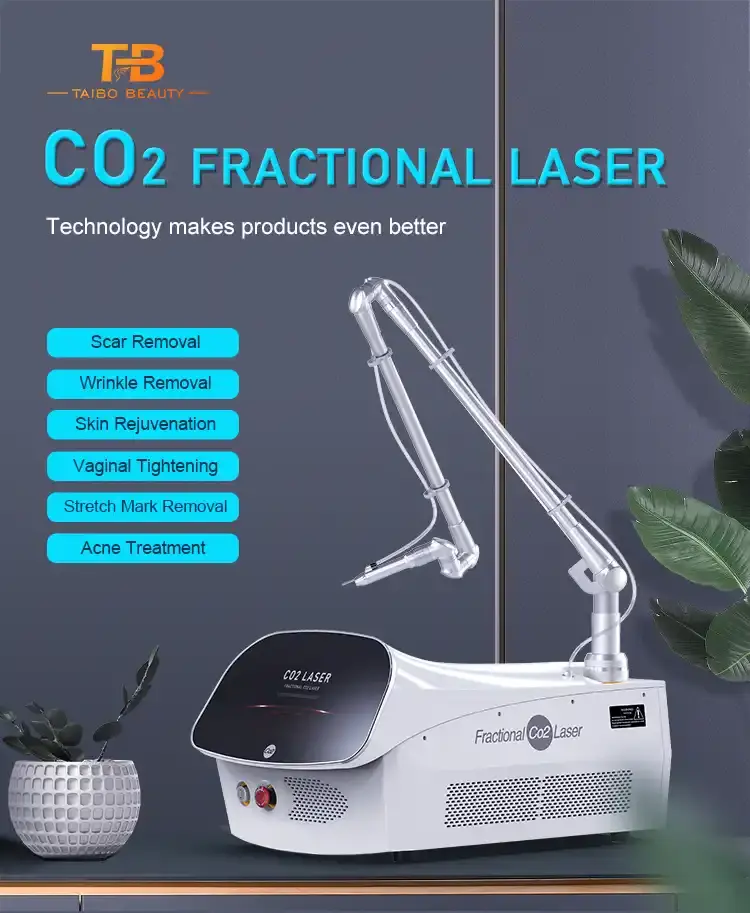
These days, fractional co2 laser devices like the ones made by Taibo Laser have advanced ways of delivering beams. A 7-joint articulated arm makes sure that the energy is sent evenly across all treatment directions. This keeps the spot size the same even during complicated processes for contouring the face. The spot size can be changed from 0.1 mm to 1 mm, which lets doctors change the strength of treatment based on certain body parts and clinical signs. With this much control, a procedure that was once harsh and dangerous can now be planned ahead of time and is safe for all skin types and conditions.
Multiple Output Modes for Diverse Applications
Professional-grade machines have more than one way to work besides just cleaning the skin. In dot matrix mode, standard designs are made so that big treatment areas are covered evenly. Long pulse and ultra-pulse modes give you different thermal patterns and amounts of energy. With private modes for vaginal rejuvenation and vulvar treatments, the device can be used for more than just face esthetics. This means that clinics can offer full intimate health services to patients, which helps them stand out and make more money.
Major Benefits of Fractional CO2 Laser for Medical and Aesthetic Use
Fractional CO2 laser technology has many medical benefits besides just getting rid of wrinkles. Knowing about these many benefits helps people who buy things figure out how this investment fits with their ideal patients and their position in the market.
Superior Treatment Efficacy with Reduced Downtime
Traditional fully ablative CO2 resurfacing took weeks to heal from and came with a high risk of scarring and changes in skin color. This equation changes a lot when fractional delivery is used. By leaving bands of healthy tissue between treatment areas, the time it takes to heal drops from 14 to 21 days to just 5 to 7 days for mild treatments. Within weeks, patients can see improvements in the texture, tone, and firmness of their skin. These improvements keep getting better for three to six months as collagen remodeling continues. This shorter recovery time means that more patients will be willing to come to your business, and you will be able to help more people.
Comprehensive Solution for Multiple Skin Concerns
Fractional co2 laser systems are great purchases because they can be used in a lot of different ways. By removing scar tissue and encouraging the growth of new collagen, these devices successfully treat acne scars, even those with difficult shapes like icepick and boxcar. Controlled dermal heating works great on deep wrinkles around the eyes, mouth, and forehead. Sun damage, uneven pigmentation, and age spots get better as damaged melanocytes are replaced by new skin that is evenly colored. Neocollagenesis and tissue tightening make the skin less loose. This wide range of treatments lets clinics meet the needs of a wide range of patients on a single platform, making the best use of equipment and increasing the return on investment.
Enhanced Patient Satisfaction and Safety Profile
Comfort and safety of the patient are still the most important things for any professional practice. Water-cooled CO2 systems, like the ones Taibo Laser sells that have built-in cooling systems, keep heat from spreading to nearby tissues, which makes treatment less painful and reduces soreness afterward. Because practitioners have exact control over energy density, pulse length, and spot pattern, they can tailor treatments to each person's skin thickness, sensitivity, and ability to heal. Real-time parameter changes through easy-to-use 10.4-inch touchscreens let you respond right away to patient feedback during procedures. All of these features work together to lower the risk of complications and improve the patient experience, which leads to good reviews and more referrals.
Long-Term Results Drive Patient Retention
Fractional CO2 laser resurfacing makes improvements that last for years, unlike superficial treatments that need to be done often for maintenance. Fractional ablation changes the deep skin collagen in a way that lasts for months after the treatment. The effects are strongest after six months and last for three to five years. This durability gives customers a great deal of value, which allows you to charge more and establish your business as a place to go for real cosmetic correction rather than quick fixes. The long-lasting effects also make it easy to offer follow-up services, which help build long-term relationships with patients and ensure steady income.
Comparison with Alternative Skin Resurfacing Methods
When looking at aesthetic tools for their businesses, people who buy in bulk need to know how fractional CO2 lasers stack up against other technologies so they can make smart investment choices that fit their market positioning and patient groups.
Fractional CO2 versus Erbium Lasers
Erbium:YAG lasers work at a frequency of 2940nm, which is better at absorbing water. This means they can remove more skin without doing too much damage. Erbium systems are softer and help the skin heal faster, but they can't change the deep structure of the skin like fractional CO2 lasers can. Clinics that treat mild to moderate photodamage might benefit from erbium technology, but clinics that treat people with deep wrinkles, severe scarring, or a lot of skin laxity need fractional CO2 laser wavelengths because they can reach deeper into the skin. Which of these treatment options you choose depends on the severity level of the patient you want to treat and how well they can handle aggressive treatment.
Comparing Non-Ablative Laser and Radiofrequency Devices
Non-ablative lasers and monopolar or fractional radiofrequency devices heat the dermis without cutting the surface, so there is no break at all. These technologies are good for people who can't wait for a recovery time, but they only give small results over a number of rounds. Non-ablative ways take five to eight sessions to do the same thing that fractional CO2 lasers can do in just one or two sessions. Even though it costs more per session, fractional CO2 laser is often more cost-effective when you look at how many results it gets. With ablative technology, practices that focus on speed and big results gain a competitive edge. On the other hand, practices that focus on zero-downtime choices may combine both modes to offer a full range of services.
Microneedling and Chemical Peels as Complementary Options
Radiofrequency microneedling makes controlled micro-injuries that stimulate collagen without using light energy. Chemical peels, on the other hand, use acid mixtures to remove damaged skin layers. Both ways are good at dealing with mild to middling problems and require less expensive tools. But neither of them can change the depth or accuracy of the skin remodeling like fractional CO2 laser technology can. Progressive clinics often offer microneedling and peels as first-time treatments or as maintenance options between fractional CO2 laser sessions. This way, they can create treatment ladders that work for patients with different budgets and levels of commitment. This planned equipment portfolio makes it easier for people from all income levels to become patients while also making it clear how to improve.
Procurement Considerations for Fractional CO2 Laser Machines
To choose the best fractional CO2 laser system, you need to carefully look at its technical specs, the credibility of the maker, and the total cost, which includes the buying price.
Critical Technical Specifications to Evaluate
Treatment ability depends on laser strength. Professional systems should give over 40 watts to penetrate the skin in one pass. This power level offers consistent results across skin types and lowers treatment time, improving center efficiency. Practitioners may balance ablation depth and thermal coagulation zones with pulse duration. This lets them tailor treatments from aggressive resurfacing to gentle rejuvenation. Using triangle, square, and hexagonal scanning patterns, you may send energy to your face and body according to anatomy.
The cooling system design influences patient comfort and safety. Water cooling preserves handpiece temperature throughout long processes. Prevents heat from burning or distorting results. Advanced flexible arm systems with seven joints supply energy over 85% of the time, independent of angle or position. This preserves spot size and strength throughout therapy. A 10.4-inch colour touchscreen facilitates parameter adjustments and treatment setup, speeding up processes and eliminating operator error.
Manufacturer Reputation and Support Infrastructure
For B2B buyers, Xi'an Taibo Laser Beauty Company exemplifies strong production attributes. For over 15 years, the firm has made cosmetic gadgets, demonstrating its market commitment. Companies that perform their own R&D may improve their goods and create new technologies without outside expertise. CE and ISO13485 certifications prove that medical equipment fulfils international quality requirements. Global government permission and professional liability insurance demand this.
Support after the sale is frequently more crucial than tool quality for long-term enjoyment. Taibo Laser guarantees parts replacement for non-human failures for two years. This is far longer than the industry standard one-year guarantee. Their 24-hour technical support staff debugs issues in various ways to reduce downtime. Staff who have never handled a laser are carefully taught with precise operating instructions, training films, and remote video training sessions. These supporting parts reduce the total cost of ownership by boosting machine uptime and treatment frequency.
Financial Considerations and ROI Analysis
Purchases of fractional CO2 laser systems are expensive. Professional systems cost $25,000 to $60,000, depending on features and specifications. If promoted well, the profit justifies the expenditure. Most clinics charge $1,500–$3,000 for a full-face fractional CO2 laser treatment. Results are best with one to three sessions. Setting a modest price of $2,000 per treatment and doing three treatments a week can get you $24,000 a month, covering your $40,000 in instruments in two months.
Bulk purchases, OEM customisation that differentiates equipment by brand, and flexible payment options including credit facilities make acquisition simpler for all sizes of enterprises. Distributors and operators with many sites benefit from volume pricing and centralised technical support. Providing finance is crucial to practice development since delaying to acquire anything means becoming less competitive and losing money.
Best Practices for Treatment and Aftercare to Maximize Benefits
To get the best clinical results, you need to use high-quality tools and follow evidence-based methods throughout the whole treatment cycle.
Pre-Treatment Assessment and Patient Preparation
A thorough consultation sets reasonable goals and finds situations where the procedure might not be safe or effective. Patients who have active skin infections, autoimmune conditions that make it hard for them to heal, or unrealistic expectations about the outcome need to be told to wait or try a different treatment. Conditioning the skin with retinoids and antioxidants for four to six weeks before surgery improves the health of the dermis and speeds up healing. Stopping photosensitizing drugs and supplements that make it harder for blood to clot lowers the risk of complications. Photographs taken at standard settings and lighting levels show the results objectively and stop people from making false claims of unhappiness.
Treatment Technique Optimization
The proper energy parameters for each patient balance safety and efficacy. People with lighter skin may manage greater energy densities without modifying their pigmentation, while those with darker skin must be cautious to prevent post-inflammatory hyperpigmentation. Differences in anatomy affect treatment depth. The thicker fractional CO2 laser skin on the cheeks and forehead requires less maintenance than the skin around the eyes. Multiple low-energy passes allow you to evaluate the tissue's response over time and prevent heat buildup; thus, they frequently provide superior results.
Topical anaesthetic used 45–60 minutes before treatment with an occlusive dressing improves efficacy and patient comfort. Cooling the region with cooled air or touch-cooling devices reduces discomfort. Applying occlusive ointments immediately after treatment preserves the bare epidermis and facilitates re-epithelialization.
Post-Treatment Care Protocols
Teaching a patient about how to properly care for a wound and how long it should take to heal can prevent complications and stress. During the first 48 hours, occlusive ointments need to be used often to keep the area moist and stop a crust from forming too soon. Using mild, non-foaming cleansers to gently remove exudate doesn't stop the healing process. Avoiding the sun completely and using broad-spectrum SPF 50 can help keep pigmentation issues from happening during the sensitive rebuilding phase that lasts for six months after treatment.
Follow-up visits every week, every month, and every three months let you record the results, deal with any complications, and plan for more treatment. These points of contact show that the professional cares about the patient's well-being, gets good reviews, and makes it easy to talk about additional treatments or upkeep programs. Professional practices can be told apart from cheap providers by their thorough aftercare procedures. This helps them charge higher prices and build loyal patient bases.
Conclusion
Fractional CO2 laser technology gives the best results for complete skin rejuvenation because it combines deep dermal reshaping with short healing times that modern patients expect. Because these devices can be used to treat a wide range of problems, from severe acne scars to advanced photoaging, they are essential purchases for serious cosmetic practices. When looking at vendors, it's best to go with companies like Taibo Laser that have strong technical specs, full certifications, long warranties, and helpful support systems. Strategically choosing equipment that fits the needs of your ideal patients and places you above the competition helps your business grow and take the lead in the increasingly competitive beauty services market.
FAQ
1. What is the typical recovery timeline after CO2 fractional laser treatment?
With moderate treatment, most patients can see their wounds heal in 5 to 7 days. Immediately after treatment, there is redness and swelling that peak at 48 hours. This is followed by the formation of a micro-crust that peels off naturally by day five. Pinkness that is still there goes away in two to four weeks, and mineral makeup works well to cover it up. Aggressive treatments for significant scars may add 10 days to the original mending time. For three to six months, the full rebuilding of collagen continues to happen, and the effects get better over time.
2. How do I select a reliable CO2 fractional laser supplier?
Give more weight to makers whose medical devices have a lot of certifications, like CE and ISO13485, which show they follow international quality standards. Instead of depending only on trading companies, check the plant to see if they can actually make the goods. Check the length of the warranty—two years show that you have a lot of faith in the equipment's dependability. Check out the technical support infrastructure, such as the hours of availability, the ways of communicating, and the promised response times. Ask well-known doctors in your target market for client examples to make sure your performance and service quality are good in the real world.
3. What are the main risk factors and potential side effects?
Serious problems are still very rare when the right method is used and the right subject is chosen. Redness, swelling, and sensitivity that last for one to two weeks are temporary side effects. Hyperpigmentation risk goes up with darker skin and not enough sun protection, which shows how important it is to choose safe parameters and follow through with strict fractional CO2 laser treatment. With the right sterile method and care for the area after treatment, infections happen less than 1% of the time. Scarring is still very rare with modern fractional delivery patterns, but it can happen if too much energy is applied or the body's ability to heal is harmed.
Partner with Taibo Laser for Premium CO2 Fractional Equipment
To run a successful esthetics business, you need to work with reputable fractional CO2 laser suppliers who know how to handle business-to-business purchases. Taibo Laser Beauty Company has been making laser beauty products for 15 years and has a full support system for foreign distributors, spa owners, and clinic managers. Our fractional CO2 laser systems have water-cooling technology, 7-joint articulated arms, and a variety of output modes, such as modes for personal health. Each device comes with CE and ISO13485 certifications, a two-year warranty that covers everything, and expert help from our team for life. We're happy to make custom OEM setups for wholesalers who want equipment that stands out from other brands. Get in touch with susan@taibobeauty.com to talk about how our fractional CO2 laser solutions can help you offer more treatments and grow your practice faster.
References
1. Anderson, R.R., & Parrish, J.A. (1983). "Selective Photothermolysis: Precise Microsurgery by Selective Absorption of Pulsed Radiation." Science, 220(4596), 524-527.
2. Hantash, B.M., et al. (2007). "Fractional Photothermolysis: A Novel Aesthetic Laser Surgery Modality." Dermatologic Surgery, 33(5), 525-534.
3. Alexiades-Armenakas, M., et al. (2008). "Fractional Laser Skin Resurfacing Treatment Complications: A Review." Dermatologic Surgery, 34(3), 301-317.
4. Tierney, E.P., & Hanke, C.W. (2010). "Review of the Literature on the Safety and Efficacy of Ablative Fractional Lasers for the Treatment of Photodamaged Facial Skin." Journal of Cosmetic and Laser Therapy, 12(3), 122-127.
5. Gauglitz, G.G., & Korting, H.C. (2011). "Management of Keloids and Hypertrophic Scars: Current and Emerging Treatment Strategies Using Fractional Laser Technology." British Journal of Dermatology, 165(2), 339-348.
6. Gold, M.H., et al. (2020). "Fractional CO2 Laser Resurfacing in Aesthetic Dermatology: A Comprehensive Clinical Review and Evidence-Based Guidelines." Journal of Clinical and Aesthetic Dermatology, 13(8), 24-31.





YOU MAY LIKE