
Ultimate Guide to Fractional CO2 Laser Treatment
2026-08-27 08:54:07
When you're looking to expand your clinic's service menu with advanced skin resurfacing solutions, understanding fractional co2 laser technology becomes essential. This laser modality operates at a 10.6μm wavelength, creating controlled microscopic thermal zones that ablate damaged skin while preserving surrounding healthy tissue. Unlike traditional fully ablative CO2 lasers that remove entire epidermal layers, fractional systems deliver energy in a pixelated pattern, significantly reducing patient downtime from weeks to just days while still achieving profound dermal remodeling. The technology has become the gold standard for treating deep acne scars, severe wrinkles, and photodamage across diverse patient populations.
Understanding Fractional CO2 Laser Technology
How Fractional Photothermolysis Works
The main idea behind CO2 laser skin resurfacing is that the skin absorbs water. The human skin is mostly water, so the 10,600nm frequency has very high absorption rates in watery tissue while having very little effect on melanin or blood contents. When the laser beam hits the skin, it instantly creates heat that turns water molecules inside the cells it is aiming at into vapor. This creates precise micro-ablative columns. These very small heated zones go through the epidermis and into the papillary dermis. They cause collagen to contract right away and start a long process of neocollagenesis that lasts for months after treatment.
Key Components of Advanced Laser Systems
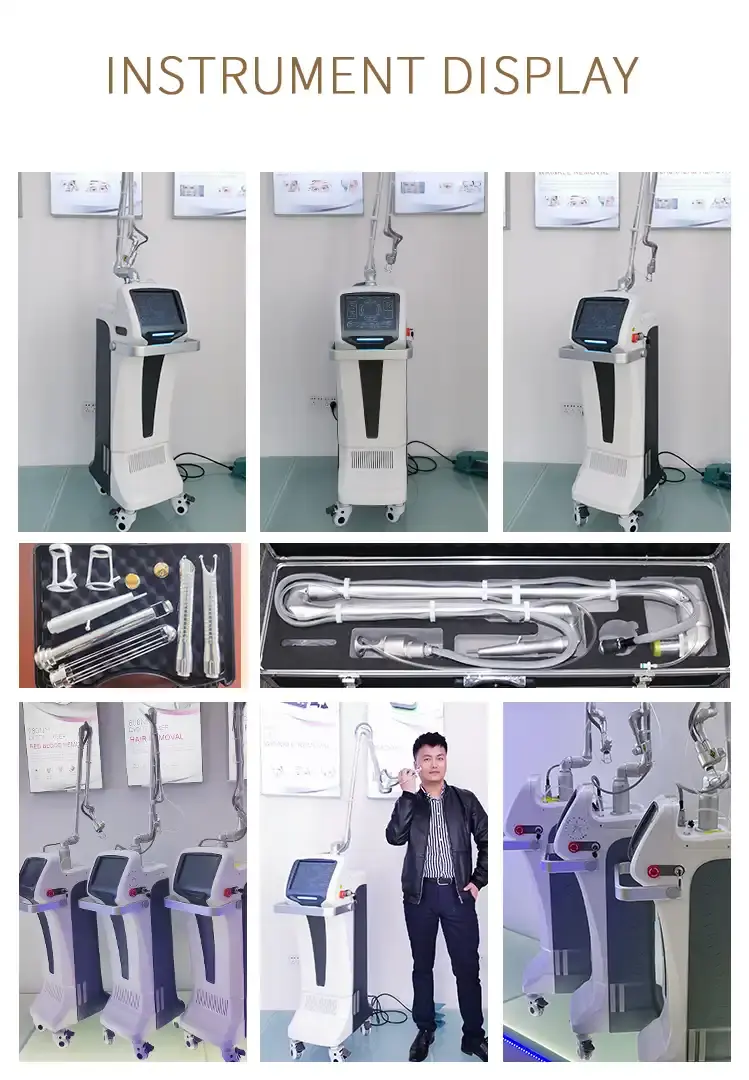
Modern fractional CO2 devices have advanced delivery systems that control how precisely the treatment works. The TB Refine system uses a seven-joint flexible arm light guide system that transmits light more efficiently than 85% of the time. This makes sure that the same amount of energy is delivered no matter where the handpiece is placed. The 10.4-inch color touch screen lets operators change important settings like the focus size (minimum 0.1 mm), pulse duration, lattice density, and penetration depth. During long treatment sessions, water-cooling systems keep the optimal working temperatures and stop thermal drift that could hurt clinical results. The 635nm frequency of the indicator light makes it easy to aim precisely, which is especially helpful when treating the area around the eyes or other sensitive body parts.
Operational Modes and Clinical Flexibility
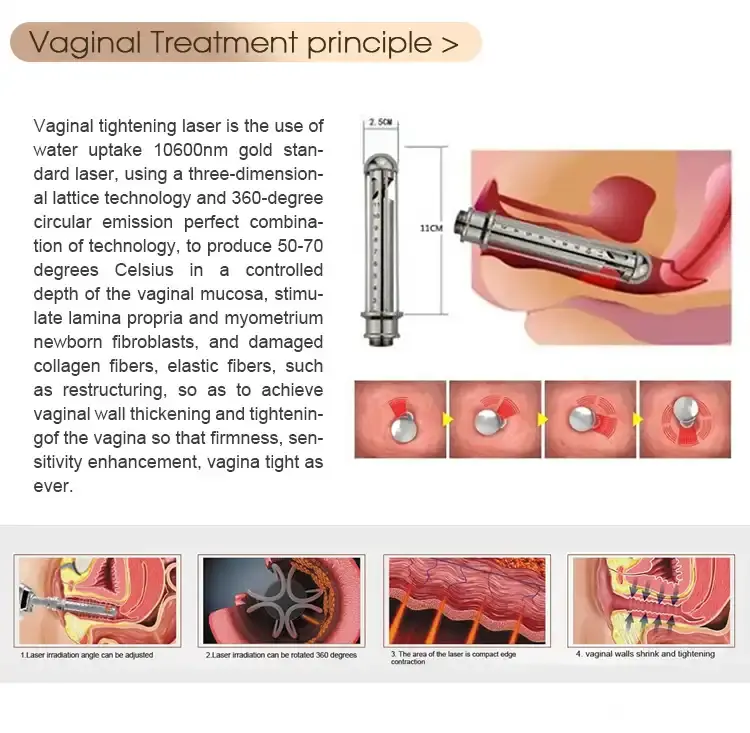
Professional-grade equipment has more than one output mode to meet different treatment goals. Dot matrix mode makes normal fractional patterns that are great for resurfacing skin on bigger areas like the forehead and lips. Long-pulse and ultra-pulse configurations are available in pulse mode. This lets doctors balance ablation depth against thermal coagulation zones based on the type of skin on each patient and the severity of the pathology. Specialized private and vulvar modes show that the technology can be used for more than just improving the look of the face. For example, controlled mucosal remodeling can help with vaginal atrophy and stress urinary incontinence.
Benefits and Considerations for Fractional CO2 Laser Usage
Clinical Advantages Driving Market Adoption
Fractional co2 laser resurfacing can cure severe skin conditions. Atrophic acne scars like icepick, boxcar, and rolling forms benefit from the procedure because it penetrates the reticular dermis, where scar development starts. Thin skin around the lips and eyes demands careful energy control to avoid ectropion; thus, the treatment works effectively there. Removing the top layer and rebuilding the bottom layer may fix photodamage such as solar lentigines, melasma, and diffuse hyperpigmentation. Skin elasticity increases when collagen fibres tighten quickly, and fibroblasts create structural proteins for six months after treatment.
Tech has functions beyond looks. It's also medicinal. Hypertrophic surgical scars and striae distensae normalise after multiple treatments that improve too much collagen deposition. The gadgets help cure diseases that don't respond to topical or less invasive treatments. They provide clinic operators with a premium service that boosts profitability.
Recovery Protocols and Patient Experience Management
When purchasing goods, consider how patients recover following therapy, which affects patient happiness and clinic workflow. Depending on energy settings and treatment intensity, patients experience redness and swelling for three to seven days following treatment. Micro-crusting lasts 24 hours to 5-10 days. As long as they apply cosmetics to disguise it, most fractional patients may return to regular activities after one week, unlike totally ablative patients who need two to three weeks.
Pain management increases treatment acceptance and referrals. The TB system's water-cooling minimises operational discomfort, although topical anaesthetic is still used. Gentle cleansing with pH-balanced solutions, heavy moisturization to let the epithelium grow back, and sun protection for at least 30 days to prevent post-inflammatory discolouration, particularly in Fitzpatrick skin types III through VI, are needed after surgery.
Risk Mitigation Through Proper Device Selection
Even though fractional CO2 technology has much lower complication rates than traditional ablative lasers, it is still very important to know what could go wrong. If the redness lasts longer than two weeks, it could mean that the wound wasn't treated properly or was damaged too much by heat. The chance of infection is still low, but the area needs to be closely watched during the re-epithelialization phase. When treatment parameters are too high for the tissue, scarring can happen. This is why machines with precise energy control are so important. Darker skin types can get hypopigmentation when strong settings mess up the function of melanocytes. This shows how important it is to be able to change spot sizes and pulse lengths so that safer methods can be used on people who are more likely to get pigmentation problems.
Comparing Fractional CO2 Laser with Alternative Treatments
Erbium Laser Systems: Wavelength Considerations
The erbium:YAG laser at 2940nm is a possible ablative choice that can absorb water about 15 times better than CO2 wavelengths. Because of this trait, ablation is shallower, and there is less heat damage left over, which means that the body heals faster, but collagen activation is lower. Erbium systems are good for people who want small changes with little downtime, while CO2 technology is better for people who need more aggressive treatment for serious photodamage or deep scarring. A lot of busy beauty salons keep both technologies up to date and choose which one to use on each patient based on an evaluation.
Microneedling and Radiofrequency Combinations
Automated microneedling, with or without radiofrequency, is a non-ablative option that is becoming more popular because it doesn't damage the surface too much. Without cutting into the skin, these devices make controlled micro-injuries that help wounds heal. The recovery time is shorter—usually 24 to 48 hours—but the clinical effects for serious textural irregularities are still worse than with fractional CO2. The technology works well for people with ethnic skin types who can't have ablative procedures because of the risk of post-inflammatory hyperpigmentation, or for maintenance treatments in between more intense laser sessions.
Chemical Peel Protocols
Medium-depth chemical peels with 30% to 40% trichloroacetic acid cause the same level of damage to the epidermis as modest fractional laser settings. Peels are cheaper and don't require as many tools, which makes them appealing to practices that are trying to stay within their budgets. Chemical methods aren't as accurate as laser technology, so results are harder to predict and treatments are more likely to be different from one another. Customization is limited because the penetration depth can't be changed in real time during processes. This is in contrast to laser platforms, where operators can constantly change settings based on how the tissue responds right away.
Return on Investment Analysis
When procurement teams are thinking about buying capital equipment, they should figure out how much treatment they need to justify the fractional CO2 acquisition costs. Good systems like the TB Refine usually cost between $25,000 and $45,000, based on how they are set up and what extras come with them. With treatment costs averaging between $1,500 and $3,000 per session and a recommended series of three to five treatments for best results, practices that do just two or three full-face procedures per week get their money back in 12 to 18 months. The versatility of the technology across multiple indications, such as facial rejuvenation and gynecological applications, makes it more likely to be used than devices that are only used for one thing.
Key Considerations for Procuring Fractional CO2 Laser Equipment
Critical Technical Specifications
Power counts most when choosing a fractional co2 laser. The TB system generates 1–40W but needs over 40W for thorough therapy. This power range may heal sensitive eye skin at lower settings and severe scarring at higher levels. Missing power reserves lengthen treatments and may need repeat use, making patients more uncomfortable.
Beam quality affects safety. Use a Gaussian beam distribution to test the device in TEM00 mode. Equal energy is given to the treatment area. Poor beam profiles and ablation patterns make thermal damage zones unpredictable. Complications increase. Ask for burn paper demonstrations at various energy levels during equipment inspections to establish beam uniformity.
Poor transport devices waste light, limiting treatment power; thus, check the articulated arm transmission system. TB seven-joint arms provide 85% gearbox efficiency and no slippage in professional equipment. Cheaper fibre optic distribution systems may fail and need replacement, reducing their initial cost advantage.
Manufacturer Reputation and Support Infrastructure
When picking a fractional CO2 laser supplier, consider the connection after you acquire the equipment. TB has its own factory with R&D, manufacturing, quality control, and after-sales service. Known as "vertical integration," this ensures great product quality and fast professional assistance. Over 180 nations import from the 15-year-old enterprise. This indicates operating stability, which is crucial for replacement parts and software updates.
Certified safety and quality management systems are objectively shown to operate. TB Refine satisfies European safety requirements and ISO 13485:2016 medical device quality management standards. These credentials make it easy to bring in equipment and reassure end-user customers about its safety while researching services.
Warranty Terms and Service Agreements
A basic two-year warranty covers manufacturing faults and component failures in the first few months of usage for the TB system. See which parts are guaranteed. The most costly items to break are laser tubes, scanning mechanisms, power supplies, and cooling systems. Make the warranty's use restrictions explicit, since some manufacturers don't cover overuse.
Service agreements and technical assistance should be considered together with the warranty duration. TB provides online assistance 24/7 via many methods to aid consumers in all time zones. No matter their laser experience, the organization offers detailed lesson plans, video tutorials, and live video consultations to teach employees. TB provides on-site installation and training for large equipment purchases, speeding up practice integration.
Customization and OEM Capabilities
OEM services that let practices change how devices look and how they interact with users may help them create a unique brand identity. TB lets larger practice groups or distributors make their own equipment lines by letting them place logos, change color schemes, and personalize software interfaces. This feature is especially useful for practices with more than one location because it lets them standardize tools across all of their locations while keeping their brand name the same. When putting equipment into places where people don't speak English, language customization services, which can be bought by the single unit, keep operators from getting confused and cut down on training time.
Real-World Use Cases and Performance Validation
Acne Scar Revision Protocols
Dermatologists and medical spas love fractional CO2 for atrophic acne scars. Controlled ablation and skin remodelling heal all scars. Icepick scar bases, deep, narrow depressions in the reticular dermis, need high-energy, small-diameter spot treatments (0.1mm to 0.12mm) with extended penetration depth. Medium-density ablation and thermal zones minimise edges in boxcar scars with apparent edges and greater widths. Lower-density thermal coagulation is better than intense ablation for rolling scars with smooth depressions. Multi-session patterns diminish dermal adherence.
Clinical study shows three to five treatment sessions, six to eight weeks apart, reduce scars by 50% to 80%. Setting realistic patient goals throughout the meeting promotes happiness. Scars can be smoothed using the right methods, but not completely eliminated.
Periorbital Rejuvenation Applications
The thin, flexible skin around the eyes makes things more difficult and requires careful energy management. Fractional CO2 treatment helps with crow's feet spreading from the lateral canthus, crepey skin on the lower eyelid, and hooding on the upper eyelid. The TB system's spot size and pulse duration can be changed, which lets you choose conservative parameters that lower the risks of ectropion and hypopigmentation in this sensitive body part. Lower energy densities (5–15 mJ per microbeam) and higher treatment densities (20–30% coverage) are usually used by practitioners to stimulate collagen while keeping the health of the epidermis. This method makes a big difference in the texture and the amount of rhytides while keeping the recovery patterns reasonable.
Gynecological Treatment Outcomes
In addition to improving the look of the face, fractional CO2 technology can also help with health issues in women, such as vaginal atrophy, stress urinary incontinence, and the way the vulva looks. Specialized 360-degree vaginal tools treat the vaginal canal all the way around. This increases the thickness and flexibility of the mucosa by increasing collagen production in the lamina propria. After three monthly treatments, clinical studies show a big rise in the Vaginal Health Index scores, less painful periods, and fewer instances of urine leakage. The technology offers non-surgical options to hormone replacement therapy or surgery, which means that practices that help women going through or already through menopause can make more money.
Operational Reliability Metrics
Device dependability has a direct effect on how profitable a practice is by managing repair costs and treatment capacity. Radio frequency-excited metal tube technology in the TB Refine gives it a lifespan of 20,000 hours or more, which is a lot longer than standard DC glass tubes, which need to be replaced every 2,000 to 5,000 hours. This makes the tubes last longer, which lowers the total cost of ownership and cuts down on service delays that mess up appointments and income. The water-cooling system runs continuously for four-hour cycles without setting off any overheating alarms. This makes it useful in busy practice settings where scheduling patients in order makes the best use of the equipment.
Conclusion
Fractional co2 laser technology is an important investment for beauty practices that want to provide the best treatment results for a wide range of skin problems. The accuracy, adaptability, and proven effectiveness of the technology make capital expenditures worthwhile when paired with the right maker choice that focuses on quality engineering, legal compliance, and a full support infrastructure. These goals are shown by TB's Refine system, which has advanced technical features such as a stable high-power output, the ability to operate in multiple modes, and easy-to-use interfaces that help operators become more skilled faster. The two-year guarantee, ISO 13485 certification, and global support network all help to lower risks, which is important for long-term operating success.
FAQ
1. What is the expected lifespan of a fractional co2 laser machine?
Professional fractional CO2 equipment that uses RF-excited metal tube technology usually works for 20,000 hours or more before the tubes need to be replaced. With the right care, the TB Refine system can last longer than ten years thanks to its strong construction and water-cooling system. Regular checks for accuracy, cleaning of optical parts, and following the service plan provided by the maker will extend the life of the equipment and ensure consistent treatment results.
2. Can fractional co2 lasers help all skin types without harm?
When the right settings are set, fractional CO2 technology can be used to treat Fitzpatrick skin types I through VI. To lower the risk of post-inflammatory hyperpigmentation, darker skin types (IV–VI) need to be treated in more careful ways, with lower energy levels and longer breaks between treatments. The TB system's precise energy control and adjustable spot sizes make it possible to create personalized protocols that balance safety concerns with effectiveness for a wide range of patient groups.
3. What effect do upkeep prices have on the total cost of ownership?
Periodic calibration, cleaning of the articulated arms and optical parts, and eventually replacing the laser tube are all part of routine maintenance. The longest tube life of the TB Refine greatly lowers the most important upkeep cost. Annual service costs are usually between 5 and 8 percent of the initial investment in equipment. This is a manageable amount when you compare it to the money you make from high-margin cosmetic procedures. Setting up repair plans prevents unexpected problems that stop clinical operations.
Partner with a Trusted Fractional CO2 Laser Manufacturer
TB has established itself as a trusted fractional co2 laser supplier over the past 15 years by producing high-quality lasers and shipping them all over the world. When practice owners are making important equipment purchases, our Refine system gives them the technical details, operational dependability, and full support they need. The CE and ISO 13485 certifications show that the device meets international quality standards. The two-year guarantee and 24/7 technical help give you peace of mind while you own the device. We offer OEM customization services that are flexible, reasonably priced, and thorough training programs that will help your clinical team become proficient quickly. Contact susan@taibobeauty.com right away to talk about your unique needs, get full technical specs, or set up a product demonstration that shows off what the Refine system can do.
References
1. Anderson RR, Donelan MB, Hivnor C, et al. "Laser Treatment of Traumatic Scars with an Emphasis on Ablative Fractional Laser Resurfacing: Consensus Report." JAMA Dermatology, 2014.
2. Hantash BM, Bedi VP, Kapadia B, et al. "In Vivo Histological Evaluation of a Novel Ablative Fractional Resurfacing Device." Lasers in Surgery and Medicine, 2007.
3. Metelitsa AI, Alster TS. "Fractionated Laser Skin Resurfacing Treatment Complications: A Review." Dermatologic Surgery, 2010.
4. Tierney EP, Kouba DJ, Hanke CW. "Review of Fractional Photothermolysis: Treatment Indications and Efficacy." Dermatologic Surgery, 2009.
5. Alexiades-Armenakas M, Dover JS, Arndt KA. "Fractional Laser Skin Resurfacing." Journal of Drugs in Dermatology, 2012.
6. Lapidoth M, Halachmi S. "Insights into Laser-Assisted Drug Delivery: Action Spectrum and Penetration Profile." Lasers in Medical Science, 2011.





YOU MAY LIKE