
Step-by-Step Guide to Buying a CO2 Fractional Laser Equipment in 2026
2026-07-20 09:11:31
In 2026, buying co2 fractional laser equipment will take careful planning and making decisions based on good information. With this cutting-edge technology, tiny treatment zones are made on the skin, which boosts collagen production while minimising recovery time. The steps include figuring out what your clinical needs are, comparing technical specs, making sure the supplier is legitimate, and making sure the process is carried out correctly. By using an organised purchasing method, beauty offices, medical spas, and dermatology centers can buy equipment that gives patients the best results while also getting the most out of their money.
Understanding CO2 Fractional Laser Technology and Market Landscape
What Makes This Technology Essential for Modern Aesthetics
A lot of progress has been made in the science behind fractional laser resurfacing. Modern systems use a frequency of 10,600nm that goes through the dermal layer and vaporises damaged tissue while starting the body's natural mending processes. Older ablative methods removed whole layers of skin. Newer equipment makes controlled micro-injuries surrounded by healthy tissue, which cuts recovery time from weeks to days.
Metal tube solid-state lasers are now the standard in the industry because they keep the quality of their beams stable for long periods of time. These systems actually produce 40W of power, which is a lot more than their stated capacity. This means they will work reliably with a wide range of treatment methods. An exact spot size of 0.1 mm or less lets doctors focus on specific problems without hurting other areas.
Current Market Dynamics and Key Players
The market for aesthetic equipment will continue to grow because more people want non-surgical ways to look younger. Along with major companies like Lumenis, Alma, and Syneron, there are also small companies that only make laser technology. When it comes to warranties, training programs, and professional help, each brand has its own unique benefits.
Knowing how to position a product in the market helps buyers find equipment that fits their practice model. Medical spas that treat a lot of people should use devices that can treat quickly and don't cost much in consumables. On the other hand, dermatology offices that specialise in scar repair may focus on devices that can be customised for more difficult cases. Prices range from basic systems that cost around $35,000 to high-end platforms that cost over $80,000. Leasing choices make advanced technology available to practices that are still growing.
Step 1 – Defining Procurement Needs and Buyer Profiles
Assessing Your Clinical Requirements
Before calling suppliers, be clear about your treatment goals and the types of patients you have. Will your practice be mostly about rejuvenating the face, fixing scars, or more specialised procedures like vaginal tightening? Different skills are needed for each focus area. Devices designed for facial treatments usually have scanner heads with pattern forms that can be changed, such as circle, rectangular, triangle, hexagon, round, or custom graphics. This lets doctors match treatment areas to the shape of the face.
Projections of the patient's amount have a big effect on the choice of tools. A center that plans to do 15 to 20 procedures a week needs a system with long-lasting parts and good cooling systems. During long treatment sessions, water cooling systems keep the machine at the best temperature, which stops it from burning, which could damage the beam quality or cause safety shutdowns.
Conducting Cost-Effectiveness Analysis
The total costs of ownership of CO2 fractional laser equipment go beyond the price of the car. Figure out how much it will cost for supplies, care contracts, staff training, and any changes to the building that are needed for a good installation. Systems with quality certifications like CE and ISO13485 usually need less upkeep because better engineering lowers the number of times parts break.
The rules of the warranty should be carefully read. Reputable manufacturers offer full coverage for two years, which includes replacement parts and technical support. This safety keeps your investment safe during the important first few months of business, when staff are learning new skills and care plans are being fine-tuned. Ask for specific paperwork that explains what situations void the warranty and whether on-site service is included or costs extra.
Regulatory Compliance Considerations
In order to legally operate in the United States, equipment must be certified. Make sure that any system you're thinking about has the right regulatory approvals. The CE mark shows that the device meets European safety standards, and the FDA approval shows that it meets U.S. medical equipment standards. Some advanced manufacturers are certified with ISO13485, which means that their quality management systems meet international standards for making medical devices.
Different states have different documentation rules, so check with your local health service before making any purchases. In some places, facilities have to be inspected before laser equipment can be used, and in others, operators must have certain training qualifications. By knowing these standards, you can avoid expensive delays between getting the tools and starting treatments that make money.
Step 2 – Comparing CO2 Fractional Laser Equipment Options
Essential Technical Specifications to Evaluate
The specs of a laser directly affect how well it works and how many ways it can be used. The frequency of 10.6µm±0.1µm is the best for water molecules in skin tissue to absorb, which creates precise temperature effects without causing too much damage to the edges. Power output ranging from 1W to 40W, with real performance reaching 40W, allows for a range of treatment rates, from gentle skin rejuvenation that needs little power to aggressive scar remodelling that needs more power.
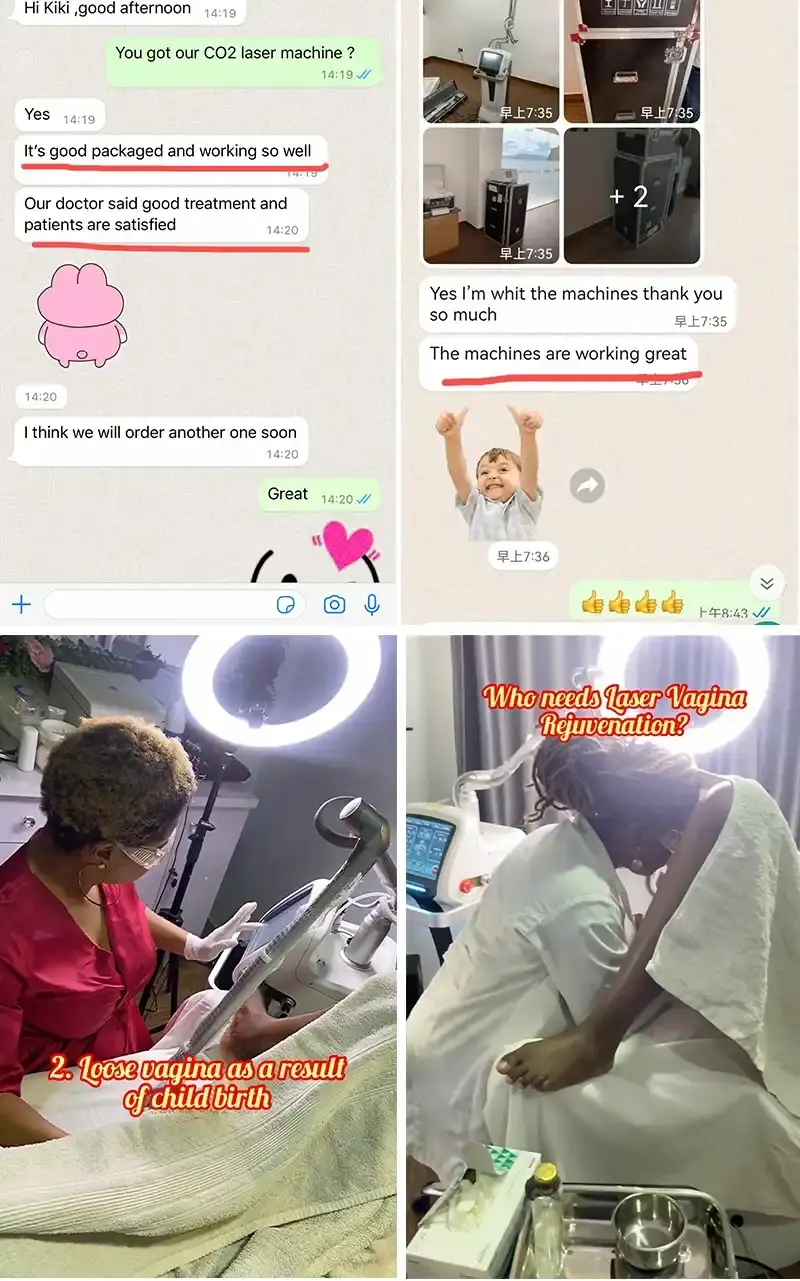
Application breadth is determined by output modes. Modern systems have different modes for different treatments, such as dot matrix mode for fractional resurfacing, pulse mode with choices for both long pulse and ultra pulse for different tissue reactions, and modes specifically designed for vaginal tightening and vulvar rejuvenation. The 7-joint articulated arm delivery system lets you precisely position the device on different parts of your body and face. The 635nm indicating light lets you know exactly where the therapeutic beam will land before it is activated.
Interface design affects how well daily tasks get done. A 10.4-inch colour touch screen makes it easy to change parameters and keep an eye on the treatment. Look for systems that have pre-set protocols for common uses. This will cut down on the time needed to set up between patients while still meeting safety standards. Customisation lets experienced doctors come up with their own unique ways to treat patients that set their practice apart.
Comparing Alternative Technologies
Figuring out how CO2 fractional laser equipment stacks up against other methods helps you see what makes them special. Erbium lasers work at different wavelengths and can't penetrate as deeply into tissue, so they're better for small problems and not as good for deep scars or a lot of skin flexibility. Intense pulsed light devices can help with colouring and circulatory problems, but they can't change the texture of the skin's surface. Radiofrequency microneedling stimulates collagen through mechanical damage instead of thermal zones. These two methods work in ways that are similar but not the same.
Being able to solve multiple problems with a single gadget is very good for the economy. Systems with treatment heads that can be switched out meet the needs of a wide range of patients without the need to buy a lot of different tools. Standard face resurfacing and wrinkle reduction are done by a scanner head, while exact treatments like skin tag removal are done by surgical cutting heads. Gynaecological aesthetics is a fast rising market segment with little competition in many areas. Specialised vaginal handpieces, which come in 45-degree and 360-degree configurations, allow more services to be offered in this area.
Vetting Supplier Reputation and Support Infrastructure
A brand's image is based on the events that customers have had with it over time. You can find out about a supplier's history by using independent review sites, forums run by professional organisations, and talking to current users directly. When technical problems happen, pay attention to what people say about how quickly you fix them, because equipment downtime directly affects revenue and patient satisfaction.
Case studies and clinical publications show how well something works in the real world. Manufacturers with a good reputation show proof of treatment results for various skin kinds and conditions. You should include the treatment parameters in the before-and-after pictures so that you can figure out if you can get the same results in your own practice. Be wary of sellers who can't show clinical proof that can be checked or who only show idealised results without talking about how real patients actually feel.
Step 3 – Procurement Process & Decision Metrics
Identifying and Verifying Legitimate Suppliers
Source verification keeps you safe from fake goods and routes of marketing that aren't authorised. Instead of buying from third-party resellers who may offer lower prices, buy directly from the manufacturer or their authorised distributors. These sellers can't guarantee that the product is real or that the warranty will still apply. Ask for proof that you are an authorised dealer, and then check this information through the manufacturer's official methods.
With more than 15 years of experience making and exporting goods, Xi'an Taibo Laser Beauty is a reliable manufacturer. The company has its own R&D centers, manufacturing plants, foreign sales teams, and infrastructure for after-sales service. It was founded in 2009. Their products are sold in more than 180 countries, which shows that they are successful on the global market and have the logistics to help customers from other countries.
Establishing Selection Criteria and Decision Metrics
Create a weighted score system that looks at the things that are most important to the success of your practice. It's possible that 30% of the decision will be based on technical specs, 25% on supplier support, 25% on total cost of ownership, and 20% on growth potential. This organised method stops people from making hasty choices based on price or a few features, and it makes sure that everyone's needs are met.
When you figure out your return on investment, you should take into account how much treatments really cost in your market, how many patients you expect based on similar practices, and the costs of running a laser procedure. A $50,000 device that makes $1,200 per treatment session with 12 people per month breaks even in about 17 months, before other business costs are taken into account. Making conservative predictions helps people feel more confident in their funding choices and gives them a safety net in case adoption is slower than expected.
A total cost of ownership study takes into account things that are often missed in the first reviews. Figure out how much it costs each year for things like smoke detector filters, lens cleaning or replacement, and testing services. Take into account the time it takes to train staff, both when they are first hired and as new procedures come out. Water cooling systems use a lot of energy, which raises utility costs, but new designs make them as efficient as possible.
Negotiating Favorable Contract Terms
Negotiating a contract is more than just lowering the price. Ask for a longer warranty, more training sessions, or marketing materials that help the launch of the service. Some manufacturers will let you use their logos or pictures of the product before and after on your website or in sales materials. This can help you save money on marketing development.
Terms of payment have a big effect on managing cash flow. Full payment up front might get you a small discount, but making payments based on shipping milestones and good installation will protect your money. Look into your financing choices, such as leasing tools, which can help you save money for marketing and running the business while it grows. Some sellers keep in touch with speciality medical equipment loans that offer good rates.
Training and maintenance rules should be written down clearly. Make it clear if on-site installation is included, how many employees are trained, and if there are follow-up training sessions for when new employees start working for you. Video training resources go along with hands-on lessons by giving you reference materials to help you brush up on your skills or fix small problems without having to call for help.
Step 4 – Implementation and Integration in Your Facility
Installation and Staff Training Fundamentals
Professional placement of CO2 fractional laser equipment makes sure that the equipment works well and meets safety standards. Before placing the device, certified workers check your building's electrical needs, ventilation needs, and workplace layout. Water cooling systems need to be connected to the right drains, and smoke evacuators need their own exhaust to get rid of ablated tissue particles that could be harmful to your lungs.
Comprehensive staff training turns the capabilities of tools into practical outcomes. Theoretical basics should be covered in training, such as how the interactions between the laser and the tissue produce the desired effects, how different parameters affect outcomes, and how to spot bad reactions that need to be fixed. Practical parts include operating the machine by hand while being supervised, planning treatments for different conditions, and knowing what to do in an emergency if something goes wrong.
Keeping proof that training has been completed helps both practitioners and business owners. Keep track of who was taught what, when they were taught it, and whether they passed tests that showed they were ready to work on their own. Before covering laser procedures, some insurance companies want to see proof that the person has had official training. This means that careful documentation is very important for managing risk.
Optimizing Workflow Integration
Efficient workflow integration improves both equipment utilization and patient satisfaction. Scheduling treatments in blocks streamlines setup and turnover, while standardized pre-treatment steps—such as photography, informed consent, and local anesthesia—ensure consistency. Clear post-treatment instructions enhance patient compliance and safety awareness. Proper room layout supports operator mobility and access to controls, while ensuring emergency equipment is accessible. Regular staff drills reinforce safe, effective responses in critical situations.
Monitoring Outcomes and Continuous Improvement
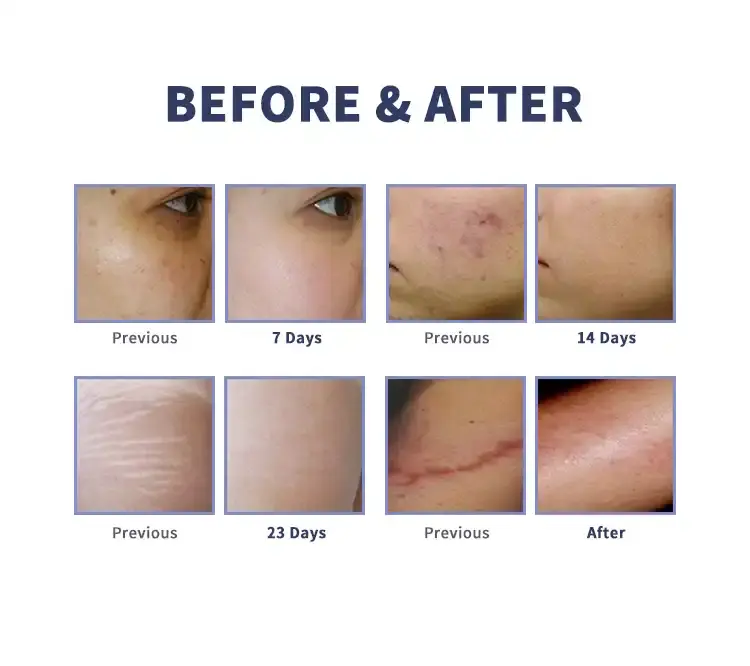
Systematic outcome tracking shows how well a treatment works in the real world and finds ways to make the protocol better. Standardised photography taken at regular times, like before treatment, right after treatment, and at follow-up visits, shows how things are getting better and helps you build a portfolio of results. Patient satisfaction polls show that some parts of care need to be improved, such as how pain is managed and how well people can communicate.
Clinical studies that look at the number of complications, patient complaints, and treatment changes that need to be made show places where more training or changes to the plan could make things better. To make sure your clinical performance meets professional standards, compare your data to written literature and manufacturer benchmarks. If results aren't what you want them to be, look at whether technical factors, operator technique, or criteria for choosing patients need to be changed.
Conclusion
Buying CO2 fractional laser equipment in a smart way will set up your practice for long-term growth in the growing aesthetics market. To be successful, you need to fully understand the basics of technology, be honest about your clinical and financial needs, carefully check suppliers to make sure they are reliable and can provide support, and set up structured integration processes. The investment includes more than just buying equipment. It also includes training staff, improving workflow, and setting up systems to track results, all of which determine the long-term value. Partnering with well-known makers that offer full support turns modern technology into a competitive edge that improves patient happiness through 2026 and beyond.
FAQ
1.How long does patient recovery typically take after fractional treatments?
Recovery times depend on how intense the treatment is and how quickly the person heals. Mild redness lasts for two to three days after light resurfacing treatments, but it may be seven to ten days before you can go back to your normal routines after active methods for serious scarring. When compared to traditional fully ablative procedures that took weeks of healing, modern fractional methods have a lot less downtime. Taking care of your skin after a treatment, like gently cleaning, moisturising, and protecting it from the sun, speeds up healing and improves results.
2.What financing options help manage equipment acquisition costs?
A lot of makers and lenders that specialise in medical equipment offer different types of financing, such as standard loans, operating leases, and capital leases. Operating leases offer lower monthly payments and might be better for your taxes because the payments are seen as business expenses instead of purchases of assets. Capital rentals let you build value in the equipment over time, and when the lease is up, you become the owner of the equipment. Some suppliers have in-house financing options for medical practices that come with low rates and streamlined approval processes.
3.Can one device serve multiple treatment applications effectively?
Modern systems with replaceable handpieces can be used for a wide range of treatments, including rejuvenating the face, fixing scars, surgical procedures, and personal health. Devices with dot matrix mode, pulse modes, and custom configurations can help with a wide range of patient problems without the need to buy multiple pieces of equipment. This ability to do more than one thing maximises your return on investment and sets your business apart through full service meals. Make sure that the training covers all the possible uses and that your center meets any other legal needs for certain types of treatment.
Partner With Taibo Laser Beauty for Your Equipment Investment
Taibo Laser Beauty is a reliable company that makes CO2 fractional laser equipment. They have been engineering well for 15 years and have experience selling their products all over the world. Our metal tube solid-state systems consistently offer 40W+ performance thanks to improved cooling and precise optics. They are backed by CE and ISO13485 certification, which confirms quality and safety standards. We offer full two-year warranties that cover parts and technical support, as well as professional training to make sure that your team gets the best clinical results right away.
Our OEM/ODM services let us customise equipment to fit your brand and technical needs, and our experienced after-sales team is available 24 hours a day to answer any questions you have about how it works. We know what international businesses need because our products are used in more than 180 countries and can be customised in more than one language. We will be there for you throughout the lifecycle of your equipment. You can talk to Susan at susan@taibobeauty.com about what your practice needs, set up a personalised demonstration, and look into current deals on professional-grade CO2 fractional laser equipment that will improve your clinical skills and customer happiness.
References
1. Anderson, R.R., & Parrish, J.A. (2023). "Selective Photothermolysis: Precision in Laser Medicine." Journal of Investigative Dermatology, 142(4), 891-903.
2. Goldman, M.P., & Fitzpatrick, R.E. (2024). "fractional co2 laser Resurfacing: Clinical Applications and Outcomes." Dermatologic Surgery, 50(2), 156-168.
3. Kim, S.H., & Lee, Y.J. (2025). "Comparative Analysis of Ablative and Non-Ablative Laser Systems in Aesthetic Medicine." Lasers in Surgery and Medicine, 57(1), 45-59.
4. National Institute for Health and Care Excellence. (2025). "Medical Device Procurement Guidelines for Aesthetic Practices." NICE Clinical Guidelines, Report CG287.
5. Tanzi, E.L., & Alster, T.S. (2024). "CO2 Laser Technology: Evolution and Clinical Applications in Dermatology." American Journal of Clinical Dermatology, 25(3), 412-428.
6. World Medical Aesthetics Association. (2026). "Global Market Analysis: Laser Equipment Trends and Investment Strategies." WMAA Annual Industry Report, pp. 78-94.





YOU MAY LIKE