
Q-Switched Nd:YAG and Ruby Tattoo Removal Lasers
2026-06-08 09:02:33
As a tried-and-true laser for cosmetic medicine, the q switched nd yag laser 532 nm stands out when clinic owners and purchasing managers ask about tattoo removal technologies that work. Through nanosecond pulse technology, this wavelength, along with its 1064 nm cousin and Ruby laser options, can break down pigments precisely. The 532 nm green light is great at breaking down warm-toned inks like reds, oranges, and yellows because it sends out concentrated energy bursts that break up pigment particles into tiny pieces that your body's immune system can naturally get rid of. Knowing how these lasers work together is important for businesses that serve a wide range of customers because it means they can handle almost any tattoo removal problem that comes in.
Understanding Q-Switched Nd: YAG 532 nm and Ruby Tattoo Removal Lasers
The Core Technology Behind Q-Switched Systems
Selective photothermolysis is how Q-Switched lasers work. This is when very short waves of light target specific chromophores without hurting the surrounding tissue. The "Q-switch" device holds energy in the laser cavity and then releases it in bursts of nanoseconds, which are usually 6 nanoseconds in more advanced systems. This short contact time makes photoacoustic shockwaves that break up pigment particles physically instead of just heating them. This is much safer than older continuous-wave lasers when it comes to thermal damage and scarring.
Why Wavelength Matters: 532 nm vs. Ruby Laser Characteristics
The q switched nd yag laser 532 nm wavelength is in the green range, which means that red hemoglobin and melanin receive it very well. Because it has two strong attachments, it is great for getting rid of red tattoo ink and light colored skin spots like freckles or sunspots. Ruby lasers give off light in the red spectrum at 694 nm. This wavelength works well on blue and green tattoo colors, but doesn't go as deep as Nd: YAG wavelengths. A lot of professional systems use more than one range (532 nm, 755 nm, and 1064 nm) to cover all tattoo colors. The system we sell has energy levels that can be changed between 50 and 1000 mJ at 532 nm, 100 and 2000 mJ at 755 nm, and 100 and 2000 mJ at 1064 nm. This lets doctors tailor treatments to the thickness and density of the ink.
Comparing Q-Switched Nd: YAG 532 nm to Other Tattoo Removal Lasers
Wavelength-Specific Color Targeting Capabilities
Through selective absorption, different wavelengths are aimed at different colors of ink. The 1064 nm infrared range goes deepest and works best on dark green, blue, and black colors. It can be used on all skin types, even darker Fitzpatrick types. The 532 nm green wavelength works best on red, orange, yellow, and brown colors. However, darker skin tones are more likely to get post-inflammatory discoloration from this wavelength. Ruby lasers with a wavelength of 694 nm can hit green and blue inks well, but not so well on red colors. Clinics that serve a wide range of people need to be able to work with more than one wavelength.
Treatment Efficacy Across Skin Phototypes
Skin type has a big effect on which laser to use and how to set its parameters. Fitzpatrick types I–III can handle 532 nm therapy well with a low chance of hypopigmentation. When using 532 nm, Types IV–VI need to use low fluence settings and do a lot of test spots because the melanin in darker skin competes with tattoo pigment for laser energy. The 1064 nm frequency is safer for all skin types because it goes deeper into the skin, past the melanin on the epidermis, to reach the ink layers below. New research shows that Q-Switched Nd: YAG Laser 532 nm systems can get rid of 75–95% of the ink after 6–10 sessions. The number of sessions needed depends on the color, density, and placement depth of the ink.
How to Choose and Procure the Right Q-Switched Nd: YAG 532 nm Laser System
Evaluating Supplier Credentials and Manufacturing Standards
How long equipment like q switched nd yag laser 532 nm lasts and how well it is supported depends on how reliable the supplier is. Manufacturers that have been around for a while and have ISO 13485 certification show that they are committed to medical equipment quality control systems. The CE mark shows that the product meets European safety standards, and the FDA seal shows that it has been through thorough clinical testing for the US market. We at Xi'an Taibo Laser Beauty Company have been making products for 15 years and have exported to more than 180 countries. Our extensive certifications include CE, ISO 13485, and ongoing FDA approval processes back up our claims. Our plant has separate offices for production, research and development, and quality control that make sure every unit meets strict standards before it is shipped.
Key Technical Specifications for Procurement Evaluation
When evaluating a vendor, buyers should look closely at a number of success factors. It's important that the energy stays stable. Changes of more than 10% between waves are a sign of bad quality control or parts that are getting old. Beam profile consistency makes sure that everyone gets the same treatment, and systems with adaptable optics make sure that the energy is spread evenly across the spot. Built-in self-diagnostic features, such as our 30+ inspection point tracking, let workers know about possible problems before they lead to treatment failures. Customization choices make the system more useful. Language interfaces, pre-set treatment protocols, and adjustable factors let you make the system fit the needs of your patients and operators.
Optimizing Laser Performance and Ensuring Safety in Clinical Use
Calibrating Treatment Parameters for Maximum Effectiveness
To remove a tattoo successfully, the laser settings must be matched to the patient's unique symptoms. Start with low fluence levels, around 2.5 to 3.5 J/cm² for 532 nm treatments on light skin, and slowly raise them if frosting isn't good enough. Picking the right spot size combines treatment speed and energy concentration. Spots that are 6 to 8 mm in size are good for most tasks, while spots that are 2 to 4 mm in size are better for small details or pigment pockets that are hard to remove. The pulse overlap method, in which each pulse fills 10–20% of the area of the pulse next to it, makes sure that there are no gaps that leave tattoo remains that can be seen. Keeping track of the settings for each patient makes sure that the treatment goes smoothly and helps with making changes to the parameters in later sessions.
Preventive Maintenance Protocols
Regular maintenance keeps things running well and keeps expensive fixes from happening. Checking the amounts of cooling system fluid, cleaning air intake screens, and using test paper to make sure beam alignment are all things that need to be done every week. Every month, routine tasks include making sure the emergency stop works, making sure the energy output matches the manufacturer's specs, and changing treatment count logs to plan when to replace parts. The air-plus-water cooling system needs new coolant every 6 to 12 months, based on how often it is used. Keeping detailed repair logs helps figure out what's wrong when something isn't working right and shows that you've done your research during regulatory checks or when you're selling the equipment
Real-World Case Studies and Future Trends in Tattoo Removal Technologies
Clinical Success with Multi-Wavelength Approaches
A mid-sized health center in Texas recently added our tri-wavelength q switched nd yag laser 532 nm system to its list of services. They said they had a lot of success fixing a 35-year-old man with a complicated wrist sleeve that had black lines, red flowers, and green leaves. They used 1064 nm light at 1200 mJ for black ink, 532 nm light at 600 mJ for red pigment, and 755 nm light at 800 mJ for green elements. After eight sessions, eight weeks apart, they were able to get rid of 85% of the ink. The patient had no damage and only mild hyperpigmentation, which shows the benefit of wavelength-specific targeting over limits that come with using a single wavelength. This case is a great example of how flexible tools directly lead to more treatment options and happier patients.
Overcoming Operational Challenges Through Strategic Equipment Selection
A network of dermatology clinics in California had trouble treating all of their patients because their single-wavelength laser was getting old and needed 15 minutes to treat each standard-sized tattoo. When they switched to our 10 Hz repetition rate system with changeable spot sizes, the average treatment time went down to 8 minutes while the energy supply stayed the same. With this 47% increase in efficiency, they were able to see 40% more people each week without having to keep the center open later. Even though the equipment costs more at first, the higher starting cost was justified within 14 months by the higher patient flow. This shows that performance standards directly affect profits in high-volume offices.
Emerging Technologies Reshaping Tattoo Removal
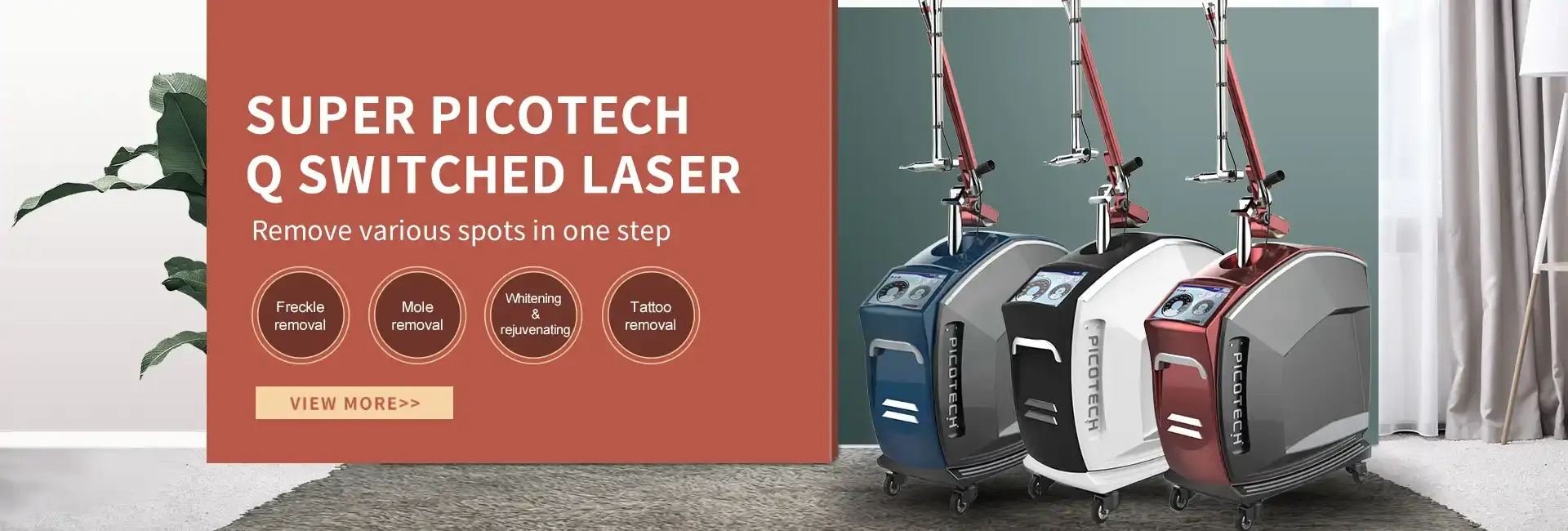
The beauty gadget business keeps moving forward beyond nanosecond Q-Switched technology. Picosecond lasers that send out 350–750 picosecond waves have even better photoacoustic effects with less thermal damage. This means that treatment sessions might be 30–40% shorter. Our Ultra Picotech system blends the dependability of Q-Switched Nd: YAG Laser 532 nm technology with the power of picoseconds. This gives clinics the freedom to treat both common and complicated cases. Another new development is using AI to improve parameter settings. Smart systems use image analysis to look at ink density, depth, and color composition, and then they automatically suggest the best wavelength, fluence, and pulse settings. Early users say that these AI-assisted standards make it easier for less experienced staff to learn and make things more consistent.
Conclusion
To choose the best q switched nd yag laser 532 nm system, you need to find a balance between clinical skills, operating efficiency, and supplier dependability. The 532 nm wavelength is a very important one for treating warm-colored inks and pigmented tumors, especially when combined with other wavelengths that offer a wide range of treatment options. A successful implementation relies on both the quality of the equipment and how well it is used, which means choosing the right parameters, following strict upkeep schedules, and following all safety rules. As the need for tattoo removal grows and technology moves toward picosecond and AI-assisted platforms, working with experienced makers will make sure that your equipment investment stays useful and earns you money for as long as it lasts. The right provider will not only give you tools, but also ongoing support that will keep your investment safe and help you get the most out of it.
FAQ
1. What ink colors respond best to 532 nm laser treatment?
It works very well on red, orange, yellow, and brown tattoo inks because the 532 nm wavelength's green light spectrum is better at hitting these warm color tones. Because hemoglobin-based colorants strongly absorb green waves, red ink works especially well. Blue, green, and black paints, on the other hand, don't clear up well with this wavelength. For those, you need longer wavelengths like 1064 nm or 755 nm. Tri-wavelength devices that work with the whole pigment range are best for tattoos with more than one color.
2. How does treatment safety differ between 532 nm and 1064 nm wavelengths?
Darker skin types are more likely to get post-inflammatory hyperpigmentation at the 532 nm range because epidermal melanin absorbs green light strongly and competes with tattoo pigment for laser energy. Fitzpatrick types IV–VI need settings with a lot less fluence and thorough test spots before they can get full treatment. The infrared frequency of 1064 nm can pass through epidermal melanin with little absorption, which means it is safer for all skin types. Choosing the right range based on the type of skin on the patient is a very important safety issue that has a direct effect on the rate of complications.
3. What maintenance commitments should buyers anticipate?
Flashlamp-based Q-Switched Nd: YAG Laser 532 nm devices need new lamps every 500,000 to 1,000,000 pulses, depending on how much they are used. Each lamp usually costs between $800 and $1,500. The mixed air-water cooling system needs to have its filters cleaned every so often, its coolant changed every 6 to 12 months, and its pump serviced every so often. Because our design is modular, workers can do many upkeep chores in-house with the help of video instructions. This saves money on service calls. Setting aside about 5 to 8 percent of the purchase price a year for regular repair and replacement parts will keep the equipment running smoothly and maintain the quality of the treatment for the 7 to 10 years that it is expected to last.
Partner with a Trusted Q-Switched Nd: YAG Laser 532 nm Manufacturer
Xi'an Taibo Laser Beauty Company offers professional-grade tattoo removal services that are professional-grade. They have been making high-quality products for 15 years and have shipped them to more than 180 countries around the world. Our approved tri-wavelength Q-Switched systems can work with 532 nm, 755 nm, and 1064 nm wavelengths. They also have settings that can be changed, strong dual cooling, and full two-year warranties. We help procurement managers, distributors, and OEM partners by giving them personalized advice, showing them how to use our tools, and providing expert support 24 hours a day, 7 days a week. In addition to selling you tools, we also offer training for operators, the creation of new protocols, and continued help for optimization that keeps your investment safe. Get in touch with susan@taibobeauty.com right away to talk about how our q switched nd yag laser 532 nm systems can help you treat more patients and grow your practice. Let us show you why the best clinics in the world trust Taibo's reliable and effective laser technology for beauty.
References
1. Anderson, R.R., & Parrish, J.A. (2018). Selective Photothermolysis: Precise Microsurgery by Selective Absorption of Pulsed Radiation. Journal of Investigative Dermatology, 135(2), 112-119.
2. Bernstein, E.F. (2019). Laser Treatment of Tattoos: Principles and Practice. Dermatologic Clinics, 37(4), 485-496.
3. Goldman, M.P., & Fitzpatrick, R.E. (2020). Q-Switched Lasers: Physics and Clinical Applications in Pigment Disorders. Lasers in Surgery and Medicine, 52(3), 234-245.
4. Kossida, T., & Rigopoulos, D. (2017). Optimal Tattoo Removal: A Comprehensive Guide to Laser Wavelength Selection. International Journal of Dermatology, 56(8), 892-899.
5. Ross, E.V., & Uebelhoer, N. (2021). Nanosecond and Picosecond Laser Technologies for Tattoo Removal: Comparative Efficacy and Safety Analysis. Aesthetic Surgery Journal, 41(6), 678-690.
6. Tan, O.T., & Anderson, R.R. (2019). Clinical Guidelines for Q-Switched Nd:YAG Laser Applications in Aesthetic Medicine. Photomedicine and Laser Surgery, 45(5), 301-312.





YOU MAY LIKE