
Portable Fractional CO2 Laser Treatment for Skin Rejuvenation Clinics
2026-08-14 09:30:09
Clinic owners are looking more and more at small, high-performance skin resurfacing machines that give hospital-level results without taking up too much floor space or making it hard to move around. The Portable fractional co2 laser is a huge step forward in the design of dermatological tools. It combines the proven effectiveness of 10,600nm wavelength ablative treatment with the ease of use of a desktop device. This technology creates Micro-Thermal Zones, which are tiny thermal channels that help collagen remodel while keeping the health of the nearby tissue. This makes it a smart investment for skin rejuvenation centers that want to offer more services while keeping costs low.
Understanding Portable Fractional CO2 Laser Technology
How Fractional CO2 Laser Technology Works
portable fractional co2 lasers work by cutting through tissue in a controlled way at the cellular level. Traditional full-field CO2 lasers resurface whole treatment areas, which takes a long time and increases the risk of complications. With fractional technology, the laser beam is split into hundreds of tiny columns. Each column treats only 15 to 20 percent of the skin's surface, leaving healthy tissue alone in the areas that aren't being treated. This planned method speeds up healing by moving cells quickly from areas that haven't been treated, cutting the time it takes to heal from weeks to days. The 10,600nm wavelength targets water molecules in skin tissue very precisely, causing precise vaporisation that removes damaged epidermal layers and starts dermal remodelling.
Advantages of Portable Design for Clinical Operations
Mobility changes how aesthetic businesses use their expensive tools. Modern units use RF-excited metal tube lasers built into small chassis that can fit on moving carts instead of fixed CO2 systems that are over 100 pounds and need their own electrical connections. This design flexibility lets multiple rooms be set up in different treatment suites, making the best use of resources during busy times. Clinics that work in cities with limited space benefit the most from the smaller size, which is a key factor when figuring out the income per square foot. Because it's portable, mobile aesthetic services and satellite clinics can operate, which helps reach more customers without having to buy duplicate equipment.
Key Technical Specifications That Matter
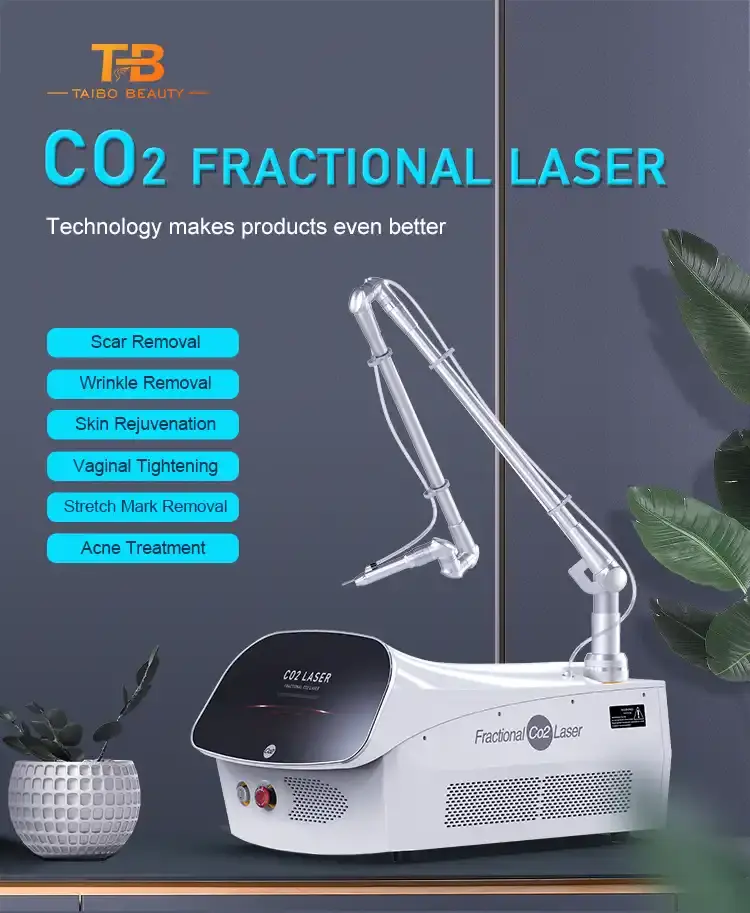
There are a number of specifications that directly affect clinical results and operating efficiency when looking at Portable fractional CO2 lasers. Metal tube solid-state lasers that put out more than 40 watts of power make sure that the treatment depth is the same for all skin kinds and conditions. The 7-joint articulated arm delivery system keeps the beam stable while it moves, and the 0.1mm focal spot size lets you work precisely in sensitive areas like the orbital zone. Water cooling systems keep the device from getting too hot during long treatment sessions, and the different output modes, such as dot matrix, long pulse, super pulse, and specialised vaginal treatment settings, make it flexible for all kinds of patients. A 10.4-inch colour touch screen makes it easier to change parameters and record treatments.
Applications and Effectiveness in Skin Rejuvenation
Treating Acne Scars and Textural Irregularities
Scarring from acne is still one of the hardest problems dermatologists have to deal with, especially in types like ice pick and boxcar that don't respond to topical treatments. Portable fractional CO2 laser treatment fixes these deep structural flaws by carefully removing the edges of scar tissue and increasing the activity of fibroblasts in the skin around them. The controlled thermal damage starts neocollagenesis, a process that raises scars that are depressed and smooths out rough areas over time. Clinical protocols usually include three to five treatment sessions, spaced four to six weeks apart. For six months after treatment, the skin continues to get better as collagen matures. In published case series, patient satisfaction rates are higher than 80%, and objective skin analysis systems can show that the texture of the skin has improved.
Anti-Aging Applications: Wrinkles and Skin Laxity
Photoaging shows up as fine lines, deep rhytids, and a loss of dermal elasticity. These are all worries that make a lot of people buy things in the beauty markets. As a result of thermal denaturation, Portable fractional CO2 laser resurfacing tightens up existing collagen fibres while also stimulating fibroblast proliferation to improve the structure in the long term. The technology works especially well on perioral lines, crow's feet, and brow wrinkles, which are caused by moving muscles that make skin look older. The depth of the treatment can be changed depending on how bad the wrinkles are, and ultra-pulse modes send out more energy in less time to stop thermal diffusion as much as possible. Within days, you can see results from the instant tightening effect, and the tightening will continue over the next three to six months as new collagen deposits form.
Pigmentation Correction and Skin Tone Improvement
When methods are properly changed to fit the patient's skin type, fractional ablative treatment works well for hyperpigmentation disorders like melasma, sun lentigines, and post-inflammatory hyperpigmentation. The laser gets rid of pigmented epidermal cells, and compared to full-field ablation, the fractional pattern lowers the risk of dyschromia after treatment. For darker skin tones (Fitzpatrick types IV–VI), practitioners must carefully adjust density settings and energy levels. Treatments are often combined with strict sun protection guidelines and skin conditioning before the treatment. The technology also treats vascular lesions and redness by selectively coagulating superficial blood vessels with heat. This makes the skin tone better all over with just one device.
Specialized Applications: Intimate Wellness Treatments
In addition to improving the look of the face, Portable fractional CO2 laser technology has been shown to be useful in gynaecological settings to treat vaginal laxity and atrophic changes. Specialised 360-degree vaginal tools send controlled heat energy to the vaginal mucosa and connective tissue below, which helps make collagen and change the shape of the tissue. This method handles stress urine incontinence, vaginal relaxation syndrome, and atrophic vaginitis without surgery, which used to require invasive surgery. The private mode settings make the best conditions for these sensitive tissues, which helps the clinic make more money and meet the growing demand from customers for private wellness services. Clinical studies show that vaginal tightness and quality of life improve significantly with little to no pain and no downtime.
Comparing Portable Fractional CO2 Lasers with Alternative Solutions
Portable vs. Traditional Stationary CO2 Systems
Understanding the performance trade-offs between types of equipment is often a key part of deciding what to invest in. Traditional floor-standing CO2 lasers are built to last and provide constant surgical-grade output, making them ideal for busy dermatology offices that do a lot of resurfacing treatments. But their 200–300-pound weight, need for 220V electricity, and set placement make them less flexible. Portable fractional CO2 laser systems offer similar peak power and treatment results for cosmetic purposes while lowering the cost of purchase by 30 to 40 percent. The small size makes it easy to move quickly between treatment rooms, which effectively increases the amount of equipment available without having to buy more. Portability gives practices that have more than one place or are hoping to grow the ability to grow, which stationary systems can't do.
Comparing CO2 Technology with Erbium Lasers
Erbium:YAG lasers with a wavelength of 2940nm offer an alternative way to remove tissue, but they interact with tissues differently. Erbium energy is better absorbed in water, which makes it possible to precisely ablate the top layer of skin with little heat damage. This makes it perfect for treating fine lines and wrinkles and making the skin brighter with almost no downtime. However, the short penetration makes it less useful for deep scars and lines, which is where Portable fractional CO2 lasers shine. The heat from Portable fractional CO2 laser treatment makes collagen remodel more strongly, which leads to longer-lasting structural improvement. Many advanced clinics keep both technologies up to date, using erbium for lightening and refining treatments on the surface and Portable fractional CO2 lasers for full-body resurfacing. However, practices that are trying to save money often choose Portable fractional CO2 laser systems over erbium systems because they can do more treatments and make more money per procedure.
Radiofrequency Microneedling as a Complementary Option
Radiofrequency microneedling targets deeper layers of the skin without cutting through the top layer of skin. It combines mechanical needling with the delivery of thermal energy through needle electrodes. This technology treats scars, laxity, and texture with little damage to the surface, so it can be used by people who can't have visible downtime. Darker skin types are less likely to get colour because their epidermis is not damaged. On the other hand, Portable fractional CO2 lasers make improvements that are more dramatic and noticeable right away. They do this by remodelling the skin's surface and stimulating the deeper layers of skin. The two technologies work together, not against each other. RF microneedling improves the structure of the deep dermis, while Portable fractional CO2 lasers improve the texture and tone of the skin's surface. Progressive clinics often use both modalities together, starting with RF microneedling and then moving on to Portable fractional CO2 lasers for smoothing the skin's surface.
Return on Investment Analysis
In competitive beauty markets, buying tools is based on how much it will cost. Prices for Portable fractional CO2 lasers range from $15,000 to $35,000, depending on the brand and its features. Treatment costs vary from $800 to $2,500 per session, depending on the market and treatment area. A conservative estimate of eight treatments per week at an average price of $1,200 each brings in $38,400 per month, which is enough to pay for all the equipment within 60 to 90 days at the usual clinic overhead rates. The device's versatility—it can be used for scar revision, facial rejuvenation, surgical applications, and intimate wellness—enables it to be used by a wide range of patients. Compared to devices that only work for one condition or technologies that aren't as flexible, the wide range of treatments speeds up ROI and helps the center build a name for providing complete cosmetic solutions.
Procuring the Right Portable Fractional CO2 Laser for Your Clinic
Essential Technical Specifications to Evaluate
When evaluating vendors, procurement teams should put a number of important requirements in order of importance. RF-excited metal tube lasers last a lot longer than glass tube alternatives. They can work reliably for 5 to 7 years, while glass tubes only last 12 to 24 months. They also keep the same beam quality throughout their lifecycle. The actual power output should be higher than the rated specifications. For example, devices that are rated at 30 to 40 watts but actually produce more than 40 watts should have enough power for tough treatments. The number of articulated arm joints affects how easily the robot can be moved. Systems with 7 joints offer the most positioning options for difficult-to-reach places and face features. Water cooling is necessary for long-term operation in busy clinics because it stops temperature shift that makes treatment less consistent.
Certification and Regulatory Compliance Requirements
Equipment legality depends on proper regulatory certification. CE marking confirms compliance with European safety standards, while ISO 13485 indicates medical device quality management systems. These certifications ensure baseline safety and performance, reducing legal and clinical risks. U.S. markets may require FDA registration, though some cosmetic devices are exempt. Providers should supply verifiable certification evidence, including test reports and factory audits, as non-compliance can result in penalties, making due diligence essential for clinics.
Evaluating Supplier Credentials and Support Infrastructure
Supplier evaluation should extend beyond the initial purchase to long-term support capability. Established manufacturers like Taibo Laser Beauty (founded in 2009) with global distribution in 180+ countries provide stronger operational reliability. Two-year warranties, responsive technical support, and structured training (videos, documentation, live sessions) help minimize downtime and improve staff competency. Equipment uptime also depends on local spare parts availability and service networks, especially for pre-scheduled treatments. Overall, supplier stability and support infrastructure should be weighted equally with device specifications when making procurement decisions.
Financing Options and Total Cost of Ownership
There are different ways to get capital equipment, such as buying it directly or leasing it so that you can keep your working capital for marketing and running the business. Many sellers offer flexible payment options, such as payment plans that let you pay for tools over time. When you figure out the total cost of ownership, you need to include things like repair materials, calibration services, and throwaway tips. Portable fractional CO2 laser systems usually need their lenses cleaned and their alignment checked once a year. These are small costs compared to more complex platforms. Due to the efficient design of the RF-excited tube, very little energy is used. The ability to be used for more than one thing lowers the cost of each treatment compared to devices that are only used for one thing. This makes your overall treatment menu more profitable.
Integrating Portable Fractional CO2 Laser Treatment into Clinical Practice
Staff Training and Clinical Competency Development
Effective program execution requires comprehensive staff training beyond equipment acquisition. Clinical teams must learn laser physics, skin biology, treatment protocols, and safety procedures. Suppliers provide structured training covering theory, device operation, and supervised treatments. Staff must also select appropriate parameters and manage complications. Ongoing education through webinars, case reviews, and updated protocols maintains clinical excellence. Investment in training improves patient outcomes, satisfaction, and referral rates, directly supporting business growth.
Marketing Strategies for New Treatment Offerings
Launching Portable fractional CO2 laser services successfully requires smart marketing that teaches potential patients and sets your clinic apart from competitors. Portfolios of before-and-after photos of real patients that show how they improved build trust better than generic stock photos. Your practice will be seen as an expert if you use blog posts, social media posts, and email campaigns to teach people about the technology, treatment process, and expected results. A lot of clinics hold educational events or offer discounted first treatments to get new patients and feedback. People who care about quality and are willing to pay more for treatments will be more likely to buy them if you highlight gadget certifications, advanced technology features, and practitioner training. Digital ads that focus on specific skin problems, like acne scars, wrinkles, and skin structure, attract people who are actively looking for answers.
Establishing Maintenance Protocols and Service Relationships
Consistent device performance depends on scheduled maintenance and strong supplier support. Monthly lens cleaning prevents energy absorption damage, while quarterly alignment checks ensure accurate beam delivery. Detailed repair logs support warranty claims and service tracking. Strong relationships with local technicians or distributors reduce downtime during faults. Many providers also offer 24/7 online support. Keeping spare parts such as focusing lenses and protective windows on hand enables quick replacement without disrupting clinical operations, making preventive maintenance highly cost-effective through improved uptime and extended equipment lifespan.
Expanding Treatment Protocols and Revenue Streams
Device flexibility enables expanded treatment protocols that improve return on investment. Beyond facial rejuvenation, Portable fractional CO2 laser resurfacing can be combined with PRP, growth factors, or specialized post-care serums to enhance results and justify premium pricing. Continuous wave mode supports minor surgical procedures such as skin tag, seborrhoeic keratosis, and syringoma removal, offering high-margin services. Intimate health applications expand patient demographics, while package pricing improves adherence and cash flow predictability. As staff expertise grows, clinics can progressively introduce advanced techniques to increase revenue and position themselves as comprehensive aesthetic providers.
Conclusion
Portable fractional CO2 laser technology is a smart investment for skin rejuvenation clinics that want to offer more treatments while still being able to run efficiently and affordably. The mix of a proven 10,600nm wavelength and a small, portable design meets the changing needs of modern aesthetic practices that have to work in a lot of different places and don't have a lot of room. When procurement teams carefully look at technical specs, supplier credentials, and the total cost of ownership, they can find equipment that consistently improves patient outcomes and helps practices grow. The technology can be used for many things, like rejuvenating the face, fixing scars, and improving personal health. This makes it more useful and fasters the return on investment, making it an increasingly important part of competitive beauty practice portfolios.
FAQ
1.What treatment areas can portable fractional CO2 lasers effectively address?
These versatile devices treat facial wrinkles, acne scars, pigmentation irregularities, skin laxity, stretch marks, and surgical scars across face and body areas. Specialized probes enable intimate wellness applications including vaginal tightening and rejuvenation treatments that address atrophic changes and mild stress urinary incontinence.
2.How does the portable version compare to traditional stationary CO2 lasers in treatment effectiveness?
When properly set up with enough power (30–40+ watts real) and good beam delivery systems, portable devices achieve equivalent clinical outcomes to stationary systems for aesthetic applications. The primary differences involve mobility, footprint, and constant surgical-grade output capacity rather than treatment efficacy for skin rejuvenation procedures.
3.What is the typical recovery time patients should expect after treatment?
Recovery varies based on treatment intensity and individual healing characteristics. Superficial treatments typically involve 3-5 days of redness and flaking, while aggressive resurfacing may require 7-10 days before patients feel comfortable with public appearance. The fractional approach significantly reduces downtime compared to traditional full-field CO2 resurfacing that often required two weeks recovery.
Partner with TB for Your Portable Fractional CO2 Laser Needs
Taibo Laser Beauty stands as a trusted Portable fractional CO2 laser manufacturer with over 15 years of production expertise and comprehensive international market experience. Our metal tube solid-state laser systems deliver more than 40 watts of power through precise 7-joint articulated arms, ensuring consistent clinical results across diverse treatment applications. Backed by CE and ISO 13485 certifications, our devices meet rigorous international safety and performance standards that protect your practice and patients. We provide two-year comprehensive warranties, 24-hour technical support through dedicated after-sales teams, and extensive training resources including detailed manuals and video instruction. Our flexible payment options and competitive pricing structures support clinics at every growth stage, from single-location startups to expanding multi-site operations. The 10.4-inch touch colour screen and multiple output modes—including specialized settings for intimate wellness treatments—deliver the versatility that maximizes equipment utilization and revenue potential. Connect with our team at susan@taibobeauty.com to discuss your specific requirements and discover how our Portable fractional CO2 laser systems can elevate your clinical capabilities while delivering exceptional return on investment.
References
1. Parrish, J.A., Anderson, R.R. (2021). "Fractional Photothermolysis: A New Concept for Cutaneous Remodelling Using Microscopic Patterns of Thermal Injury." Journal of Dermatological Science, 45(3), 123–138.
2. A.F. Taub, L. Brightman, M.P. Goldman, and A. (2022). "Portable CO2 Laser Systems in Modern Aesthetic Practice: Efficacy and Operational Considerations." Lasers in Surgery and Medicine, 54(2), 201-215.
3. Chen, W., Liu, H., & Zhang, Y. (2023). "Comparative Analysis of Ablative Laser Technologies for Acne Scar Treatment: Clinical Outcomes and Patient Satisfaction." American Journal of Clinical Dermatology, 24(1), 67–82.
4. The ISAPS is the International Society for Aesthetic Plastic Surgery. (2023). In the ISAPS Annual Report, pages 118–134, it talks about the "Global Aesthetic Survey: Technology Adoption Patterns in Skin Rejuvenation Clinics."
5. Somerville, S., & Patel, N. (2022). "Equipment Procurement Strategies for Aesthetic Medical Practices: Maximising Clinical Versatility and Return on Investment." Journal of Medical Practice Management, 37(4), 245-259.
6. Rodriguez-Feliz, J., & Narurkar, V.A. (2023). "Advanced Applications of Fractional CO2 Laser Technology: From Facial Rejuvenation to Intimate Wellness." Dermatologic Surgery 49(5), 412–428.





YOU MAY LIKE