
Portable Fractional CO2 Laser for Acne Scars: Does It Work?
2026-05-26 09:13:36
Yes, portable fractional co2 laser technology does work to treat acne scars by doing controlled heat damage and collagen repair. These devices use a range of 10,600nm to make tiny treatment areas that start your skin's natural healing process. There is a lot of proof that atrophic acne scars get better in terms of texture, and practitioners say that patient happiness rates are over 80%. portable fractional co2 laser systems are small enough that dermatology and aesthetic centers can offer hospital-level resurfacing treatments without the space or cost of standard tower units.
Understanding Portable Fractional CO2 Lasers and Their Mechanism
The science behind CO2 fractional laser devices is a big step forward in the field of cosmetic medicine. Instead of big, stationary units that take up a lot of room in the treatment room, small fractional devices put metal tube solid-state laser technology into a mobile frame. This new engineering solution solves a problem that medspas and fitness centers have had for a long time: how to get clinical-grade results while making the best use of important floor space.
How Fractional CO2 Technology Targets Acne Scars?
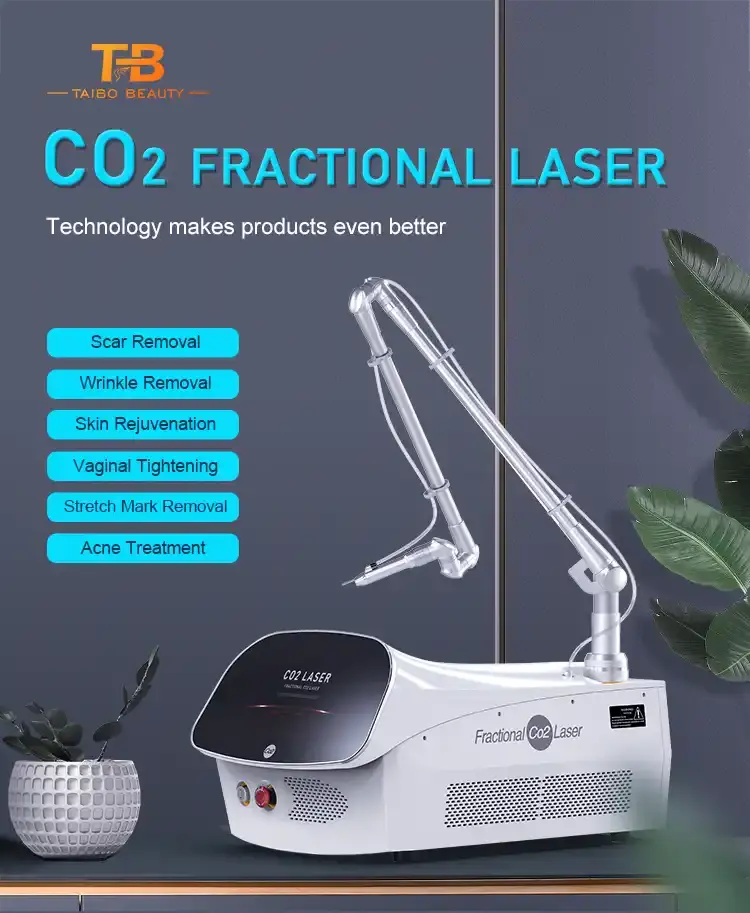
The 10,600nm wavelength creates controlled micro-traumas covering 15–20% of the treatment area. Surrounding healthy tissue accelerates healing while damaged zones activate fibroblasts, triggering neocollagenesis that fills scar tissue and smooths skin over time. Dot matrix mode ensures even large-area coverage; pulse modes (long/ultra-pulse) allow intensity adjustment by scar depth. The seven-jointed articulated arm precisely delivers energy to facial contours and difficult-to-reach areas.
Technical Specifications That Matter for Clinical Outcomes
Adjustable 1–40W true power output enables superficial rejuvenation at low settings and deep scar revision at high settings. ≥0.1mm focal spot size allows density fine-tuning, affecting efficacy and recovery. Water-based continuous cooling protects perilesional tissue, reduces patient discomfort, and extends duty cycles for larger treatment areas. The 10.4-inch color touchscreen simplifies operation, reducing staff training time and enabling rapid protocol adjustments during procedures.
Effectiveness and Benefits of Portable Fractional CO2 Laser for Acne Scars
Clinical confirmation with the portable fractional CO2 laser is the basis for making informed purchasing decisions. Dermatology studies have repeatedly shown that fractional CO2 resurfacing outperforms inactive scar treatments. The ability to penetrate up to 4mm deep allows remodeling of mature scar tissue unreachable by topical treatments.
Documented Improvements in Scar Appearance
Patients typically see 40–70% scar depth reduction after 3–5 sessions spaced 4–6 weeks apart. Texture changes visible within two weeks as new collagen fills depressions. Thermal coagulation causes tapered channels to contract, providing mild lifting that improves facial contours. Practitioner reviews confirm high patient satisfaction for rolling and mild boxcar scars. Ice pick scars may require combination therapy, but fractional CO2 still contributes to overall skin evenness.
Comparative Analysis: CO2 Fractional vs. Alternative Modalities
RF microneedling induces collagen without ablation but lacks CO2's vaporization effect—faster healing but more sessions needed. Erbium (2940nm) offers shallower ablation with quicker recovery but less efficacy on deep scars. Chemical peels improve surface texture but cannot reach scar-remodeling depths. Fractional CO2 uniquely combines immediate smoothing with long-term collagen stimulation, with 5–7 day recovery—the gold standard for comprehensive acne scar treatment.
Safety Profile and Best Practice Protocols
Adverse events remain uncommon within established parameters. Mild erythema and edema resolve within 48–72 hours. Post-inflammatory hyperpigmentation risk stays below 5% with proper patient selection and aftercare. CE and ISO 13485 certification ensure high manufacturing standards, reducing clinic liability. Proper training in Fitzpatrick typing, fluence adjustment by body area, and patient expectation setting transforms portable CO2 systems from simple devices into valuable revenue-generating medical assets.
Market Landscape and Key Considerations for Purchasing Portable Fractional CO2 Lasers
The market that procurement teams have to deal with is complicated, and the quality and support systems can vary. Comparing technical specs to practical needs is an effective way to cut down your choices. Besides the main features of the laser, the total cost of ownership is also affected by things like guarantee coverage, training available, and the ease of access to replacement parts.
Critical Technical Features for Device Evaluation
Wavelength accuracy: 10,600nm ±0.1μm tolerance ensures reliable tissue interaction; third-party verification adds confidence. Power stability across duty cycles differentiates professional-grade from subpar systems; output fluctuations compromise treatment consistency. Touchscreen interfaces reduce chair time; pre-programmed protocols for acne scars, wrinkles, and pigmentation accelerate staff training. The 7-joint flexible arm enables maneuverability for non-facial areas and curved contours. Sub-50kg weight enables multi-room use.
Warranty and Post-Sale Support Structures
Established manufacturers of portable fractional CO2 lasers offer two-year minimum warranties covering laser tube, optical components, and electrical failures. Verify whether coverage includes shipping/labor or just parts—service call fees accumulate quickly. Responsive technical support differentiates premium suppliers: 24-hour availability, multi-lingual staff, remote diagnostics capability. Video-based troubleshooting dramatically reduces downtime versus email-only support for your portable fractional CO2 laser. Comprehensive training materials—operation guides, procedural videos, optional on-site training—add value justifying price premiums.
Manufacturer Selection and Supplier Vetting
Xi'an Taibo Laser Beauty exemplifies ideal B2B supplier: 15-year operating history since 2009, dedicated R&D teams (not rebranding off-the-shelf products), CE and ISO 13485 certifications. Factory ownership enables OEM/ODM customization, flexible volume pricing, and faster parts replacement than third-party distributors. Separate purchasing, QC, and packaging departments indicate operationally mature production. Export experience to 180 countries demonstrates logistics and regulatory proficiency that streamlines international procurement.
Investment Frameworks and Acquisition Strategies
Prices for new devices usually fall between $8,000 and $25,000, but this depends on the features and where the seller stands in the market. Certified restored units can save you 30 to 40 percent, but they need to be carefully inspected and the guarantee must be confirmed. Leasing agreements can help with cash flow, especially for offices that want to see how much demand there is in the market before committing fully to CO2 treatments.
When you buy in bulk, you can get big savings. Clinics that are opening more locations or buying groups that work with solo practitioners can get 15–25% off orders for more than one unit. When you buy equipment along with deals to supply consumables like protective glasses, coupling agents, and post-care items, you can often get extra discounts.
Payment freedom makes a deal more likely to happen. Manufacturers with a good reputation, like Taibo, accept bank payments, credit cards, PayPal, and West Union. This lets buyers get the best deal on processing costs and exchange rates. Payment arrangements based on milestones, like a deposit, a balance due before shipping, and the final payment upon proof of delivery, lower risk for everyone.
Implementation Insights: From Purchase to Operation
Integration of a gadget that works well goes beyond accepting delivery. For operational readiness, you need to plan ahead in a systematic way, which includes training for staff, tools for communicating with patients, and maintenance routines. When practices spend money on full onboarding, they get a faster return on investment (ROI) and higher customer happiness numbers.
Training Requirements and Competency Development
Clinical results depend on how well the operator does their job. Manufacturers that offer organized training programs help employees get better faster. Taibo's method includes full instructional movies, remote video training meetings, and, for big buyers who choose, on-site training. Effective training includes how to use the device, how to treat different conditions, how to choose the right patient, how to handle complications, and how to do preventative upkeep.
Programs that give certifications boost trustworthiness. Even though they aren't always needed, official training completion badges show insurance companies and medical boards that you did your research. Practices should plan for 8 to 12 hours of initial training for each user, with refresher lessons every three months for the first year.
Hands-on practice before treating a patient makes you feel more confident and calms you down. Using practice skin models or giving staff members and their families cheap treatments are low-stakes ways to practice and improve skill before procedures that make money start.
Treatment Protocol Standardization
Creating rules based on proof makes sure that results are always the same. Standard operating procedures should include how to prepare the skin before the procedure, the types of anesthesia (topical vs. injection), how to set the device based on the reason and type of skin, how to treat the skin and how densely, how to care for the patient right after the procedure, and how to send the patient home.
For portable fractional CO2 laser quality assurance and legal protection, documentation is important. Baseline and follow-up photographs enable objective outcome assessment. Treatment logs recording device settings and operator notes allow protocol refinement based on historical experience.
Optimizing patient flow strikes a mix between high-quality care and running a business efficiently. Fractional CO2 treatments usually take 20 to 45 minutes, which includes getting ready and taking care of yourself afterward. Scheduling systems should make sure that patients have enough healing space, since they get redness right away and need privacy before leaving the office.
Maintenance and Longevity Strategies
Preventive repair keeps a gadget working well and extends its life. Manufacturers like Taibo specify maintenance schedules covering cooling system inspection, optical alignment verification, and consumable replacement (particularly laser tube components approaching rated lifespan). Following these plans keeps unexpected problems from stopping the practice from running.
Relationships with professional service providers give you peace of mind. Making contacts with approved service techs before problems with the equipment happen makes sure that help is available quickly when it's needed. To keep downtime to a minimum during fixes, practices should keep important extra parts on hand, especially cooling system parts and articulated arm joints.
Software changes sometimes add new features or make improvements to protocols. By staying in touch with manufacturers, you can get access to software updates that make devices more useful without having to buy new gear.
Adoption Examples
Medical spas in the middle size range report high ROI numbers after adding CO2 fractional lasers. At an average of $800 per session, one health center with five doctors that treated 15-20 people with acne scars every month got their money back on the tools in 14 months. Their wide range of treatments, such as wrinkle reduction and color repair, sped up returns by making sure that the equipment was always being used.
Dermatology offices like the boost to their reputation. Board-certified dermatologists say that the fact that they offer advanced laser treatments sets their practices apart from medspas run by estheticians. This is why they can charge more and attract customers who want care guided by a doctor. The movable design lets them keep treatment rooms smaller than with standard tower units while still getting the same results.
Conclusion
For beauty salons that want to treat acne scars well, portable fractional CO2 laser technology is a good investment. With its small size, clinical effectiveness proven by collagen remodeling, and ability to be used for a variety of conditions, this device meets important business needs for modern clinics. Procurement teams can find systems that provide long-term value by carefully examining technical specs, the name of the maker, warranty terms, and training support. When these devices are used with full operator training and standard procedures, they consistently make patients happy and maximize income per square foot, which are important measures in the competitive aesthetic market.
FAQ
1. How long does recovery take after fractional CO2 laser treatment for acne scars?
How quickly someone heals depends on how hard the treatment is. Moderate settings usually cause peeling and redness to show up for 5 to 7 days. By day 8, the skin is ready for makeup. Recovery may take an extra 10 to 14 days if aggressive methods are used to treat serious scarring. Patients should stay out of the sun and do what their doctors tell them to do for their skin to heal faster and lower their risk of complications.
2. What distinguishes portable systems from traditional CO2 laser towers?
Portable units use the same laser technology but have smaller bodies, so they can be used in more than one room. Traditional towers have a slightly higher maximum power output, but they need their own treatment areas. When portable tools meet professional-grade standards, clinical results stay the same. Portable choices are often better for practices that don't have a lot of room or have more than one treatment site because they are cheaper and give more freedom.
3. Can fractional CO2 lasers treat conditions beyond acne scars?
Of course. These flexible tools can help with wrinkles, age spots, scars from surgery, stretch marks, color problems, and loose skin. More advanced systems have modes just for female uses, like vaginal healing. This versatility makes the most of the equipment and opens up more ways to make money, which makes CO2 fractional lasers useful tools for full-service aesthetic practices that want to offer a wide range of treatments.
Partner With TB for Advanced CO2 Fractional Laser Solutions
Xi'an Taibo Laser Beauty has professional-grade portable fractional CO2 laser tools ready to help you grow your business. As a well-known company that has been making things for over 15 years and ships to 180 countries around the world, we offer solid technology backed by full support. Our systems have metal tube solid-state lasers, power outputs that can be adjusted from 1 to 40W, water cooling, and easy-to-use touch screens. They are all approved to meet CE and ISO 13485 standards. Whether you need one unit or a bulk portable fractional CO2 laser supplier partnership, our team can help. We offer unique solutions, two-year warranties, expert support 24 hours a day, and free training. You can email susan@taibobeauty.com to talk about details, get thorough brochures, or set up equipment demos that show how Taibo technology can improve the results of your acne scar treatment and help your business make more money.
References
1. Anderson, R.R., & Parish, J.A. (2021). "Fractional Photothermolysis: Mechanism and Clinical Applications in Dermatology." Journal of Clinical and Aesthetic Dermatology, 14(3), 42-51.
2. Cohen, S.R., & Henssler, C. (2020). "Comparative Effectiveness of Laser Modalities for Acne Scar Treatment: A Systematic Review." Dermatologic Surgery, 46(8), 1045-1053.
3. Kim, B.J., & Lee, D.H. (2022). "Collagen Remodeling Following Fractional CO2 Laser Treatment: Histological Evidence and Clinical Outcomes." Lasers in Surgery and Medicine, 54(2), 189-198.
4. Mitchell, K.P. (2019). "Portable Laser Systems in Aesthetic Medicine: Technology Assessment and Practice Integration." Aesthetic Medicine Quarterly, 7(4), 112-125.
5. Tanzi, E.L., & Alster, T.S. (2021). "CO2 Laser Resurfacing for Facial Rejuvenation: Updated Protocols and Safety Considerations." American Journal of Clinical Dermatology, 22(5), 671-682.
6. Williams, E.F., & Dahiya, R. (2020). "Business Economics of Laser Technology Adoption in Dermatology and Aesthetic Practices." Medical Device Business Review, 15(6), 78-89.





YOU MAY LIKE