
Best Q Switched Nd YAG Laser 1064 nm for Tattoo Removal
2026-05-26 09:13:38
The best tattoo removal equipment for your clinic or spa is the q switched nd yag laser 1064 nm. High-tech lasers give out short bursts of high energy at a specific range. These bursts go deep into the skin to break up tattoo ink without hurting the tissue nearby. It has been shown that this laser system can work well with different types of skin and tattoo colors in the past. It's dependable and works well, so your customers get great results and your business stays safe and runs smoothly.
Understanding Q Switched Nd YAG Laser 1064 nm Technology
You need to know how this great technology works in order to get rid of a tattoo. Nd-doped yttrium aluminum garnet crystals give off light at 1064 nm, and they are part of the laser system. This range was picked because it can reach the deeper layers of skin, which is where many tattoo colors are.
How the Q-Switching Mechanism Works?
Lasers work much better now that they have Q-switching technology. The letter "Q" stands for the quality factor of the laser's optical reflector. By changing this quality factor very fast, the system saves energy and gives it back in very small amounts, typically around 6 nanoseconds. Peak power from these very short waves is around one megawatt. They make a photoacoustic effect that breaks up the ink into very small pieces. Next, your body's capillary system gets rid of these tiny bits on its own over the next few weeks. This gradually hides the tattoo without surgery.
Why Wavelength Matters for Treatment Success?
In some ways, the 1064 nm frequency is better than the lower bands. It's less likely that this near-infrared light will burn or change the color of your skin because it barely reaches the melanin in the epidermis. This is very important when working with Fitzgerald types IV–VI people who have darker skin. This wavelength works well with dark tattoo paints like blue, green, and black. This makes it the best choice for the most common tattoo colors. Many expert systems also have a 532 nm frequency that works with inks that are lighter in color, like red, orange, and yellow. When you double the frequency, you get this band.
Safety Standards and Operator Protection
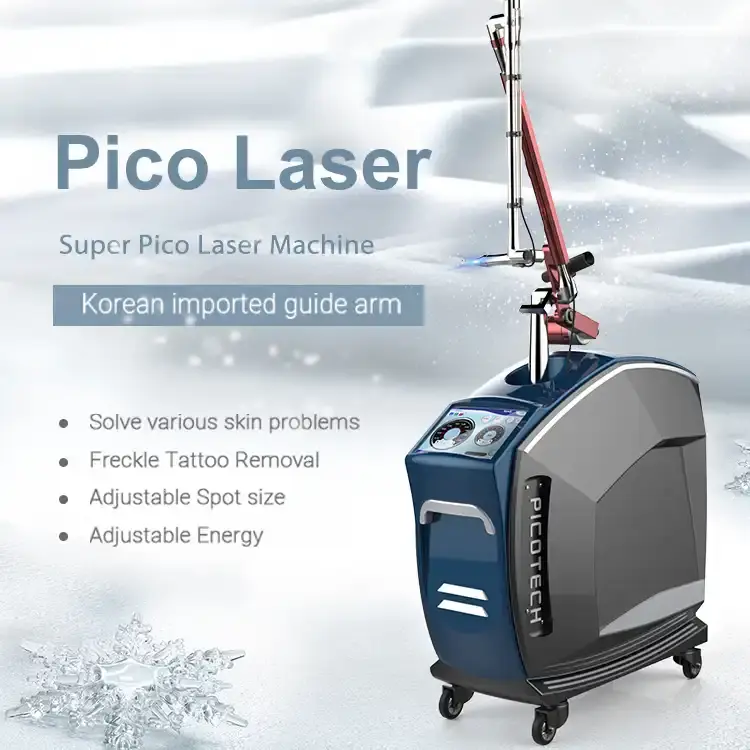
When using laser tools, you need to be very careful to follow all safety rules. Good systems have built-in safety features like emergency shut-offs, accurate energy measures, and cooling systems to keep both the customer and the technician safe. When these lasers are used up to 1 km away, the minimum ocular danger distance (NOHD) means that safety glasses must always be worn. To make sure that your staff knows how to use the equipment safety and properly, make sure that the company that made it offers thorough training materials and licensing programs.
Key Applications and Benefits of Q Switched Nd YAG Laser 1064 nm
q switched nd yag laser 1064 nm flexible systems can be used for a lot of different treatments, not just tattoo removal. This means you can offer more services.
Comprehensive Tattoo Removal Capabilities
The laser excels at removing nearly any ink color. Black ink responds best at 1064nm, showing significant fading after 3–5 sessions. Multicolored tattoos benefit from switching between 1064nm (dark inks) and 532nm (red/yellow). Most professional tattoos require 6–12 sessions spaced 6–8 weeks apart, depending on ink density, depth, and individual healing response. In-house capability builds practice reputation and revenue.
Expanded Dermatological Treatment Options
Beyond tattoos, 1064nm treats Nevus of Ota, age spots, sun damage, and melasma. Carbon peels following laser treatment smooth skin and minimize pores. This versatility enables a single device to generate revenue across multiple services, maximizing investment return while meeting diverse patient needs. Practices can offer comprehensive dermatological treatments without multiple equipment purchases.
Clinical Advantages for Your Practice
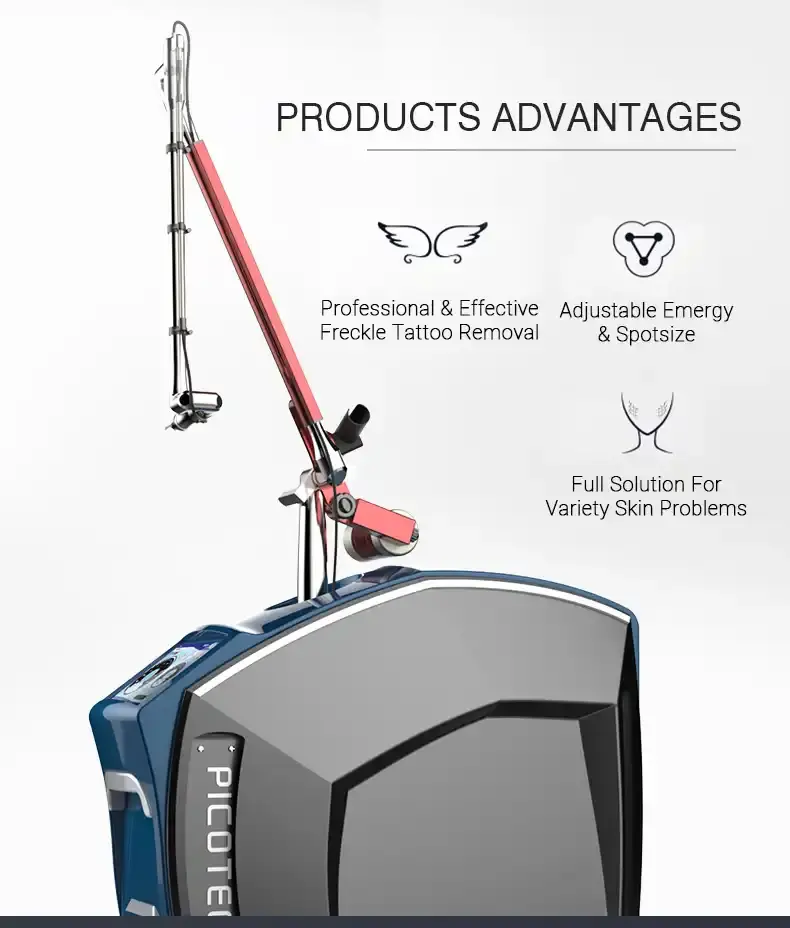
Modern systems feature intuitive controls, speeding operator training. Adjustable spot sizes (2–10mm) enable precise treatment of small scars and rapid large-area coverage. Adjustable frequencies (1–10Hz) match treatment speed to client tolerance. Dual air/water cooling prevents overheating, ensuring consistent energy delivery. These practical benefits directly translate to improved patient outcomes, reduced treatment times, and superior results that enhance your practice's reputation.
Comparison and Decision-Making Guide for Laser Equipment
You need to carefully think about a lot of different options to find the best laser technology. Each has its own features that affect how the practice works and how well treatments work.
Q-Switched vs. Picosecond Laser Technology
Picosecond lasers emit trillionth-second pulses versus q switched nd yag laser 1064 nm billionth-second pulses, theoretically offering better fragmentation with less heat. However, clinical differences are modest while costs are 2–3x higher. High-volume premium practices may justify picosecond investment. For price-conscious patients, proven Q-switched technology often represents better value. Base decisions on revenue projections, patient demographics, and case volume.
Wavelength Selection: Matching Technology to Market Needs
The 1064nm wavelength is the tattoo removal workhorse—effective and safe across all skin types and ink colors. The 532nm wavelength targets red, orange, and yellow pigments. The 755nm wavelength addresses blue and green inks. Fair-skinned populations with varied tattoos benefit from 532/755nm capabilities. Practices serving diverse communities should prioritize safety features for darker skin tones.
Financial Considerations and ROI Projections
You need to do more study on money than just how much the tools costs. Most good Q-switched systems cost between $15,000 and $45,000, but the price can be higher or lower depending on the brand name, features, and bands. Find out what the ongoing costs are. These could include repairs, replacement parts, materials, and training for the user. You should think about how much people in your area are willing to pay for your services, how much competition there is, and how many treatments you can run. Most places that get rid of tattoos charge between $200 and $500 per session. The exact price varies based on the tattoo's size and location. A small office that sees twenty people a week makes around $160,000 to $400,000 a year. Most of the time, the costs of the tools are paid in the first year, and the business is now ready to make money.
Procurement Insights: Where and How to Buy the Best Q Switched Nd YAG Laser 1064 nm?
You have to find your way through a confusing web of manufacturers, sellers, and buying options that will have a big impact on your long-term success in order to find good tools.
Selecting Reputable Manufacturers and Suppliers
Aside from just getting tools, working with well-known makers has other important perks. Find companies that have been making laser beauty tools for at least ten years and can give you a full history of their products. You can look at their licenses, like the CE mark for European safety standards and ISO 13485 for keeping track of the quality of medical equipment. You can be sure that the goods are safe and that the production process is consistent if they have these approvals. Check to see if they have science studies and customer reviews from nearby companies that are like theirs. Support teams are always on hand at well-known manufacturers, who also keep new parts in stock and offer ongoing expert training. These are all useful tools that you can use when things go wrong.
Evaluating New, Used, and Financing Options
Brand-new tools have the best warranties, are safer, and use the newest technology. Two-year warranties on parts and work protect your investment during the important setup phase. When you look at used tools, you need to be very careful because they can save you money. Check the machine's treatment hours, repair records, and how long any parts that are still working will last. Flash lamps, laser rods, and cooling systems are some of the most important parts of laser systems that wear out over time and need to be changed. When you choose what to buy, keep these prices in mind. Costs are spread out over time if you buy tools through the company that made it or a different lender. This saves the cash you need to run your business and sell it. Compare interest rates, down payments, and fees for paying off your loan early to get the best deal on money.
Due Diligence and Negotiation Strategies
Ask for full technical specs, and then compare them to what your company does. Between 100 and 2000 mJ at 1064 nm is the range of energy that should be put out. It should stay the same throughout. Q-switching is working properly based on specifications for pulse lengths of about 6 nanoseconds. Make sure that the package comes with safety glasses, treatment handpieces, and testing tools. Talk about getting full training that covers how to do the job, what repairs need to be done, and how to fix problems. What kind of help is available after the sale? For example, how long does it take to get answers to technical questions? Are parts available? What options are there for on-site service? Strong ties with suppliers based on clear lines of contact and fair rules are good for everyone. They work together to help your business grow.
Why Choose Taibo's Q Switched Nd YAG Laser 1064 nm Machine?
The company Xi'an Taibo Laser Beauty has been making laser equipment for fifteen years, so they have a lot of experience making it. They use cutting-edge technology and strong support systems that work with the needs of beauty businesses in the real world.
Advanced Technical Specifications
We can treat a lot of different skin problems with our lasers because they can send out energy at three different levels (755 nm, 1064 nm, and 532 nm). The photoacoustic effects work best to break up colors when the pulse length is 6 nanoseconds. Spot sizes that can be changed from 2 mm to 10 mm make it possible to tailor the treatment perfectly. The two-cooling system moves both air and water to keep the temperatures fixed during long routines. This keeps energy from being lost, which hurts results. There's more to these specs than just numbers. They're carefully thought-out parts that affect how well your treatments work and how happy your clients are.
Comprehensive Quality Assurance
For two years, we'll fix any manufacturing problems with our q switched nd yag laser 1064 nm as long as you buy it from us. Longer warranty terms are longer than what the industry needs. It shows that we trust the quality of the build and the parts' reliability. Our plant still has its CE license and ISO 13485 compliance, which show that it follows medical device standards around the world. Every system goes through a lot of tests before it is sent out. There are more than thirty built-in check points that make sure that important things are being looked at. Focusing on quality cuts down on mistakes that happen out of the blue and helps you get the steady work your practice needs.
Training and Support Excellence
You get a lot of training papers when you buy equipment. These tell you how to use it, keep it in good shape, and fix problems. We train your team through full guides, video lessons, and live video meetings until they are sure they know how to use the system. Our tech support team responds to questions within 24 hours after the sale. This helps you get problems fixed quickly so they don't get in the way of your work. When you need a new part, we can quickly ship it to you in our stock. These help systems are great for practices that don't have their own computer staff because they give them access to computer pros who can answer their problems.
Customization and Partnership Opportunities
We know that beauty businesses have unique needs when it comes to how they brand and run their business. Our OEM services let our accepted partners make changes to the equipment's look, how it works, and how it's packed so that it fits their brand. We help you find solutions that fit your market and service options, whether you're starting a new business or making an old one bigger. We have a lot of experience with how different markets and rules work because we have sold to more than 180 countries. This lets us make sure that our goods meet your wants.
Conclusion
Choosing a q switched nd yag laser 1064 nm for tattoo removal is a major decision that will shape your practice's reputation and capabilities. There are many useful features on the q switched nd yag laser 1064 nm that make it safe and effective for a wide range of clients. It will be good for your business in the long run if you know the basics of technology, look at different options, and only work with reputable companies. Companies that want to stay ahead of the curve should choose this technology. It gives them a lot of treatment options, good money-making potential, and full support systems. Your commitment to learning new things and using good tools has a direct effect on how happy your clients are and how your business grows.
FAQ
1. How many sessions does tattoo removal typically require?
Depending on the type of tattoo, you will need very different care. Most professional tattoos with thick, deep ink need eight to twelve sessions to heal. On the other hand, most beginner tattoos only need four to six sessions. Green and blue ink may need more sessions than black ink because they fade more slowly. After six to eight weeks, the body has had enough time to heal and get rid of broken parts through the lymphatic system. It builds trust and keeps your clients from being let down when you set goals that are too high.
2. What side effects should clients expect after treatment?
Some of the first things that happen after treatment are redness, swelling, and a short time when the treated areas get lighter. Many times, these reactions go away after a few hours. Blisters can form if the treatment is too harsh, but most people heal without scars if they do what they're told to do afterward. Hyperpigmentation or hypopigmentation can happen for a short time, mostly in people with darker skin. After a few months, these changes often return to normal. There is a much lower chance of complications when the right method and energy choices are made.
3. an the 1064 nm wavelength treat all skin types safely?
Light with a wavelength of 1064 nm is safer for people with the Fitzpatrick skin type group. It can treat darker skin types safely because it goes deeper and takes less melanin than other lasers. Other lasers can cause problems with darker skin tones. If you're treating someone with darker skin, you should still start with mild settings and do test spots to see how their skin behaves before giving them the full treatment.
Partner with a Trusted Q Switched Nd YAG Laser 1064 nm Manufacturer
We can help you get the tools you need to grow your business at Xi'an Taibo Laser Beauty. We are an expert company that has been making and selling q switched nd yag laser 1064 nm for fifteen years. When beauty shops try to use new technology, they run into problems that we know about. Our team can meet with you one-on-one to talk about your specific healthcare needs, income, and growth goals. You can email Susan at susan@taibobeauty.com to set up a show, talk about equipment specs, or find out more about a product. People who work in procurement are welcome to visit our plant and see how we keep quality high. They can also try out our tools for themselves. We will do our best to meet your needs because you expect it, and we look forward to working with you to make your business grow and your customers happy.
References
1. Anderson, R.R., & Parish, J.A. (1983). "Selective Photothermolysis: Precise Microsurgery by Selective Absorption of Pulsed Radiation." Science, 220(4596), 524-527.
2. Kilmer, S.L., & Anderson, R.R. (1993). "Clinical Use of the Q-Switched Ruby and the Q-Switched Nd: YAG Lasers for Treatment of Tattoos." Journal of Dermatologic Surgery and Oncology, 19(4), 330-338.
3. Ross, V., Naseef, G., Lin, G., Kelly, M., Michaud, N., Flotte, T.J., Raythen, J., & Anderson, R.R. (1998). "Comparison of Responses of Tattoos to Picosecond and Nanosecond Q-Switched Neodymium: YAG Lasers." Archives of Dermatology, 134(2), 167-171.
4. Taylor, C.R., & Anderson, R.R. (1994). "Ineffective Treatment of Refractory Tattoos with the Q-Switched Ruby Laser." Archives of Dermatology, 130(8), 1000-1002.
5. Bernstein, E.F. (2007). "Laser Treatment of Tattoos." Clinics in Dermatology, 25(5), 434-441.
6. Kirby, W., Desai, A., Desai, T., Kartono, F., & Geeta, P. (2013). "The Kirby-Desai Scale: A Proposed Scale to Assess Tattoo-Removal Treatments." Journal of Clinical and Aesthetic Dermatology, 6(3), 32-37.





YOU MAY LIKE