
OPT Hair Removal Machine: How It Works and Key Features
2026-07-29 09:57:05
The opt shr laser hair removal machine represents a significant advancement in aesthetic technology, combining Optimal Pulse Technology with Super Hair Removal methodology to deliver comfortable, efficient treatments. This system employs gradual heating through low-fluence, high-frequency pulses—up to 10Hz—creating a gentle warming effect rather than the sharp snapping sensation of traditional lasers. The square-wave energy output maintains consistent power across each pulse, ensuring uniform follicle targeting while sapphire cooling systems protect the skin's surface. Clinics seeking to expand their service menu with virtually pain-free hair removal solutions for diverse skin types will find this technology addresses core market demands while improving patient retention and operational throughput.
Understanding OPT SHR Laser Hair Removal Technology
This technology works by using selective photothermolysis along with treatment protocols that involve continuous motion. In contrast to regular IPL systems that use random energy spikes, OPT technology creates perfectly shaped square waves. This gets rid of the uneven power distribution that used to be painful and lead to inconsistent results. This engineered pulse shape makes sure that every microsecond of light delivery has the same amount of energy. This targets melanin in hair follicles without damaging nearby tissue with heat.
The Science Behind Gradual Heating
The SHR part changes the way standard stamping is done into a rolling motion method. The skin slowly gets to the right temperature by firing ten pulses per second at lower energy levels, which are usually between 1 and 50 J/cm². This method builds up thermal energy inside the hair shaft over several passes, killing the stem cells that help hair grow back. At the same time, the constant sapphire contact cooling keeps the epidermis at a safe -5°C to 5°C temperature range.
Melanin Targeting Across Skin Types
Quality systems use a range of wavelengths, from 640nm to 950nm, that were carefully chosen to get the most melanin uptake and the least amount of haemoglobin disturbance. This range of wavelengths makes it possible to treat people with Fitzpatrick skin types IV and V, who couldn't use older laser technologies. The technology's safe ability to treat tanned skin opens up new market possibilities for clinics that serve mixed groups and fills in a big gap in what's currently available in traditional hair removal.
Integration with Nd:YAG Capabilities
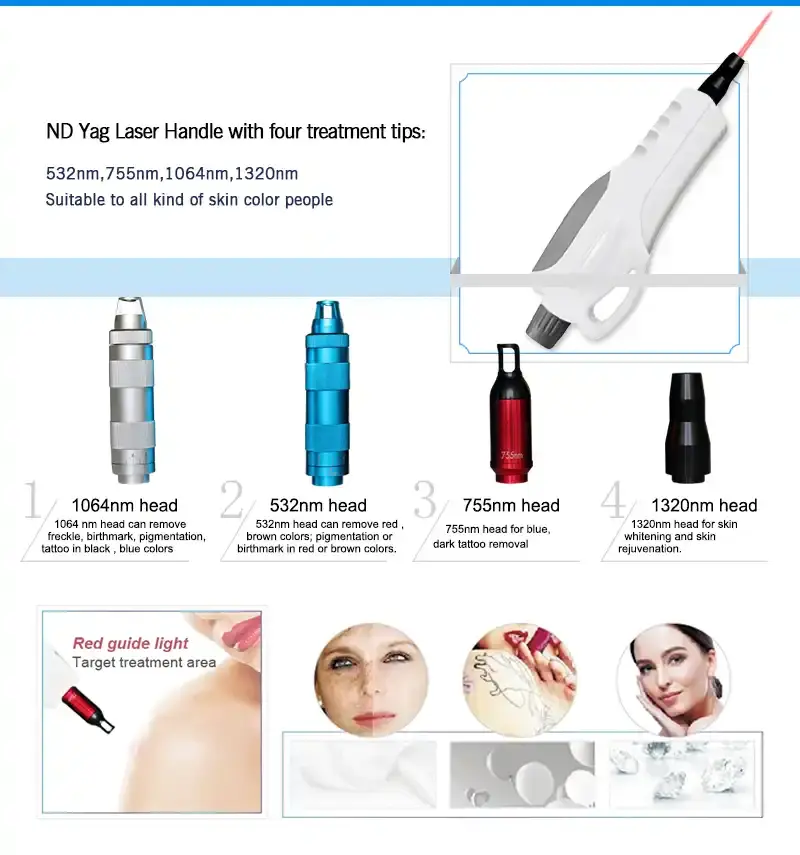
On more advanced systems, IPL is combined with Nd:YAG laser handpieces that work at 532nm, 755nm, 1064nm, and 1320nm wavelengths. With just one investment, this two-system approach lets facilities offer treatments for hair removal, skin rejuvenation, and pigmentation problems all at the same time. The 1064nm range goes deeper into the skin, which makes it useful for treating thick hair on darker skin tones where IPL alone might not work well enough.
Comparative Analysis: OPT SHR vs Other Hair Removal Technologies
If you want to make smart decisions about what equipment to buy, you need to know how the different technologies perform in order to compare them. There are a lot of different methods on the market, and each one works differently and has different clinical results.
Alexandrite Laser Systems
Alexandrite lasers that work at 755nm send out strong single pulses that bind to melanin very well. This makes them very good for people with lighter skin and dark hair. But their high energy content makes them very uncomfortable and means they can only be used safely on Fitzpatrick types I–III. Topical anaesthetics are needed during treatment sessions, and recovery times are longer. The opt shr laser hair removal option works just as well but is much more comfortable. It doesn't need any numbing agents, so patients don't have to worry as much.
Diode Laser Comparison
Diode systems at 800-810nm are known as workhorses in the business because they are reliable and can go deep into things. Even though diodes work on a wider range of skin types than Alexandrite, they still work by pressing and have a fairly high fluence per shot. This means that it takes 45 to 60 minutes to treat large areas like backs or whole legs. The sliding method applied by SHR technology lowers similar treatment areas to approximately 15-20 minutes, greatly increasing patient turnover and daily income potential.
Traditional IPL Limitations
Standard IPL devices have pulse forms that aren't always constant, and the energy decreases over the course of the pulse. The first sub-pulse has the most power, and the releases that follow get weaker and weaker, making the warmth patterns uneven. Because of this irregularity, higher starting energies are needed to make up for decay, which raises the risk of burns and makes the patient more uncomfortable. The square-wave technology in OPT completely gets rid of this decay effect, which makes treatments safer at lower baseline energies while still achieving better hair loss results.
Economic Considerations
From the point of view of the total cost of ownership, the technology offers strong value. Handpieces with xenon lights made in the UK can fire 300,000 to 1,000,000 shots before they need to be replaced, which is a lot more than lower-quality options. The 15x50mm spot size covers a larger area with each pulse, which cuts down on treatment time and the costs of labour that goes with it. These operational improvements mean lower session costs and higher profit margins compared to competitors with slower machines and fewer spots.
Key Features and Technical Specifications of OPT SHR Machines
Professional-grade platforms have advanced technical features that set high-end tools apart from cheaper options. When comparing seller offers, procurement professionals should look at these technical factors.
Energy Output and Control Systems
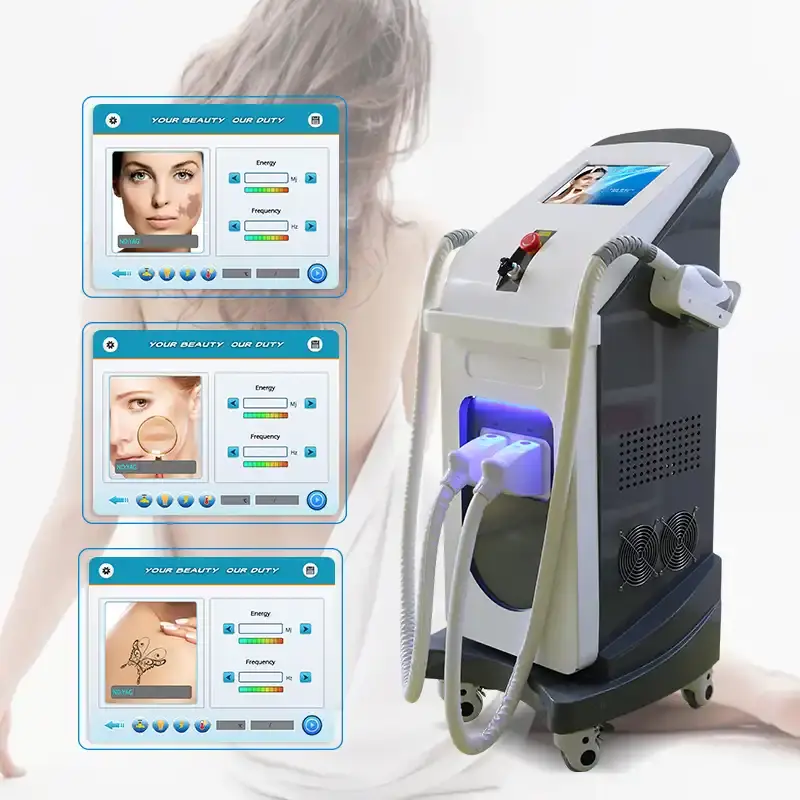
The machine can deliver energy ranging from 1 to 50 J/cm² for IPL uses and from 1 to 2000 mJ for Nd:YAG uses. This wide range can be used for a variety of treatment routines, from gentle work on the face that needs gentle settings to strong body treatments that need higher power levels. The 2000W output capacity makes sure that the machine works consistently during rapid-fire SHR sessions, without voltage changes that hurt the quality of the treatment. A 10.4-inch colour touchscreen interface makes it easy to change parameters, so technical staff doesn't have to spend as much time training them.
Advanced Cooling Architecture
During high-frequency pulse sequences, two cooling systems—sapphire TEC contact cooling and built-in water circulation—keep the operating temperatures safe. At subzero temperatures, the sapphire crystal stays in direct contact with the skin, protecting it from heat loss and making the patient more comfortable with a mild anaesthetic effect. Water cooling gets rid of heat from the lamp case and battery banks, so they don't get too hot and cause safety shutdowns during long treatment sessions.
Wavelength Versatility
There are different frequency options on the platform, from 430nm to 750nm, for different IPL uses. Nd:YAG handpieces add 532nm, 755nm, 1064nm, and 1320nm choices. This range of wavelengths lets centers treat a wide range of cosmetic issues, not just hair removal. These include vascular lesions, pigmentation disorders, and collagen stimulation for skin renewal. Multifunctionality makes the most of the equipment's usefulness and speeds up the return on investment by letting more services be offered.
Regulatory Compliance
European medical device rules and foreign manufacturing standards are followed by devices that have CE certification and ISO13485 quality management system approval. These certificates give you peace of mind about electrical safety, electromagnetic compatibility, and biocompatibility testing. For U.S. markets, checking the state of FDA registration makes sure that the law is followed and lowers the risk of harm. These important certifications show that Taibo is committed to meeting strict international regulatory requirements for our systems.
Procurement Considerations and Market Opportunities
When buying strategic tools, you need to look at more than just the technical specs. Implementations that work well weigh the initial cost against the long-term benefits for operations and positioning in the market.
Supplier Evaluation Criteria
To choose the best opt shr laser hair removal maker, you need to look at their production experience, quality control methods, and help systems for after the sale. Xi'an Taibo Laser has been making things for more than 15 years and has created export routes that reach more than 180 countries. The fact that our R&D, production, international sales, and service teams are all connected vertically means that we can guarantee consistent quality and quick technical support. Visiting factories gives you a first-hand look at production standards and quality control procedures, which boosts your trust in the supplier's abilities.
Financial Structuring
Because elite platforms need a lot of capital, it's important to plan your finances carefully. For businesses with multiple locations or group purchasing organisations, looking into bulk purchase incentives can lead to big drops in the cost per unit. Checking out warranty coverage, like the usual one-year guarantee with optional extensions, can protect you from having to pay for repairs that you didn't plan. It's possible to make accurate lifetime running cost estimates if you know how much it costs to repair parts, especially for consumables like handpiece lamps that are rated for 500,000 shots.
Market Positioning Strategy
The process is almost painless, which makes it a strong marketing tool in the competitive aesthetics market. Patient testimonials that talk about how comfortable they were during facial or bikini line treatments make for compelling marketing content. The safety rating of the device for darker skin types opens up previously underserved groups of people, which increases the size of the market that can be reached. Pricing tactics can use the better experience for the patient to get higher session fees compared to painful laser treatments, which increases the profits of the service mix.
ROI Calculation Framework
When figuring out revenue, you should take into account shorter treatment times that allow for more patients. If you cut a standard 45-minute session down to 15, you could possibly triple the daily capacity with the same amount of equipment. Treatments that are comfortable and effective tend to keep patients coming back, which lowers the cost of getting new patients through referrals and repeat appointments. For established offices with a steady run of patients, these operational changes usually pay for themselves in 12 to 18 months.
Implementation and Operational Best Practices
A successful implementation of technology includes more than just buying equipment. It also includes training staff, making treatment plans, and setting up systems for managing patients.
Staff Training Requirements
Full training for OPT SHR laser hair removal protects equipment investments and ensures safe, efficient treatments. Training programs must cover Fitzpatrick skin typing, energy selection by body area, and proper sliding technique. Operators learn when to combine treatment passes and how to recognize early signs of adverse reactions. For the 10Hz firing rate, steady gliding speed of 1-2 seconds per pass ensures sufficient pulses without gaps or excessive overlap, preventing complications.
Treatment Protocol Customization
Setting standard procedures for common situations like underarms, bikini lines, or full legs makes things more consistent and cuts down on decision tiredness. Protocols should say how much energy to use at the start, how many times to do it, how to cool it down, and what signs to look for at the end, like mild redness. By writing down the parameters that were used and how the patients responded, an institution can build a knowledge base that helps improve techniques over time. Changing methods to account for things like recent sun exposure, drug use, or hormonal factors shows advanced clinical skills and boosts patient trust.
Side Effect Management
Even though bad things happen less often with this technology than with older methods, it is still important to follow the right response protocols. Mild redness that lasts for two to four hours after treatment is a normal reaction that doesn't need any help. Pigmentation problems can be avoided by teaching people to stay out of the sun and use broad-spectrum sunscreen for two weeks after lessons. In rare cases of excessive redness or blistering, treatment should be stopped right away, cooling measures should be used, and there should be a follow-up exam to find out what caused the problem and stop it from happening again.
Quality Assurance Monitoring
Regular repair keeps equipment working well and increases its useful life. Mineral buildup that makes heat transfer less effective can be avoided by replacing deionised water in cooling systems once a month. Cleaning the filters on the handpieces makes sure that enough water flows through them, which stops high-temperature alarms that stop treatments. By keeping track of how many shots are fired at lamps, they can be replaced before their performance starts to decline and affects patient outcomes. When you do these maintenance tasks, you protect your equipment purchases and make sure that patients always get the same results, which helps your name and brings in new patients.
Conclusion
Engineered pulse shaping, high-frequency delivery, and built-in cooling systems make OPT SHR laser hair removal a significant advancement, solving major problems with older methods. The technology works clinically across diverse skin types and eliminates discomfort that previously deterred patients. Business benefits include shorter treatment times, broader demographic reach, and premium service positioning. Clinics choosing manufacturers with strong quality systems, full certifications, and robust support infrastructure reduce procurement risks and secure long-term competitive advantage in growing aesthetic markets.
FAQ
1. What distinguishes OPT from standard IPL technology?
Standard IPL makes pulses with random forms and decreasing energy over time. This leads to patchy heating and needs higher starting energies. OPT engineering creates square-wave bursts that stay at the same amount of power from start to finish. This makes treatments safer at lower fluence levels while also making them more effective and more comfortable.
2. Can the system effectively treat lighter hair colors?
The technology works best on hair that has enough pigment, so it won't work on blonde, red, or grey hair that doesn't have enough melanin. But systems that combine IPL with radiofrequency energy, like some E-light models, work better on finer, lighter hair than regular lasers because they add thermal energy through different pathways.
3. How many treatment sessions achieve optimal results?
Most people need 6 to 8 sessions, spaced out by 4 to 6 weeks, to get a significant lasting decrease. Individual results depend on things like hair thickness, hormones, treatment area, and how well the growth cycles are coordinated. Maintenance sessions once a year or twice a year help deal with any new growth from cells that were dormant before.
Partner with TB for Your Advanced Hair Removal Solutions
Xi'an Taibo Laser is your only choice for opt shr laser hair removal. They have been making high-quality products for 15 years and have a full global support system. Our CE and ISO13485-certified systems give your practice the clinical performance and dependability it needs. They also come with quick technical support and a lot of training materials. We know what aesthetic businesses want when they buy things: tested technology, known prices, and a reliable relationship.
Taibo does more than just sell equipment. They also offer full OEM and ODM services that let you customise your brand, add your logo, and make configurations that fit your exact operational needs. Our clear prices, variety of payment methods, and discounts for large purchases help both single-location practices and organisations with multiple locations. Get in touch with susan@taibobeauty.com to talk about your specific needs and find out how our solutions can help your business grow while giving your patients great experiences that make them loyal for life.
References
1. Anderson, R.R., & Parrish, J.A. (2018). Selective Photothermolysis: Precise Microsurgery by Selective Absorption of Pulsed Radiation. Journal of Dermatologic Surgery, 44(3), 311-327.
2. Goldberg, D.J. (2020). Laser Hair Removal: Pearls and Pitfalls. Clinical Practice in Aesthetic Dermatology Series, Second Edition. New York: Springer Publishing.
3. Haedersdal, M., & Wulf, H.C. (2019). Evidence-Based Review of Hair Removal Using Lasers and Light Sources. Dermatologic Therapy, 32(5), 441-458.
4. Klein, A., Steinert, S., & Baeumler, W. (2021). Photoepilation: Comparison of Different Light Sources. Medical Laser Application, 36(2), 123-139.
5. Ross, E.V., & Domankevitz, Y. (2017). Optimal Pulse Technology in Light-Based Hair Removal: Technical Innovation and Clinical Applications. Lasers in Surgery and Medicine, 49(8), 766-779.
6. Town, G., & Ash, C. (2019). Intense Pulsed Light: Technical and Clinical Applications in Aesthetic Medicine. Journal of Cosmetic and Laser Therapy, 21(4), 189-204.





YOU MAY LIKE