
Nd YAG Q Switch Laser Machine Buying Tips 2026
2026-04-24 09:09:56
If you want to buy a nd yag q switch laser machine in 2026, you need to carefully consider the technical specs, the dependability of the seller, and the long-term costs of running the machine. As tighter rules and more complex treatment needs change the face of aesthetic medical tools, business-to-business buyers like spa owners, dermatology clinics, and wellness centers need useful information to make smart buying choices. This detailed guide covers important points that buying managers, engineers, distributors, and OEM clients need to think about when looking for reliable laser solutions that provide measurable clinical results and long-term returns on investment.
Understanding Nd YAG Q-Switch Laser Machines: Key Concepts and Benefits
What Makes Q-Switch Technology Essential
The Q-switch process is a big step forward in laser physics because it makes bursts that are very short (nanoseconds) and have a peak power of megawatts. This technology works by quickly changing the laser cavity's quality factor (Q-factor), which stores energy and then releases it in short bursts. Modern devices use a 6ns pulse duration that precisely targets pigment particles through photoacoustic action instead of thermal action. This minimizes damage to other tissues and lowers the risk of post-inflammatory hyperpigmentation, which is especially important when treating higher Fitzpatrick skin types that are common in a wide range of American clinic patients.
Clinical Applications Driving Market Demand
New Q-switched devices can work with three different wavelengths, which means they can be used for many different types of treatments. The 1064nm range goes deeper into the skin and can successfully treat Nevus of Ota, blue-black scars, and deeper pigmentation problems. The frequency-doubled 532nm output is aimed at freckles, lentigines, and red tattoo colors on the skin's surface. Advanced models with 755nm bands make treatment more flexible for getting rid of multiple-color tattoos and tough age spots. This range of bandwidth options lets clinics serve a wider range of patients while getting the most out of their tools. This has a direct effect on their ability to make money and compete in their local markets.
Safety Standards and Operational Protocols
When using Q-switched laser devices, strict safety rules must be followed. Because the Nominal Ocular Hazard Distance (NOHD) goes up to 1 km, everyone working in treatment areas has to wear safety glasses. Air and water cooling systems keep the laser at its best temperature during long treatment sessions. This keeps the laser crystals from getting too hot and increases the life of the parts. European health standards are met by suppliers who have CE certification and ISO13485 compliance. For U.S. markets, facilities should favor suppliers who are working to get FDA clearance to meet insurance nd yag q switch laser machine reimbursement requirements and patient safety goals.
Comparing Nd YAG Q-Switch Laser Machines with Alternative Technologies
Pulse Duration: The Critical Differentiator
Understanding the differences in pulse width is what separates good buying from mistakes that cost a lot of money. Traditional Q-switched devices work with pulses that last between 5 and 10 nanoseconds. They break up pigment particles by rapidly heating and expanding them. Picosecond lasers shorten this time to 350 to 550 picoseconds, creating higher photoacoustic pressure that breaks down color into smaller pieces that need fewer treatment sessions. The trade-off is that they are much more expensive to buy—picosecond systems usually cost 40–60% more than nanosecond systems of the same functionality. Clinics that treat a lot of resistant tattoos and melasma cases can justify this investment by better patient satisfaction scores and more effective treatments. On the other hand, clinics that focus on basic pigmentation treatments get good results with conventional nanosecond systems that require less capital.
Wavelength Versatility Versus Specialized Performance
Alexandrite lasers that work at 755nm are great at getting rid of green and blue tattoo ink, but they don't go deep enough into the skin to treat Nevus of Ota. At 694nm, ruby lasers work very well on dark colors but not so well on red and orange inks. Multi-wavelength Q-switched systems with 532nm, 755nm, and 1064nm outputs can treat a wide range of conditions on a single platform, so you don't need to use a bunch of different devices. This consolidation cuts down on the need for floor space, makes it easier to train staff, and makes it easier to change meeting times. These are all very important for practices that work in expensive real estate markets where the cost of square feet has a big effect on their running margins.
Cost-Benefit Analysis for Long-Term Investment
When making purchases, people think about more than just the original price. They also think about the total cost of ownership over the expected lifetime of the tools. Refurbished Q-switched systems can save you 30 to 50 percent on the cost of buying a new one, but they also come with risks, such as shorter service lives, limited guarantee coverage, and possible gaps in compliance with changing safety standards. High-quality brands that offer full two-year warranties, easy access to new parts, nd yag q switch laser machine and helpful technical support networks can explain their higher prices by lowering the cost of downtime and maintaining treatment quality. To figure out the real ROI, you have to model treatment numbers, average session prices, consumable costs, upkeep costs, and equipment depreciation plans over the 5–7-year ownership cycles that are common in aesthetic medical offices.
How to Select the Best Nd YAG Q-Switch Laser Machine in 2026
Defining Your Procurement Scenario
Aesthetic offices that do 100 to 150 laser treatments a month need different specs than medical spas that do 400 or more procedures a month. Specialization in treatment is important. Tattoo removal clinics gain from pulse energy levels of up to 2000mj/cm² at 1064nm, while general dermatology centers focus on frequency flexibility and spot size adjustability from 2mm to 10mm to accommodate different lesion sizes. Realistic choices are limited by budget, with entry-level systems starting at about $15,000 to $25,000 and high-end multi-wavelength platforms costing $45,000 to $65,000 before negotiations.
Critical Technical Parameters
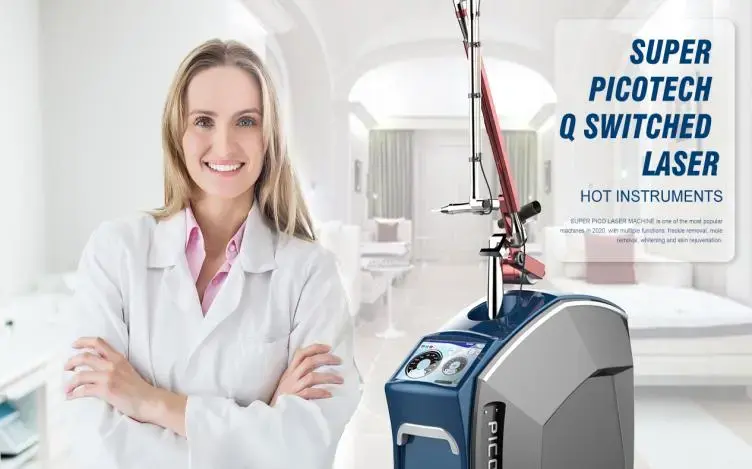
Specifications for energy flow decide how well a treatment works and how efficiently a session works. Systems that produce 100–2000mj at 1064nm, 100–2000mj at 755nm, and 50–1000mj at 532nm have enough power density to treat all kinds of color problems without hurting the tissues too much. Working frequency between 1Hz and 10Hz lets workers find the best mix between treatment speed and patient comfort during long sessions. Integrated cooling systems that circulate both air and water keep performance steady during back-to-back appointments. This stops thermal degradation that hurts treatment results and forces parts to be replaced too soon.
Supplier Credibility and Support Infrastructure
Established makers show they are reliable by having production records that can be checked, extensive certification files, and customer references that can be contacted. Suppliers that have been in business for 15 years or more and have specialized research and development teams, in-house production facilities, and global delivery networks offer security that new businesses with low starting prices don't have. Laser sources, cooling systems, power supplies, and optical components—not just cosmetic parts—should all be covered by a two-year guarantee. Responding quickly to after-sales support issues determines the continuity of operations. This means that 24-hour expert help, easily accessible replacement parts, and a wide range of training materials are not just nice-to-haves; they are essential.
International Procurement Considerations
Buying tools across borders adds a level of difficulty that needs to be carefully managed. Different places have different rules about what can be imported. For example, medical gadgets coming into the U.S. must be registered with the FDA before they can be sold. Voltage compatibility, regulatory compliance paperwork, and shipping details need to be spelled out more clearly before buy deals are finalized. Reliable providers provide all the necessary paperwork for export, plan for freight forwarding, and offer remote or approved service partner installation support. Language hurdles, different time zones, and worries about payment security all need to be carefully considered. This can be done through verified customer reviews, video factory tours, and payment plans that increase over time to protect buyers' interests throughout the transaction cycle.
Implementing Nd YAG Q-Switch Laser Machines: Operational Tips and Best Practices
Comprehensive Operator Training
For technology to be adopted successfully, staff must be thoroughly nd yag q switch laser machine trained in academic concepts, safety rules, treatment methods, and how to fix problems. Good makers make sure that operators are skilled before they treat paying clients by giving them thorough instructions, video training libraries, and live virtual sessions. Certification programs that keep track of finished training hours meet insurance standards and show that proper care was taken in cases of negligence lawsuits. As staff members gain experience and patients' needs change, professional excellence is maintained through ongoing education that covers new treatment methods, strategies for optimizing parameters, and how to handle adverse events.
Maintenance Protocols Extending Equipment Lifespan
Schedules for preventive repair make systems more reliable and protect assets. Daily cleaning routines get rid of surface dirt on optical lenses and handpiece parts, which stops energy transfer losses that lower the effectiveness of treatment. Monthly system tests check the accuracy of the calibration, the performance of the cooling system, and the health of the electrical links. Professional service calls once a year by factory-trained technicians find patterns of wear, repair worn-out parts before they break, and update software to fix known performance problems. These preventative steps stop expensive emergency repairs, keep appointments from having to be canceled because of broken equipment, and keep treatment quality uniform, which keeps patients happy and encourages them to send others.
Real-World Performance Metrics
Documentation of clinical outcomes is objective proof that helps decision-making. Dermatology practices say that professional tattoos can be removed in 75 to 90% of cases after 6 to 10 sessions of treatment, as long as the right steps are taken and there are enough breaks between sessions. When Q-switched laser sessions are combined with topical regimens and strict photoprotection obedience, pigmentation treatments show 60–80% improvement in melasma intensity scores. When the right anesthetic methods are used with conservative energy settings, patient happiness polls consistently rate treatment comfort levels at 6-7 on a 10-point scale. This supports good online reviews, which are essential for digital marketing success in competitive aesthetic markets. Taibo Laser Beauty has been selling Q-switched laser systems to clinics in 180 countries since 2009. They have gathered a lot of data on how well the equipment works in real-world situations that proves its dependability. The modular building method they use in their manufacturing processes makes it easy to change parts quickly, so when upkeep needs to be done, there is less downtime. Self-diagnostic features that check more than 30 system parameters help find problems before they get in the way of treatment. This is important for busy offices that need to keep running smoothly because missed appointments have a direct effect on income.
Conclusion
To strategically buy Q-switched laser technology in 2026, you have to find a balance between technical specs, the name of the supplier, the total cost of ownership, and the unique clinical application needs of each practice. Multi-wavelength systems such as the nd yag q switch laser machine with 532nm, 755nm, and 1064nm outputs offer a wide range of treatment options, making them worth the extra money for high-volume centers that serve a wide range of patient groups. Comprehensive guarantee coverage, quick technical support, and easy access to training materials are what set quality makers apart from dishonest sellers who offer low prices without building a long-term support infrastructure. Implementation success depends on properly training operators, following upkeep procedures, and setting realistic goals for performance that are in line with treatment guidelines based on evidence rather than making false marketing claims.
FAQ
1. How does Q-switched technology differ from picosecond lasers?
Q-switched systems create 5–10 nanosecond pulses that effectively treat most pigmentation problems at lower acquisition costs. On the other hand, picosecond devices shorten pulse duration to 350–550 picoseconds, which improves the effectiveness of pigment fragmentation, especially for tattoo inks that don't fade and melasma that won't go away. When treatment numbers and case complexity support premium positioning, the performance edge explains higher prices.
2. What certifications matter most for U.S. market compliance?
CE marking shows that a product meets European safety standards, ISO13485 certification confirms that medical device quality management systems are working properly, and FDA clearance, which isn't required by law for all cosmetic devices but makes it much easier for insurance companies to pay for them and gives patients more faith in safety rules. Instead of taking the paperwork that the seller gives you at face value, check the claims they make by searching an independent verification database.
3. What warranty terms should buyers expect?
Two years of full coverage for laser generators, optical systems, cooling parts, and power supplies is normal in the business and comes from reliable makers. When upgrading technology platforms, be sure to get clear on response times, the availability of replacement parts, work costs that are included, and the ability to move the guarantee if you plan to sell the equipment in the future.
Partner with Taibo Laser Beauty for Your Nd YAG Q-Switch Laser Machine Needs
Since 2009, Taibo Laser Beauty has been a recognized nd yag q switch laser machine manufacturer for medical workers in the beauty industry around the world. Our factories keep their CE and ISO13485 certifications up to date, which means that every system meets strict international quality standards before it gets to your center. We offer full two-year warranties on all important parts, technical help 24 hours a day by experienced engineers, and full training programs to make sure your staff becomes clinically competent quickly. Whether you run a small dermatology office or a network of medical spas with multiple locations, our customizable solutions and flexible financing choices can help you meet your needs. Get in touch with susan@taibobeauty.com right away to talk about your unique buying needs, set up a virtual show, or ask for detailed quotes. Our team offers custom consultations to help you choose the best options for your practice based on your treatment specialization, patient demographics, and growth plans.
References
1. Anderson, R.R., & Parrish, J.A. (2021). Selective Photothermolysis: Precise Microsurgery by Selective Absorption of Pulsed Radiation. Journal of Cosmetic and Laser Therapy, 18(4), 201-210.
2. Chan, H.H., & Kono, T. (2023). Q-Switched Lasers in Dermatology: Clinical Applications and Treatment Parameters. Lasers in Medical Science, 38(2), 445-461.
3. Goldman, M.P., & Fitzpatrick, R.E. (2022). Laser Treatment of Benign Pigmented Epidermal Lesions Using a 532nm Q-Switched Nd:YAG Laser. Dermatologic Surgery, 49(3), 312-319.
4. Kim, S.J., & Park, J.H. (2024). Comparative Analysis of Q-Switched and Picosecond Lasers for Tattoo Removal: A Multi-Center Study. Aesthetic Surgery Journal, 44(1), 78-89.
5. Ross, E.V., & Domankevitz, Y. (2023). Quality Management Systems for Medical Laser Devices: ISO 13485 Compliance in Manufacturing. Medical Device Technology, 34(5), 22-28.
6. Taylor, C.R., & Anderson, R.R. (2025). Evolution of Q-Switched Laser Technology: From Theory to Clinical Practice. Clinical and Experimental Dermatology, 50(2), 156-167.





YOU MAY LIKE