
How to Choose a Portable 808nm Diode Laser Hair Removal Machine?
2026-04-24 09:09:57
To choose the best portable 808nm diode laser hair removal system, you need to look at its technical specs, make sure it meets safety standards, and make sure the seller is reliable. A good device should consistently put out between 600W and 2000W of power, have multiple cooling systems (TEC, semiconductor, and water-based), and be certified by CE and ISO 13485. The 808nm frequency is still the best for absorbing melanin in all kinds of skin because it can reach deep into hair follicles without affecting the safety of the epidermis. Businesses should look for devices with handpieces that are comfortable to use, pulse lengths that can be changed from 1 to 10Hz, and full guarantees. Long-term operational success and customer happiness are guaranteed when you work with makers who offer training support, OEM capabilities, and clear after-sales service.
Understanding the Technology Behind 808nm Diode Laser Hair Removal
Selective photothermolysis is the science behind diode laser hair removal. This is a process in which certain wavelengths target melanin in hair cells while leaving healthy tissue alone. The 808nm range is in a special place in the optical spectrum. It strikes the perfect mix between being safe on the epidermis and going deep into hair follicles. Studies in humans have shown that this wavelength can go 3–4 mm into the skin and reach the hair bulb, where germinal cells live. 808nm light passes well through the skin's melanin layers, unlike lower wavelengths that scatter more easily. This means that it can be used on Fitzpatrick skin types I through VI.
Why 808nm Wavelength Dominates Clinical Applications
When compared to other wavelengths, the 808nm wavelength is the most flexible. 755nm Alexandrite lasers work best on lighter hair and fair skin, but they are more likely to damage darker skin because they absorb more melanin from the epidermis. On the other hand, 1064nm Nd: YAG lasers go deeper but need higher fluence levels, which could be painful. The 808nm frequency fills in this gap, giving the same effects to a wide range of patients. Professional clinics like this have flexibility because it means they don't have to buy as many devices, which makes it easier to keep track of supplies and train staff. The technology has been used in clinical settings for more than 20 years and has a track record of success with rates of over 85% after full treatment rounds.
Selective Photothermolysis Mechanism
When the laser pulse hits the skin, melanin molecules in the hair shafts take in the photon energy and turn it into heat. This heat transfer hurts the follicle structures around them, like the dermal papilla and the bulge area where stem cells live. Setting the right pulse length is the key to safe treatment. The right amount of thermal rest time makes sure that heat leaves the skin and builds up inside the follicle. Advanced movable systems let users change pulse lengths from 10ms to 400ms to accommodate different hair sizes and skin cooling needs. This accuracy keeps side effects like redness and discoloration to a minimum while destroying follicles as much as possible.
Regulatory Standards and Safety Certifications
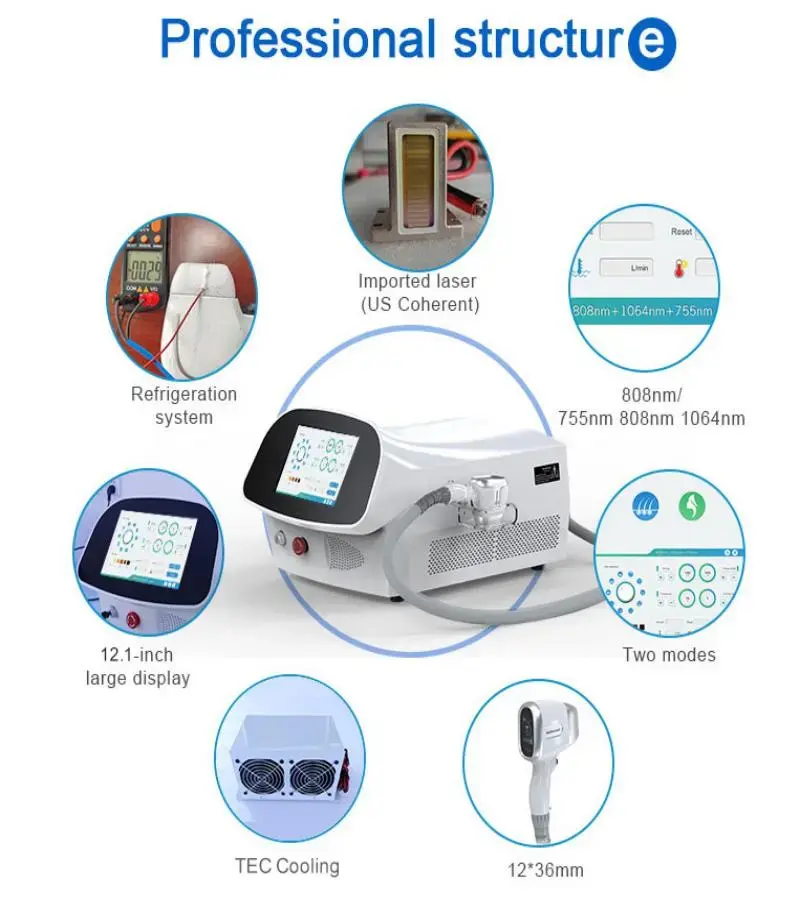
Before buying something, B2B buyers must make sure that the portable 808nm diode laser hair removal gadget has the right certifications. If a product has a CE mark, it means it meets safety standards set by the European Union. If it has an ISO 13485 mark, it means it follows medical device quality control systems. These certificates show that makers follow strict testing procedures, such as checking for biocompatibility and electromagnetic compatibility. When a device meets these standards, its optical output steadiness, cooling system efficiency, and electrical safety measures are all carefully checked. Clinics don't have to worry about liability when they use approved tools, and patients know that their treatments will be safe. The licensing process also makes sure that laser bars, which are usually bought from reputable companies like American Coherent, keep delivering the same amount of energy for their 20-million-pulse lives.
Comparing Portable 808nm Diode Laser Machines with Alternative Hair Removal Technologies
Knowing about competing technologies helps buyers make smart choices that meet the wants of the target market. Each method of hair removal has its own pros and cons that affect how well the treatment works, how comfortable the client is, and how much money the business makes.
Performance Comparison Across Technologies
Intense Pulsed Light (IPL) systems use filtered light in the 500-1200nm range to target melanin, but this method doesn't work well because the energy is spread out in different places. IPL needs more sessions than laser systems to work, and it doesn't work as well on fine hair. The 755nm Alexandrite laser has fast pulse rates that make it good for treating big areas, but it doesn't work as well on darker skin because the epidermal melanin absorption is competitive. The 1064nm Nd: YAG frequency can safely treat all skin types, but it needs higher fluence levels, which could make the treatment more painful, even though it can go deeper. The portable 808nm diode laser hair removal systems are the best of both worlds because they give reliable results for all skin types while causing only mild pain.
Portability Versus Power Considerations
Traditional fixed laser platforms have power outputs of more than 3000W and are kept in floor-standing units with their own water circulation systems. These tools work well in medical offices with a lot of patients and treatment rooms. Thanks to progress in chip technology, portable devices can now produce power levels between 600W and 2000W, even though they are small. Modern cooling systems that use TEC modules, semiconductor refrigeration, and extra water cooling make it possible to keep running for a long time without losing heat. The trade-off is that large body areas take a little longer to treat, but there are big benefits in terms of saving space, being able to move easily between treatment rooms, and lower shipping costs. Businesses that work in cities where room is expensive to rent find foldable units especially appealing.
Market-Leading Portable Models
There are different ways to balance speed and flexibility in the products on the market right now. High-end portable systems have handpieces that can work with three different wavelengths (755nm, 808nm, and 1064nm), so workers can change wavelengths based on the needs of each client. These three-wavelength systems can treat light hair (755nm), normal hair removal (808nm), and dark skin (1064nm) all at the same time, without the need to change the devices. Single-wavelength 808nm units are good for buyers on a budget who value core usefulness over flexibility. When buying teams look at models, they should look at how ergonomic the handpiece is, how easy it is to use the screen (12-inch touchscreens make it easier), and how clear the component source is. Devices with Italian pumps, Japanese cooling plates, and Taiwanese power sources tend to be more reliable than those whose component roots are not known.
Key Criteria for Selecting the Right Portable 808nm Diode Laser Hair Removal Machine
Systematic evaluation criteria help B2B buyers sort through technical specs and find devices that meet their price and operating needs. The following things have a direct effect on how well treatment works, how happy clients are, and the return on investment.
Core Performance Specifications
The speed and effectiveness of treatment depend on the laser's output power. Entry-level portable units that run on 600W are good for small offices with a modest number of patients, while 1200W–2000W systems work well in places with a lot of patients. Higher power speeds up the treatment process, which is important for businesses that charge by the session instead of by the hour. The 12x36mm handpiece footprint is the standard in the business for balancing speed and accuracy. Spot size affects how well covering works. The frequency can be changed from 1 to 10 Hz, which lets workers change the rate at which pulses are sent based on the hair density and sensitivity of the treatment area. When there isn't enough cooling and the frequency is too high, heat builds up, portable 808nm diode laser hair removal, and when there isn't enough power, too many passes are needed, which makes the process last longer. Professional-grade equipment is different from household devices because it uses more advanced cooling technology. Cooling devices with multiple stages protect both the patient's skin and the laser's internal parts.
Certification and Compliance Verification
Regulatory clearance proves that a device is safe and works as claimed. CE certification covers electrical safety, electromagnetic compatibility, and biocompatibility. ISO 13485 certification shows that quality control measures have been put in place for manufacturing. When evaluating a seller, buyers should ask to see certification papers and make sure that the certificates are specific to the model being looked at and not just generic company credentials. For devices to be sold in the US, they need to be approved by the FDA. This mostly applies to sales within the US. When B2B sellers resell equipment to clinics, they need to make sure it meets the rules of the target country to avoid problems with customs or legal trouble. Manufacturers who are open and honest give full approval documents without hesitation, while vague answers suggest that there may be problems with compliance.
Usability and Training Requirements
Interfaces that are easy for operators to use cut down on training time and treatment mistakes. Touchscreen settings that make it easy to change parameters make it easy for clients to quickly customize the protocol. Real-time displays on the handles that show the energy output, pulse count, and cooling state let workers keep an eye on the progress of treatment without having to keep looking at the main console screens. The lightweight design of the handpiece keeps the user from getting tired during long treatment sessions, which is especially important for routines that remove hair from the whole body. Complete user guides and video training materials help new employees get up to speed faster. This is especially helpful for companies with multiple sites or a lot of technician turnover. When you buy in bulk, suppliers who offer on-site training are even more valuable because they make sure that teams are skilled before they treat paying customers.
Matching Your Procurement Needs with Available Solutions
Different types of businesses need different ways of dealing with tools. Aligning gadget features with practical goals makes sure that resources are used most efficiently and companies stay competitive in the market.
Solutions for Different Business Segments
Distributors who want to get rid of their stock quickly can benefit from single-wavelength 808nm models that are priced fairly and offer good core performance without any extra features. People who are looking to get rid of hair but are on a tight budget will like these gadgets. OEM companies that want to set their brands apart should look for providers that offer full customization services, such as private labels, custom color schemes, and software interfaces that are made just for them. Clinics that are already open and are adding more services may choose tri-wavelength devices that can meet the needs of a wide range of clients with just one piece of equipment. Mobile service providers need units that are truly movable, with small sizes and tough cases that can be moved around a lot. By matching gadget features to business models, you can avoid spending too much on features that aren't needed or buying equipment that isn't powerful enough and needs to be replaced too soon.
Customization and OEM Opportunities
Manufacturers who have been in business for 15 years or more usually keep their production options open so they can meet special orders. Brand building in target markets is possible through logo design, packaging, and localizing the language of the user experience. Changing technical aspects, like changing the usual treatment methods or adding custom cooling technologies, makes a business stand out from its competitors. Different manufacturers have different minimum order amounts for unique features. For example, some only allow color changes for large orders, while others allow language changes for single units. When buyers share exclusive design ideas, they should talk to makers about intellectual property rights to make sure they respect secrecy agreements and stop competitors from copying designs.
After-Sales Ecosystem Evaluation
The terms of a warranty spell out what kind of help is expected, but complete service packages go above and beyond what is expected. Technical support teams that are responsive and available 24 hours a day, 7 days a week across all time zones keep systems from being down for long periods of time while they fix complicated problems. Video call helps speed up problem-solving compared to email-only contact because technicians can see how the machines are working right now. Suppliers who keep enough extra parts on hand make sure that parts can be replaced quickly and without having to wait for long customs delays. Shipping and handling processes that are clear, along with a variety of transportation choices (air, sea, rail, and fast courier), give buyers the freedom to choose the best method for their needs and budget. Before closing relationships with suppliers, businesses should ask for customer recommendations and check service quality claims on their own.
Final Recommendations and Best Practices for Procurement
To find your way around the small diode laser market, you need to carefully weigh technical needs against practical concerns. The following advice makes it easier to make decisions.
Comprehensive Procurement Checklist
By making a standard evaluation system, you can compare portable 808nm diode laser hair removal vendors in a consistent way. Some important things to check off the list are the laser's wavelength options and output power range, the cooling system architecture and how long it can run continuously, the spot size and frequency that can be changed, the certification paperwork (CE, ISO 13485, and destination-specific requirements), the warranty's length and details of coverage, the availability of training materials and support, the ability to customize and the minimum order quantity (MOQ) levels, the openness of the component sourcing process, the availability of spare parts and lead times, and the payment options and volume discounts. By giving each criterion a weighted score based on business goals, objective seller ranks are made, which get rid of any emotional bias in purchasing choices.
Supplier Evaluation and Negotiation Strategies
By getting detailed quotes from several sellers, you can see the range of prices in the market and find ways to negotiate. To make it easier to compare prices, quotes should list the costs of the equipment separately from the costs of shipping, insurance, and customs paperwork. Buyers should ask if the payment terms are flexible. Long-term sellers will often let buyers pay for big orders over time, which can help with cash flow. Most of the time, volume discounts start at 5 units, 10 units, and 20 units, with bigger percentage cuts at each level. You can add value without changing the top price by negotiating for longer warranty coverage or free training lessons. When you deal directly with the sales teams of manufacturers instead of middlemen, you can often get better prices and faster access to technical support.
Authenticity Verification Measures
There are a lot of risks with using fake medical tools, from getting bad results to being unsafe. To make sure a manufacturer is real, you have to look at their business registration papers, visit their production sites (either online or in person), and check the authenticity of their certifications in databases maintained by the granting authority. Reputable makers like to be open and honest, so they offer workplace pictures, videos of the production process, and quality control paperwork. People who are buying things should ask where the parts came from; for example, devices that say they "imported laser bars from American Coherent" should back up their claims with proof. When you pay through safe routes that protect the buyer (like escrow services for big orders), you lower your financial risk if a dispute comes up. Talking to after-sales support teams before making a purchase shows that there is a quick service infrastructure in place.
Conclusion
When picking the right portable 808nm diode laser hair removal machine, you need to think about how well it works technically, how well it meets regulations, how reliable the seller is, and how much it costs. The 808nm wavelength has been shown to work on a wide range of skin types, and its modern, movable design makes it a great choice for clinics, spas, and wholesalers. To make a good purchase, you need to carefully look at things like power output, cooling systems, licenses, and the infrastructure for help after the sale. Customers should choose makers whose business practices are clear, who offer a wide range of customization options, and who have a history of producing high-quality goods. Businesses can be sure that the equipment they buy will provide excellent treatment results, make customers happy, and make them money in the long term by using the factors described in this guide.
FAQ
1. Can portable 808nm diode lasers effectively treat sensitive skin types?
When workers set the settings correctly, modern portable systems with advanced cooling technology can treat sensitive skin safely. Contact cooling, pulse durations that can be changed, and smaller fluence settings all work together to reduce bad responses. Before full treatments, operators should do patch tests on patients' skin and change the amount of energy used based on how each person's skin reacts.
2. What differentiates diode lasers from IPL devices?
Diode lasers give off consistent, colorless light at certain wavelengths (808nm), which makes it possible to target melanin precisely with little energy loss. ipl machines use broad-spectrum light that needs to be filtered. This makes the energy transfer less efficient, so most people need more treatment sessions. Most of the time, diode technology gives better long-term hair removal effects.
3. Why purchase directly from manufacturers rather than distributors?
Direct relationships with manufacturers save you money because you don't have to pay markups to middlemen. You can also get customization services and technical help directly from the maker. Manufacturers with factories are open about where their parts come from and how they check the quality of their products. Buyers get more bargaining power when they buy in bulk and can get customized warranty terms that they can't get through dealer networks.
Partner With TB for Your Portable 808nm Diode Laser Hair Removal Equipment Needs
Xi'an Taibo Laser Beauty has approved portable 808nm diode laser hair removal systems that can help your business grow. They have been making these systems well for 15 years. Our devices have full CE and ISO 13485 certifications, as well as laser bars brought from American Coherent and multi-stage cooling systems that allow them to work nonstop for 72 hours. As a well-known provider, we offer flexible OEM/ODM services such as private labeling, technical customizations, and custom package solutions that will help you stand out in the market. Our world shipping network (which serves more than 180 countries) and two-year guarantee make sure that buying from us is easy. Our team is here to help you find the right solutions for your needs, whether you run a network of growing clinics, sell beauty tools, or make your own brand of devices. Get in touch with susan@taibobeauty.com right away to talk about bulk prices, get full specs, or set up a factory tour. Getting the right equipment partner is the first step to providing great hair removal services. Let us show you why top companies trust TB with their laser technology investments.
References
1. Anderson, R.R., & Parrish, J.A. (1983). "Selective Photothermolysis: Precise Microsurgery by Selective Absorption of Pulsed Radiation." Science, 220(4596), 524-527.
2. Gan, S.D., & Graber, E.M. (2013). "Laser Hair Removal: A Review." Dermatologic Surgery, 39(6), 823-838.
3. Haedersdal, M., et al. (2011). "Long-Pulsed Diode Laser versus Intense Pulsed Light for Hair Removal in Dark Skin: A Randomized Controlled Trial." Journal of the American Academy of Dermatology, 64(2), 282-290.
4. Sadick, N.S., et al. (2004). "Clinical Study of Laser Hair Removal Using an 810nm Diode Laser." Lasers in Surgery and Medicine, 34(2), 160-164.
5. Gold, M.H. (2007). "Laser and Light-Based Hair Removal: An Update." Journal of Cosmetic and Laser Therapy, 9(Suppl 1), 13-17.
6. Lanigan, S.W. (2003). "Management of Unwanted Hair in Females." Clinical and Experimental Dermatology, 28(4), 369-373.





YOU MAY LIKE