With more than 15 years of experience making high-quality 808nm diode laser machines, Xi'an Taibo Laser Beauty Company is the trusted 808nm diode laser machine supplier you can rely on. Our CE and ISO13485-approved equipment has three wavelengths (808nm, 755nm, and 1064nm), a power source that can be adjusted up to 2000W, and advanced multistage cooling systems that keep patients comfortable and ensure effective treatment. We offer full warranties for two years, professional help 24 hours a day, and OEM customization options that are easy to use to make your brand stand out. Our tech team works with you to set up the best options for your market, whether you run a small spa or a dermatology business with multiple locations. Get in touch with susan@taibobeauty.com right away to talk about the tools you need and find out how our factory-direct prices and quick after-sales service can help your business grow.


808nm Diode Laser Machine vs Alexandrite: Key Differences
2026-04-23 08:45:17
When buying professional hair removal tools, it's important for B2B buyers to know the technical differences between an 808nm diode laser machine and an Alexandrite laser. The 808nm wavelength targets melanin in hair follicles with the best mix of absorption. This allows greater tissue penetration and safe treatment of all Fitzpatrick skin types from I to VI. Alexandrite lasers work at 755nm and have faster pulse rates that work best on lighter skin tones and fine hair. However, they can't be used on darker skin tones because they absorb more melanin through the epidermis, which increases the risk of complications.
Overview of 808nm Diode Laser and Alexandrite Laser Technologies
Understanding Wavelength Science and Tissue Interaction
The main difference between these laser devices is the type of wavelength they use and how their energy affects living things. Near-infrared light from an 808nm diode laser machine goes 3–4 mm into the dermis and reaches the bulb and bulge areas of hair follicles, where germinative cells live. This wavelength hits the best mix between letting enough melanin pass through for effective chromophore targeting and letting as little water and hemoglobin get in the way in nearby tissues as possible.
Alexandrite lasers use 755nm wavelengths, which have higher melanin absorption rates. This makes them very good for people with light skin and dark hair. The shorter frequency delivers energy quickly with little thermal transfer, which lets treatments go faster. But this same trait makes it harder to treat darker Fitzpatrick types safely, since too much melanin in the epidermis can take energy meant for follicular structures.
Clinical Applications and Safety Profiles
Professional beauty salons want their tools to be useful in a variety of situations. Modern diode laser systems, especially those with three wavelength options (808nm, 755nm, and 1064nm), can treat the widest range of patients. The 808nm wavelength is the main one used for hair removal. Adding 755nm handles finer hair, and 1064nm safely goes through highly colored skin with little effect on the epidermis.
Alexandrite lasers work great in offices with a lot of Fitzpatrick I–III patients who need quick treatments. The technology's high repetition rates and big spot sizes cut down on treatment times, but doctors need to be extra careful with people who are tanned or naturally darker to avoid hyperpigmentation, burns, or paradoxical hypertrichosis.
Mechanism of Selective Photothermolysis
Both types of lasers work by selectively heating certain wavelengths, which breaks down chromophores without hurting other parts of the structure. With pulses lasting 10–400 milliseconds, the 808nm diode laser machine heats follicular melanin to about 65–70°C, which causes long-lasting thermal damage. Modern cooling systems, like sapphire contact cooling and TEC (thermoelectric cooling), keep the skin safe by keeping the surface temperature between -5°C and 3°C while the energy is being delivered.
Alexandrite systems use shorter pulse lengths (3–20 milliseconds) that match the time it takes for hair cells to cool down, which causes damage right away. This method needs exact fluence adjustment based on skin type, since the wrong settings can send too much heat to the epidermis.
Comparative Performance for Hair Removal and Skin Types
Efficacy Across Hair and Skin Characteristics
Matching laser technology to patient traits is very important for clinical results. On coarse, terminal hairs that are common in places like the back, legs, and waist line, the 808nm diode laser machine works better. The greater entry depth makes sure that the follicles are destroyed, even in people whose dermal layers are thicker or in places where the follicles are deeper below the skin's surface.
Alexandrite lasers work very well on light-skinned people with fine to medium hair types. Because 755nm wavelengths absorb more melanin, lower fluences are needed for successful treatment, which lowers the amount of pain. Higher repeat rates (up to 10Hz in more advanced models) make treatment sessions go faster, which is good for offices that see a lot of patients.
Skin Type Compatibility and Safety Margins
Fitzpatrick skin type is still the most important thing to think about when choosing a laser. Because the 808nm wavelength absorbs less melanin from the epidermis, it creates bigger safety margins for Fitzpatrick IV-VI patients, who make up large market groups in many different countries. Clinical studies show that using diode systems on darker skin types lowers the risk of post-inflammatory discoloration and the number of complications that happen.
Alexandrite technology works best on Fitzpatrick I–III skin, but Type IV skin needs more cautious treatment. Most doctors don't use Alexandrite lasers on Fitzpatrick V–VI skin because there are higher risks of complications. This limitation makes it harder to use in places where most people are darker-skinned, which hurts the return on investment (ROI) for businesses that serve a wide range of clients.
Pain Management and Patient Comfort
Client engagement and feedback rates are directly linked to how comfortable patients are. The 808nm diode laser machine uses modern cooling technologies, such as air cooling, semiconductor refrigeration, TEC, and water cooling systems, to make treatments pleasant, even at therapeutic fluences. The bigger spot size (12x36mm) spreads the energy over a larger area, which speeds up treatment and makes it less painful.
In the past, Alexandrite lasers were more painful because they released energy quickly. However, current systems have dynamic cooling devices (DCD) that spray cryogen milliseconds before each pulse. Even with these improvements, a lot of patients say they are in more pain than they were with diode treatments, especially in sensitive areas like the face and waist line.
Operational Considerations and Maintenance
Treatment Parameters and Clinical Flexibility
For operational success, you need tools that let you precisely change parameters in a wide range of clinical situations. The 808nm diode laser machine has laser power that can be changed from 600W to 800W, 1200W to 2000W, and frequency that can be changed from 1Hz to 10Hz. It also has pulse lengths that can be changed so that practitioners can make the machine work best for each patient. The 12-inch color touch screen has easy-to-use controls that cut down on staff training time.
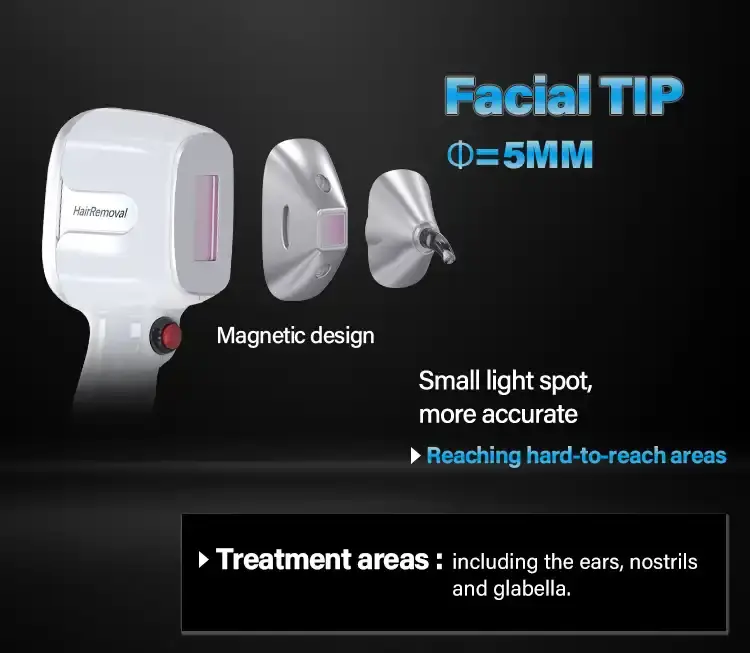
The treatment can do more than just get rid of hair. Many diode systems have skin regeneration procedures that reduce the size of pores and improve the skin's tone. This means that they can be used for more than just hair removal. Dermatology centers and medical spas that want complete treatment platforms will like this product's ability to do more than one thing.
Maintenance Requirements and Downtime
The supply of treatments and the cost of upkeep have a direct effect on how profitable a business is. Crystal-based Alexandrite devices have more moving parts than semiconductor-based diode lasers because they are built in a solid state. Many diode laser bars are approved for 20 million shots or more, which means this design cuts down on failure spots and makes parts last longer.
Alexandrite lasers use laser rods, which are actually crystals, that need to be replaced every so often and carefully lined up with the optics. Over time, the crystal medium can develop thermal lensing effects that lower the quality of the beam and need to be re-calibrated by a professional. These repair needs lead to higher running costs and regular downtime that limits the flexibility of schedules and the stability of income.
Cooling System Performance
Good thermal control protects both the safety of patients and the life of tools. In modern 808nm diode laser machines, cooling systems that include water-cooling circuits, semiconductor chillers, air flow, and TEC modules are all used together. This extra cooling keeps the handle temperatures between -10°C and -5°C, so the machine can keep running for long treatment sessions without slowing down.
The cold ability (1–5 level cooling) lets doctors change how cool it is based on how the patient can handle it and how sensitive the treatment area is. This versatility comes in handy when treating parts of the face that need softer cooling versus parts of the body that need more active thermal management.
Cost, Procurement, and After-Sales Support Insights
Total Cost of Ownership Analysis
B2B purchasing decisions involve more than just the original buy price. They also include operational efficiency and costs over the product's entire life. The 808nm diode laser machine usually has a low total cost of ownership because it doesn't need as much upkeep, doesn't need as many consumables, and can be used for more types of treatments, which makes the most of its usefulness for a wide range of patients.
Alexandrite systems may require bigger original expenses and higher ongoing costs because they need new crystals, more frequent service, and more specialized technology support. However, practices that only treat people with Fitzpatrick I–III may be able to explain these prices by providing more treatments and presenting themselves as a premium service.
Certification and Regulatory Compliance
Certification of equipment has a big effect on buying choices, especially in markets that are controlled. CE certification makes sure that safety standards in the EU are met, and ISO 13485 certification checks that medical products have good quality control systems. These certifications, along with FDA approval for the U.S. market, are on the 808nm diode laser machine from well-known makers. This makes it easier for foreign buyers to follow the rules.
Checking the authenticity of a license keeps buyers safe from low-quality tools that could put businesses at risk of liability. By asking for copies of certificates and checking out suppliers through industry databases, you can make sure that what the maker says is true and that the equipment meets international safety standards.
Warranty Programs and Technical Support
A full warranty protects you financially against broken tools and mistakes in the making process. Standard diode laser systems come with two-year warranties that cover new parts and technical support. For long-term financial safety, you may be able to find choices for longer warranties. Buyers can figure out how much a guarantee really is worth by looking at the terms that cover things like replacement parts, shipping costs, and work.
When equipment breaks down during busy practice times, quick expert help is very important. Companies that give international help 24 hours a day, remote diagnostics, and fast shipping of parts keep their customers happy and keep their profits high. Checking a company's image by calling past customers for references gives you more information than what the company's ads say about how quick their customer service is.
OEM and Customization Options
In competitive aesthetic markets, it's getting more and more important for brands to stand out. OEM and ODM services let businesses create equipment with their own logos, color schemes, and software displays that help people remember their brand. Customizing interface languages, treatment protocols, and reporting features makes it easier to use the equipment with the way things are already done in the office.
This method is shown by Xi'an Taibo Laser Beauty Company, which offers OEM services that are flexible enough to allow for changes to logos, brand colors, and feature adds. Their engineering team works with buyers to create custom solutions that meet the needs of the market while keeping the quality of all personalized units the same.
Decision-Making Guide: How to Choose Between 808nm Diode Laser and Alexandrite Laser Machines
Assessing Your Client Demographics
The characteristics of the patient group should guide the choice of tools. The 808nm diode laser machine can safely treat all Fitzpatrick types, which is helpful for practices that work with a lot of different racial and cultural groups. Because the technology is so flexible, patients don't have to be turned down because of their skin type, which increases its market reach and income potential.
Clinics in areas where most people are fair-skinned may be able to get more work done with Alexandrite technology's faster treatment speeds. But even in these areas, there are people with tanned skin, Mediterranean skin tones, or Asian ancestry who are more likely to have problems with 755nm wavelengths. This suggests that mixed-technology methods or flexible diode systems are needed.
Evaluating Practice Scale and Growth Trajectory
The size of a business affects what tools it needs and how it buys it. The 808nm diode laser machine is versatile on a single base, which saves startups and smaller businesses money by not having to buy multiple specialized devices. As a practice grows, it doesn't have to replace its core tools; instead, it can add technologies that work well with it.
Established, high-volume offices may use more than one laser platform to improve process efficiency. For example, diode lasers are used for patients with darker skin, while Alexandrite systems are used for patients with lighter skin. It takes more money and room to set up, but this segmented method increases throughput.
Long-Term Technology Considerations
Aesthetic technology changes quickly, so being able to adapt your tools is important for staying competitive in the long run. When treatment methods change, modular diode laser platforms that allow software changes, parameter growth, and accessory adds protect the value of the investment. Adding wavelengths (going from single-wavelength to tri-wavelength systems) makes tools more useful as clinical data changes.
Long-term support can be predicted by looking at how committed the maker is to product growth and update availability. Companies that have formed research and development teams and regularly release new products show that they care about keeping their current customers competitive by updating their technology instead of making them buy new equipment.
Conclusion
To choose between 808nm diode laser machines and Alexandrite systems, you need to carefully look at the types of patients you have, your business priorities, and your budget. The 808nm range is very flexible and can be used on all kinds of skin. It is also safe, easy to maintain, and has a high total cost of ownership. Alexandrite technology can speed things up for some types of patients, but it is less useful in other situations and requires more work to run. Business-to-business buyers should look for equipment that fits the needs of their current patients and can also be expanded in the future. This should be backed up by makers that offer strong approval, extensive warranties, and quick technical support.
Frequently Asked Questions
1. Which type of laser treatment is better for people with darker skin?
Because epidermal melanin absorption is smaller at this frequency, the 808nm diode laser machine is safer for Fitzpatrick IV–VI skin types. The deeper entry goes after follicular melanin while limiting the damage to the skin's surface that happens from heat, which can be problematic for darker skin. Because 755nm wavelengths absorb more melanin, darker skin is more likely to get discoloration and burns from Alexandrite lasers.
2. How do maintenance requirements differ between these laser systems?
In addition to cleaning and checking the cooling system once in a while, semiconductor-based diode lasers don't need much upkeep. Laser bars are rated for millions of bursts. Because crystal-based parts wear out, alexandrite systems need to have their crystal rods replaced and their optics realigned. This means that they cost more to maintain and have breaks, which can affect the practice's ability to make money and make schedules.
3. Can these lasers successfully treat all parts of the body?
Both technologies work well on normal body parts, but the 808nm diode laser machine is more effective on a wider range of body parts because it has a bigger spot size (12x36mm) and more changeable parameters. For men, the greater entry is helpful in places where follicles are deeper, like on the backs and legs. Alexandrite lasers are great for sensitive areas like the face and fine hair, but the parameters may need to be changed for areas that are more sensitive.
Partner with a Trusted 808nm Diode Laser Machine Manufacturer
References
1. Anderson, R. R., & Parrish, J. A. (1983). Selective photothermolysis: Precise microsurgery by selective absorption of pulsed radiation. Science, 220(4596), 524-527.
2. Goldberg, D. J. (2012). Lasers and lights: Procedures in cosmetic dermatology series. Elsevier Health Sciences, Philadelphia.
3. Altshuler, G. B., Anderson, R. R., Manstein, D., Zenzie, H. H., & Smirnov, M. Z. (2001). Extended theory of selective photothermolysis. Lasers in Surgery and Medicine, 29(5), 416-432.
4. Haedersdal, M., & Gotzsche, P. C. (2006). Laser and photoepilation for unwanted hair growth. Cochrane Database of Systematic Reviews, Issue 4.
5. Battle, E. F., & Hobbs, L. M. (2004). Laser-assisted hair removal for darker skin types. Dermatologic Therapy, 17(2), 177-183.
6. Town, G., & Ash, C. (2010). Instrumentation and principles of treatment for laser hair removal. In Lasers in Dermatology and Medicine (pp. 89-112). Springer Publishing, London.





YOU MAY LIKE