
Laser Tattoo Removal Machine for Clinics: Top Picks
2026-05-13 08:52:31
It's not enough to just compare prices to find the right laser tattoo removal machine for your business. At Xi'an Taibo Laser Beauty Company, we know how important it is for your investment to give you great results for your patients while also giving you the best return on investment (ROI). Our high-tech Q-switched Nd:YAG system uses three wavelengths (755nm, 1064nm, and 532nm) to successfully remove all ink colors, from tough greens to deep blacks. With 2000mJ of energy output and a strong dual cooling system, this device is at the cutting edge of technology for removing tattoos. It is CE and ISO13485 certified, so you can be sure that your clinic meets the highest international standards.
Understanding Laser Tattoo Removal Machines: Technology & Benefits
Modern laser tattoo removal machines use selective photothermolysis, which sends out focused light energy that breaks up ink specks without hurting the flesh around them. This part breaks down the main tools that are changing the way dermatologists do their jobs all over the US.
Q-Switched Technology: The Industry Standard
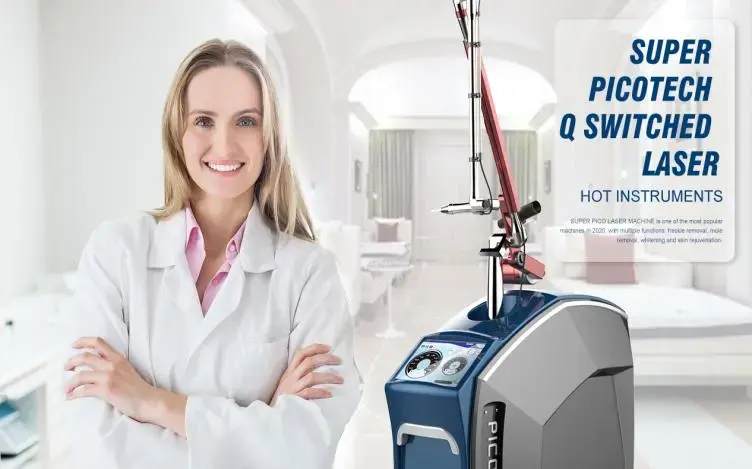
Q-switched lasers send out very short pulses that last between 6 and 10 nanoseconds. These pulses create strong photoacoustic shockwaves that break up tattoo ink into tiny pieces. Unlike continuous-wave lasers, which use heat, this mechanical action keeps the skin's structures from getting too hot. Over a few weeks, the body's lymphatic system gets rid of these broken-up bits on its own. Our Taibo device has spot sizes that can be changed from 1 to 5 mm, so it can precisely target both big tattoos and small places close to sensitive skin.
Multi-Wavelength Versatility
Certain bands of light are absorbed by different colors of ink. The 1064nm wavelength goes deep into the paper to remove black and dark blue colors, while the 532nm wavelength gets rid of red, orange, and yellow inks effectively. The addition of the 755nm range fixes the hardest colors, like light blues and greens, which used to need more than one treatment method. With this tri-wavelength feature, your clinic can safely treat a wide range of patients without having to buy extra tools.
Patient Safety and Comfort Features
Safety is still the most important thing in cosmetic treatments. Our combination cooling system uses both air and water to keep the computer at the best temperature for long treatment sessions. The imported German water pump works quietly, making the room more cozy and calming the patient. Water flow alarms stop operations immediately if coolant levels drop. This keeps equipment from getting too hot and skin from getting burned. These built-in safety measures keep both doctors and patients safe and also make machines last longer.
Top Laser Tattoo Removal Machines for Clinics in 2026
There are a lot of different kinds of laser tattoo removal machine beauty tools on the market, but professional-grade systems are different from basic ones in certain ways. Knowing these differences helps procurement managers make choices that are in line with healthcare goals.
Established Brands vs. Emerging Manufacturers
Market talks are mostly about the big players, like Candela and Cynosure. However, smaller companies like Taibo Laser Beauty Company offer cheap prices and 15 years of experience in making lasers. Our factory-direct plan gets rid of markups for distributors while keeping quality standards very high. The most important thing is to look at the certifications. Our CE, ISO13485, and soon to be FDA approvals show that we follow strict international rules for medical devices.
Performance Benchmarks That Matter
The length of a session has a big effect on how happy patients are and how quickly the office can work. Our 2000W power system has a changeable 1-10Hz frequency that lets tattoo artists change the strength of the treatment based on the patient's tattoo density and tolerance. The 10.4-inch tablet makes things easier to use and cuts down on the time it takes to train new employees. Based on comments from clients in over 180 countries, the average treatment time for medium-sized tattoos is between 10 and 15 minutes. This means that clinics can plan multiple appointments every day without sacrificing quality.
Technology Comparison: Q-Switch vs. Picosecond
Picosecond lasers make bursts that are shorter (measured in trillionths of seconds), and they can only usually work with one color, such as 755nm. Changing colors through dye modules cuts power output by a lot, which makes it less useful for pigments that are resistant to light. Q-switched devices give the same amount of energy at all wavelengths without losing power. Our testing results show that Q-switched technology has similar clearance rates at much lower equipment costs. This makes it the realistic choice for clinics that want to be financially stable while also providing excellent clinical care.
How to Choose the Right Laser Tattoo Removal Machine for Your Clinic?
To choose the right equipment, you need to carefully consider your unique operating situation. The best choice is based on the type of patients, how many services are expected to be needed, and the treatments that are already available.
Assessing Your Clinical Requirements
First, look at the description of your average patient. Dermatology centers in cities that treat a wide range of people need to be able to treat all skin tones safely. The Fitzpatrick scale tells us which wavelengths to use. For example, darker skin types (IV–VI) need longer wavelengths like 1064nm to lower the risk of hypopigmentation. Medspas in suburbs that cater to people with lighter skin might start by focusing on 532nm and 755nm bands. Our 100–2000mJ energy sets cover the whole range, so one machine can meet the needs of a wide range of patients without the need to buy multiple devices.
Evaluating Total Cost of Ownership
The price of the tools is only one part of the expense. Include ongoing costs like repair contracts, new parts, and consumables. Our 316L stainless steel structure and German-made parts make sure that it will last, which lowers the number of times it needs to be serviced over time. The 110V/220V voltage flexibility makes foreign shipping easier and gets rid of the need for expensive electrical changes. We offer full two-year guarantees that cover all non-consumable parts, and you can choose to get longer coverage if you want to. These things have a big effect on five-year total cost estimates that people with financial power look over carefully during the approval process.
Matching Equipment to Clinic Type
Small beauty salons that do 5 to 10 tattoo removal appointments a week can benefit from small, single-handpiece systems that take up less room. Dermatology clinics that do more than 30 treatments a day need strong cooling systems and fast pulse repeat rates to keep their performance stable. Our water-cooled system can work for a long time without losing its temperature, so it can keep accurate energy readings even when things get busy. Its 35 kg weight is just right for multi-room spaces because it keeps the furniture stable while it's being used.
Procuring Laser Tattoo Removal Machines: Best Practices and Global Sourcing
Smart buying keeps your investment safe and sets you up for long-term business success. To get around in the global market, you need to pay close attention to things like making sure suppliers are certified and having thorough support deals.
Verifying Supplier Credentials
When looking at possible partners for a laser tattoo removal machine, it's important to ask for proof. Legitimate makers make copies of their certifications easy to find. These include CE marking, ISO13485 quality management proof, and regional governmental approvals. As part of our open and honest approach, we share test results and offer facility trips to serious buyers. We have separate offices for production (Production 1, 2, and 3), quality inspection teams, and research and development (R&D) that are led by experienced engineers. This infrastructure supports consistent product quality and quick customization options that trading firms or dealers do not offer.
Understanding Pricing Structures
There are three main price ranges for equipment: cheap systems ($8,000–$15,000), mid-range professional devices ($15,000–$30,000), and high-end multi-platform systems that cost more than $40,000. Our place in the middle of the pack gives you professional results without the high prices of luxury brands. Ask for specific quotes that list the items that are included, such as handpieces, cooling systems, safety glasses, and the first supplies that will be used up. Make the guarantee terms clear, especially how long the coverage lasts, how long it takes to get service requests answered, and whether loaner equipment is available while fixes are being done. These details keep costs from coming up out of the blue and destroying ROI forecasts.
Hidden Costs and Training Requirements
Whether you ship by air freight, sea freight, or train delivery, the costs vary depending on where you're sending the goods and how quickly you need them. We work with a number of transportation providers so that we can give our clients a range of affordable rates. Setting up the water lines and electricity connections is usually all that's needed for installation, but if your building doesn't have technical staff, plan to pay for professional help. Full training for operators makes sure that the equipment is used safely and effectively. Our team offers thorough video tutorials, multilingual instruction guides, and live video training classes until employees can operate the equipment with confidence. This investment in good training stops mistakes that cost a lot of money and makes treatment work better from the start.
Case Studies & Future Trends in Laser Tattoo Removal Technology
Real-life examples of practice show benefits that go beyond technical details. Clinics in North America and Europe say that improving their tools makes a real difference in how happy their patients are and how much money they make.
Success Story: Midwest Dermatology Practice
A practice in Wisconsin that works with a variety of people had trouble getting rid of green and blue inks completely with their older single-wavelength system. After adding our tri-wavelength Q-switched device, they were able to get rid of 85% of the colors that were previously resistant in 6 to 8 sessions. Patients were kept for 40% longer, and word-of-mouth requests went up because the effects were clear. The practice said that the tools paid for itself in 18 months thanks to more services and higher prices per session that were justified by better results.
Emerging Technology Integration
The next big thing in laser tattoo removal machine cosmetic treatments is the use of artificial intelligence. AI-powered skin research in prototype systems is being used to change the wavelength, energy, and pulse period automatically based on how the tissue reacts in real time. These more advanced features are still being tested, but the Q-switched technology we have now works well and reliably enough to meet instant clinical needs. Clinics can plan smart upgrade timelines without wasting money on platforms that haven't been tested yet if they keep up with how technology changes.
Market Projections and Investment Timing
Analysts predict that the markets for beauty devices will grow by 12% each year until 2028. This is because more people are getting cosmetic procedures done and more insurance plans are covering some of them. At the moment, it's easy to get credit that makes buying tools a great idea. Clinics that put off changes risk falling behind the competition as patients' needs change. Our flexible payment choices, such as lease agreements and tiered purchase plans, allow people with different budgets to get access to the latest technology.
Conclusion
When choosing a laser tattoo removal machine, you need to think about how well it works in the clinic, how much it costs, and how long the support system will last. The best device has a range of wavelengths that can work with all types of ink, strong safety features that keep patients and workers safe, and reliable maker support that makes sure operations don't stop. Our Q-switched system provides this all-around answer thanks to 15 years of technical improvement and deployment around the world. With tri-wavelength technology, you don't need as many specialized devices, and improved cooling systems make treatments more comfy, which keeps patients coming back. You can be sure that your investment meets regulatory standards and gets ongoing help if it has the right certifications and warranties.
FAQ
1. How many treatment sessions does complete tattoo removal typically require?
For full clearance, most people need between 6 and 12 sessions, spaced 6 to 8 weeks apart. This gives the lymphatic system time to get rid of any leftover ink. Tattoo age, ink depth, color variety, and each person's healing reaction are some of the things that affect the number of sessions. Professional tattoos with a lot of color need more sessions than tattoos done by amateurs. Our tri-wavelength method might cut down on the number of sessions needed because it targets all colors at once instead of needing different tools for each stage.
2. Is laser tattoo removal safe for all skin types?
All Fitzpatrick skin types (I–VI) can be treated safely with modern Q-switched technology as long as the right colors and energy sets are used. The 1064nm frequency goes deep without absorbing too much melanin, which makes it safest for people with darker skin. Lighter bands, like 532nm, need careful energy changes on darker skin to keep it from losing its color. When operators are properly trained, they can choose the right parameters based on each patient's needs, which reduces the risk of side effects.
3. What return on investment can clinics expect?
Laser tattoo removal sessions usually cost between $200 and $500, but this depends on the size of the tattoo and where the client lives. Professional setups usually cost between $15,000 and $30,000 for the equipment. Clinics that offer 10 lessons a week at an average price of $300 make $156,000 a year. When running costs like materials, labor, and fees are taken into account, most businesses get their tools back within 18 to 24 months. When patients are happy with their care, they will send others, which will lead to more sales over time.
Partner With Taibo Laser for Your Tattoo Removal Equipment Needs
Are you ready to improve your clinic's tattoo removal services with tried-and-true technology and the best customer service in the business? The Xi'an Taibo Laser Beauty Company provides complete solutions for laser tattoo removal machine suppliers seeking competitive advantages in the aesthetic equipment market. Our approved Q-switched systems offer three different wavelengths of flexibility, cutting-edge safety features, and dependable performance. They come with two-year warranties and expert help that is available 24/7. You can email our team at susan@taibobeauty.com to set up a meeting, get more information, or set up a virtual equipment display. We offer custom financing choices, savings for buying in bulk, and OEM services for clinics that are making their own treatment names. Let our 15 years of experience making things and shipping them all over the world help your practice grow.
References
1. Anderson, R.R. & Parrish, J.A. (1983). "Selective Photothermolysis: Precise Microsurgery by Selective Absorption of Pulsed Radiation." Science, 220(4596), 524-527.
2. Bernstein, E.F. (2007). "Laser Treatment of Tattoos." Clinics in Dermatology, 25(4), 397-409.
3. Kossida, T. & Anderson, R.R. (2012). "Advances in Laser Dermatology." Journal of Investigative Dermatology Symposium Proceedings, 15(1), 77-81.
4. Ross, E.V. & Yashar, S. (2013). "Laser Tattoo Removal: A Clinical Update." Seminars in Cutaneous Medicine and Surgery, 32(2), 88-95.
5. Sardana, K. & Garg, V.K. (2015). "Tattoo Removal: An Update." Indian Journal of Dermatology, Venereology, and Leprology, 81(2), 125-136.
6. Zelickson, B.D. & Mehregan, D.A. (2018). "Clinical Evaluation of Q-Switched Laser Systems for Tattoo Removal." Lasers in Surgery and Medicine, 50(6), 623-632.





YOU MAY LIKE