
How Much Does a Diode Laser Hair Removal Machine Cost?
2026-05-13 08:52:33
The first thing that people usually think about when they want to buy a professional laser hair removal system for their beauty shop, dermatology clinic, or health center is how much it costs. A professional-grade diode laser Hair Removal Machine costs between $8,000 and $80,000, but this depends on its features, power output, color settings, and where it was made. Single-wavelength 808nm units with 600W to 800W of power start at about $8,000. Mid-range triple-wavelength systems (755nm, 808nm, 1064nm) with 1200W to 1600W of power cost between $20,000 and $45,000. And top-of-the-line machines with more than 2000W of power and advanced cooling systems can cost $60,000 to $80,000 or more. If you know why these prices are different, you can make better purchasing choices that combine cost, quality, and performance.
Understanding the Diode Laser Hair Removal Machine Market
Over the past ten years, the global market for professional hair removal tools has grown incredibly. This is because more and more people want safe, effective, and long-lasting beauty services. When it comes to technologies, diode laser hair removal machine systems have become the best because they use semiconductor technology to create exact wavelengths that target melanin in hair follicles without hurting the flesh around them. This idea, called selective photothermolysis, lets doctors treat people with different skin and hair colors safely.
How Diode Technology Differs from Alternatives
Broad-spectrum IPL emits multiple wavelengths; diode lasers emit concentrated 808nm, penetrating deeper to follicle roots. Alexandrite (755nm) works well on light skin but risks darker tones. Nd:YAG (1064nm) safely treats dark skin but requires more sessions. Modern diode systems integrate all three bands (755/808/1064nm) in one handpiece, treating Fitzpatrick skin types I–VI. This versatility makes diode platforms highly attractive for diverse patient populations.
Key Market Players and Sourcing Hubs
Major manufacturing hubs produce professional laser equipment. China has emerged as a production center. Xi'an Taibo Laser Beauty Company makes FDA-ready, CE-certified equipment at competitive prices. Western brands command premium pricing for home-market reputation and support. Chinese manufacturers increasingly match quality standards while offering significant price advantages. Smart procurement managers buy directly from established Chinese factories serving international markets for 15+ years, securing optimal pricing without compromising safety certifications.
Emerging Trends Shaping the Market
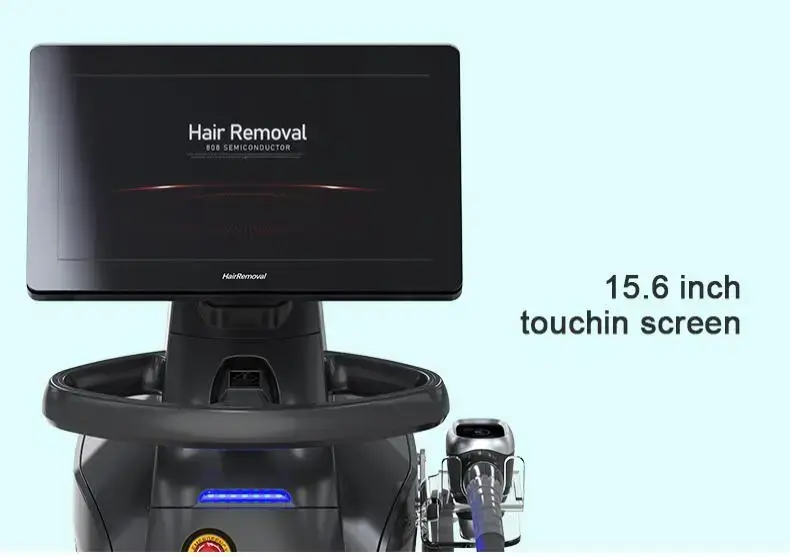
The latest trends in the diode laser hair removal machine industry focus on faster treatment times with high-frequency operation (1-10Hz), better patient comfort with improved cooling systems, and multifunctionality that can remove hair and rejuvenate the skin. More and more buyers want machines with big spot sizes (12x36mm or bigger) that cut down on treatment time, easy-to-use touchscreens that make operation simple, and strong guarantee programs that protect their investment. These tastes have a direct effect on how prices are set and what people buy.
Factors Influencing the Cost of Diode Laser Hair Removal Machines
Learn about the factors that affect the prices of tools to find the best deal for your individual clinical needs and budget.
Technical Specifications and Performance Parameters
Wavelength configuration significantly affects cost. Single-wavelength 808nm systems are most economical; dual and triple-wavelength platforms cost more due to expanded capabilities. Power output (600W–2000W) directly impacts treatment speed. Lower-powered systems suit smaller practices; higher-powered systems accelerate throughput for high-volume operations. Spot size affects efficacy—12x36mm windows cover more area per pulse than standard 9x9mm. Frequency ranges (1–10Hz) enable faster "in-motion" techniques; adjustable pulse durations (10–400ms) add value but increase cost.
Component Quality and Origin
Where key parts come from has a big effect on both price and function. American companies like Coherent make laser diode bars that are guaranteed to last more than 50 million shots. This makes the higher original cost worth it because repair costs are lower. It's not just the main parts that matter; Italian water pumps, Japanese cooling plates, and Taiwanese power sources are more reliable than generic options. At Xi'an Taibo Laser Beauty Company, we combine American Coherent laser bars with high-quality cooling parts to offer professional-level performance at prices that are lower than those of the maker.
Cooling System Architecture
Cooling technology is very important for both patient ease and treatment safety. Simple air-cooling devices work fine for low-intensity tasks but not for professional use with a lot of power. Advanced multi-layer cooling that includes semiconductor refrigeration, TEC (thermoelectric cooling), sapphire contact cooling, and water movement keeps the handpiece at the right temperature for long treatment sessions. Our triple-cooling design keeps treatments painless, even at full power, and keeps expensive laser parts and the skin of the patient safe from heat damage.
Certifications, Warranties, and Support Services
Safety certifications (CE, FDA clearance, ISO 13485) increase production costs but are essential for legal compliance and market credibility. Comprehensive warranty programs—like our standard two-year coverage—demonstrate manufacturer confidence. After-sales support (installation assistance, operator training, troubleshooting, spare parts availability) represents hidden value reducing total ownership cost. Taibo provides lifetime technical support, video training materials, and 24-hour response times, ensuring equipment investment continues generating revenue.
Logistics and Import Considerations
International purchasing costs more than just the price of the tools itself. Shipping costs depend on where the package is going and how it is being sent (by air, sea, or road freight). The trade rules in your country will determine the import duties, taxes, and customs clearance fees. Working with experienced makers who know how to handle foreign shipping and what paperwork is needed can help you avoid delays and fees that you didn't expect. We handle professional packing using metal alloy cases with custom foam inserts, and we work with dependable freight partners to make sure that packages get delivered safely all over the world.
Price Comparison: Diode Laser Hair Removal Machine vs. Alternative Technologies
When you look at how much something costs, you have to look at more than just the buying price. You have to look at how well it works, how often it needs to be maintained, and how well it treats different conditions.
Initial Investment Analysis
ipl machines cost 3,000–3,000–25,000 but require periodic flashlamp replacement (2,000–2,000–8,000 per 100,000–300,000 shots). Alexandrite lasers (30,000–30,000–90,000) excel on light/medium skin but cannot safely treat darker tones. Nd:YAG lasers (35,000–35,000–95,000) work on dark skin but require longer treatment times. Professional diode laser machines (8,000–8,000–80,000) offer optimal treatment versatility. Triple-wavelength platforms eliminate multiple specialized equipment purchases, saving capital and floor space.
Operational Efficiency and Treatment Speed
The number of patients directly affects how profitable a business is by how long treatments last. For big areas of the body, IPL systems usually take 20 to 30 minutes, but new high-frequency diode lasers with large spot sizes can do the same job in 10 to 15 minutes. Because of this productivity gain, more appointments can be made every day, and more money can be made per hour of machine use. With a 12x36mm spot size and a frequency range of up to 10Hz, our technology lets practitioners get more done without lowering the quality of treatment.
Maintenance and Lifecycle Costs
IPL flashlamps break down over time, and based on how often they are used, replacing them costs $2,000 to $8,000. Maintenance on an Alexandrite laser can cost more than $5,000 a year for things like tuning and replacing parts. Quality diode laser systems don't need much upkeep other than changing the coolant and cleaning the filters every so often. Laser bars that are properly made can last 20 to 50 million shots before they need to be serviced. Over the course of 5 to 10 years, this edge in durability cuts the total cost of ownership by a large amount.
Treatment Efficacy and Client Satisfaction
Rates of repeat business and referrals are affected by how well patients do and how comfortable they are during diode laser hair removal machine treatments. With diode laser technology's exact melanin targeting, permanent hair loss can be achieved in fewer sessions than with IPL. This makes clients happier and improves the clinic's image. Advanced cooling systems make treatments almost pleasant, which sets your business apart from others in the same field. Being able to safely and successfully treat all skin types, from light to dark, increases the number of people you can reach and makes the most of your tools.
How to Effectively Procure a Diode Laser Hair Removal Machine?
To get the best return on investment, strategic procurement balances technical needs, price limits, source dependability, and long-term support issues.
Defining Your Clinical Requirements
Assess target patient demographics and expected treatment volumes. Predominantly lighter skin clients may consider dual-wavelength (755+808nm) systems; diverse populations require triple-wavelength configurations. Expected patient volume determines power output: 600–800W for small practices, 1200W for mid-size, 1600–2000W for high-volume medical spas. Facility size and utility availability (power supply, water cooling) also influence equipment selection. Match specifications to clinical needs.
Evaluating Manufacturer Credentials
Supplier selection has long-term consequences for equipment performance and support. Prioritize manufacturers with substantial industry experience—Taibo's 15 years manufacturing professional laser equipment demonstrates technological maturity and product continuity. Verify certifications (CE, ISO 13485, FDA registration/clearance) relevant to target markets. Request component origin documentation (laser bar source, cooling system specifications) and manufacturing quality verification. Established manufacturers maintain comprehensive documentation and embrace transparency.
Understanding Pricing Models and Purchasing Options
Direct manufacturer purchasing offers best pricing—particularly from reputable Chinese manufacturers combining quality with competitive costs. Authorized distributors provide local support but add markup. Used/refurbished equipment reduces upfront cost but carries warranty, technology currency, and remaining component life risks. Financing options manage cash flow: outright purchase maximizes long-term value; leasing preserves working capital and may offer tax advantages. Bulk purchase discounts available for multi-unit buyers. Taibo offers flexible payment terms.
Negotiating Terms and Agreements
Complete purchase agreements should include information about the length and scope of the warranty, the availability and reaction times for technical help, the training requirements for workers, how to get spare parts and how much they cost, and the return or swap policies. Make it clear who is responsible for damage during shipping, problems with import clearing, and installation. Write down the rules for software updates and make sure you know if adding new features will cost extra. Clear agreements keep people from misunderstood each other and hold people accountable.
Verifying Pre-Purchase Claims
Ask for example films that show real treatment methods and outcomes. Ask well-known clinics in your area or market group for customer examples. If you can, set up trips to the plant to look at the production areas, quality control methods, and stock of finished goods. Customers-to-be are welcome to visit our Xi'an facility and get hands-on training before they decide to buy. This gives them trust in their business choice.
Maintenance, Safety, and Operational Costs to Consider
The initial buying price of a diode laser hair removal machine is only one part of the total cost of owning. Long-term profitability and machine dependability are greatly affected by ongoing operating costs and following proper maintenance procedures.
Routine Maintenance Requirements
Professional diode laser equipment requires regular service for optimal performance. Water cooling systems need distilled water replacement every 3–6 months depending on usage frequency and source water quality. Air filters require monthly cleaning or quarterly replacement preventing dust accumulation reducing cooling efficiency. Optical components (handpiece windows) need weekly cleaning using manufacturer-approved methods. These routine tasks consume minimal time and materials—typically under $500 annually.
Common Pitfalls That Increase Costs
Several upkeep mistakes cause costs that aren't necessary. When cooling systems use tap water instead of pure water, minerals build up and hurt the pumps and make heat exchange less effective. If you don't clean the filters, the cooling systems have to work harder, which wears out parts faster and uses more energy. When you use equipment beyond its recommended job cycles without giving it enough time to cool down, the laser bar's life is cut short. Using non-certified techs or aftermarket parts to try to fix something breaks the warranty and could cause more damage. Costly fixes can be avoided by following the manufacturer's instructions and taking care of warning lights right away.
Safety Features and Regulatory Compliance
Modern professional equipment incorporates multiple safety features protecting both operator and patient. Emergency stop buttons enable immediate power cut-off. Skin temperature sensors prevent thermal damage by reducing energy delivery or halting treatment if tissue temperature exceeds safe limits. Key-switch operation restricts unauthorized use. Safety glasses protect operators from reflected laser energy. Door interlocks prevent laser emission when access panels open for service. These features ensure safe operation.
Energy Consumption and Environmental Impact
The amount of electricity used affects operating costs, which depend on the power level of the equipment and how it is used. A 1200W system that runs for six hours a day uses about 200 to 250 kWh of electricity each month, which, depending on your local rates, means $25 to $40 in energy costs. Water-cooled systems only use 5 to 15 liters of water a day, which is a very small amount of water. Designs that use less energy and smart power management cut down on usage when not in use, which lowers costs and has a positive effect on the environment.
Conclusion
Purchasing a professional diode laser hair removal machine (8,000–8,000–80,000; typical $20,000–45,000) is a strategic business decision affecting capabilities, client satisfaction, and profitability. Beyond initial cost, evaluate technical specifications matching your patient demographics, component quality, cooling technology, warranty coverage, and manufacturer support. Strategic integration of these factors maximizes ROI and builds your practice's reputation as a trusted provider of advanced cosmetic treatments.
FAQ
1. What is the typical price range for professional-grade equipment?
Most professional diode laser hair removal machine systems cost between $8,000 and $80,000, but the exact price depends on the power output, wavelength setup, and quality of the parts. Single-wavelength machines for beginners cost between $8,000 and $15,000. Triple-wavelength systems in the middle range cost between $20,000 and $45,000, and top-of-the-line high-power units cost more than $60,000. Due to lower costs, Chinese makers can often make products with the same specs as Western names at 30–50% lower prices.
2. What hidden costs should I anticipate beyond the purchase price?
Shipping and import fees (usually 5–15% of the value of the equipment), setup and installation ($500–$2,000), operator training (often included, but check), higher insurance rates, annual maintenance supplies ($500–$800), professional service visits ($800–$1,500 a year), and advertising costs to get the word out about your new service. The total costs for the first year, besides buying the tools, are usually between $3,000 and $8,000.
3. How does warranty coverage affect total ownership cost?
Comprehensive guarantee protection lowers financial risk by replacing parts and paying for repair work during the service time. Standard one-year guarantees leave you open to fix costs of $5,000 to $15,000 after the warranty period is over. Our two-year guarantee covers more time, which is when laser bars, cooling systems, and electronics are most likely to show signs of production flaws. Compared to shorter coverage periods, this means that the total cost of ownership is much lower.
Partner with Xi'an Taibo Laser for Your Equipment Investment
Xi'an Taibo Laser Beauty Company delivers premium diode laser hair removal machines with 15 years of manufacturing expertise and factory-direct pricing. Our professional systems feature triple wavelengths (755/808/1064nm), 600-2000W power, American Coherent laser bars (50M+ shots), triple cooling, CE/ISO13485 certification, two-year warranty, and lifetime technical support. OEM/ODM customization, flexible payments, training, and after-sales support are available. Contact susan@taibobeauty.com right away to get a full quote on diode laser hair removal machines for sale, talk about deals for buying in bulk, or set up a virtual tour of our factory to see how we make our products and make sure they are of high quality. We are dedicated to greatness because of your success.
References
1. Anderson, R.R. & Parrish, J.A. (1983). "Selective Photothermolysis: Precise Microsurgery by Selective Absorption of Pulsed Radiation." Science, Vol. 220, Issue 4596, pp. 524-527.
2. Ibrahimi, O.A., Kilmer, S.L. & Anderson, R.R. (2011). "Laser Hair Removal: A Comprehensive Review." Dermatologic Surgery, Vol. 37, Issue 7, pp. 823-838.
3. Haedersdal, M., Beerwerth, F. & Nash, J.F. (2020). "Laser and Light-Based Hair Removal: Consensus Report and Guidelines from an Expert Panel." Journal of the European Academy of Dermatology and Venereology, Vol. 34, Issue 9, pp. 1996-2010.
4. Goldman, M.P. & Weiss, R.A. (2019). "Treatment of Unwanted Hair: A Comprehensive Clinical Update on Laser and Light Sources." Lasers in Surgery and Medicine, Vol. 51, Issue 2, pp. 141-157.
5. American Society for Laser Medicine and Surgery (2017). "Guidelines of Care for Laser Hair Removal." ASLMS Clinical Practice Guidelines, pp. 1-24.
6. Klein, A., Steinert, S. & Baeumler, W. (2018). "Wavelength-Dependent Variations in Diode Laser Hair Removal: Clinical and Histological Analysis." Lasers in Medical Science, Vol. 33, Issue 4, pp. 791-799.





YOU MAY LIKE