
Best Nd YAG Q Switch Laser Machine for Clinics
2026-05-13 08:52:29
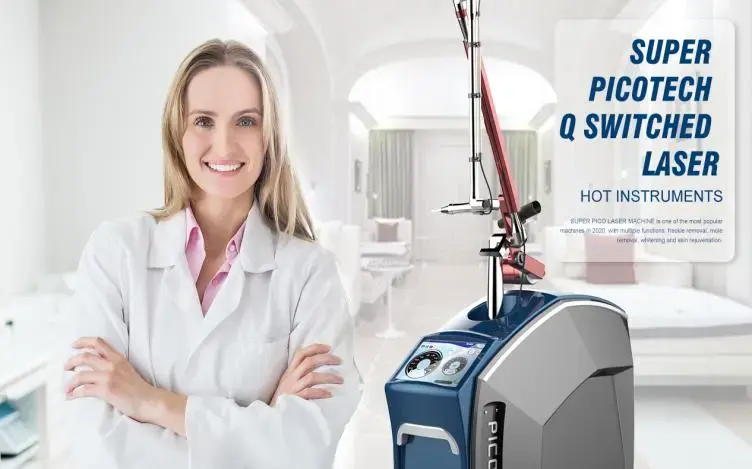
When you look for the best nd yag q switch laser machine for your clinic, you're making a choice that will have a direct effect on how well treatments work and how happy your patients are. These high-tech laser systems send out very short bursts of light at certain wavelengths, usually 532nm, 755nm, and 1064nm, to safely and effectively treat pigmentation problems, tattoo ink particles, and different skin diseases. The Q-switch technology uses photoacoustic effects to break up color into tiny pieces that your patients' bodies can naturally get rid of. This reduces thermal damage and speeds up healing. These days, clinical-grade machines can work with a wide range of wavelengths, have strong cooling systems, and have all the necessary safety certifications. This makes them must-haves for dermatology practices, medical spas, and aesthetic clinics that want to offer more services while still providing the best care to their patients.
Understanding Nd YAG Q-Switch Laser Machines: Technology and Benefits
Laser treatment has come a long way thanks to the Q-switch system. When the quality factor of the laser chamber changes quickly, Q-switching (short for "Quality Switching") controls the release of light. This makes spikes with very high peak power that last only 6 nanoseconds. During each wave, the laser sends out up to 2000mJ/cm² of energy, which is strong enough to break up pigment specks without hurting nearby tissues.
Core Components and Wavelength Functions
There are three main bands that are used for different medical reasons. The 1064nm frequency goes deep into the dermal layers, which makes it perfect for fixing Nevus of Ota, professional tattoos, and dark spots on darker skin. For Fitzpatrick skin types IV through VI, this longer range goes around epidermal melanin, which lowers the risk of post-inflammatory hyperpigmentation. Solar lentigines, freckles, and red tattoo ink components can all be successfully treated with the 532nm wavelength, which is aimed at superficial skin coloring. The 755nm frequency is useful for both of these tasks because it allows even entry for tattoos with multiple colors and different levels of pigmentation.
Clinical Benefits That Matter
Q-switched devices use photoacoustic effects—not thermal ablation—to target chromophores precisely. Ultra-short high-energy bursts fragment pigment particles small enough for macrophage clearance. Two-month intervals between sessions. This selectivity preserves surrounding architecture, reducing patient downtime and enabling faster appointment turnover. Modern cooling systems significantly improve safety profiles. Taibo's air/water cooling maintains optimal skin temperature, protecting epidermis while enhancing energy delivery. Visible results with minimal recovery time increase patient satisfaction.
Expanding Your Service Menu
Versatility turns these tools into workhorses that bring in money. In addition to normal treatments for tattoo removal and pigmentation, modern nd yag q switch laser machine solutions can also do carbon peeling to rejuvenate the skin, improve acne scars, and make pores smaller. When the right bands and settings are used, the same tools can fix vascular lesions. This ability to do more than one thing supports the investment because it helps a wide range of patients, from young adults who want to get rid of tattoos to older people who are worried about photoaging.
Comparing Nd YAG Q-Switch Laser Machines with Other Laser Technologies
Knowing how nd yag q switch laser technology stacks up against other options can help you make a better buying choice. There are a lot of competing technologies in the beauty laser field, and each one has its own strengths.
Pulse Duration Differences and Treatment Outcomes
Picosecond lasers emit trillionth-second pulses, potentially offering stronger photoacoustic effects, but clinical improvements over nanosecond systems are often marginal for most applications. Nanosecond Nd YAG Q-switch laser machines deliver proven results at more accessible price points—ideal for practices treating common pigmentation and tattoos. Fractional lasers create controlled micro-injuries for collagen remodeling but require more downtime. Diode lasers excel at hair removal but cannot treat pigmentation or tattoos.
Cost-Effectiveness and Maintenance Considerations
Nd YAG Q-switch laser machines offer lower acquisition costs than picosecond alternatives while delivering comparable results for most conditions. Solid-state construction and flexible design minimize maintenance requirements. Taibo's self-diagnostics monitor 30+ operating parameters, alerting operators before issues cause downtime. Two-year warranty and readily available spare parts enable predictable budgeting without unexpected repair expenses. Lower total ownership cost favors Q-switch technology for most practice settings.
Performance and Reliability in Real-World Settings
Clinical feedback consistently praises Q-switch systems for treatment consistency and patient comfort. When used per protocols—2–10mm spot sizes, 1–10Hz frequencies, appropriate fluences for skin type—these devices deliver predictable results session after session. Adjustable frequency enables area-specific tailoring: lower frequencies for delicate areas, higher frequencies for rapid large-area coverage. Real-world reliability outweighs theoretical specifications. Q-switch technology's track record spans millions of treatment sessions globally.
How to Choose the Best Nd YAG Q Switch Laser Machine for Your Clinic?
To choose the right laser device, you need to make sure that the technical specs fit your needs and the needs of your patients.
Defining Your Clinical Needs and Treatment Scope
The first thing you should do is look at your present and future customer demographics. Dermatology offices that treat melasma, lentigines, and other medical pigmentation diseases can benefit from nd yag q switch laser machine systems that focus on both 532nm and 1064nm wavelengths. To get rid of multicolored ink successfully, tattoo removal professionals need strong energy flow across all three colors. Mixed practices that help people with a range of physical issues should focus on tools that can do both pigmentation repair and rejuvenation treatments, such as carbon peeling.
Key Technical Specifications to Evaluate
Expected patient volume determines equipment durability requirements. Practices performing 20+ daily treatments need industrial-grade cooling and long-life flashlamps. Boutique practices with lower throughput can choose clinically effective devices while optimizing capital budgets. Energy delivery matters: Taibo's systems deliver 100–2000mJ at 1064nm/755nm, 50–1000mJ at 532nm—sufficient for all skin types/pigmentation depths. 6-nanosecond pulse duration balances photoacoustic effect and thermal confinement. Adjustable 2–10mm spot sizes enable precise focal treatment or rapid large-area coverage.
Evaluating Supplier Reliability and Support Infrastructure
Cooling system quality directly affects patient comfort and treatment speed. Combined air/water cooling maintains stable temperatures, preventing discomfort-causing heat buildup or complications. Look for integrated cooling requiring no routine service or consumable replacement—lowering long-term operating costs. Certification compliance demonstrates quality and safety commitment. CE marking indicates European safety standards; ISO13485 certifies medical device quality systems. These aren't mere paperwork—they're verified manufacturing processes and quality controls protecting patients and practice.
Pricing Structures and Financial Considerations
Professional Q-switch lasers range $5,000–50,000+ depending on features, brand, included accessories. Basic dual-wavelength units start at lower price points; advanced triple-wavelength platforms with enhanced features command premium pricing. Taibo's factory-direct pricing eliminates distributor markups that artificially inflate costs. Warranties differentiate professional manufacturers. Taibo offers comprehensive two-year parts-and-labor coverage for non-user-caused failures. 24/7 technical support answers operational questions via video training, troubleshooting assistance. This support system proves invaluable during learning curve and throughout equipment lifespan.
Maintenance and Safety: Ensuring Long-Term Efficiency and Patient Trust
Following the right upkeep and safety rules will help you get the most out of your tools while keeping patients and staff safe.
Routine Maintenance Practices
Daily maintenance: clean exterior with appropriate non-abrasive products and lint-free cloths. Verify cooling system fluid levels and circulation function before each treatment day. Weekly checks include optical component cleaning and inspecting electrical connections for damage or loosening. Monthly system verification includes calibration and parameter testing ensuring consistent energy delivery. Professional service frequency depends on usage volume—quarterly for high-volume practices, semi-annual for moderate use. Professional inspections identify issues early, replacing worn components before failure and recalibrating systems.
Safety Protocols and Operator Training
Eye protection is foundational—both operator and patient must wear wavelength-specific safety eyewear during treatments. For Q-switch systems, nominal ocular hazard distance (NOHD) extends to 1 kilometer, underscoring appropriate goggle requirements. Comprehensive operator training covers patient assessment, parameter selection, emergency procedures. Fitzpatrick skin typing guides wavelength selection, preventing over-energizing complications. Test spot placement in inconspicuous locations assesses tissue response before full treatment. Proper pre-treatment cleaning and topical anesthetics improve patient comfort and outcomes.
Procurement Guide: Buying and Leasing Nd YAG Q Switch Laser Machines
Strategic procurement strikes a balance between short-term budget limits and long-term operating goals and growth forecasts.
Identifying Authorized Manufacturers and Distributors
Direct relationships with manufacturers are better than relationships with third-party dealers. Xi'an Taibo Laser Beauty Company is a fully integrated company that has been making laser beauty products for 15 years. They sell directly from the factory, so there are no middleman markups. Their well-established export infrastructure helps more than 180 countries, and they have specialized foreign sales teams that help with local support and paperwork for import clearance. Verification of the nd yag q switch laser machine manufacturer's qualifications guards against fake equipment and makes sure that the guarantee covers real products. Taibo has many certificates, such as CE, ISO 13485, and several appearance patents. FDA approval is currently being processed. Factory tours are open and honest because they let potential buyers see the production facilities, quality control systems, and inventory management systems in action. A lot of serious buyers plan tours of the facility before they buy it, and Taibo is happy to have them. During trips, visitors can get free training.
Understanding Complete Pricing and Hidden Costs
Clear price includes the cost of the tools, the shipping, help with installation, and the first training. Ask for detailed quotes that list all the parts, tools, and refills that are included in the base price. Shipping costs change a lot depending on where the package is going and how it is being sent. For example, air freight is faster than ocean freight but costs more. Getting protection for your package during transit protects it. Setting up and calibrating things correctly is made sure by installation and testing services. Some makers offer on-site installation for large orders, while others offer thorough video instructions and remote help for installations of single units. Different suppliers offer different levels of thorough training. For example, Taibo offers detailed video libraries, written operation manuals in languages that can be changed, and live video training events until operators are proficient.
Flexible Payment and Leasing Arrangements
Payment method freedom helps people with different types of finances. Traditional bank payments work well for businesses that are already up and running and have the money to do so. Credit card choices, which may come with handling fees, protect purchases and let you earn reward points. Leasing spreads costs over multiple operating times, keeping working capital for things like hiring and marketing while bringing in money right away from equipment. Customers who make bigger promises are rewarded with bulk savings, longer warranties, or free accessories. When groups or clinic chains buy more than one unit, they can get better prices and specialized account management. Standardization is also helped by these arrangements; having the same Nd YAG Q-switch laser machine in all places makes training easier and gives staff more freedom to move between spots.
After-Sales Support and Long-Term Partnership
Professional manufacturers are different from transactional sellers because they offer strong after-sales help. Taibo's support system includes specialized expert teams that are available 24 hours a day, 7 days a week through a variety of contact methods. Video troubleshooting quickly fixes most problems, and parts replacement apps quickly send new parts when hardware fails. The two-year warranty gives you peace of mind, and practices that want to minimize business risk can choose to get extra security. International markets are served by language customization services that offer control panels, displays, and literature in more than one language, even for sales of just one machine. This localization boosts operator trust and cuts down on training time, especially in places where people don't speak English as their first language. When you buy in bulk, you can change the colors of your clinical tools to match your brand, which helps your practice's image and personality.
Conclusion
When choosing the best nd yag q switch laser machine system for your business, you need to think about how well it works technically, how much it costs, and how reliable the seller is. Modern Q-switch platforms have been shown to work well for a wide range of problems, from stubborn tattoos to photoaging, and when used properly, they are safe for all skin types. Taibo's systems have competitive specs, full certifications, and manufacturer-direct prices. They also have a great help system that was built over 15 years of experience working with customers around the world. Triple-wavelength flexibility, strong cooling technology, and flexible dependability all work together to make equipment purchases that bring in money, make patients happy, and increase referrals. Carefully comparing your individual clinical situation to the options that are available will help you make the best choice that meets both your current operational needs and your long-term practice development.
FAQ
1. What's different about Q-switch technology from other laser medicine?
Q-switch systems make very short, high-energy bursts that have photoacoustic effects instead of photothermal ones. This breaks up the pigment particles physically instead of burning them, which protects the tissue around them and speeds up the healing process. The nanosecond pulse length gives the best energy concentration for breaking up melanin and tattoo ink while reducing heat loss.
2. How many treatment sessions do patients typically need?
Treatment plans change depending on the reason and the person's reaction. Getting rid of a tattoo usually takes six to twelve sessions, split eight weeks apart. Simple tattoos fade faster than complex, multicolored tattoos done by an expert. People with pigmentation problems usually get better after three to six lessons spaced out every two months. Total session time depends on the type of skin, the depth of the lesion, and the quantity of the color.
3. Can Q-switch lasers treat all skin types safely?
Modern Q-switch systems that can treat 1064nm wavelengths can safely treat darker skin types (Fitzpatrick IV–VI) by skipping melanin in the epidermis and going straight for pigment in the deeper layers of skin. Complication risks are kept to a minimum by choosing the right parameters based on an analysis of the skin type. Darker skin needs more protective settings for lighter wavelengths to avoid discoloration after inflammation.
Partner with a Trusted Nd YAG Q Switch Laser Machine Manufacturer
Picking the right tools partner affects your long-term success and the health of your patients. Taibo Laser Beauty (TB) is a trusted nd yag q switch laser machine supplier that can provide certified systems directly from the factory. Their scientifically proven equipment offers great value and comes with full support. Our position in over 180 countries and 15 years of manufacturing experience demonstrate the quality and dependability customers can expect. With CE and ISO 13485 certifications, two-year warranties, flexible maintenance design, and expert support available 24 hours a day, seven days a week, you gain a partnership that goes far beyond simply delivering equipment. Our team offers advice, training, and ongoing support to make sure your investment achieves the best results, whether you're adding new aesthetic services or expanding current ones. Contact susan@taibobeauty.com right away to talk about your unique needs, get full specifications, and find out how our Nd YAG Q-switch laser machine solutions can help your clinic do more while still meeting the high standards of quality your patients demand.
References
1. Anderson, R.R., & Parrish, J.A. (1983). Selective photothermolysis: precise microsurgery by selective absorption of pulsed radiation. Science, 220(4596), 524-527.
2. Chan, H.H., et al. (2012). A retrospective analysis of complications in the removal of pigmented and vascular lesions using a Q-switched Nd:YAG laser. Journal of Cosmetic and Laser Therapy, 14(3), 126-129.
3. Kossida, T., et al. (2012). Optimal tattoo removal in a single laser session based on the method of repeated exposures. Journal of the Optical Society of America B, 29(12), 3283-3288.
4. Negishi, K., et al. (2010). Low-fluence Q-switched Nd:YAG laser for the treatment of facial pigmentation and rejuvenation. Lasers in Surgery and Medicine, 42(6), 555-563.
5. Ross, E.V., et al. (2011). Comparison of responses of tattoos to picosecond and nanosecond Q-switched neodymium: YAG lasers. Archives of Dermatology, 147(5), 597-602.
6. Wang, C.C., et al. (2014). Efficacy and safety of Q-switched 1064-nm neodymium-doped yttrium aluminum garnet laser treatment for melasma and acquisition of optimal treatment parameters. Dermatologic Surgery, 40(4), 379-387.





YOU MAY LIKE