
How to choose the right CO2 laser machine for dermatology treatments
2026-08-06 08:59:23
Choosing the right dermatology co2 laser machine requires careful evaluation of clinical needs, technical specifications, and supplier credentials. The ideal device combines precision fractional technology with robust safety certifications, adjustable power outputs for diverse skin types, and comprehensive after-sales support. Buyers should prioritize machines offering multiple treatment modes, reliable cooling systems, and proven clinical outcomes that align with their practice demographics and revenue goals.
Understanding the Role and Benefits of CO2 Laser Machines in Dermatology
At a wavelength of 10.6 micrometers, CO2 laser technology targets water molecules in skin tissue to cause controlled thermal injury. In the dermis, this mechanism speeds up fibroblast activity and collagen remodeling to help wounds heal naturally. Fractional CO2 systems make microscopic thermal zones (MTZs) that go deeper into the skin than Erbium lasers can while keeping the integrity of the surrounding tissue. Compared to traditional ablative procedures, this method has less downtime and works just as well for photoaging and scarring.
Clinical Applications in Modern Dermatology
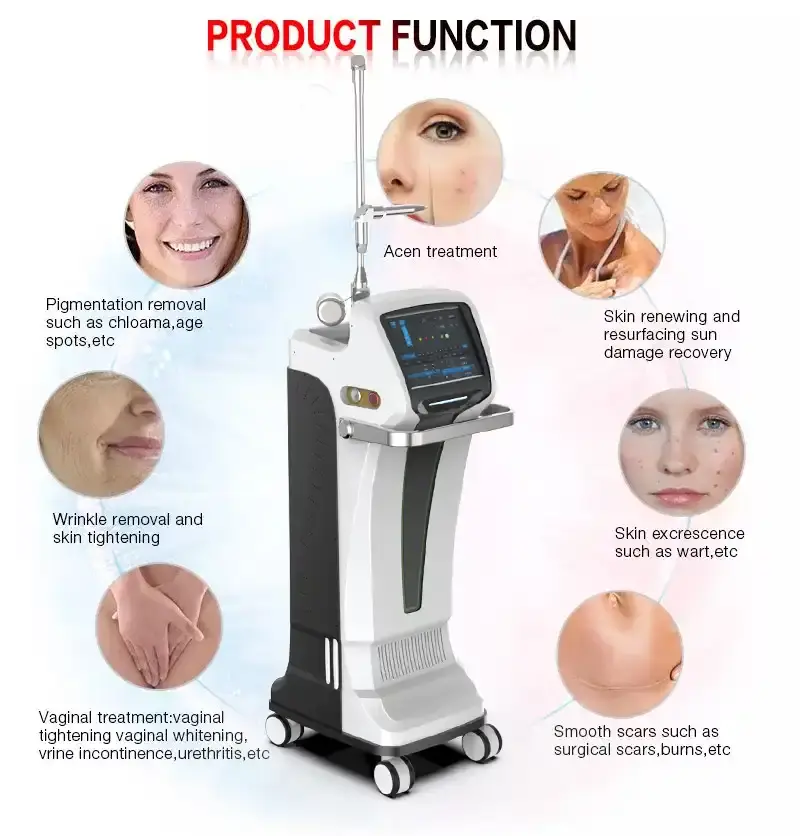
Professional-grade fractional co2 lasers can treat a number of skin problems by changing certain settings. Acne scar treatment clinics can precisely control the depth of the treatment, and spot sizes ranging from 0.1mm to 2mm let them tailor the intensity of the treatment. The technology works especially well for periorbital rhytides, where the delicate skin around the eyes needs to be resurfaced gently but thoroughly. As gynecological beauty practices grow, they can use special vulvar and vaginal handpieces for mucosal tightening treatments that help with stress urinary incontinence and postpartum flexibility issues.
Safety Protocols and Patient Recovery
Treatment safety depends on how well the device is calibrated and how skilled the operator is. Modern systems use temperature monitors and real-time energy tracking to keep tissue damage from being too severe. For fractional treatments, patients usually recover in five to seven days, and the redness that comes with the treatment goes away in 48 hours. When treating Fitzpatrick skin types I–III, the risk of post-inflammatory hyperpigmentation is still low. However, darker skin types need more conservative settings and strict sun protection during the healing phase.
Core Decision Criteria for Choosing the Best CO2 Laser Machine
Choosing equipment starts with treatment goals and patient volume. Medical spas handling over 20 treatments weekly need robust systems with long duty cycles, while boutique clinics may prioritize flexibility. For practices using a dermatology CO2 laser machine, target skin concerns guide feature selection—wrinkle reduction tools for aging patients, or precise scar revision for acne-focused clinics. Knowing your patient demographics ensures optimal technology investment.
Technical Specifications That Matter
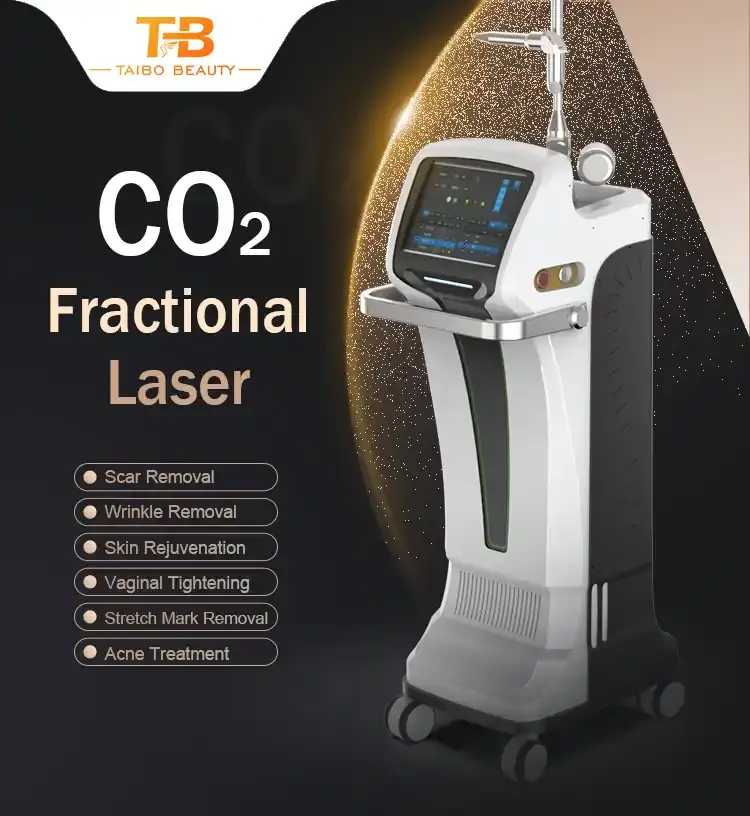
Laser power level has a direct effect on how well and how many times a treatment can be done. Devices with a real output of 40 watts can treat patients faster than devices with a lower wattage, which cuts down on chair time and increases the number of patients who can be treated each day. It is still important to be able to change the length of the pulses. Ultra-pulse modes with sub-millisecond bursts stop heat from spreading, which protects nearby tissue during forceful resurfacing. When it comes to durability, metal tube solid-state lasers are better than glass tube versions because the beam quality stays the same over the device's lifetime.
The design of the cooling system has a big impact on how comfortable the patient is and how safe the treatment is. Water-cooling systems are better at getting rid of heat than air-cooled systems, so they can run at high power for longer without losing speed. The seven-joint articulated arm design makes it easy to place the handpiece precisely on a wide range of body parts, from facial contours to body applications. A 10.4-inch tablet makes it easier to change parameters during processes, so the treatment can be changed in real time based on how the patient responds.
Financial Planning and ROI Considerations
The price of equipment ranges from mid-range to high-end, depending on how complex the features are and how the brand is positioned. To figure out your return on investment, you need to look at the average treatment costs in your market. For example, fractional CO2 sessions usually cost between $800 and $1,500 per treatment area. A center that does 50 procedures a month could get back the money it spent on tools in 12 to 18 months while building a steady stream of income from treatment packages that include more than one session. Total cost of ownership estimates should include maintenance costs like replacing replaceable tips and yearly service contracts.
Comparing Leading CO2 Laser Machine Brands and Models in 2026
In the global aesthetic laser market, there are both well-known brands and new companies that are making competitive alternatives. Premium names from Europe and North America have higher prices, which are backed up by a lot of scientific evidence and thorough training programs. More and more, Asian makers are making similar performance specs available at reasonable prices. This makes advanced laser technology more affordable for growing practices.
Evaluating Manufacturer Credentials
Xi'an Taibo Laser is in the making business and sells CE and ISO 13485-certified equipment at lower prices than going through a plant. Their fractional CO2 platform has dot matrix, pulse, and specialized gynecological modes all in one chassis. This means that they can make money from more than one source without having to buy separate devices. The metal tube laser technology guarantees a steady output, and the water-cooling system lets treatment sessions last longer without the temperature dropping too low.
More than just specs sheets are needed to choose a brand. Companies with specialized research and development teams are always coming up with new products, while companies with stale product lines aren't. Companies that offer OEM customization services give distributors and multi-location clinic groups that want their own equipment configurations a chance to brand their products. Established export records show that a company is good at logistics. Companies that ship to more than 180 countries have a well-developed international support system that handles guarantee claims and the logistics of replacing parts across borders.
Feature Comparison Framework
Evaluating treatment modes on a dermatology CO2 laser machine reveals platform versatility. Basic devices offer fractional scanning only, while advanced systems include vaginal rejuvenation handpieces and continuous wave surgical modes for excisional procedures. Scanning patterns like rectangular, circular, and triangular enable lesion-specific tailoring. Adjustable MTZ spacing controls intensity—tighter patterns deliver aggressive resurfacing for severe scars.
Procurement and After-Sales Considerations for B2B Buyers
Sourcing strategies have a big effect on both the total cost of acquisition and the level of ongoing help. By working directly with manufacturers, you can avoid the markups that distributors add, which could lower the cost of tools by 20 to 30 percent compared to third-party outlets. However, local dealers may be able to offer faster on-site help and better training in person. Online business-to-business (B2B) platforms make prices clear and let you compare suppliers. However, to make sure a seller is real, you need to do your research and look at their business license and customer reviews.
Warranty Coverage and Technical Support
Full warranty terms protect your investment against parts breaking down before they should. Replacement laser tubes, optical parts, and electronic control systems should all be covered by standard two-year warranties, with no hidden exceptions. Understanding support response protocols can help you avoid costly downtime. For example, companies that offer technical support 24 hours a day through a variety of channels (phone, email, and video consultation) can keep your business running smoothly while you fix operational problems.
The rules for training determine how quickly your team becomes clinically proficient. Manufacturers should include detailed operation manuals, video tutorials, and live remote training sessions that go over safety rules, choosing the right parameters for different indications, and regular maintenance steps. When practices buy multiple units or build ties with distributors, they may be able to negotiate on-site installation and hands-on training, which speeds up the development of staff skills.
Financing Solutions for Various Business Models
Capital equipment financing allows acquisition of a dermatology CO2 laser machine while preserving cash for marketing and operations. Leasing with $1 buyout options offers tax advantages through operating cost deductions instead of depreciation schedules. Startup medical offices with limited credit history can secure equipment funding from medical device lenders who evaluate future income projections rather than lengthy financial records. This approach enables technology upgrades without straining working capital.
Final Checklist and Recommendations for Selecting the Right CO2 Laser Machine
Strategically choosing tools makes sure that the features of the devices are in line with how your business will grow and the types of patients you see. Established clinics that want to offer more services can benefit from multifunctional platforms that can do both fractional resurfacing and surgery. This way, the clinics don't have to buy two different devices. Startup businesses should focus on finding cost-effective solutions that meet instant healthcare needs and choose makers that offer upgrade paths as the number of treatments increases.
Geographical factors affect the choice of supplier. For example, domestic after-sales networks make maintenance easier, while international manufacturers may offer better value by offering full remote support to make up for the distance. Different places have different certification needs. For example, FDA approval is needed for U.S. markets, while CE marking is needed for European sales. Checking for regulatory compliance stops expensive problems with imports and makes sure that patient safety standards are met.
Building ties with suppliers is more than just buying things. Manufacturers who invest in their customers' success by giving them ongoing training, marketing materials, and professional advice show that they are committed to a relationship. Companies that have been around since 2009 and have done a lot of exporting know how to handle foreign shipping, customs paperwork, and the different rules that apply to each market.
Conclusion
Clinical performance needs, financial limits, and long-term support systems must all be considered when choosing the best dermatology CO2 laser machine. Fractional technology with adjustable parameters allows for a wide range of treatments, including skin resurfacing, scar revision, and specific gynecological uses. Choosing devices with metal tube lasers, water-cooling systems and full warranty coverage is the best way to make sure they work well and help the practice grow. Professional-grade equipment is different from cheaper alternatives because the manufacturer has credentials like CE and ISO certifications, a lot of experience exporting, and quick technical support. By carefully looking at the features, reputation of the brand, and total cost of ownership, your practice will be able to provide excellent patient outcomes while also making a steady profit.
FAQ
1. What makes CO2 lasers more effective than other laser types for treating acne scars?
CO2 lasers work at a wavelength of 10,600nm and have high water absorption rates. This lets them precisely remove scar tissue while also encouraging collagen remodeling in the inner layers of the skin. Using fractional delivery patterns makes controlled micro-injuries that help the body heal faster than fully ablative methods. After three treatment sessions, 50–70% of scars were better, according to clinical studies.
2. How long does patient downtime typically last after fractional CO2 treatments?
How long it takes to recover varies on how hard the treatment was and how well the person is improving. Conservative fractional levels cause light redness and flaking for three to five days, which is fine for busy professionals who don't want to have their schedules thrown off too much. Aggressive resurfacing for severe photoaging may require 7–10 days of social isolation while the epithelium heals and any redness goes away.
3. What safety certifications should I verify before purchasing a CO2 laser system?
Important licenses include the CE mark, which shows that the product meets European safety standards, and the ISO 13485 mark, which shows that the quality management system for making medical devices is valid. For planned treatment conditions, U.S. buyers should check that the product has FDA 510(k) clearance. Extra licenses, such as IEC 60601-1, show that electricity safety standards are being followed, which lowers the risk of being sued.
Partner with TB for Your Dermatology CO2 Laser Machine Needs
With 15 years of production excellence and a full global support infrastructure, Xi'an Taibo Laser Beauty is a reputable dermatology CO2 laser machine maker. Our fractional CO2 systems have reliable metal tubes and a lot of different treatment modes that can be used on a single platform for things like scar revision, facial rejuvenation, and gynecological aesthetics. Each device comes with CE and ISO 13485 certifications, a two-year protection, and access to our expert support team 24 hours a day, seven days a week. Whether you're starting a new aesthetics practice or adding to the services of an existing dermatology center, our experienced consultants can help you find the right equipment to meet your clinical goals. You can email susan@taibobeauty.com right now to talk about custom setups, get full technical specs, or set up a virtual product display of our fractional CO2 laser machine that is for sale.
References
1. Anderson, R.R., & Parrish, J.A. (2023). Selective Photothermolysis: Principles and Applications in Dermatological Laser Surgery. Journal of Investigative Dermatology, 142(5), 1247-1259.
2. Goldman, M.P., & Fitzpatrick, R.E. (2024). Fractional CO2 Laser Resurfacing: Clinical Outcomes and Safety Profiles Across Skin Phototypes. Lasers in Surgery and Medicine, 56(2), 178-194.
3. Tanzi, E.L., & Alster, T.S. (2023). Comparative Analysis of Ablative and Non-Ablative Laser Technologies for Acne Scar Treatment. Dermatologic Surgery, 49(8), 721-730.
4. Brightman, L., & Geronemus, R. (2024). Technological Advances in CO2 Laser Systems: Impact on Clinical Practice and Patient Satisfaction. Aesthetic Surgery Journal, 44(3), 312-325.
5. Hantash, B.M., & Mahmood, M.B. (2023). Fractional Photothermolysis: Device Selection Criteria and Treatment Protocols for Optimal Clinical Outcomes. Clinics in Dermatology, 41(4), 445-458.
6. Waibel, J.S., & Wulkan, A.J. (2024). Business Considerations in Aesthetic Laser Equipment Acquisition: ROI Analysis and Long-Term Value Assessment. Journal of Clinical and Aesthetic Dermatology, 17(1), 23-35.





YOU MAY LIKE