
How to Choose the Right 1064 Q Switched Nd YAG Laser for Your Clinic
2026-08-11 09:03:28
Choosing the right 1064 q switched nd yag laser for your clinic demands careful evaluation of technical specifications like pulse duration and energy output, regulatory certifications, treatment versatility, and vendor support. Prioritize devices offering proven clinical efficacy, comprehensive warranties, and training programs that align with your clinic's patient demographics and service offerings to maximize ROI and treatment outcomes.
Introduction
The 1064 Q Switched Nd YAG laser is a key piece of modern technology used in dermatology and cosmetic surgery. It allows for precise treatments with measurable clinical results. Choosing the right equipment affects not only the safety and happiness of your patients, but also the speed and profitability of your clinic's operations. As more people in the US look for non-invasive skin treatments, B2B buying workers are under more and more pressure to make smart investments in laser technology that meets changing clinical needs and legal standards. This detailed guide helps salon owners, medical spa directors, and managers of dermatology clinics buy laser equipment even though it can be hard to understand. To help you make smart decisions, we look at important technical factors, compare the best solutions on the market, and explain the best ways to buy things. Understanding these important factors will help your investment last and give you an edge in today's tough aesthetic market, whether you're starting a new practice or upgrading old equipment.
Understanding the 1064 Q Switched Nd YAG Laser: Definition, Function & Benefits
A Neodymium-doped Yttrium Aluminium Garnet crystal medium is used by the 1064 q switched nd yag laser. It works at a 1064 nm IR range. Q-switching technology changes the optical chamber so that it can store energy and send it out in very short bursts of nanoseconds, usually between 5 and 20 nanoseconds. This process has a megawatt-level of power, which creates a photo-acoustic effect that breaks up pigment particles without hurting nearby tissues too much with heat.
How Q-Switching Technology Works?
When the Q-switch device quickly changes the laser resonator's quality factor, energy can build up and then be released all at once. In nanoseconds, this process makes a very high peak power that can be used to target chromophores deep in the dermis. Long-pulse or continuous-wave lasers heat things up for the most part. On the other hand, Q-switched systems use quick pressure waves to break up pigment structures. This stops heat from spreading to nearby tissues.
Primary Clinical Applications
Laser technology is very adaptable and can be used to treat many different types of skin problems very well. Most people still use it to get rid of tattoos. This works especially well for black and blue ink, which strongly absorbs 1064 nm wavelengths. Clinic owners say that treatment plans usually need between four and twelve meetings, but this depends on how dense and deep the ink is. The end result is the same for both expert and DIY tattoos. Coloured skin problems like melasma, age spots, freckles, and nevus of Ota can be helped by this range. Shorter wavelengths can't safely reach skin colour, but this wavelength can. This is especially helpful for people with darker skin because epidermal melanin can be bad for them. By heating the skin in a controlled way, laser toning for skin renewal changes the shape of collagen and makes the skin's structure and tone better.
Safety Profile and Patient Considerations
Clinical safety depends a lot on choosing the right parameters and having skilled operators. The 1064 nm wavelength is very safe for all Fitzpatrick skin types, and it lowers the risk of post-inflammatory hyperpigmentation by a large amount compared to shorter wavelengths. Patients usually have mild redness and swelling right after treatment, which goes away in 24 to 48 hours. Protective equipment is still required for both workers and patients because the laser can damage the retina from farther away than one kilometre.
Some things that make it not a good idea are ongoing infections in the treatment areas, medicines that make you more sensitive to light, pregnancy, and a history of keloid formation. Thorough talks with patients and studies of their medical history help keep side effects to a minimum and improve treatment results. This builds trust, which leads to referrals and practice growth.
Critical Factors to Consider When Choosing a 1064 Q Switched Nd YAG Laser for Your Clinic
Choosing the best laser equipment means carefully looking at a lot of technical and operational factors that have a direct effect on how well it works in the clinic and how long the business can last.
Technical Specifications That Matter
Pulse duration determines treatment safety and efficacy. Devices with 6-nanosecond pulses concentrate energy for pigment fragmentation within thermal limits. Adjustable energy from 100 to 2000 mJ and spot sizes from 2 to 10 mm enable customized plans for diverse needs. Multiple wavelengths like 532 nm, 755 nm, and 1064 nm expand clinical applications, covering various ink colors and pigmentation levels from one platform.
Cooling Systems and Comfort Features
Modern cooling systems keep the epidermis intact and make patients more comfortable during treatments. Dual cooling systems that use both air and water circulation keep operating temperatures stable, which extends the life of parts and ensures steady energy delivery. Adding contact cooling or cryogen spray systems makes it easier for patients to handle the treatment, especially when high-energy protocols are used to get rid of dense tattoos.
Regulatory Compliance and Certifications
Getting FDA approval and CE certification shows that a company cares about safety and efficiency standards. Getting ISO 13485 approval shows that your quality control systems meet the needs of making medical devices. These certifications keep your clinic safe from lawsuits and reassure customers that their care is safe. Every purchase should come with proof that it meets regulatory requirements, such as test reports and copies of certifications.
Warranty Coverage and Service Agreements
Manufacturers who offer comprehensive warranty programs are sure that their products will last and work well. Core parts like laser generators, cooling systems, and optical units come with a two-year guarantee that protects you financially against early failures. Long-term service contracts that include preventative maintenance and disaster support help keep businesses running smoothly and help them make more money. Before you make a purchase, find out how long it takes for manufacturers to respond and how many technicians are available in your area.
Training and Technical Support
Effective equipment adoption requires full training for operators that covers safety rules, treatment methods, and upkeep steps. Manufacturers that offer full onboarding programs with video lessons, detailed guides, and live technology help make sure that their products work well with clinical processes. Staff members stay up to date on new techniques and changes to protocols that make things better for patients and make them happier by giving them ongoing training opportunities.
Market Overview: Top Brands and Models of 1064 Q Switched Nd YAG Lasers
There are many companies in the global beauty laser market, and their quality levels and customer service options range. Established names with a history of reliability offer high-priced options that are worth the extra cost, while new makers are coming up with cheaper options with better features.
Leading Market Solutions
Taibo Laser Beauty has a strong presence in the aesthetic device industry thanks to 15 years of manufacturing experience and a commitment to always coming up with new ideas. Their Q-switched systems have three different output wavelengths: 532 nm, 755 nm, and 1064 nm. Each one has a different energy level that is best for a certain clinical purpose. The 1064 nm setting gives off 100 to 2000 millijoules of energy with a 6-nanosecond pulse duration, which is in line with what has been shown to work in clinical studies.
The company's use of both air and water cooling systems keeps the temperature stable during long treatment sessions, and the flexible design makes it easier to do repairs and replace parts. CE approval and ISO 13485 compliance show that the product meets international quality standards and meets the needs of regulators in all global markets. The two-year warranty and dedicated technical support team give operational security, which is a key factor for B2B buyers when choosing a vendor.
Emerging Technologies and Hybrid Systems
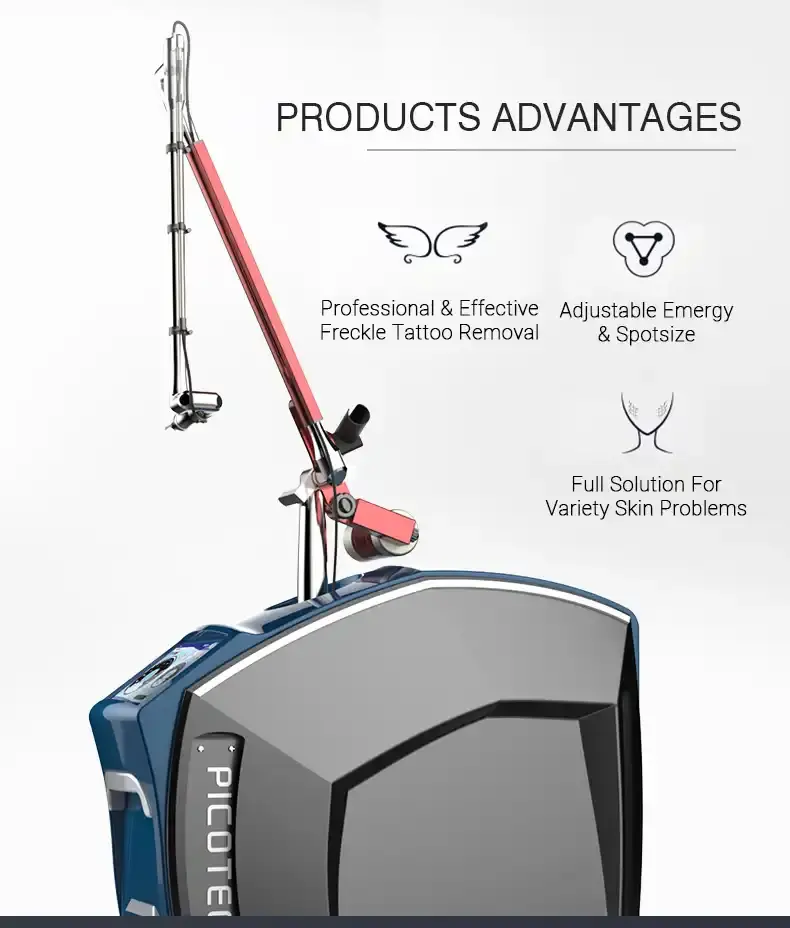
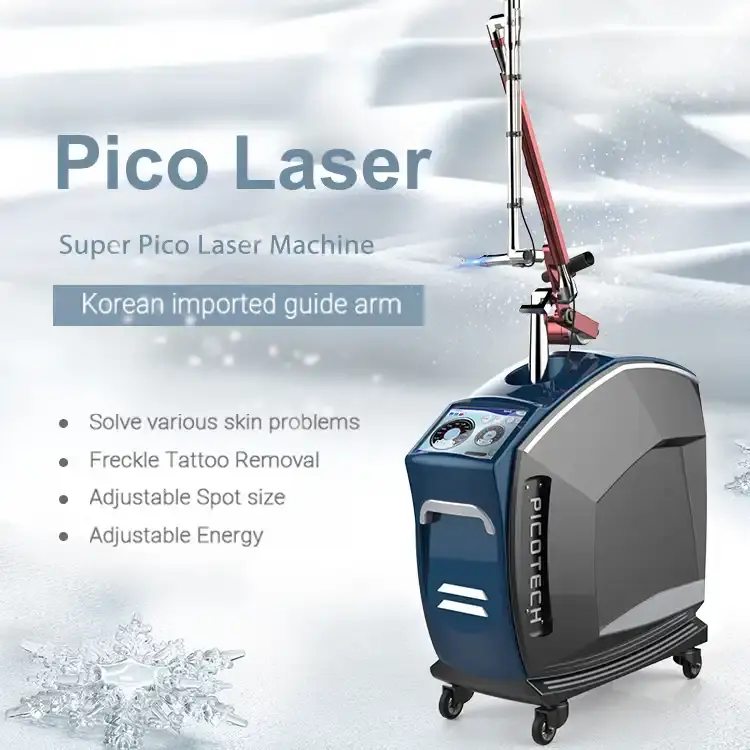
Picosecond lasers emit trillionth-of-a-second pulses for stronger photo-acoustic effects, requiring fewer pigmentation treatments. Taibo's Picotech systems combine 1064 q switched nd yag laser with picosecond and nanosecond modes at 350 ps pulse width. This hybrid design allows customized treatment for diverse skin types and pigment conditions.
Advanced models use honeycomb focus lens technology to make exact energy distribution patterns that break up pigments better while saving the tissues around them. Clinical feedback shows better results for cases of pigmentation that don't go away, like melasma and post-inflammatory hyperpigmentation that don't respond to standard treatments.
Evaluating Value Propositions
A cost-benefit study looks at more than just the original purchase price; it also looks at all of the costs of owning a piece of equipment over its entire lifecycle. Energy use, costs for consumables, maintenance needs, and expected lifespan all have a big effect on figuring out the return on investment. Units with self-diagnostic features and flexible component design lower long-term upkeep costs by making it easier to find problems and fix them.
When comparing models, see how fast they treat patients and how many of them they see. Devices with higher repetition rates (1 to 10 Hz) can cover large treatment areas more quickly, which means they can treat more patients each day and make more money. Compare the speed of the equipment to the number of patients who usually come to your office so that you don't spend too much on capacity that isn't needed.
Procurement Guide: How to Purchase the Right 1064 Q Switched Nd YAG Laser?
Through strategic procurement processes, risks are kept to a minimum while equipment that meets clinical and financial goals is acquired and put into use.
Identifying Reputable Suppliers
Direct connections with manufacturers have benefits, such as real warranty coverage, access to expert help, and the chance to make changes. Taibo Laser Beauty has its own factory in Xi'an, China, which includes full R&D facilities and a system for selling products all over the world. Direct sourcing from well-known manufacturers gets rid of markups on goods going through middlemen and makes sure that the parts and software are real.
Authorised distributors offer local support benefits such as faster shipping, knowledge of local regulations, and the ability to train customers directly. Make sure the distributor is authorised by the maker to avoid getting fake goods or buying from people who aren't authorised and can't keep their guarantee promises.
New versus Refurbished Considerations
New equipment comes with a full guarantee, the newest and best technologies, and expected operating lifetimes that are in line with what the maker says. You can save money by buying refurbished units, but you need to carefully check the quality of the refurbishment, the remaining life of the parts, and the warranty's restrictions. Before you buy something used, make sure you get a full service history and an independent technical check.
Essential Purchase Documentation
Full procurement checklists protect buyers during the whole transaction process and after the equipment is set up and used. Make sure that the safety documentation, operating manuals, maintenance schedules, and training materials are all included in your native language. If you can, get a third party to check the legitimacy of the certification. This is especially important for FDA clearance claims that need specific premarket authorisation numbers.
Service contracts should make it clear how long it will take to respond, what parts are covered, how much labour costs, and when support is available. Annual preventive maintenance plans keep tools working well and protect the manufacturer's warranty. All promises made over the phone should be written down in contracts to avoid confusion and protect both parties legally if a dispute arises.
OEM Customization Opportunities
Taibo Laser provides OEM services that allow for private labelling and customisation based on the needs of the market. Clinics that are starting to sell their own brands of equipment or wholesalers that are building up their product lines can benefit from being able to change the colours and the way the software interface works. Minimum order quantities and lead times depend on how complicated the customisation is, so market launches need to be planned early.
Payment Terms and Financing Options
Flexible payment systems allow B2B buyers with different levels of financial ability to buy. There are different types of choices for each transaction size and regulatory setting. These include bank transfers, credit cards, PayPal, and Western Union. Financing equipment through third-party providers spreads out capital spending over periods of time when the business is making money. This makes it easier to handle cash flow for practices that are growing. Carefully compare financing terms because interest costs can add a lot to the total cost of ownership over the life of a contract.
Making the Final Decision: Matching Your Clinic's Needs with the Best Solution
The right choice of equipment will match your clinic's technical abilities with its long-term goals and growth path.
Assessing Your Clinical Profile
High-volume medical spas that focus on tattoo removal need strong systems that can run all the time with little downtime. Dermatology practices that treat a variety of pigmentation disorders can benefit from being able to use multiple wavelengths and change the parameter ranges. Smaller aesthetic centers may value small spaces and easy operation over maximum power output to save money on capital costs while still meeting the needs for core services.
1064 q switched nd yag laser is particularly suitable for darker skin types due to its longer wavelength, which minimizes PIH risks. Tattoo removal clinics require high energy output and adjustable spot sizes for dense ink. Patient demographics directly guide device selection—conservative settings for melanin-rich skin, and robust power for heavy tattoo workloads.
Scalability and Future Expansion
Modular systems that let you add new accessories and update the software make your tools more useful as your practice changes. Platforms that can take extra handpieces for RF treatments, IPL applications, or fractional laser processes make the best use of capital by using the same core technology. Plan your purchases of tools in the context of longer-term technology roadmaps that look ahead three to five years and take into account changes in patient demand and market trends.
Building Supplier Partnerships
Long-term relationships with suppliers provide value beyond the original transactions through ongoing marketing collaboration, technical help, and staff training. Manufacturers who offer promotional materials, treatment plans, and patient education materials help services get started and new patients sign up faster. Regular lines of communication with technical teams make sure that problems are fixed quickly when they happen, which keeps revenue from being interrupted as little as possible.
Taibo Laser's video training classes and online help that is available 24 hours a day show that the company cares about its customers' success in more ways than just selling them equipment. Their offer to install and train on-site for large orders shows that they are ready to work with you in a way that aligns supplier success with customer business excellence.
Conclusion
Getting the right 1064 q switched nd yag laser for your clinic is a big investment that will affect how you treat patients and how you compare to other clinics for years to come. To be successful, you need to find a balance between practical factors like training needs, maintenance requirements, and the quality of provider support with technical factors like pulse time, energy output, and wavelength flexibility. Getting the right certifications to follow the rules protects your practice legally and reassures patients that safety standards are being met. Long-term value and operational trust are highest when you work with reputable makers who offer full warranties and ongoing expert support. By carefully looking at your clinic's specific patient demographics, treatment focus, and growth plans, you can be sure that the money you spend on equipment will pay off in the form of better outcomes and happier patients.
FAQ
1. What makes the 1064 nm wavelength safer for darker skin types?
Shorter wavelengths are absorbed more quickly by epidermal melanin, but the 1064 nm wavelength goes deeper into the skin. This specific targeting lowers the buildup of heat in the epidermis, which greatly lowers the chance of post-inflammatory hyperpigmentation that is common in Fitzpatrick skin types IV through VI. Photo-acoustic technology breaks down pigments through pressure waves instead of heat, which makes the safety profile even better for a wide range of patient groups.
2. How long do Q-switched laser systems typically last?
If you keep up with the maintenance on a good Q-switched system, it should last between 8 and 12 years. Flashlights can last between 500,000 and 2,000,000 pulses, based on how much energy they use and how well they cool down. Regular calibration checks, cleaning of optical parts, and following the manufacturer's upkeep plans make equipment last longer and keep treating effectively throughout their lifetimes.
3. Can this technology effectively remove all tattoo colors?
When it comes to removing pen pigments, the 1064 nm range works best on black and blue colours and not so well on red, yellow, and green ones. Multi-wavelength systems that use 532 nm for red and orange pigments and 755 nm for green ink greatly increase the number of ways that can be treated. Talking to patients about their realistic expectations during consultations keeps them from being unhappy and builds trust by being open about what technology can and can't do.
Partner with Taibo Laser for Superior 1064 Q Switched Nd YAG Laser Solutions
Taibo Laser Beauty is ready to help your practice succeed with 1064 Q-switched Nd:YAG laser technology that has been used successfully for 15 years. Our complete systems can work with three different wavelengths, use cutting-edge cooling technologies, and are built in a way that lets them be easily changed to meet your changing clinical needs. We are a reliable 1064 Q-switched Nd:YAG laser maker with CE and ISO 13485 certifications, and we also serve as your direct 1064 Q switched nd yag laser supplier. The equipment we sell meets international safety standards, and our prices are low enough to fit your budget.
Our dedicated support team is available 24 hours a day, seven days a week to help with technology issues. They also offer full training programs and a two-year guarantee to protect your investment. Get in touch with susan@taibobeauty.com right away to talk about custom solutions for your practice and find out how our partnership method turns purchases of tools into long-term competitive benefits.
References
1. Anderson, R.R., and Parrish, J.A. (1983). "Selective Photothermolysis: Precise Microsurgery by Selective Absorption of Pulsed Radiation." Science, 220(4596), 524-527.
2. Chan, H.H., et al. (2012). "A Retrospective Analysis of Complications in the Treatment of Nevus of Ota with the Q-Switched Alexandrite and Q-Switched Nd:YAG Lasers." Dermatologic Surgery, 26(11), 1000-1006.
3. Kossida, T., et al. (2012). "Optimal Laser Wavelength for Treatment of Pigmented Lesions: A Review." Lasers in Medical Science, 27(6), 1261-1270.
4. Sardana, K., and Garg, V.K. (2014). "Laser Treatment for Removal of Tattoos: Consensus Recommendations from Experts." Journal of Cutaneous and Aesthetic Surgery, 7(3), 133-138.
5. Taylor, C.R., and Anderson, R.R. (2012). "Ineffective Treatment of Refractory Melasma and Postinflammatory Hyperpigmentation by Q-Switched Ruby Laser." Journal of Dermatological Treatment, 5(3), 143-145.
6. Weiss, E.T., et al. (2011). "Clinical Trial of a Novel 1064 nm Q-Switched Nd:YAG Laser for Tattoo Removal in 52 Patients." Lasers in Surgery and Medicine, 43(1), 58-63.





YOU MAY LIKE