
1064 Q Switched Nd YAG Laser for Skin Rejuvenation and Collagen Stimulation
2026-08-07 09:25:27
The 1064 q switched nd yag laser represents a revolutionary advancement in non-invasive skin rejuvenation technology. This solid-state laser system utilizes Neodymium-doped Yttrium Aluminum Garnet crystal to generate high-intensity pulses at a specific infrared wavelength of 1064 nm. Through Q-switching technology, the device stores energy and releases it in ultra-short nanosecond bursts, typically around 6ns, creating a photomechanical effect rather than relying solely on heat. This approach safely targets deep dermal pigmentation and stimulates collagen production while minimizing surface damage—a critical advantage for treating diverse skin types without triggering post-inflammatory hyperpigmentation or scarring.
Understanding 1064 Q Switched Nd YAG Laser Technology
Core Operating Principles
The most important thing about 1064 Q-switched Nd:YAG laser technology is how well it is engineered. This technology uses Q-switching to change the quality factor of the optical cavity, while continuous-wave or long-pulsed lasers create heating effects. The system builds up power to megawatt-level peaks during the energy buildup phase. It then releases the power in controlled 6-nanosecond bursts. This very short contact time makes acoustic shockwaves that break up pigment particles and start cellular reactions deep in the dermis without hurting nearby tissues too much with heat.
Our device works at three different wavelengths: 1064 nm, 755 nm, and 532 nm. This gives us a lot of options for how to treat different chromophores. The 1064 nm frequency goes the deepest, hitting the reticular dermis, which is where collagen remodelling takes place. The main wavelength's energy output goes from 100 to 2000 mJ, and spot sizes can be changed from 2 to 10 mm. This lets doctors change the treatment's strength and coverage area based on the needs of the patient and the treatment zones.
Technical Specifications and Safety Features
The technology behind our system makes sure that it works well in the office and keeps the people who work with it safe. The machine moves at speeds of 1 to 10 Hz and sends out pulses of steady energy of up to 2000 mJ/cm². This much power is enough to connect with cells well while still being in charge. When you use the laser crystal for a long time, the built-in air and water cooling system keeps it from getting too hot. This keeps the performance steady and makes the crystal last longer. When you're at work, safety is still the most important thing. The standard distance for visual hazards is 1 km, so all patients and workers must wear safety glasses during treatment. International safety standards have been met by the device, which has CE certification and ISO 13485 compliance. The fact that it meets these standards shows that it is a quality medical device. Purchasing managers can be sure that the equipment they're buying meets the high standards for safety and quality that are needed in hospital situations because it has these certifications.
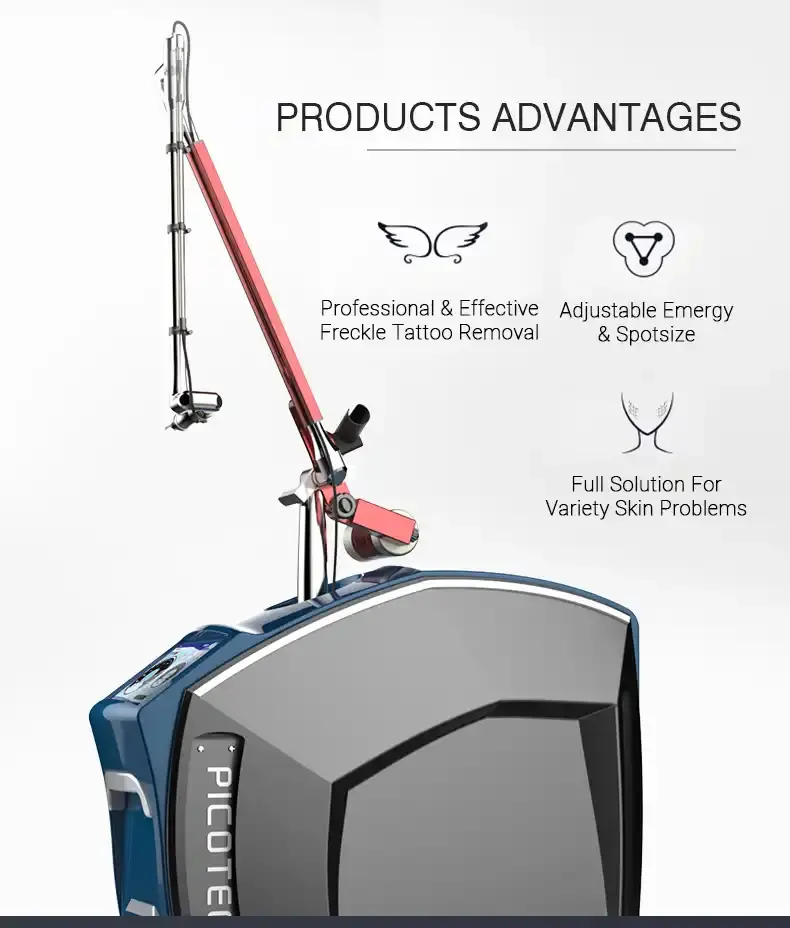
Collagen Stimulation Mechanism
In addition to addressing pigment, this 1064 q switched nd yag laser technology's real value for skin renewal lies in its ability to boost collagen. When nanosecond waves from the 1064 Q-switched Nd:YAG laser reach the dermal layer, they cause small, controlled damage that set off the body's natural process for treating wounds. Fibroblasts get busy making new collagen and elastin fibres following 1064 Q-switched Nd:YAG laser treatment. This makes the skin smoother, firmer, and more flexible over the next few weeks and months. The 1064 Q-switched Nd:YAG laser's dual effect—pigment clearance plus collagen induction—makes it a versatile tool for comprehensive facial rejuvenation protocols.
This biological chain reaction happens without damaging the skin's surface, so treatments are good for people who want to look younger without having to take time off. Selective photothermolysis creates a thermal gradient that heats the structures you want to target while leaving the surrounding tissues alone. This has fewer side effects than more forceful resurfacing methods.
Benefits and Applications of 1064 Q Switched Nd YAG Laser in Skin Treatment
Clinical Benefits for Skin Rejuvenation
Advantages for Rejuvenating the Skin: Nd:YAG lasers are useful for many things besides just getting rid of pigments. Clinics and medical spas like these tools because they can fix a number of skin problems at once. Treatments for skin renewal can even out your skin tone, get rid of wrinkles and fine lines, shrink your pores, and make your skin look healthier. People often say that their skin feels and looks smoother and more even after a series of treatments. Researchers have found that the photomechanical effect of Q-switched pulses is better at helping the skin change shape than ways that only use heat. This makes collagen grow faster, and it keeps growing for months after the process is over. This means the effects don't show up right away but get better over time. Although the patient needs to be properly educated on this delayed reward method, the results look natural and avoid the "overdone" look that can come with more invasive treatments.
Comprehensive Treatment Applications
This technology is useful for aesthetic practices because it can do the following treatments:
- Pigmentation Disorders: The 1064 Q-switched Nd:YAG laser can treat melasma, age spots, freckles, sun damage, and hyperpigmentation after inflammation very well. Darker skin types (Fitzpatrick IV–VI), which are more likely to be damaged by shorter wavelengths, can safely be penetrated by the 1064 nm wavelength. This treats deep dermal melanin deposits that chemical treatments can't reach.
- Tattoo Removal: The ability to use multiple wavelengths lets you get rid of different colours of ink. The 1064 nm wavelength works best on blue and black colours, while the 532 nm wavelength works best on red and orange pigments. Professional tattoos need more than one session, but the high energy output of up to 2000 mJ is enough to break up dense ink particles.
- Vascular Lesions: This isn't the main use of the device, but it can help treat some vascular problems, especially when used with the right wavelength settings and cooling routines.
- Carbon Peel Treatments: The 1064 Q-switched Nd:YAG laser can do carbon peeling procedures that deep-clean pores, reduce oiliness, and give you a brighter look right away. These procedures are popular with people who are getting ready for an event.
These different uses let centers get the most out of their equipment by using it for a wide range of services. This increases their return on investment while also meeting the needs of a wide range of patients. Because the system is so flexible, treatments can be changed to fit each person's skin issues, racial background, and level of tolerance.
Side Effects and Aftercare Protocols
Being honest about possible side effects of the 1064 q switched nd yag laser helps patients trust you and gives you permission to do what you're doing. Some common short-term responses to the 1064 Q-switched Nd:YAG laser are redness at the treatment site, light swelling, and small amounts of bleeding every once in a while. Topical anaesthetics put on 30 minutes before 1064 Q-switched Nd:YAG laser treatment help most people handle processes well. Some people, especially those with darker skin, get temporary discolouration that goes away in a few weeks. The 1064 Q-switched Nd:YAG laser's 1064 nm wavelength, on the other hand, greatly lowers this risk compared to shorter wavelengths. This safety advantage makes the 1064 Q-switched Nd:YAG laser the preferred choice for treating Fitzpatrick IV–VI skin types.
After treatment, you should put aloe vera gel on the area to soothe it and cover it with sterile gauze for 24 to 48 hours. During the mending process, patients must stay out of the sun and carefully apply broad-spectrum SPF 50+ sunscreen. As the broken pieces rise to the surface, crusting may form over pigmented areas. To avoid scars, patients should never pick at or scratch these areas. Because most people can go back to their normal routines right away, these methods are popular with people who are working.
Comparing 1064 Q Switched Nd YAG Laser with Alternative Technologies
Q-Switched vs. Picosecond Technology
The market for beauty lasers has a lot of different technologies, and each one is different in how it works. Procurement managers can choose technology that works for their business and patients better when they know these differences. More people are interested in picosecond lasers because they send out bursts that are even shorter than nanoseconds, lasting only 350 to 750 picoseconds. This should make breaking up pigments less painful. Ten64 Q-switched Nd:YAG lasers, on the other hand, are still very useful in clinical situations because they have been used before, are cheaper, and give similar results when used properly for most tasks. There are advanced tools in our system that you usually only find on more expensive platforms. As an example, the adaptive optics lattice makes sure that treatment areas get the same amount of energy. Along with making sure that healing energy hits all target areas evenly, this technical feature stops hot spots that could burn. This is very important for safe, consistent results.
Wavelength Comparison: 1064 nm vs. 532 nm
These tools let doctors do more because they can work with two or three wavelengths. Ink colours and heavier colouring are easy to get rid of with the 1064 nm range. It is also safer for skin that has a lot of melanin. Its longer wavelength can get to targets in the dermis without being absorbed too much on the surface because it goes around melanin in the epidermis. The 532 nm range, on the other hand, works well on skin pigmentation, red ink, and arterial ulcers because it takes haemoglobin very well. Most treatment plans use both bands one after the other. For example, 532 nm is used for problems on the surface and 1064 nm is used for problems deeper in the skin. This will help them get the best results and keep them safe. Because of this, you don't need as many single-wavelength devices, which saves money on both the equipment and the clinic room.
Fractional CO2 and IPL Alternatives
Different things happen when you use a fractional co2 laser. By carefully cutting skin, they make microscopic thermal zones that bring it back to the surface. There is a chance of getting an illness after a CO2 treatment, and the skin will be hot for a long time. However, the treatment is very good at fixing serious sun damage, lines, and scars. A lot of people like 1064 Q-switched Nd:YAG laser treatments because they are softer and take less time to heal from. This is still true if they need more than one meeting. Intense Pulsed Light (IPL) systems are not at all like laser systems because they use a wide range of light instead of just one colour. IPL can fix vascular and pigmentation spots on the skin's surface, but it's not as precise, doesn't go as deep, or has as much power as laser systems. When focused energy and certain wavelengths are needed, 1064 Q-switched Nd:YAG lasers are better at getting rid of tattoos, removing dark spots on the skin, and boosting collagen.
Procurement Insights for 1064 Q Switched Nd YAG Lasers
Evaluation Criteria for B2B Buyers
Choosing 1064 q switched nd yag laser equipment requires evaluating reliability beyond purchase price—downtime reduces revenue, angers patients, and erodes profits. Our systems use military-grade Q-switching with modular design for easier maintenance and fewer failures. Supplier reputation matters: Xi'an Taibo Laser Beauty's 15 years, 180-country reach, and full two-year warranty on parts (excluding human error) ensure ongoing support, spare parts availability, and rapid technical assistance, protecting your investment during critical early operation.
New vs. Refurbished Equipment Considerations
Refurbished 1064 Q-switched Nd:YAG lasers offer upfront savings but hidden costs emerge—flashlamps may need replacement soon after purchase (500k–2M shot lifespan). Older units lack modern safety features, software updates, and patient-expected protocols. New equipment includes full warranties, advanced cooling, self-diagnostics (30+ monitoring points), and modular designs, reducing operating costs and improving reliability despite higher initial investment.
Supplier Selection and Negotiation Strategy
Direct manufacturer relationships yield better pricing, faster support, and customization. Taibo Laser's OEM/ODM services enable branding and market differentiation. Volume buyers negotiate favorable terms—installation, extra training, parts discounts. Verify certifications directly (CE, ISO13485, FDA in progress). Assess after-sales infrastructure: 24/7 multilingual support ensures rapid problem resolution across time zones.
Maximizing ROI and Long-Term Benefits from 1064 Q Switched Nd YAG Laser Investments
Implementation Best Practices
Adopting technology well takes more than just buying the right tools. Standardising treatment protocols makes sure that the results are the same for all operators and types of patients. Clinical success starts with giving all staff members a lot of training on how to use devices, follow safety rules, choose patients, and set realistic goals. In our training programs, operators get detailed video lessons, written manuals, and live video consultations until they can show they are proficient.
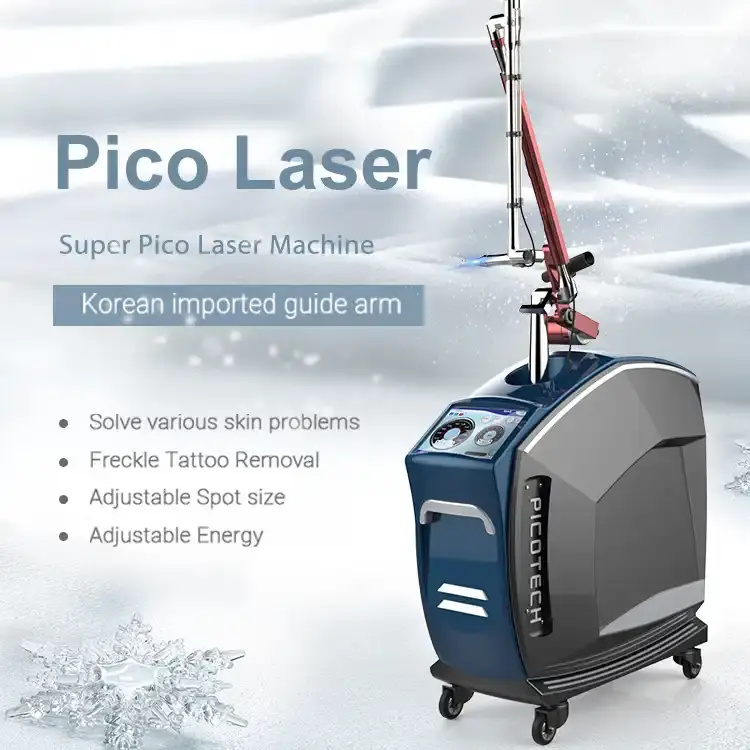
By advertising the new services, the capital input is successfully turned into income. Professional photos of the before and after effects of the treatment, patient reviews, and teaching material that explains the benefits of the treatment all draw in potential clients. A lot of practices give introductory deals or bundles of services to get people to try them out and make regular appointments. 1064 Q-switched Nd:YAG laser treatments have very little downtime, which is great for word-of-mouth marketing because happy patients tell their friends and coworkers about their experiences.
Maintenance and Service Agreements
Preventive maintenance keeps equipment running at its best and extends its life. For safety and effectiveness reasons, it is important to make sure that the energy output is correct on a regular basis. The optical parts, like the flexible arm and hollow mirrors, usually stay aligned well in good systems. However, they should be checked once a year to find any problems before they affect treatments. Our modular design makes it easy for techs to quickly change parts, which cuts down on downtime when service is needed.
Building a connection with the manufacturer's care team before problems happen is very helpful. Our after-sales staff keeps thorough records of all service visits, can identify many problems remotely, and keeps replacement parts in stock so they can be sent out quickly. Because extra parts are available for as long as the device works (usually 10 to 15 years for well-maintained systems), it doesn't become obsolete too soon and practices can get the most out of their initial investment.
Emerging Trends and Future Outlook
New developments in pulse delivery, cooling technology, and treatment methods are making the aesthetic laser business grow. New developments include better picosecond capabilities, treatment planning assisted by AI, and combination approaches that use multiple technologies together to get better results. Our research and development team keeps an eye on these trends all the time and keeps our clients competitive by regularly releasing new equipment and better designs.
Leaders in buying can make choices that look to the future when they understand these trajectory patterns. The current 1064 Q-switched Nd:YAG laser technology is still very useful and will meet clinical needs for many years to come. However, practices can plan for long-term growth by thinking about how to add new technologies or devices that work with the current ones. Because Nd:YAG laser systems work well and can be used in many different ways, they will still be useful even as new technologies come out. This is similar to how 1064 Q-switched Nd:YAG laser devices and picosecond platforms work well together in many high-performing clinics.
Conclusion
The 1064 q switched nd yag laser is still an important tool for modern aesthetic practices that want to treat pigmentation and rejuvenate the skin in a reliable and flexible way. A lot of people still use it even though newer technologies are coming out because it has a good track record, is safe for all skin types, and can boost collagen production. When purchasing managers look at laser systems, they should put reliability of the equipment, warranty coverage, and supplier support infrastructure at the top of their list, along with technical specifications. Immediate pigment reduction and gradual collagen remodelling make patients happy, which leads to practice growth and long-term equipment ROI.
FAQ
1. What distinguishes Q-switched technology from continuous-wave lasers?
1064 Q-switched Nd:YAG lasers store energy and send it out in very short, very intense bursts that are measured in nanoseconds. This creates photomechanical effects that break up pigment particles. Continuous-wave or long-pulsed lasers work mostly by heating up the tissues around them, which can damage them. The Q-switching process makes it safer to treat pigmented tumours on darker skin types while lowering the risk of hyperpigmentation after inflammation.
2. How many treatment sessions typically achieve desired results?
Treatment needs are different depending on what is being treated. Deep dermal melasma usually needs 6–10 treatments to go away, while freckles and other light spots on the skin may fade after 2–4 sessions. Professional tattoo removal usually takes 8 to 15 sessions, but this depends on the colour, depth, and density of the ink. Collagen stimulation for face rejuvenation shows gradual change over 4 to 6 monthly treatments, since the body keeps making new collagen in between sessions.
3. Can this laser safely treat all skin types?
The 1064 nm frequency is very safe for all Fitzpatrick skin types, even those with darker skin (types IV–VI), which is more dangerous with shorter wavelengths. Its longer wavelength goes around melanin in the epidermis to reach targets in the dermis without absorption on the surface being too high. But using the right method, using low energy levels during the first few treatments, and carefully checking out the patient are still important for getting the best results and avoiding problems.
Partner with Taibo Laser for Your Aesthetic Equipment Needs
With our certified 1064 Q-switched Nd:YAG laser systems, Taibo Laser Beauty is ready to help you grow your business. We are an experienced maker with our own plant and 15 years of experience making things. We offer reliable 1064 Q-switched Nd:YAG laser equipment with full two-year warranties and quick technical support. Our CE-certified and ISO 13485-compliant gadgets meet international quality standards and give your patients and your office the peace of mind they need.
Dermatology clinics, medical spas and distributors of aesthetic equipment from all over the US are welcome to look at our full line of products and talk to us about custom solutions that meet your needs. Our team offers personalised advice, competitive prices, and a variety of payment options, whether you need a single unit or want to work with a reliable 1064 q switched nd yag laser supplier on a regular basis. Email susan@taibobeauty.com right away to get more information about the product, set up a presentation, or talk about price for multiple units. Picking the right technology partner is the first step to giving your patients the best care possible.
References
1. Anderson, R.R., & Parrish, J.A. (2983). Selective photothermolysis: precise microsurgery by selective absorption of pulsed radiation. Science, 220(4596), 524-527.
2. Chan, H.H., Lam, L.K., Wong, D.S., Kono, T., & Trendell-Smith, N. (2004). Use of 1064 nm Q-switched Nd:YAG laser for benign pigmented lesions in Asians. Lasers in Surgery and Medicine, 34(2), 179-183.
3. Goldberg, D.J. (2012). Laser Dermatology: Pearls and Problems. Blackwell Publishing Ltd.
4. Herd, R.M., Dover, J.S., & Arndt, K.A. (1997). Basic laser principles. Dermatologic Clinics, 15(3), 355-372.
5. Kilmer, S.L., & Anderson, R.R. (1993). Clinical use of the Q-switched ruby and the Q-switched Nd:YAG lasers for treatment of tattoos. Journal of Dermatologic Surgery and Oncology, 19(4), 330-338.
6. Wang, C.C., Sue, Y.M., Yang, C.H., & Chen, C.K. (2006). A comparison of Q-switched alexandrite laser and intense pulsed light for the treatment of freckles and lentigines in Asian persons: a randomized, physician-blinded, split-face comparative trial. Journal of the American Academy of Dermatology, 54(5), 804-810.





YOU MAY LIKE