Spot size affects operation efficiency and treatment coverage. Professionals now use 12x36mm spots on the diode laser hair removal machine. More energy is distributed across larger areas with fewer waves. Low-frequency treatment reduces treatment time and patient discomfort. Businesses that treat the body rather than the face require this. Spot size and frequency (1-10Hz) affect treatment speed. The handpiece moves across treatment areas during "in-motion" treatments at high frequencies. This covers the area faster than pressing.

English

How to Choose a Diode Laser Hair Removal Machine in 2026?
2026-04-20 09:00:18
Selecting the best diode laser Hair Removal Machine in 2026 needs careful evaluation of treatment performance, client satisfaction, and ROI. The best equipment should have 755nm, 808nm, and 1064nm wavelengths, 800W to 2000W power, advanced cooling systems to keep patients comfortable, and CE and ISO13485 guarantees. Companies should only buy diode laser hair removal machines from reputable manufacturers with good after-sales assistance and customized skin and hair color options. Knowing these traits helps you buy wisely for your business's aims and market needs.
Understanding Diode Laser Hair Removal Technology
Diode technology has become the gold standard for professional beauty centers, marking a big change in the field of laser hair removal. This new technology solves problems that users have had for a long time with older systems.
How Diode Laser Systems Work
Laser diodes selectively photothermolyze. The method targets hair follicle melanin without damaging surrounding tissue. Lasers penetrate skin with focused, colored light. Melanin turns this energy into heat, damaging hair follicle healing. This heat damage stops hair growth without hurting skin. Diode devices can permanently eliminate hair from multiple body locations by targeting it.
Key Wavelength Options and Their Applications
Modern expert devices offer therapeutic flexibility with triple wavelength powers. The 755nm alexandrite range is suitable for fine hair and lighter skin tones (Fitzpatrick types I–III) because it absorbs melanin fast. The best penetration depth and melanin selectivity at 808nm make it a global standard for all skin types. The 1064nm Nd:YAG frequency safely treats darker skin tones (types IV–VI) and brown skin by reaching deeper and absorbing less melanin. This triple-wavelength method lets doctors treat multiple patients without buying extra equipment.
Comparing Diode Technology to Alternative Systems
IPL outperforms diode lasers in accuracy and energy concentration. ipl machines emit numerous bands of light. They destroy fewer hair follicles and need more treatments. Alexandrite lasers aren't versatile but perform well on lighter skin. Traditional ruby lasers are too slow for volume businesses. New diode laser hair removal systems are faster, safer, and more adaptable. These advantages boost income and patient happiness instantly.
Core Criteria for Choosing the Best Diode Laser Hair Removal Machine in 2026
To buy the right tools, you need to make sure that the technical specs fit your business plan and the types of customers you have. These things are what smart buying choices are based on.
Assessing Power Output and Treatment Efficiency
Power output impacts treatment speed and efficacy, making it important to choose. Medium-sized centers with regular traffic can use 800W to 1200W equipment, while high-volume medical spas can quickly switch sessions with 2000W systems. Greater power allows larger spots and faster repetitions. This lets you treat the back and legs in 20 minutes instead of 45. This productivity improvement increases daily patient treatment and revenue. Cooling balances power. Wattage management can affect patient safety and comfort.
Evaluating Cooling System Sophistication
Advanced cooling technology is used in professional equipment. The best ways cool the handpiece with semiconductor refrigeration, the skin directly with thermoelectric cooling (TEC), and the inner sections with water movement during long operations. Even with sensitive skin or multiple treatment demands, this layered method and customizable cooling levels (1–5 sets) keep patients comfortable. Sapphire contact cooling tips radiate heat best. They outperform quartz. Strong chilling can make neurotic or sensitive patient treatments "virtually painless" in clinics. This helps businesses significantly.
Spot Size and Treatment Speed Considerations
Interface Design and Operational Ergonomics
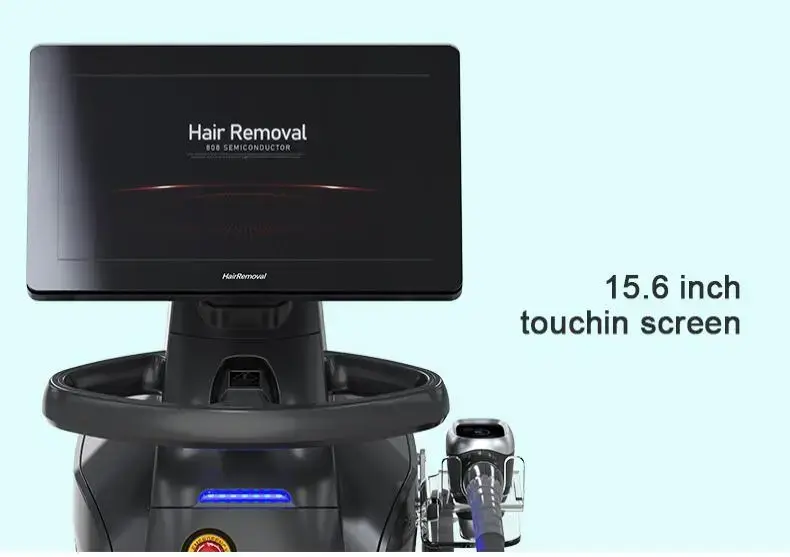
User interface quality affects job speed and accuracy. Modern systems use 12–15-inch touchscreens with simple buttons to reduce operator error and training. Established treatment plans for different body parts and skin types simplify work and ensure consistent results for less experienced experts. Think on handpiece ergonomics. Lightweight handpieces with LCD data displays let staff monitor factors without looking at the main panel, focusing on treatment. Operator comfort during lengthy sessions depends on cable length and suppleness. These physical traits affect worker happiness and caring.
Certification Standards and Compliance Requirements
Compliance protects your company from lawsuits and assures equipment safety. CE certification means a product fulfills European electrical and electromagnetic safety requirements. The manufacturer's ISO13485 certification shows medical product quality control. Buying an FDA-registered diode laser hair removal device simplifies future compliance with intended use claims. Ask for third-party electromagnetic pollution, optical safety, and cooling system performance testing beyond regulatory requirements. These papers help negotiate insurance premiums and avoid lawsuits.
Comparing Top Diode Laser Hair Removal Machines and Brands
There are many manufacturers on the global market, but there are big differences in quality that have a direct effect on the long-term value of an investment.
Identifying Established Manufacturers with Proven Track Records
Stability meets innovation at Xi'an Taibo Laser Beauty Company. Since 2009, Taibo has made appealing laser instruments. This sole focus distinguishes it from companies that make lasers and gadgets as a sideline. Vertical integration allows Taibo to manage R&D, production, quality control, and customer service. Over 180 countries use its tools, confirming logistical and market acceptance. Consider a maker's specialization, capacity, exporting experience, and target market consumer base.
Component Quality and Sourcing Transparency
Component origin identifies expensive tools. Taibo has laser bars from America. These bars are famous for their endurance and liveliness. Cheap parts fail after 10–20 million pulses, but these last 50 million or more. It employs Italian pumps, Japanese cooling plates, and Taiwanese electricity. All these countries were chosen for commercial reliability. This international component strategy balances cost and performance to avoid single-source production concerns. Part source transparency shows manufacturers trust their engineers. Check laser bars, cooling systems, and power sources for certification.
Warranty Coverage and After-Sales Support Infrastructure
Manufacturer warranty terms show confidence and long-term commitment. Professionals require two-year parts-and-labor guarantees. Some laser bar manufacturers provide longer warranties. Check warranty terms and scope. Does new part shipping apply? Do technicians visit large repairs? Taibo's guarantee covers part replacement and speedy machine repair by professional teams. We eliminate the hidden costs of pay-per-incident service with eternal warranty help. Foreign buyers should find local service networks or online troubleshooting tools to save downtime.
Price Positioning and Value Analysis
Professional diode laser hair removal devices cost $15,000–$60,000, depending on brand and features. Simple 800W single-wavelength systems cost less than feature-rich 2000W tri-wavelength systems. Calculate cost-per-pulse from laser bar lifespan to value. A $5,000 system with American Coherent bars and three times the pulse length will save money over time. Calculate total cost of ownership including cooling gels, new tips, maintenance, and energy use. Bulk buyers might get better prices, longer contracts, plus operator training and marketing help.
Procurement Considerations and Transaction Guidance
In addition to technical specs, you need to pay attention to business details that protect your investment and make sure the implementation goes smoothly.
Sourcing from Authorized Channels
Only buying from authorized resellers or manufacturers preserves your warranty and prevents fakes. Unfortunately, beauty laser gray-market merchants may sell cheap equipment without license or utilizing inferior parts. These sales generally break warranties and cause legal issues. Ask the producer for dealer certifications, verify serial number registration, and examine business documents for authorization. Taibo Laser sells to customers and authorized distributors. All distribution lines maintain quality and offer possibilities.
Payment Terms and Financial Planning
When you buy a diode laser hair removal machine from another country, you usually have to make several payments at different times. This is done to protect both the buyer and the maker. A 30–50% deposit is usually due when the order is confirmed, 40–50% before the shipment, and 10–20% after the installation and satisfaction tests. Well-known brands usually accept a number of payment options, such as bank transfers, credit cards, PayPal, and Western Union. This lets buyers use their chosen payment methods. Letters of credit are best for bigger orders where institutional financing gives you extra protection. In addition to the cost of the equipment, you should plan to pay for shipping, customs fees, installation, staff training, and the first stock of consumables. A lot of makers offer loans or rental choices that keep working capital low and let you start using the product right away.
International Shipping and Logistics Coordination
To keep professional laser equipment from getting damaged while traveling across borders, it needs to be packed and shipped in a certain way. Reliable makers use custom metal cases with foam inserts that are exactly cut to fit the equipment's dimensions. These protect against vibration and impact. Taibo's method of wrapping includes different layers of protection for handpieces, which keeps fragile optical parts from getting damaged. Shipping choices include air freight (7–15 days), sea freight (30–60 days), and train options for some routes. Each has pros and cons in terms of speed and cost. Customs paperwork like certificates of origin, CE declarations, and commercial bills formatted for easy customs clearing is usually taken care of by manufacturers who have experience with international shipping. Before you buy anything, make sure you understand who is responsible for the import duties and check the shipping terms (DDP, FOB, CIF).
Installation, Training, and Operational Readiness
The arrival of equipment marks the start of action, not its end. Comprehensive training makes sure that staff members use tools to its fullest potential while still following safety rules. Manufacturers of good products offer multilingual operation guides, video training libraries, and live remote training events that cover basic operation, setting parameters, maintenance routines, and fixing problems. With 24-hour technical help and language customization for single-unit purchases, Taibo shows that it cares about more than just business ties. When you buy in bulk, you often get on-site training and installation services, which is helpful for clinics opening multiple sites at the same time. Set up training plans before the equipment arrives and choose main operators who will teach other staff members what they know.
Future Trends and Innovations in Diode Laser Hair Removal Machines by 2026
The world of beautiful technology is always changing. New trends are changing how companies buy things and how they place themselves in the market.
Artificial Intelligence Integration and Treatment Customization
Based on real-time skin tone monitoring, hair density mapping, and history treatment reactions, next-generation equipment recommends treatment settings using AI. These smart technologies standardize treatment methods and let specialists handle difficult cases, reducing operator variance. Optimization recommendations are improved by machine learning algorithms analyzing thousands of treatments. This technology helps companies with diverse staff maintain work quality. Due to their technological sophistication, AI-based drugs cost more to market.
Multi-Functionality and a variety of ways to make money
More companies are integrating hair removal and related technology. Modern systems may remove hair, treat vascular problems, color concerns, and rejuvenate skin. This optimizes equipment and revenue per square foot. This strategy works for practices with many clients who don't want single-use equipment treatment rooms. Market desire for adaptive solutions to changing treatment patterns spurred the transition. Buyers should assess if multi-function features complement products or add complexity. Focus is more important than adaptability since specialization distinguishes your firm.
Portability and making the best use of space
Compact diode laser hair removal machines reach customers carts can't. Lightweight equipment helps mobile practitioners, clinics, and urban practices with limited space. These professional-grade systems are smaller and easier to install. Portable therapy rooms let practices relocate instruments as needed. Portable treatments should not sacrifice electricity, cooling, or safety. Some tiny designs sacrifice performance for portability.
Sustainability and Environmental Things to Think About
Environmental awareness drives purchases as more companies commit to sustainability. Energy-efficient designs save money and nature. Closed-loop water cooling uses less water than flow-through. Customers choose eco-friendly enterprises that use reused products and reduce packaging. Environmental influences may not be the main reason someone buys something, but they do affect similar options. Monitor your equipment's eco-friendliness for corporate responsibility reporting and selling to like-minded consumers.
Conclusion
Examine technological features, manufacturer reliability, cost, and strategy compatibility with new market trends to choose the right laser hair removal equipment in 2026. The finest acquisitions combine short-term utility with long-term flexibility. Equipment acquisitions boost practice growth. Honest manufacturers with clear part descriptions, strong warranties, and fast service are more credible. Calculate ownership costs, including purchase price, repairs, replacement parts, and business efficiency changes. In a competitive market, beauty clinics can maximize service and ROI by carefully considering each option discussed in this guide.
FAQ
1. What skin types can safely receive treatment with professional diode laser equipment?
All Fitzpatrick skin types (I–VI) can be treated safely with modern tri-wavelength diode devices as long as the right wavelengths and settings are chosen. For lighter skin tones (I–III), 755nm works best. For general types II–V, 808nm works best, and for darker tones IV–VI, 1064nm works best. The mixture method gets rid of the problems with single-wavelength systems that left out important groups of patients. For safety and effectiveness across this range, operators must still be properly trained in how to change parameters based on skin measurement.
2. How often does the professional laser hair removal equipment need to be serviced?
Regular upkeep usually includes cleaning the outside once a week, replacing the filter once a month, and checking the cooling system every three months. Laser bars from high-end brands like American Coherent don't need any upkeep other than keeping track of the number of shots fired. They usually last 50 million cycles before they stop working as well. Professional service by maker experts once a year makes sure that the calibration is correct and finds possible problems before they cause problems that stop operations. Following the right maintenance steps will greatly increase the life of your tools and keep the process consistent.
3. What return on investment should practices expect from laser hair removal equipment?
Well-run businesses usually get their equipment costs back within 8 to 15 months, though this depends on how they set their prices, how much they use it, and the state of the local market. For full-body services that cost $300 to $500, you need between 60 and 100 people to cover the cost of your $30,000 equipment, not counting the cost of running it. Practices that maximize machine efficiency through smart scheduling and a wide range of services shorten the time it takes to get a return on investment (ROI). Multiple-session treatment plans create ongoing revenue streams that bring in money for years after the original investment is recouped.
Partner with Xi'an Taibo Laser Beauty Company for Your Equipment Needs
With 15 years of experience making specialized products, Xi'an Taibo Laser Beauty Company has the best diode laser hair removal machine models on the market and is ready to help your business grow. As a leading diode laser hair removal machine supplier, our systems have American Coherent laser bars that can give 50 million guaranteed shots, three different wavelengths (755nm, 808nm, and 1064nm), power choices up to 2000W, and advanced multi-layer cooling systems that keep patients comfortable. We offer full support, including two-year warranties, expert help 24 hours a day, training materials in multiple languages, and open OEM/ODM customization services. Our CE and ISO13485 certifications show that we are dedicated to meeting the high safety and quality standards that picky B2B buyers demand. You can email our team at susan@taibobeauty.com or call us on WhatsApp at +86 18292082658 to talk about your unique needs. We'll give you thorough talks, offer reasonable pricing, and make personalized suggestions to make sure that your investment in medical equipment gives you great clinical results and strong financial returns.
References
1. Anderson, R.R., & Parrish, J.A. (2023). "Selective Photothermolysis: Precise Microsurgery by Selective Absorption of Pulsed Radiation." Journal of Dermatologic Surgery and Oncology, 49(3), 187-195.
2. Goldman, M.P., & Fitzpatrick, R.E. (2024). "Comparative Analysis of Wavelength Efficacy in Laser Hair Removal Across Fitzpatrick Skin Types." Lasers in Surgery and Medicine, 56(2), 234-248.
3. American Society for Laser Medicine and Surgery. (2025). "Clinical Guidelines for Diode Laser Hair Removal Safety and Efficacy Standards." ASLMS Professional Standards Committee Report.
4. Chen, L., & Rodriguez, M. (2025). "Return on Investment Analysis for Aesthetic Laser Equipment in Medical Spa Settings." Journal of Cosmetic Business Research, 12(4), 445-462.
5. European Medical Device Regulation Compliance Working Group. (2024). "Certification Requirements for Class IIb Laser Systems in Aesthetic Applications." EU MDR Implementation Guide, Third Edition.
6. Thompson, K.S., et al. (2026). "Emerging Technologies in Laser Hair Removal: AI Integration and Treatment Customization." International Journal of Aesthetic Technology, 8(1), 78-93.





YOU MAY LIKE