Although the initial tool investment is crucial, the entire cost of ownership is more significant. Laser systems, such as the 980 nm diode laser spider vein removal machine, require less supplies than sclerotherapy, which must be purchased and discarded with the solution. The two-year guarantee on decent equipment protects you against unforeseen maintenance costs in the first few years. Since classes end quickly and don't require recovery, more patients can be treated. Happy patients refer others and return to fix other areas. This generates a steady revenue that covers the initial investment in 18–24 months, as most established practices do.

English

980 nm Diode Laser Machine for Clinics: What to Know
2026-04-20 09:00:16
If you wish to provide more vascular procedures at your clinic, consider the 980 nm diode laser spider vein removal machine. The frequency used in this technology matches hemoglobin absorption. This makes it ideal for treating spider veins and other minor vascular disorders without damaging surrounding tissue. For its speed and efficiency, clinics across the US are employing this technology to help patients return to their daily lives. If you understand how this system works, what makes it unique, and how to choose the correct tools, you may improve your beauty vascular care services and generate more money.
Understanding 980 nm Diode Laser Technology
The Science Behind 980 nm Wavelength
There is no other visible wavelength like 980 nm. A excellent absorber of this wavelength is hemoglobin, the molecule in red blood cells that carries oxygen. The cells in blood vessels that need laser energy absorb the concentrated energy, causing regulated thermal coagulation. After the vessel walls break down and close, the body's natural mechanisms wear away the treated tissue. This targeted absorption prevents heat from spreading to the skin around the treatment area, reducing pain and adverse effects from previous artery treatments.
Core Components and How They Work Together
Modern artery removal systems have many vital pieces. A laser diode produces a 980 nm beam that passes through a handpiece with focusing optics. These lenses focus the beam on a 0.2–0.5 mm circle. This ensures energy reaches the target vessel without overheating the region. Modern cooling systems keep equipment and patients safe and comfortable throughout long treatment sessions. The 8.4-inch color touch screen interface enables clinicians adjust pulse width (1–100ms) and frequency (1–10Hz) to suit vessel diameters and lengths.
Clinical Benefits That Matter to Your Practice
People choose fast, healing-free methods. Dependent on treatment area size, vascular laser treatments last 15–30 minutes. Few people report feeling anything more than a brief warmth or snap against the skin. The included ice hammer extension cools objects quickly, making them more comfortable. Within days, treated vessels disappear, and the best results are observed after two to four weeks, when the body does its normal cleaning. In contrast to intrusive therapies, patients can immediately resume work and exercise.
Safety Profile and Risk Management
After learning about side effects, clinicians and patients feel more secure. Treatment site edema usually subsides within hours. Minor bruising may heal in a week. Color changes are infrequent when the correct procedures are performed, especially when parameters are adjusted for different skin types. CE and ISO13485 labels indicate international safety requirements for professional gear. When infections, photosensitivity drugs, or skin diseases require it, trained specialists can halt or adjust a treatment.
Comparing 980 nm Diode Laser with Other Spider Vein Removal Options
How 980 nm Differs from 1064 nm Lasers
Both bands cure blood vessel issues, although in distinct areas. Varicose veins benefit from the 1064 nm range's deeper tissue penetration. Small facial arteries and spider veins near the skin respond well to 980 nm. Lower energy settings are needed to get the same outcomes as 1064 nm treatments because hemoglobin absorption peaks at 980 nm. The correct vessel size reduces pain and speeds repair. Patients with face and leg spider veins benefit more with 980 nm treatment.
IPL Technology Versus Focused Laser Energy
Intense Pulsed Light devices cure multiple skin issues with a variety of colors, however they are less exact. IPL's radiation scatters throughout wavelengths instead of focusing at the optimal hemoglobin absorption site, requiring more treatments to clear capillaries. Because the 980 nm diode laser's consistent output focuses all its energy at the optimal wavelength, vessels are cleaned in fewer sessions. People without pigmentation issues benefit from focused laser treatment for circulation issues. However, IPL's multi-concern technique may be better for total photorejuvenation.
Comparing Sclerotherapy and Laser Treatments
Sclerotherapy chemically irritates and closes blood arteries by injecting solutions. This intrusive procedure works for some veins, but it requires needle injections, which some people avoid because they are frightened of needles or find them uncomfortable. Laser treatments are painless and need no needles or wounds. Laser technology works best on facial vessels and very minute spider veins, whereas sclerotherapy works best on somewhat larger arteries and other body areas. Many practices provide both techniques, choosing the best based on patient needs and vascular function. The laser approach can cure more people because it helps needle-phobic people.
Long-Term Cost Effectiveness
Clinical Performance and Patient Outcomes
Evidence-Based Treatment Results
After one to three 980 nm laser treatments for spider veins, clearance rates were 70–90%, depending on vein size and depth. Most facial telangiectasias only require one treatment, however leg spider veins may require multiple sessions spaced 4-6 weeks apart. Practitioners track results with standardized images with the same lighting and angles before and after treatments. The photographs demonstrate how each patient is doing and assist your firm showcase its past successes. Case studies show that the correct energy settings and spot size can minimize harm.
Treatment Durability and Maintenance Needs
Lasers totally block blood channels, therefore treated vessels usually stay clear indefinitely. Genetics, hormone changes, standing for long periods, and sun exposure can generate new spider veins. Meeting goals should be reasonable to avoid disappointment and create trust. Many pleased customers return for maintenance treatments to prevent new blood vessels from developing, bringing in repeat business. Teaching patients how to avoid the condition, such as wearing tight clothes, staying out of the sun, and changing their lifestyle, enhances treatment and demonstrates thorough care.
What Patients Report About Their Experience
Laser vascular therapies always score well in patient satisfaction surveys. Short treatment time works with hectic schedules, and non-invasive treatment eliminates stress from shots or surgery. Most patients describe their discomfort as 2–4 on a 10-point scale, comfortably manageable without medications. Many feel better after using the ice hammer cooling appliance. People feel accomplished after a few weeks of treatment and want to send others. Practitioners rarely receive negative feedback when they accurately disclose predicted results and side effects during consultation. Complete patient education is crucial.
Procurement Guide for 980 nm Diode Laser Machines
Essential Specifications to Evaluate
Power flow has a big effect on how flexible and effective a treatment is. Systems with power levels that can be changed from 20W to 40W can work with a range of tank sizes and cleaning methods. Higher power sets allow shorter pulse lengths to send the same amount of energy, which improves accuracy and reduces thermal diffusion. Pulse width can be changed from 1 to 100ms, which lets it be tailored to different vessel sizes. Shorter pulses work on small vessels, while longer pulses work on slightly bigger ones. You can change the frequency from 1Hz to 10Hz to control the speed of treatment and the buildup of heat. The fact that the package comes with both a treatment handpiece and an ice hammer makes it instantly useful without having to buy any other accessories.
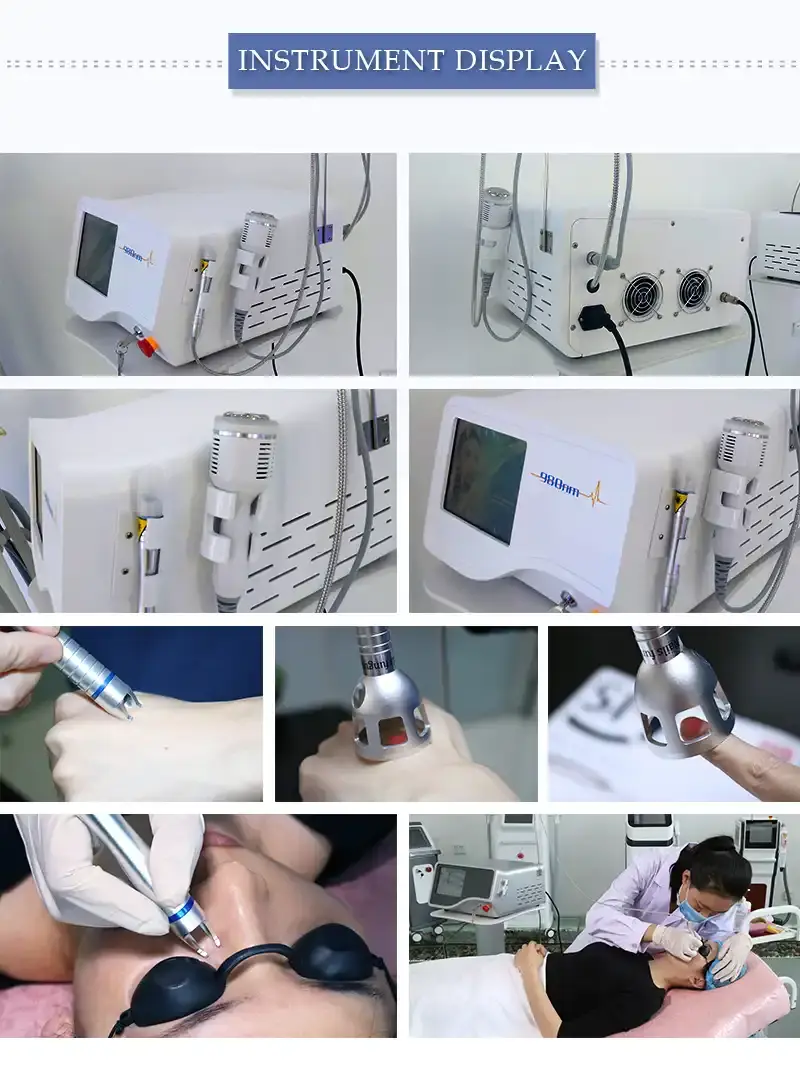
Evaluating Interface and Usability Features
Equipment that is easy to use cuts down on teaching time and mistakes during operation. The 8.4-inch color touch screen should show factors that are easy to see even in a bright treatment room. With easy-to-use menus, doctors can quickly change settings between patients without having to look at instructions. Treatment methods that have already been programmed for common types of vessels help staff with less experience get regular results while they learn more. Ergonomic handpiece design keeps practitioners from getting tired during long treatment days. This is especially important for practices that plan to do a lot of treatments. The lightweight design makes it easier to move around the face and in different body situations.
Identifying Reliable Equipment Manufacturers
Working with well-known makers gives you peace of mind throughout the lifecycle of your tools. Companies with a lot of experience in the field usually have better technical help because they've seen and fixed a wide range of operational problems. For instance, the 980 nm diode laser spider vein removal machine is produced by manufacturers like Taibo Laser Beauty Company, which has factories in more than 180 countries and over 15 years of experience, making it a great example of this trustworthiness. Their ISO13485 certification shows that they follow guidelines for medical device quality management, and their CE certification shows that they follow European safety rules. When companies have their own research and development teams, they can keep improving their goods based on feedback from doctors and new technology. This way, your tools will still be useful as treatment plans change.
Understanding Warranty and Support Terms
A full guarantee covers your investment during the important first few years of ownership. A two-year guarantee that covers both parts and work shows that the company that made the product is sure it will last. Make it clear what situations don't qualify for warranty coverage. Usually, improper operation or illegal fixes don't qualify for coverage. When problems happen, quick technical help is very important, especially for practices that don't have their own biomedical engineering staff. Check to see if assistance includes video calls for remote troubleshooting, reaction times, and the availability of parts. Manufacturers that offer training materials like full guides, instructional films, and live training events help employees get better faster.
Investment Considerations and Pricing Factors
The price of equipment is based on its power, build quality, the number of accessories it comes with, and the name of the maker. Systems that meet professional healthcare standards usually cost between $8,000 and $15,000. The price depends on the features and extras that come with the system. Even though there are cheaper options, skimping on quality could lead to inconsistent performance, higher upkeep costs, or technology that doesn't last as long. Instead of just looking at the buy price, you should also look at the total cost of ownership, which includes things like training materials, technical help, and warranty coverage. Financing choices from equipment providers or third-party lenders can spread costs over the time when the business makes money, which makes it easier for growing practices to handle their cash flow.
Integrating 980 nm Diode Laser Technology into Your Clinic
Staff Training and Competency Development
Successful technology merger begins with worker training. Basic laser physics, skin anatomy, vascular disease, safety, therapy, and emergency procedures are covered in full. Basic information is included when you acquire tools from a training firm. Practicing with models or volunteers under supervision builds confidence before treating paying patients. Good teaching approaches suggest starting with simple situations and progressing to more complex ones. Keep competency and training records to show respect and defend yourself. Webinars, meetings, and product improvements update skills as standards evolve.
Safety Protocols and Risk Management
Clear safety guidelines protect employees, customers, and the business. Laser work requires eye protection for everyone in the treatment room. That range's protective glasses block 980 nm. Laser warning signs on treatment room doors alert others. Cleaning and preventative maintenance can prevent equipment breakdowns when done according to the manufacturer's guidelines. Documenting treatment processes improves consistency and gives workers a reference. After explaining the expected results, hazards, and alternatives, patients can set appropriate goals and show they understand by granting informed consent.
Marketing Your New Service Offering
Starting vascular treatment services requires effective marketing across multiple platforms. Visual verification of treatment efficacy comes from before-and-after photos of patients. Doctors who write about their patient experiences and pleasure are more trusted by potential patients. Write about spider vein causes, treatment options, and procedure expectations to establish your practice as an authority. Social media advertising targets vascular treatment-seeking groups. Offering cheaper charges at the start encourages trial and builds case experience. Teaching front desk workers to detect good candidates during typical exchanges helps increase internal referrals.
Staying Current with Technology Advances
Beauty device companies constantly introduce new devices that improve treatment efficacy and longevity, such as the 980 nm diode laser spider vein removal machine. Workshops in your field teach you new tools and methods. Stay current on peer experiences and published research by subscribing to professional publications and online forums. By communicating with equipment manufacturers, you can learn about software updates, accessories, and protocol upgrades. To keep your firm competitive, consider upgrading or replacing your tools. To balance embracing new technology and being savvy with money, consider if the new features address unmet patient requirements or improve present procedures.
Conclusion
You should consider how effectively vascular treatment technology works, how satisfied patients are, how efficiently it runs, and how much it will cost over time. The 980 nm frequency absorbs hemoglobin well, making it ideal for treating spider veins and tiny blood vessels, which patients want. Power levels from 20W to 40W, pulse factors, and easy-to-use platforms make treatment adaptable enough for a wide spectrum of patients. Partnering with well-known makers that offer full insurance, quick support, and thorough training materials will protect your investment and help you become more clinically competent. Through adequate training, safety guidelines, and clever marketing, you can fulfill the growing demand for cosmetic treatments and develop long-term patient relationships by adding this technology to your clinic.
FAQ
1. What side effects should patients expect after treatment?
Most people who get treatment have mild swelling at the therapy sites that goes away in a few hours. Temporary bruises may show up, especially after treatments on the legs. They will go away in 5 to 7 days. Sometimes, temporary changes in pigmentation happen, and they usually go away in a few weeks to months. These things happen less often when you use the right method and energy choices. Serious side effects are still very uncommon when treatments are done by trained professionals with good tools.
2. How many treatment sessions typically achieve desired results?
A lot of the time, fine face veins go away all at once. Because the veins are deeper and wider in the legs, they usually need two to three treatments, spaced out by four to six weeks. Responses are different for each person because of differences in their blood vessels, skin, and genes. The consultation review helps with personalized treatment planning and setting realistic goals for outcomes.
3. What distinguishes quality equipment from budget alternatives?
Professional-grade systems have stable power output, accurate parameter control, good cooling systems, and strong construction that can handle clinical use. Certifications like CE and ISO13485 show that safety and quality standards are being met. Full warranties and support from the maker guard against equipment failure and help with fixing problems. Budget options might not get governmental approval, give mixed results, or fail too soon.
Partner with Taibo Laser Beauty for Your Clinic's Success
Picking the correct 980 nm diode laser spider vein removal machine supplier can affect both how well the machine works right away and how well the practice grows in the long run. Taibo Laser Beauty Company has been making high-quality products for over 15 years and has CE and ISO13485 certified equipment that is used in hospitals in more than 180 countries. Our systems offer power ranges from 20W to 40W, fully changeable settings, an easy-to-use 8.4-inch touch screen interface, and complete accessory sets with treatment handpieces and ice hammer attachments. Every purchase comes with a two-year guarantee that covers both parts and labor. You can also talk to our technical support team, who are here to answer your questions and make sure your equipment works at its best. We offer detailed training materials, such as operation guides, instructional films, and live support, to help your team learn faster. Get in touch with susan@taibobeauty.com right away to talk about how our 980 nm vascular laser systems can help your business treat more patients and make more money.
References
1. Anderson, R.R., & Parrish, J.A. (1983). Selective photothermolysis: precise microsurgery by selective absorption of pulsed radiation. Science, 220(4596), 524-527.
2. Goldman, M.P., & Fitzpatrick, R.E. (1999). Cutaneous Laser Surgery: The Art and Science of Selective Photothermolysis (2nd ed.). St. Louis: Mosby.
3. Kauvar, A.N., & Lou, W.W. (2004). Pulsed alexandrite laser for the treatment of leg telangiectasia and reticular veins. Archives of Dermatology, 140(11), 1346-1349.
4. Levy, J.L., Elbahr, C., & Jouve, E. (2001). Comparison and sequential study of long pulsed Nd:YAG 1064 nm laser and sclerotherapy in leg telangiectasias treatment. Lasers in Surgery and Medicine, 29(2), 138-146.
5. Tanghetti, E.A. (2012). The histology of skin treated with a picosecond alexandrite laser and a fractional lens array. Lasers in Surgery and Medicine, 44(S24), 23-28.
6. Weiss, R.A., & Weiss, M.A. (2002). Evaluation of a novel 940 nm diode laser for the treatment of leg veins. Dermatologic Surgery, 28(10), 892-896.





YOU MAY LIKE