
How does a 9d Hifu Machine heat the tissue?
2026-06-26 09:03:00
Ultrasound waves of high strength that are directed at specific depths below the skin's surface heat up tissue in the 9D HIFU Machine. In contrast to traditional methods, this cutting-edge technology uses ultrasonic waves that go through the skin without hurting the surface and reach specific tissue layers 1.5 mm to 13 mm below. When ultrasound energy gets to the focus point, it quickly shakes molecules in the tissue, creating controlled heat between 65°C and 75°C. This exact heating sets off thermal coagulation points right away and also speeds up the body's natural mending process, which in turn speeds up the production of collagen and the reshaping of tissues over the next few weeks.
Understanding 9D HIFU Technology and Its Tissue Heating Mechanism
Focused ultrasound technology is at the heart of modern non-invasive aesthetic medicine. The 9D HIFU Machine uses up to 12 simultaneous treatment lines, forming a grid of thermal coagulation points. Unlike traditional single-line HIFU requiring manual application, the 9D system uses a stepper motor and multiple transducer cylinders for simultaneous energy delivery over larger areas. Acoustic absorption converts sound to heat at focal zones, creating precise thermal coagulation points without affecting surrounding tissue. Unlike RF or laser, focused ultrasound passes harmlessly through the epidermis, only generating heat at the specified cartridge depth.
Multi-Dimensional Energy Delivery System
Piezoelectric ceramic elements in each cylinder convert electrical signals to ultrasonic waves at 2–7MHz. Contact sensors ensure proper skin connection before energy delivery. The stepper motor moves the sensor across treatment areas in 1–2mm steps. Modern systems make rows of parallel coagulation points instead of single points per pulse, ensuring even energy distribution across the entire treatment zone.
Thermal Coagulation and Collagen Response
When the temperature is managed, it makes what doctors call "thermal coagulation points." These are tiny areas of controlled tissue damage that are about 1 mm across. Research has shown that these points form at temperatures between 65℃ and 75℃, which is the best range for activating fibroblasts without causing too much death or inflammation. These managed temperature zones tell the body to start the healing process, which takes 8 to 12 weeks and includes increasing collagen production and reorganizing the extracellular matrix.
Scientific Principles Behind 9D HIFU Tissue Heating
To understand the science of focused ultrasound, you need to look at how sound waves behave when they pass through living things. Ultrasound uses frequencies that are too high for humans to hear, typically recorded in megahertz (MHz). Both penetration depth and focus accuracy are directly affected by the frequency choice. Lower frequencies (2–3 MHz) reach deeper tissue layers, suitable for body applications and targeting abdominal fat. Higher frequencies (4–7 MHz) allow shallower penetration with more accuracy. The 9D HIFU Machine utilizes these frequency principles to deliver precise, layered treatments for both face and body.
The sensor cartridge's geometric shape determines the focus depth, which is the distance from the skin's surface to the point where the most energy is concentrated. Each cartridge is made with a unique curve and collection of elements that make a focus area at a certain depth. A 1.5mm cartridge works on the top layer of skin to get rid of fine lines, while a 13mm cartridge goes deep into the fat layers under the skin to shape the body.
The idea behind sound lens focusing is that energy is concentrated at the focal point. The bent surface of the sensor focuses ultrasound waves in the same way that a magnifying glass focuses light to make heat. At the focus point, the strength can be thousands of times higher than at the skin's surface, but the tissue in between doesn't get very hot because the sound waves stay spread out until they come together.
Frequency, Depth, and Thermal Effects
Higher frequency waves have more energy per cycle but lose power more quickly moving through tissue due to absorption and scattering. The 9D system compensates by adjusting output power, pulse length, and repetition rate. Within 0.5–1 second, focal zone temperatures reach 65–75°C while tissue 2mm away stays near body temperature, enabling selective treatment.
Multi-Layer Simultaneous Treatment
Earlier HIFU versions required completing one depth before switching cartridges. Modern systems with multiple handles allow sequential application at different depths within the same session. Some advanced setups permit firing at multiple depths simultaneously. This capability is important because sagging skin affects multiple tissue levels at once, requiring thermal energy at various depths for comprehensive results.
Applications & Treatment Areas for 9D HIFU Machines
Focused ultrasound technology can be used for many different things, such as rejuvenating the face, shaping the body, and specific tasks that improve a person's appearance. Knowing the right places to treat helps doctors get the most out of their devices while keeping patients happy by setting realistic goals for results.
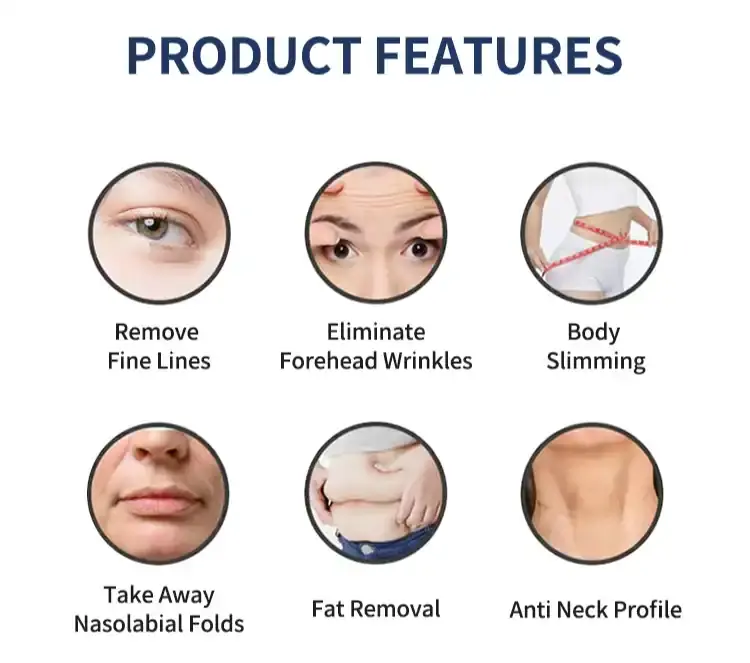
The most well-known use of HIFU technology is for lifting the face. Targeting the SMAS layer with 4.5mm cartridges gives the face support, and tightening it thermally lifts the chin, lips, and neck for a noticeable look better. As part of most treatment plans, thermal coagulation points are placed in multiple horizontal lines across the lower face, mid-face, and forehead. The distance between each line is carefully measured to make sure that it covers enough area without crossing over too much. Most guidelines say that you should do 400 to 600 lines on your whole face, which can be done in 30 to 45 minutes with modern 9D HIFU Machines.
For periorbital rejuvenation to work, you need to use the right method and cartridges. With the 1.5mm and 2.0mm capsules, you can treat crow's feet, loose skin under the eyes, and the position of your face. Because the anatomy in this area is so delicate, it's important to use exact energy settings (usually 0.2 to 0.3J per focal point) and pay close attention to the edges of the anatomy. When doctors treat, they don't go straight over the edge of the orbit or too close to the eyeball. Instead, they focus on the side of the orbit and the brow, where the tissue is thick enough to safely absorb energy.
Body Contouring and Fat Layer Treatment
6mm, 9mm, and 13mm cartridges target different levels of subcutaneous fat. Abdominal treatment uses 9mm and 13mm cartridges causing thermal damage to adipocytes. Apply 600–800 lines in a grid pattern. Waist circumference decreases over 8–12 weeks as the body eliminates broken fat cells. Clinical results show 1–3cm circumference reduction in treated areas.
Treatment Intervals and Protocol Optimization
Inflammatory response peaks 3–5 days post-treatment, followed by a proliferative phase at 4–6 weeks when fibroblasts actively produce new collagen. Remodeling continues for up to six months. Most professionals recommend a three-month evaluation after initial treatment. Avoid overtreatment which may inhibit collagen production. Some protocols use treatments spaced 4–6 weeks apart for advanced laxity.
Choosing the Right 9D HIFU Machine for Your Business Needs
Evaluate technical specs, reliability, and business factors beyond purchase price. Power output of 100–200W suffices for facial applications. Energy settings should adjust in 0.1J steps from 0.2J to 2.0J. Cartridge sets should cover face depths (1.5–4.5mm) and body depths (6–13mm) with 20,000–30,000 shot lifespan per cartridge. Avoid proprietary cartridge systems with higher long-term costs.
Technical Differentiators and Innovation Features
Real-time imaging tools on the 9D HIFU Machine show treatment progress and line placement. Integrated cooling reduces surface heating. Automated parameter algorithms suggest energy settings based on treatment area and patient traits. Touchscreen controls with intuitive menu layouts allow multiple cartridges to be prepped simultaneously. Customizable treatment plans store frequently used parameters for repeated procedures, improving workflow efficiency and consistency.
OEM and Customization Opportunities
Manufacturers offering OEM/ODM services help distributors brand products. Customization includes software interface localization, treatment protocol changes, and hardware configuration. CE marking, ISO13485 certification, and FDA registration demonstrate quality control commitment. These certifications ensure devices meet international safety standards and have undergone extensive testing for electrical safety and electromagnetic compatibility.
Addressing Safety and Side Effects Related to Tissue Heating
Redness at treatment sites usually resolves within 2–4 hours. Mild edema peaks at 24–48 hours and resolves in 3–5 days. Some patients report soreness similar to muscle pain for several days, managed with over-the-counter pain relievers. Sharp, severe pain may indicate excessive energy delivery or overlapping treatment lines causing cumulative thermal damage requiring immediate parameter adjustment.
Safety Standards and Certification Requirements
IEC 60601 standards cover electrical safety, electromagnetic compatibility, and software validation for medical electrical equipment. CE marking under EU Medical Device Regulation requires clinical evidence and conformity assessment. In the US, FDA 510(k) clearance requires manufacturers to demonstrate substantial equivalence to legally marketed predicate devices through performance testing, biocompatibility assessment, and clinical data.
Operator Training and Risk Minimization
Comprehensive training covers device operation, patient selection, parameter optimization, and complication management. Knowledge of facial anatomy helps plan treatment lines avoiding high-risk areas. Start with low energy and gradually increase based on patient feedback and visible tissue reaction. Maintain line spacing of 1.5–2.0mm to ensure adequate coverage without overlap causing cumulative thermal damage.
Conclusion
Understanding how directed ultrasound creates healing thermal effects helps explain why the 9D HIFU Machine is so important in non-invasive cosmetic medicine. The precise convergence of acoustic energy at set tissue depths, the controlled heating that starts collagen production without damaging the surface, and the multidimensional delivery systems that make it more effective are all big steps forward in technology that are meeting real clinical needs.
If an aesthetic business wants to offer more treatments using tried-and-true, safe technology, high-quality HIFU systems are a great choice because they can be used for a lot of different things, have a history of good safety records, and have high customer happiness rates. Before making a purchase choice, it's important to carefully look at the heating performance specs, cartridge systems, maker support, and certification status. This will help the business grow and be successful in the long run.
FAQ
1. What makes 9D HIFU different from traditional HIFU in heating precision?
The 9D improvement is multi-line delivery, which means that up to 12 parallel treatment lines can fire at the same time instead of just one line like most devices do. This makes the temperature distribution more even across treatment areas while cutting the process time by a huge amount. At the focal point level, the heating accuracy stays the same, but the general covering uniformity gets better as the delivery pattern changes to a matrix.
2. Can focused ultrasound cause tissue damage?
Focused ultrasound causes controlled, intended micro-injuries that promote healthy tissue remodeling without causing harm when used according to established standards with the right energy settings and technique. The thermal coagulation places are about 1 mm across and are bordered by healthy tissue, which lets them heal quickly. Damage only happens when too much energy is used, the wrong level is chosen, or the same area is treated too many times.
3. How can practitioners verify proper thermal function?
Visual tissue response (a little whitening on the skin's surface showing a deep thermal effect), patient sensation feedback (warmth and short-term discomfort showing that energy is being delivered), and the device's self-diagnostic systems that check transducer function and energy output are all signs that the treatment is working. During regular maintenance checks, thermal paper tests with special ghost materials can make sure that focal points form correctly and the right temperature is generated.
Partner with Taibo for Superior 9D HIFU Machine Solutions
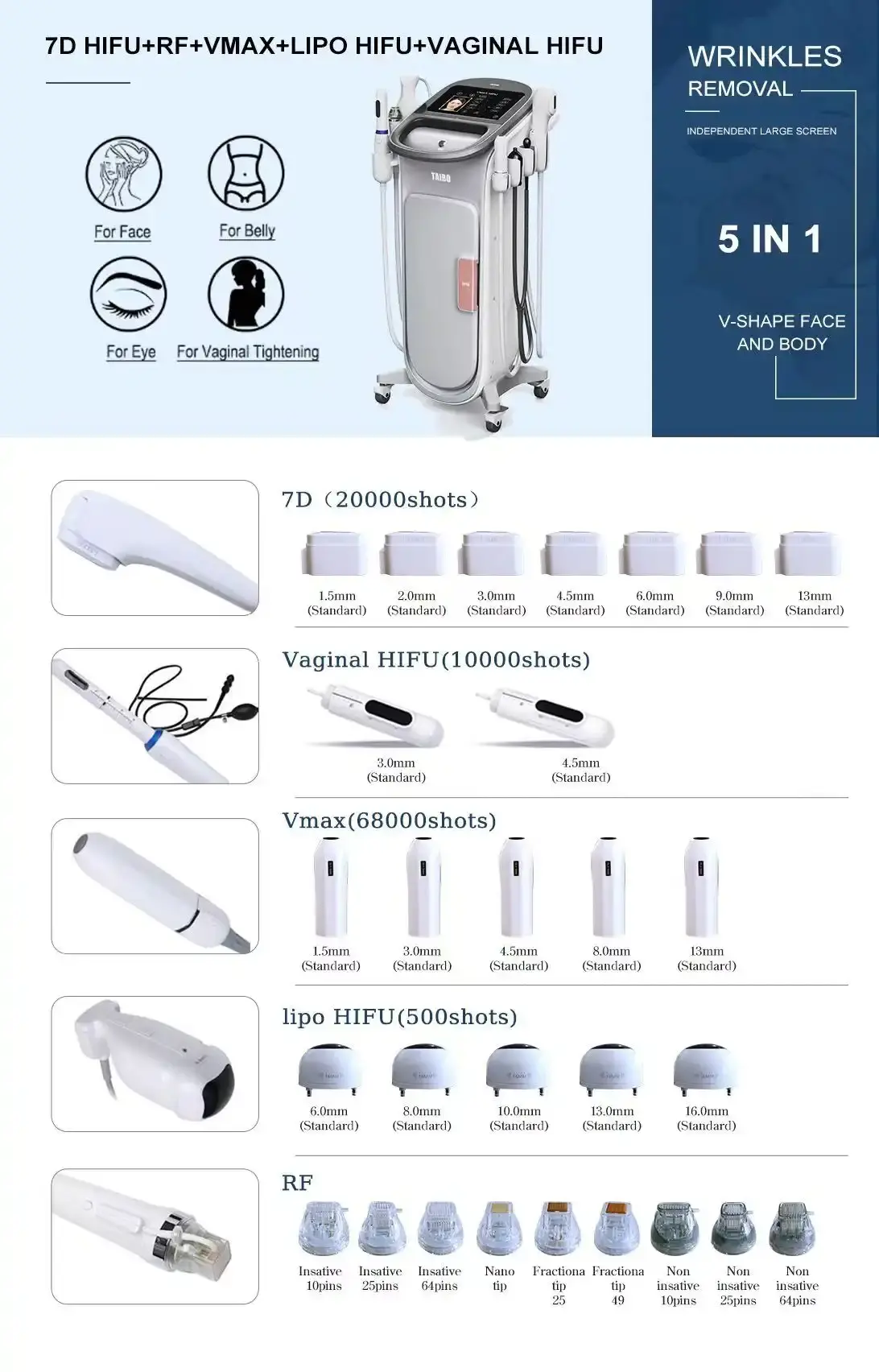
Since 2009, Taibo Laser Beauty has been making high-tech beauty equipment. We've become a known 9D HIFU Machine seller through 15 years of engineering innovation and excellent customer service around the world. Our focused ultrasound systems heat tissue precisely through seven specialized cylinders that cover depths from 1.5 mm to 13 mm. This lets us do full face and body treatments that are certified by CE and ISO13485. The 5-in-1 platform with 7D HIFU, RF microneedling, VMAX, Lipo HIFU, and vaginal tightening technology is very flexible and can be used for a wide range of medical purposes. We help our business-to-business (B2B) partners by offering OEM/ODM customization options, cheap factory-direct prices, full operator training, and quick technical support. Get in touch with Susan at susan@taibobeauty.com to talk about how our approved tools can help you offer more treatments and grow your business through high-quality focused ultrasound technology.
References
1. Fabi, S.G., & Goldman, M.P. (2014). The safety and efficacy of combining poly-L-lactic acid with intense focused ultrasound in facial rejuvenation: A retrospective review. Dermatologic Surgery, 40(10), 1135-1142.
2. Suh, D.H., Shin, M.K., Lee, S.J., & Rho, J.H. (2015). Intense focused ultrasound tightening in Asian skin: Clinical and pathologic results. Dermatologic Surgery, 41(12), 1323-1329.
3. Alam, M., White, L.E., Martin, N., Witherspoon, J., Yoo, S., & West, D.P. (2010). Ultrasound tightening of facial and neck skin: A rater-blinded prospective cohort study. Journal of the American Academy of Dermatology, 62(2), 262-269.
4. Ko, E.J., Hong, J.Y., Kwon, T.R., Choi, S.Y., Jang, Y.J., Chung, J.H., & Kim, B.J. (2017). Efficacy and safety of non-invasive body tightening with intense focused ultrasound: A prospective study of 30 patients. Journal of the European Academy of Dermatology and Venereology, 31(4), 680-685.
5. Werschler, W.P., & Werschler, P.S. (2016). Long-term efficacy of micro-focused ultrasound with visualization for lifting and tightening lax facial and neck skin. Journal of Clinical and Aesthetic Dermatology, 9(6), 27-31.
6. MacGregor, J.L., & Tanzi, E.L. (2013). Microfocused ultrasound for skin tightening. Seminars in Cutaneous Medicine and Surgery, 32(1), 18-25.





YOU MAY LIKE