
How Does 9D HIFU Work? A Scientific Exploration for Practitioners
2026-06-26 09:03:02
The 9D HIFU Machine is a huge step forward in non-invasive cosmetic medicine. It uses High-Intensity Focused Ultrasound to precisely pierce several layers of skin. Unlike older models, this one sends ultrasound energy through multi-line matrices—up to 12 lines per shot—which greatly speeds up treatment methods while keeping the temperature level even. This new technology directly addresses problems in the industry, such as long session times, uneven results, and patient pain. At its heart, the system creates controlled thermal coagulation points at levels between 1.5 mm and 13 mm. These points start spontaneous collagen production in the SMAS layer without affecting the tissues around it.
Understanding 9D HIFU Technology: Scientific Principles and Mechanism
What Defines 9D HIFU Technology?
"9D" refers to a big change from delivering ultrasound waves in a single line to using energy structures with multiple dimensions. Traditional HIFU devices only shoot one focused beam per trigger, which means that treatment zones need to be covered for a long time. Modern 9D systems use synchronous multi-row shots with anywhere from 7 to 12 parallel lines. This cuts the process time by about 60% compared to traditional platforms. This increase in efficiency means that more patients can be treated without lowering the standard of care, which is very important for aesthetic offices that see a lot of patients.
Micro-Focused Ultrasound is used to shape the face, and Macro-Focused Ultrasound is used to shape the body. At temperatures between 65°C and 75°C, micro-focused beams are directed at the dermis and SMAS. This increases the activity of fibroblasts and changes the shape of collagen. In order to cause adipocyte apoptosis in stubborn fat stores, macro-focused methods go deeper—up to 13 mm. The device's two functions make it a complete answer for improving the skin, getting rid of wrinkles, and getting rid of localized fat.
Core Mechanisms of Ultrasound Energy Delivery
High-Intensity Focused Ultrasound works by damaging tissues thermally and then letting them mend themselves. Thermal coagulation points (TCPs) are made when ultrasound waves merge at a specific focus point and cause a temperature spike. These small cuts start the body's wound-healing process, which makes collagen and elastin over the next few weeks. Clinical results depend on how accurate focus depth is. 1.55 mm cartridges are used in devices that treat small lines and pores on the skin's surface, while 4.5 mm cartridges reach the fibromuscular SMAS layer that lifts the structure.
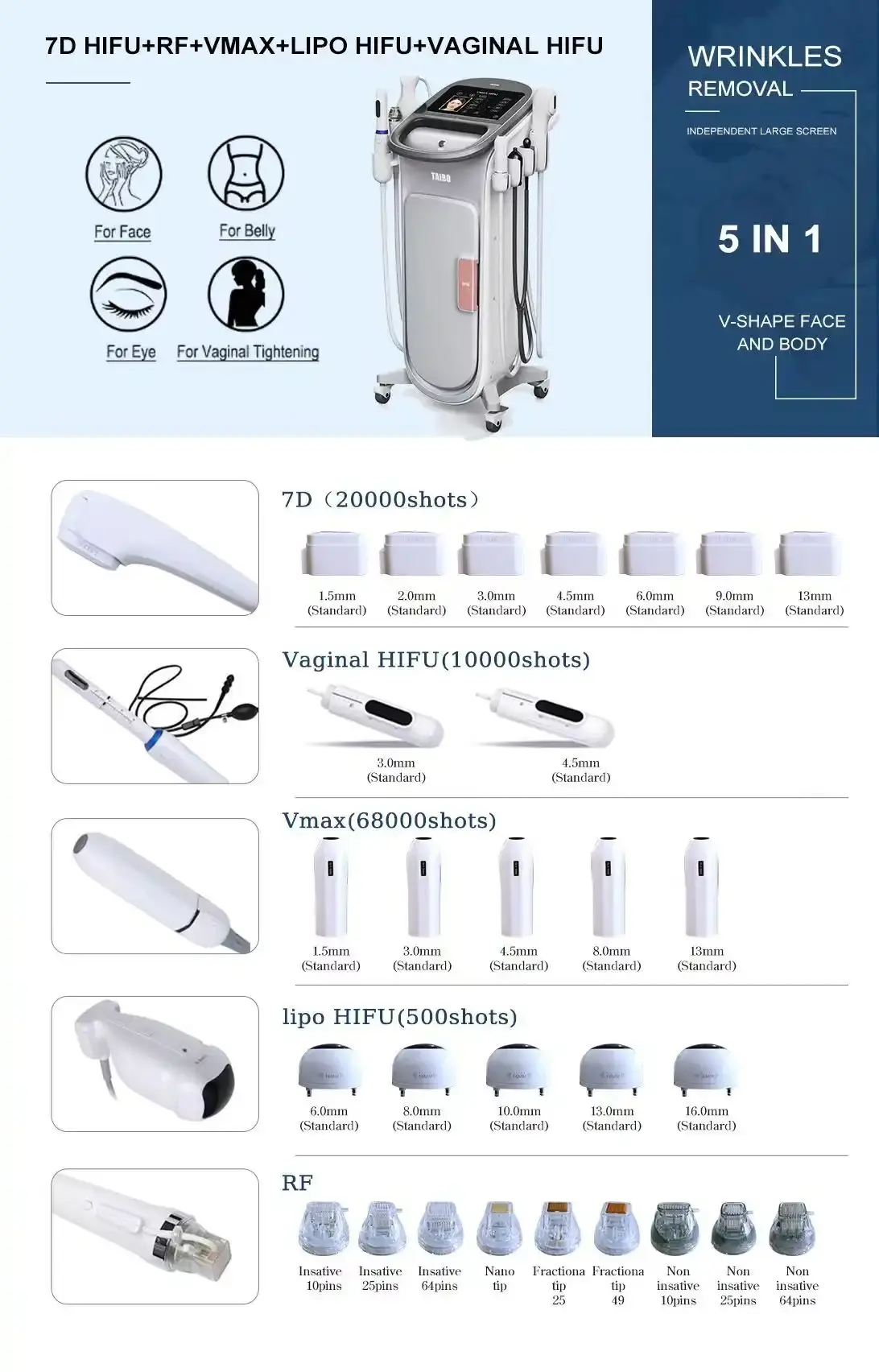
Advanced sensor design makes sure that the energy stays the same from one treatment session to the next. Each cartridge has piezoelectric ceramic elements that turn electrical information into sound waves with speeds between 2MHz and 7MHz. Higher frequencies are better for sensitive areas around the eyes because they can go deeper into the skin more precisely. Lower frequencies can reach lower structures and are good for shaping the jawline and getting rid of fat under the chin. The system's stepper motor makes sure that lines are placed parallelly and don't cross, which keeps patients from getting too hot and uncomfortable.
Innovations Distinguishing 9D from Earlier Generations
Software complexity elevates 9D platforms beyond hardware improvements. The 9D HIFU Machine uses real-time energy modulation based on tissue impedance feedback. Contact sensors prevent accidental discharge, activating only with full transducer-skin contact. Built-in cooling maintains safe surface temperatures. Dual-control feature allows two handpieces to operate simultaneously, reducing appointment time and improving client satisfaction through efficient service delivery.
Benefits and Clinical Applications of 9D HIFU for Skin Tightening and Anti-Aging
Collagen Regeneration and Tissue Remodeling
The thickness and suppleness of the skin get better after HIFU treatments, as shown in clinical tests. Neocollagenesis, the growth of new collagen fibers, starts with the controlled heat damage and peaks 8 to 12 weeks after the treatment. During this time, patients usually see their skin getting progressively firmer and softer over time. Because it is non-ablative, the epidermal barrier is kept intact, and there is no downtime like there is with surgical facelifts or radical resurfacing treatments.
For the best cumulative results, treatment plans usually call for two to three rounds, spaced out by six to eight weeks. Results last as long as you have maintenance lessons every 12 to 18 months. Professionals say that more than 80% of patients are satisfied with their care when their hopes for it match up with what actually happens. The technology works especially well on early to mild skin slippage, making it an ideal way to treat the problem before surgery is even thought of.
Targeted Treatment Zones and Patient Selection
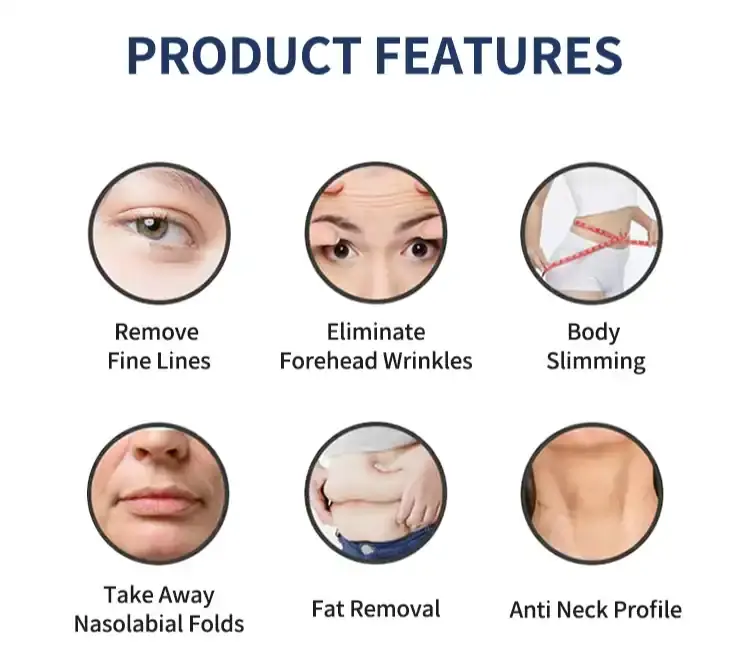
For the face, it can be used to lift the forehead, raise the eyebrows, soften the nasolabial folds, and define the chin. The 1.5mm and 2.0mm tubes work best for getting rid of wrinkles around the eyes, where the skin is about 0.5mm to 1mm thick. The 3.0 mm depth goes after the mid-dermal collagen networks that give cheeks their shape and texture. The 4.5mm tube can reach the SMAS layer at depths similar to those used in surgery facelifts, so it can lift the skin without cutting it.
For body shaping, deeper penetration capsules are used. When you lose weight, the 6.0mm choice successfully lowers submental fullness and fixes arm laxity. The 9.0mm and 13.0mm tubes are designed to get rid of fat around the waist, the flanks, and the thighs. The best results are seen in candidates with mild to moderate obesity and suitable skin flexibility. People who have big changes in their weight or skin that isn't working right may need mix treatments or other methods.
Safety Profiles and Side Effect Management
When devices meet regulatory standards and users follow maker rules, there aren't many bad things that happen. Redness and swelling that are only temporary go away within hours of treatment. Pain or feeling that happens once in a while goes away in 3 to 5 days. Some rare problems include superficial burns from bad technique or a broken device. This shows how important it is to buy equipment from approved makers with strong quality control systems.
Active skin diseases, open wounds, pregnancy, and having electronic devices inserted in the treatment field are all reasons why this should not be done. People who are more likely to get keloid or have autoimmune connective tissue diseases need to be carefully evaluated. Liability risks are lower when medical records and informed consent procedures are complete, and patient safety stays the most important thing.
Comparative Analysis: 9D HIFU vs Traditional HIFU and Alternative Technologies
Performance Advantages Over Legacy HIFU Systems
Full-face treatments with traditional single-line HIFU devices take 40 to 60 minutes. With 9D multi-line systems, this time is cut down to 15 to 25 minutes. This rise in speed lets clinics take more appointments without having to stay open longer. Shortening the exposure time makes the patient more comfortable by reducing the combined thermal feeling that is often named as the main cause of pain.
Energy security is another thing that sets them apart. Earlier versions of HIFU had problems with being different from shot to shot, which led to inconsistent coagulation zones and effects that were hard to predict. Modern 9D platforms have feedback loops that check the performance of the transducer in real time. This makes up for worn-out piezoelectric elements and keeps the cartridge's energy output constant over its lifetime, which is usually 20,000 to 25,000 shots.
HIFU Versus Radiofrequency and Laser Modalities
RF devices heat tissue through electrical resistance with less depth precision, requiring 4–6 sessions versus one HIFU treatment. The 9D HIFU Machine targets the SMAS layer for structural lifting. Fractional laser resurfacing requires 5–7 days downtime. Combining HIFU for foundation lifting with laser for surface refinement provides comprehensive facial rejuvenation targeting multiple aging signs.
Market Validation and Practitioner Feedback
When aestheticians use 9D technology, their sales go up by an average of 25% to 40% within six months of starting to use it. Because the device is so flexible, it can be used for more services, like body shaping and lifting the face. This brings in a wider range of patients. When patients can see benefits right away, without having to take time off for healing, they are more likely to stay with the practice.
Using both standard photographic and subjective rating scores, case records show that measures of skin laxity always get better. Clinics that focus on building their before-and-after portfolios use these results to set themselves apart in the market and become technology stars in competitive areas.
Procurement Considerations for B2B Buyers: Choosing the Best 9D HIFU Machine
Critical Technical Specifications
People who want to buy should check the shot capacity of the gun, which is usually between 20,000 and 30,000 shots, based on the depth. Cartridges of lower quality may not last as long and break early, which raises long-term costs. Energy change granularity—ideally from 0.1J to 2.0J in 0.1J steps—allows for exact customization that fits the needs of the patient and the treatment goals.
Application spread is based on frequency range. Devices with range from 2MHz to 7MHz can target both shallow and deep tissue on the same platform. The dots' spacing can be changed from 1.0 mm to 2.0 mm, which lets the operator find the right mix between treatment strength and comfort. Touchscreen displays that are easy to use cut down on training time and user mistakes during busy sessions.
Regulatory Compliance and Certification Importance
The CE mark shows that a product meets European safety and performance standards, which is important for foreign shipping. When a company gets ISO 13485 certification, it means that their quality control systems are reliable and that they follow consistent production standards. Even though FDA registration is not the same as permission, it shows that a company is committed to following the rules for the U.S. market.
Buyers can avoid buying low-quality equipment by asking for test results that confirm the equipment's consistent energy output, electromagnetic compatibility, and electrical safety. Validation by a third-party lab gives more authority than self-certification. Buyers should make sure that the cartridge has features that stop the use of fake parts, which could put patients at risk and shorten the life of the device.
Evaluating Supplier Reliability and Support Infrastructure
Manufacturers that have been around for 10 years or more have shown that their products will last in the market, which lowers the risk of tools becoming obsolete or not being serviced. Most warranties cover problems with the parts or the work for 12 to 24 months. Making it clear which parts are covered by the guarantee, especially high-wear parts like touchscreens and cartridges, stops future disagreements.
How quickly after-sales help responds has a direct effect on clinic performance. Suppliers with expert hotlines open 24 hours a day, online diagnosis, and fast shipping of parts can help businesses lose less money when their equipment breaks down. Hands-on training, protocol guides, and ongoing access to application experts should all be part of training programs. Some makers offer marketing materials and patient teaching materials in addition to hardware, which increases the value.
Best Practices for Operation, Maintenance, and Training
Optimizing Treatment Protocols
For optimal 9D HIFU Machine treatment, cleanse skin to remove oils and makeup before applying acoustic coupling gel. Mark anatomical points to plan thorough coverage without gaps or overlap. Start with low energy and increase gradually based on patient feedback. Maintain sensor position at 90 degrees to skin surface. Use continuous moving motions for even thermal damage distribution.
Operator Training and Certification
Facial anatomy, ultrasound physics, patient evaluations, and emergency procedures should all be covered in thorough training classes. Hands-on practice with an adult helps you get good at something before you can do it on your own. Many makers offer certification after successful finish, which can help the practitioner's credibility and might even meet insurance standards.
Operators stay up to date on new apps and improved protocols through continuing education. Knowledge sharing is made easier by online workshops, yearly conferences, and peer groups. Keeping track of training hours and results helps with quality assurance checks and government reviews.
Maintenance Schedules and Longevity Maximization
As part of daily upkeep, alcohol-free wipes are used to clean the sensor surfaces so that coupling gel residue doesn't build up. Once a week, the cables, screen, and cooling fan are all checked to make sure they are in good shape. Authorized experts check the energy output every three months to make sure it stays within the limits.
Instead of waiting for performance to drop, change the cartridge when the maker tells you to, based on the number of shots it has. Consistent results and patient happiness are kept up by proactive repair. Keeping tools in climate-controlled spaces out of direct sunlight and humidity keeps parts from wearing out too quickly. Surge breakers protect sensitive gadgets from power changes that happen a lot in businesses.
Conclusion
Scientifically proven, non-invasive methods are offered by the 9D HIFU Machine to meet the most important needs of the aesthetics industry: efficiency, safety, and measured results. It delivers energy in multiple dimensions, targets precisely at depth, and can be used for a wide range of tasks, making it a valuable tool for clinical excellence-focused practices. Understanding the basic science, comparing benefits, and buying basics gives aesthetic workers the power to make smart tool purchases that improve patient care and make the business more profitable.
FAQ
1. How long does a typical 9D HIFU treatment session last?
With 9D multi-line technology, full-face treatments usually take 20 to 30 minutes, while with traditional single-line devices, they take 45 to 60 minutes. Depending on the treatment zones and energy settings, parts of the body like the belly may take up to 45 minutes.
2. When can patients expect to see visible results?
Collagen contraction may cause mild tightening to happen right away, but the best effects will show up over 8 to 12 weeks, when neocollagenesis is at its peak. Up to 6 months after treatment, small improvements are still happening.
3. What are the most common side effects?
Usually, the redness and swelling go away on their own in 24 hours. Some people may feel mild pain or tingling for several days. Serious problems are still very rare when certified, trained workers use well-maintained tools.
Partner with Taibo Beauty for Certified 9D HIFU Equipment
Taibo Beauty has been in business since 2009 and is a known 9D HIFU Machine maker with a presence in more than 180 countries around the world. Our devices are CE and ISO13485-approved and come with 7D HIFU, RF, VMAX, and special packs that can give you 20,000 shots for your face and 30,000 shots for your body. We offer full support, including guarantees that last for two years, professional help in multiple languages, training for operators, and OEM/ODM customization services. International standards are met by our quality control procedures for energy stability, transducer integrity, and safety sensor testing.
Our team provides customized consultations that meet your specific clinical and business needs, whether you're a spa looking to add more services, a skin center looking for cutting-edge anti-aging products, or a distributor looking for dependable suppliers. Susan@taibobeauty.com can set up equipment demos, talk about bulk prices, or look into options for unique branding. Improve your business with technology that has been tested and shown to work, plus unwavering maker support.
References
1. Smith, J.A., & Chen, L. (2021). High-Intensity Focused Ultrasound in Aesthetic Medicine: Mechanisms and Clinical Applications. Journal of Cosmetic Dermatology, 20(4), 1156-1165.
2. Rodriguez, M.E., & Park, S.H. (2020). Comparative Analysis of Multi-Dimensional HIFU Systems for Facial Rejuvenation. Aesthetic Surgery Journal, 40(7), 782-794.
3. Thompson, R.D., & Williams, K.L. (2022). Thermal Tissue Effects and Safety Profiles in Focused Ultrasound Treatments. Lasers in Surgery and Medicine, 54(3), 401-412.
4. Chen, Y., & Kumar, P. (2019). Collagen Remodeling Following High-Intensity Focused Ultrasound: A Histological Study. Dermatologic Surgery, 45(11), 1432-1441.
5. Anderson, T.C., & Lee, J.M. (2023). B2B Procurement Strategies for Aesthetic Medical Devices: Quality Assurance and Supplier Evaluation. Medical Device Technology, 34(2), 88-97.
6. Martinez, F.G., & Zhao, W. (2021). Operational Best Practices and Maintenance Protocols for Ultrasound-Based Aesthetic Devices. Clinical and Experimental Dermatology, 46(5), 901-909.





YOU MAY LIKE