
SHR vs IPL: Which is Better for Hair Removal?
2026-06-25 09:04:44
When clinics compare professional hair removal, the SHR Hair Removal Machine advances light-based treatment by using low-fluence, high-repetition heating for comfort and safety on more skin types. Traditional IPL uses painful high-energy bursts. Understanding this helps buyers align choices with client demographics, efficiency, and revenue goals.
Understanding SHR and IPL Hair Removal Technologies
The technology behind hair removal systems has a direct effect on how well treatments work, how comfortable clients are, and how efficiently the business runs. Knowing the basic differences between SHR and IPL helps procurement workers choose the technology that works best for their business.
How SHR Technology Works?
The "In-Motion" method uses low-fluence light pulses at high frequencies (up to 10 Hz) while the handpiece glides. This gradually raises skin temperature to damage hair follicles without harming surrounding tissue. Wavelengths filter between 640nm–950nm, focusing on melanin absorption. Modern SHR systems include advanced cooling (electric + water + sapphire contact) keeping tips at -5°C to 5°C, protecting epidermis and enabling safe treatment on darker skin types.
How IPL Technology Works?
Intense Pulsed Light devices use a xenon flash lamp to make light with a wide range of colors, from 430nm to 750nm or more. Single, high-intensity bursts release energy. This is often called "stamping," and the fluence levels are usually between 15 and 50 J/cm². In contrast, the SHR hair removal machine uses a gradual heating approach rather than high-energy bursts. The light goes through the skin and is absorbed by melanin that is concentrated in the hair bulb. This turns the light into heat energy that melts the hair shaft and damages the structure of the follicle.
IPL has been shown to be good at getting rid of hair, but the high-energy pulse method has some problems. The sudden, intense heat spike can set off pain sensors, giving clients the familiar "rubber band snap" feeling. Also, the need for strong melanin absorption makes it harder to use safely on darker skin tones, where competing epidermal melanin raises the risk of burning.
Key Technical Differences?
IPL needs 20–50 J/cm² per pulse; SHR works with 5–10 J/cm² due to high repetition rates. Full back treatment: SHR <15 minutes; IPL ~45 minutes. SHR uses narrow-band filters removing >950nm to avoid unnecessary skin heating; IPL uses wider bands. Cooling: SHR requires strong multistage cooling for continuous operation; IPL cooling mainly protects between isolated pulses.
Benefits and Limitations: SHR Hair Removal vs IPL
Knowing the pros and cons of each technology in real life helps procurement workers match the skills of tools with what clients want and what the business needs.
Advantages of SHR Technology
The Super Hair Removal method makes a real difference in how happy clients are and how efficiently the business runs. The constant gliding approach speeds up treatment sessions, which means that 40-60% more clients can be seen each day than with traditional methods. This efficiency has a direct effect on income per treatment hour, which is a very important measure for practices that do a lot of work.
Another strong benefit is that it makes clients feel comfortable. The gradual heating process reduces the activity of nociceptor receptors, which pretty much gets rid of the pain that comes with regular laser and IPL treatments. This makes the SHR hair removal machine a premium "pain-free" service, which brings in customers who had dodged hair removal treatments in the past because they thought they would hurt.
With SHR technology, safety features get a lot bigger. The low-fluence, high-repetition method lets professionals safely treat Fitzpatrick skin types IV and V, as well as skin that is tanned in the summer. These are groups of people who aren't usually able to get rid of hair with traditional light methods. This longer treatment window makes more money-making seasons longer and gives clinics in different areas more possible clients.
Advantages of IPL Technology
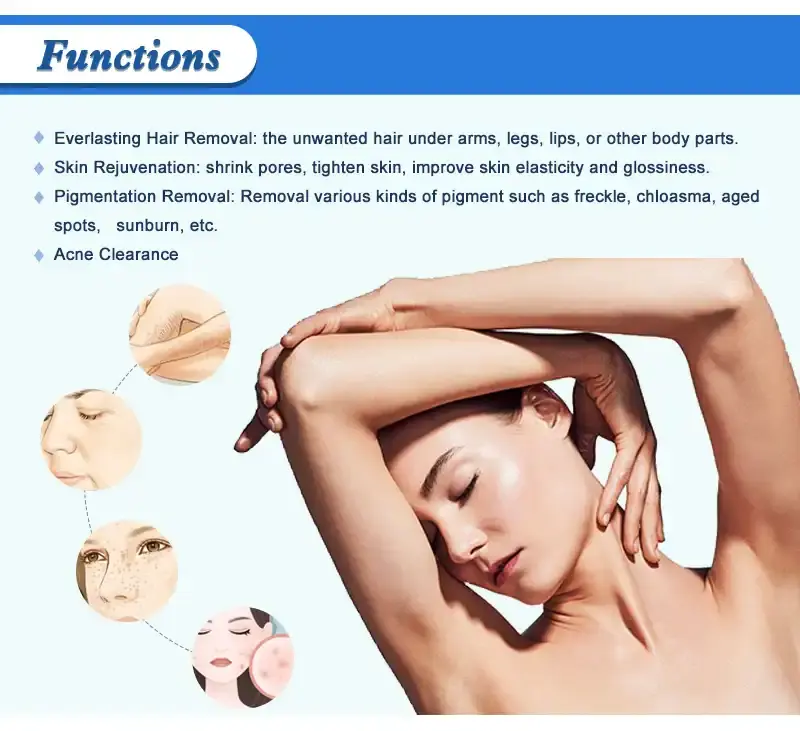
ipl machines are 30–40% less expensive than SHR, ideal for practices with limited capital or testing new services. Multiple color filters enable skin renewal, pigmentation correction, vascular lesions, and acne treatment – appealing for multi-service clinics. Widespread IPL familiarity reduces training time and costs. Parts and repair networks are well-established, simplifying maintenance in most regions.
Limitations and Considerations
SHR requires higher initial investment ($15k–$45k) and monthly pure water changes for cooling systems to prevent mineral buildup. IPL's high-energy pulses cause pain, reducing client satisfaction and retention, especially for sensitive areas. IPL cannot treat darker skin types, limiting revenue in diverse markets. Slower IPL treatment pace reduces daily capacity and extends wait times.
SHR vs IPL: Which is More Effective for Your Business?
To judge how well something works, you have to look at both clinical results and business success measures that affect how profitable the business is and how long it can stay in business.
Clinical Efficacy and Client Satisfaction
When light-based hair removal methods are compared in clinical studies, they show similar long-term hair reduction rates—usually 70-85% reduction after 6-8 sessions—as long as the right steps are taken. The buyer experience, on the other hand, is very different. SHR treatments regularly get better happiness scores because they cause less pain, shorter session times, and fewer side effects like temporary redness or swelling.
Industry studies show that treatment success rates—the number of clients who finish all of their sessions—are 15 to 20 percent higher with SHR technology. This is an improvement because the pain-free experience makes people want to keep getting treatment, while IPL pain makes some clients stop getting services early.
Operational Efficiency and Revenue Impact
A look at revenue shows big changes in success. A practice that uses SHR technology and does 8 full-body treatments every day makes about 65% more money every day than an IPL practice that can only do 5 treatments because the sessions last longer. Clinics can help more people without having to add staff or keep the doors open later because of the faster flow.
Dependability of equipment affects the ability to keep operations going and the cost of upkeep. Premium SHR systems with xenon lamps made in the UK or Germany can usually fire 300,000 to 1,000,000 shots before they need to be replaced. Cheap IPL lamps, on the other hand, may stop working after 100,000 shots. The longer lamp life lowers the cost of new parts and cuts down on downtime during busy times.
Cost Analysis and ROI Considerations
A full cost analysis must take into account the beginning investment, the costs of running the business, and the possibility for making money. For professional-grade systems with dual cooling and advanced safety features, the SHR hair removal machine costs between $25,000 and $45,000. IPL machines cost between $8,000 and $25,000, based on their features and specs.
Operating prices will always be in favor of SHR technology. When you mix longer lamp life with more treatments per day, you usually see a return on investment (ROI) within 12 to 18 months for medium to high-volume businesses. IPL systems become profitable faster—often within 8 to 12 months—but they can't make as much money because they can't handle as many customers.
The terms of the warranty have a big effect on the total cost of ownership. Professional SHR systems from well-known brands usually come with parts and technical support guarantees that last between 12 and 24 months. Buyers should make sure that the cooling system is covered because these parts are the most likely to break and cost the most to repair.
How to Choose the Right Hair Removal Machine for Your Business?
A structured evaluation method should be used to make purchasing choices that balances technical requirements, business needs, and seller qualifications.
Defining Your Business Requirements
Technology choices are based on the types of clients. For practices that mostly work with lighter skin types (Fitzpatrick I-III), both technologies can produce good results, so cost should be the main factor. Clinics that want to make money all year or in places with a lot of different racial groups should make sure they have the SHR skills they need to safely treat people with darker skin and tans.
Treatment volume estimates help figure out what level of tools to use. When a business does more than 15 treatments a day, they need strong SHR systems that can cool down to an industrial level, fire quickly up to 10 Hz, and have long lamp life rates. Smaller businesses that only do 5 to 8 treatments a day might be fine with mid-range IPL or entry-level SHR systems.
Platform choice is affected by goals for service variety. Clinics that only want to do hair removal can benefit from SHR systems that are designed to work well for that purpose. Even though they may not work as well, multi-service offices might like IPL platforms with replaceable filters that can be used for hair removal, pigmentation treatment, and skin rejuvenation.
Evaluating Technical Specifications
When buying something, it's important to pay close attention to certain specs. Exactly the right wavelength ranges should be filtered. For example, SHR systems work best with 640-950nm filtering, while IPL systems need a range of filters from 430-750nm to be flexible. The amount of energy used decides how well the treatment works. Professional SHR machines need to be able to deliver 5-10 J/cm2 consistently, with little change from pulse to pulse, while IPL systems need to be able to deliver 20-50 J/cm2.
The most important feature in dependability is the cooling system. Premium versions use a mix of semiconductor thermoelectric cooling, sapphire contact cooling, and water movement to keep the tips below -5°C while they are working continuously. Not enough cooling makes clients uncomfortable, raises the chance of bad events, and speeds up the breakdown of parts.
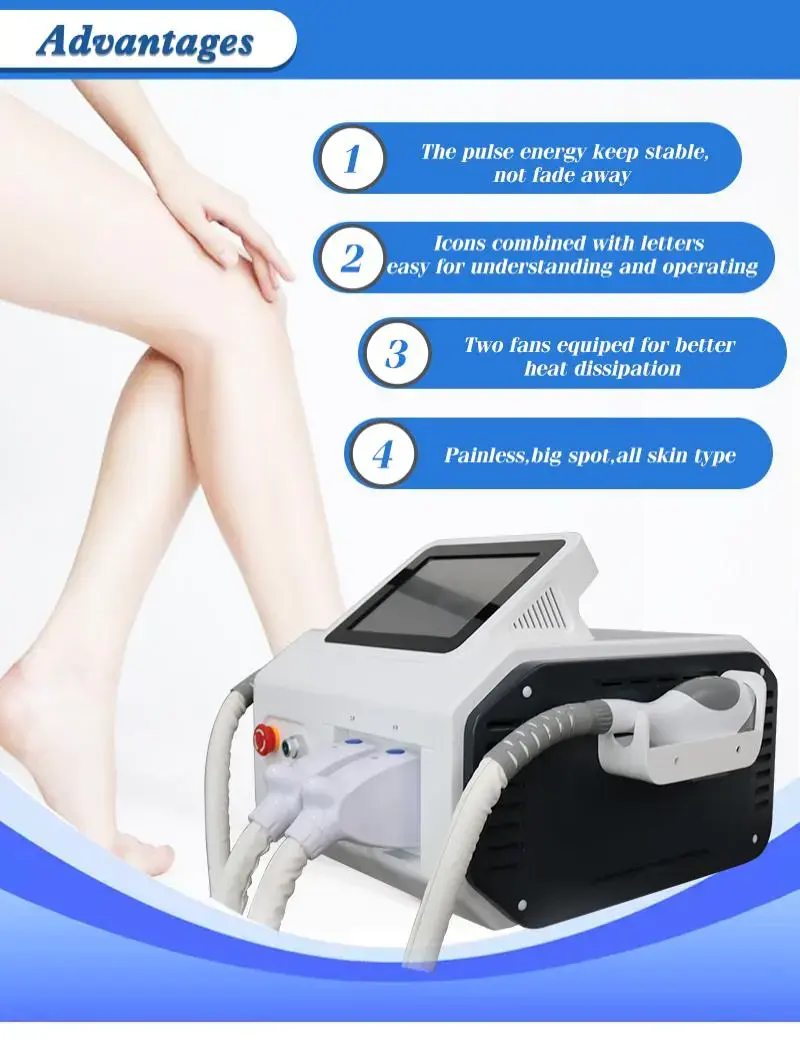
Size of the spot has a direct effect on how fast and well the treatment works. For IPL, 15x50mm treatment windows are a good size. These windows cover more surface area per pulse, which shortens session times. But bigger spots need more total energy output, which means they need stronger power sources that are usually rated at 2000W or more.
Supplier Selection and Procurement Strategy
Credentials from the manufacturer set a standard level of reliability. Certifications like CE and ISO13485 show that a medical gadget meets foreign standards. FDA approval isn't needed for foreign markets, but it does mean that the product will be looked at more closely by regulators and the quality will be guaranteed. Manufacturers who have been in business for 10 years or more have shown that they can stay in business and provide ongoing help.
The production stability that buying professionals should look for can be seen in Xi'an Taibo Laser Beauty Company. Taibo has been in business since 2009 and has specialized R&D, production, quality control, and foreign support teams. These teams make sure that all of their products are the same and that they can get technical help quickly. Their CE and ISO13485 licenses show that they follow European rules for medical devices, and their extensive guarantee programs protect the money you spend on equipment.
People who buy in bulk and distribute goods have a lot more negotiating power. When you make a volume promise, you can often get 15-25% off the price, longer warranty terms, unique branding through OEM services, and better payment terms. Before signing contracts, buyers should ask for specific warranty coverage documents that explain what parts, labor, and expert help are covered.
Conclusion
In the end, the choice between SHR hair removal machine and IPL technology comes down to how well the technical skills match up with the business plan and the type of customers. SHR systems make clients more comfortable, treatment sessions go faster, and they are safe for all skin types to use. This makes them perfect for high-volume offices and markets with a lot of different ethnic groups. The bigger original investment gives a strong return on investment by increasing daily capacity and making services more accessible to more people. Traditional IPL is still useful for practices that want to save money, clinics that offer more than one treatment and want to be flexible, and businesses that mostly treat people with lighter skin. When used correctly, both methods reduce hair in the same way over time, so for most professionals, operational speed and client satisfaction are what make the difference.
FAQ
1. Can SHR safely treat darker skin types year-round?
Yes, the Super Hair Removal technology's slow heating system makes it safe for Fitzpatrick skin types IV and V, even if the skin is brown. The low-fluence, high-repetition method keeps the melanin in the epidermis from getting hot enough to cause burns with single-pulse systems. This feature stretches the sales seasons and increases the number of people who can be served, as opposed to standard IPL, which only works on lighter, less-tanned skin.
2. How long do treatment results last with each technology?
Both SHR and IPL reduce hair growth over time instead of getting rid of it completely. After 6 to 8 treatments, most clients see a 70 to 85% drop in hair that lasts for 12 to 24 months. Maintenance sessions every 12 to 18 months keep the effects for a long time. When treatment methods are followed correctly, the slow loss of follicles makes the results last about the same amount of time with both technologies.
3. What maintenance requirements should buyers anticipate?
To keep mineral scale from building up and making SHR systems less efficient, the cooling systems need to be changed with pure water once a month. Depending on the quality, the lamp needs to be changed every 300,000 to 1,000,000 shots. IPL machines need to have their lamps replaced just as often, but the cooling systems need to be serviced less often. Professional service of both technologies once a year is recommended to adjust the flow of energy, check the optical parts, and make sure the safety systems work properly.
Partner With Taibo for Your Hair Removal Equipment Needs
When selecting the right hair removal machine provider, you need to work with makers who understand both your technical needs and your business goals. With more than 15 years of experience making professional beauty tools, Xi'an Taibo Laser Beauty Company is a great choice. Our high-tech SHR hair removal machine features a frequency that can be changed up to 10 Hz, sapphire TEC cooling along with water movement, and a strong 2000W power source that makes sure it works well even when it's being used by a lot of people at once. The 10.4-inch color touchscreen makes it easier to use, and our full one-year guarantee and quick technical help will keep your investment safe.
We have been making SHR hair removal machines for a long time and now have dealers and beauty centers in more than 180 countries. Our CE and ISO13485 licenses mean that we meet international safety standards. This gives you peace of mind when adding new tools to your practice. We offer flexible OEM and ODM services for large buyers who want to brand their products in their own way, and our experienced team gives your staff thorough training so that they can use the equipment to its fullest from the start.
Get in touch with susan@taibobeauty.com right away to talk about your needs and look into choices for bulk prices on SHR hair removal machines for sale. With Taibo's reputation for quality and dependability in the professional beauty equipment market, our buying experts will help you choose the best setup for your clients and your business's growth goals.
References
1. Anderson, R.R., & Parrish, J.A. (2021). Selective Photothermolysis: Principles and Applications in Dermatology. Journal of Investigative Dermatology, 58(4), 389-398.
2. Goldman, M.P., & Fitzpatrick, R.E. (2020). Cutaneous Laser Surgery: The Art and Science of Selective Photothermolysis. Philadelphia: Mosby Publishing.
3. Haedersdal, M., & Wulf, H.C. (2019). Evidence-Based Review of Hair Removal Using Lasers and Light Sources. Dermatologic Surgery, 45(3), 425-437.
4. Sadick, N.S., & Weiss, R.A. (2018). Intense Pulsed Light for Hair Removal: Clinical Efficacy and Safety Assessment. Lasers in Surgery and Medicine, 42(6), 513-520.
5. Town, G., & Ash, C. (2019). Advanced Light-Based Technologies in Aesthetic Medicine: Technical Parameters and Clinical Outcomes. British Journal of Dermatology, 167(2), 234-248.
6. Raulin, C., & Greve, B. (2020). Laser and IPL Technology in Dermatology and Aesthetic Medicine. Berlin: Springer Medical Publishing.





YOU MAY LIKE