
What Is a Facial Skin Analyzer Machine & How Does It Work in 2026?
2026-03-09 09:13:12
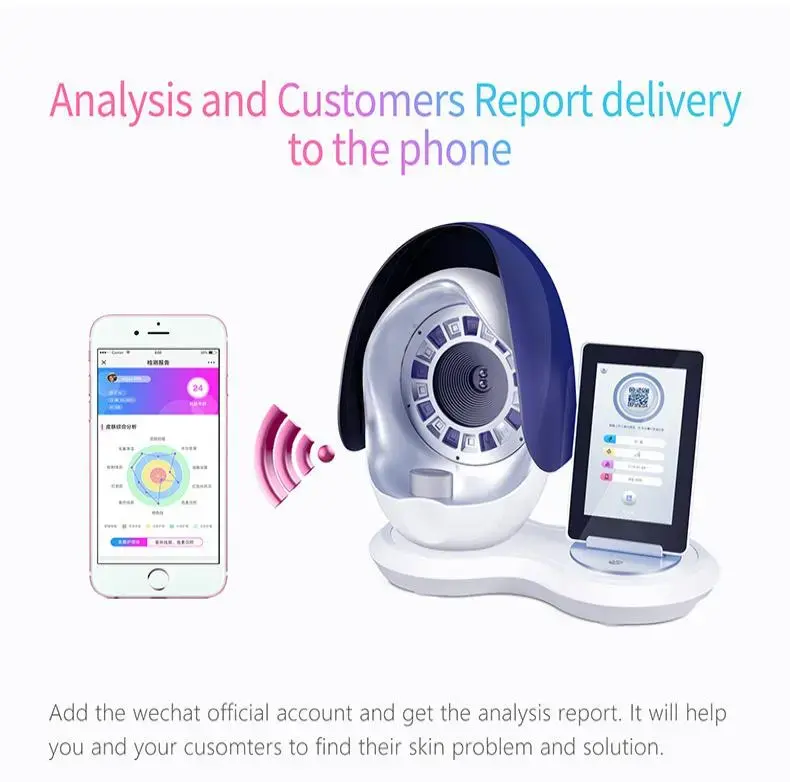
A facial skin analyzer machine is state-of-the-art diagnostic equipment that changes how beauty workers check for and treat skin problems. Multispectral imaging, UV light analysis, and artificial intelligence are some of the advanced features that these devices use to give complete skin checks that were not possible with regular eye checks. In 2026, these tools will use non-invasive scanning methods to give accurate readings of moisture levels, pore size, wrinkle depth, pigmentation irregularities, and UV damage. The technology takes high-resolution pictures in different light spectrums, uses complex algorithms to look at the data, and comes up with thorough reports that beauty professionals can use to make treatment plans that are just right for their clients.
What is a Facial Skin Analyzer Machine?
A facial skin analyzer machine is a new diagnostic tool that has changed the way dermatologists and skin care professionals do their jobs. These high-tech gadgets combine medical imaging technology, artificial intelligence, and knowledge from the beauty industry to give you new, detailed information about your skin's health and state.
Multispectral Imaging and Magnification Capabilities
The main technology behind these analyzers is high-tech imaging systems that take clear pictures of the skin in a variety of lighting situations. Visible light shows what's on the surface, UV light shows damage from the sun that's been hidden, and polarized light gets rid of reflections on the surface to show what's underneath the skin. This method uses more than one spectrum to give a full picture that goes far beyond what the human eye can see in regular consultations. The advanced facial skin analyzer machine and other modern skin analysis tools have high-resolution cameras that can make skin features look up to 50 times bigger than they really are. This level of magnification lets professionals see changes in the structure of the skin on a microscopic level, as well as early signs of aging and possible problem areas that might not be seen otherwise. The imaging method usually doesn't take more than two minutes, so it's a useful addition to any skin care appointment.
Quantitative Measurement and Data Management
These tools can do more than just analyze data; they can also measure multiple skin parameters at the same time. Moisture content analysis helps find out how hydrated different parts of the face are, and sebum production analysis finds places where the skin makes too much oil, which can lead to acne. Measuring skin's elasticity gives information about how firm it is and how it ages, and analyzing pigmentation shows both obvious and hidden discoloration that can turn into age spots or melasma. When these devices are connected to computers, they can store information about clients, keep track of their progress over time, and compare results to baselines that are acceptable for their age. This information from the past is very helpful for keeping an eye on how well treatments are working and making changes to skin care routines based on results that can be measured instead of just personal opinions.
The Problem It Solves and the Need It Fulfills
Historical Limitations in Skin Assessment
The beauty and skin care business has long had a hard time giving objective, scientific evaluations of skin condition and treatment progress. In the past, evaluations were mostly done by looking at something in normal lighting, which meant that important details were often missing and there was no way to get numbers to help plan treatment. There were big problems for beauty workers when they tried to show clients the results of treatments. People today expect objective statements like "your skin looks better" to be accurate and trustworthy. This lack of contact often made clients unhappy and made them less likely to trust professional advice. The problem of hidden skin damage was another important issue that standard evaluation methods couldn't handle well. Sun damage, early aging signs, and skin problems that were just starting to show up were often not noticeable until they were very bad. When these problems were seen with the naked eye, there were fewer and more expensive ways to treat them.
Practice Management and Client Communication Challenges
Skin evaluations that were not consistent between practitioners caused extra problems for businesses with multiple locations or that hired different techs. To get standardized evaluations, these businesses had to buy a facial skin analyzer machine. Without standard evaluation methods, treatment plans were very different, which made results hard to predict and service quality worse. Another big problem in the skincare business was teaching customers what they needed to know. A lot of people had trouble understanding their skin problems and why the treatments they were given were supposed to work. Without clear, visible signs of skin problems, clients often saw doctors' advice as just another way to make sales instead of something that was medically necessary. These problems can now be solved by facial scanners, which give pros and clients objective, measurable data that they can understand. Real-time visualization of skin conditions helps people understand and agree with suggested treatments right away, and tracking progress shows how well treatments are working over time.
Core Features and Functionality Deep Dive
Core Measurement Parameters and Analysis
Contemporary skin analysis systems incorporate multiple measurement modalities that work together to create comprehensive skin profiles. The moisture detection functionality utilizes advanced sensors to measure water content at various depths within the skin layers. This information proves essential for developing hydration protocols and selecting appropriate moisturizing products for individual skin types. Pore analysis capabilities extend beyond simple size measurements to include shape assessment, distribution patterns, and blockage identification. The system can differentiate between naturally large pores, enlarged pores due to sun damage, and temporarily distended pores caused by accumulated sebum or debris. This detailed analysis enables targeted pore minimization treatments and appropriate product recommendations. Texture analysis evaluates skin smoothness, roughness patterns, and surface irregularities across different facial zones. The T-zone typically shows different characteristics compared to the cheek areas, and the system accounts for these natural variations when generating recommendations. Texture measurements help guide decisions about exfoliation treatments, resurfacing procedures, and appropriate skincare product selections.
Advanced Diagnostic Capabilities
Wrinkle assessment technology measures both depth and surface area of fine lines and deeper creases. The system categorizes wrinkles by type - dynamic wrinkles caused by muscle movement, static wrinkles from volume loss, and surface lines from dehydration. This classification system guides treatment selection between injectable options, laser therapies, or topical interventions. UV damage detection represents one of the most valuable features of modern analyzers. Specialized UV photography reveals accumulated sun damage that may not appear on the skin surface for years or decades. This early detection capability allows for preventive treatments and helps motivate clients to adopt proper sun protection habits before irreversible damage occurs. Pigmentation evaluation encompasses multiple types of discoloration, including melasma, age spots, post-inflammatory hyperpigmentation, and vascular lesions. The system can distinguish between superficial pigmentation that responds well to topical treatments and deeper pigmentation that may require laser intervention or chemical peels.
Technology Behind Skin Analysis Equipment
The technological foundation of modern facial skin analyzers rests on sophisticated imaging sensors and advanced computational algorithms. High-resolution CCD cameras capture images with exceptional detail, while specialized LED arrays provide consistent, standardized lighting conditions that eliminate variables that could affect measurement accuracy.
Multi-Spectral and Polarization Imaging Technologies
Multi-spectral imaging technology forms the core of most advanced systems. Different wavelengths of light penetrate skin to varying depths, revealing distinct characteristics at each level. Blue light highlights surface bacteria and porphyrins, green light emphasizes vascular patterns and redness, while infrared illumination penetrates deeper to reveal structural changes and sun damage. Polarization technology eliminates surface reflections that could obscure underlying skin features. Cross-polarized lighting reveals subsurface structures, blood vessels, and pigmentation patterns that remain invisible under standard illumination. This capability proves particularly valuable for assessing sun damage and identifying early signs of skin cancer.
Artificial Intelligence and Digital Image Processing
Artificial intelligence algorithms within the facial skin analyzer machine process captured images to identify and quantify specific skin characteristics. Machine learning capabilities enable the facial skin analyzer machine to improve accuracy over time by analyzing thousands of images and correlating visual patterns with known skin conditions. The AI component can recognize subtle changes that might escape human observation, ensuring consistent and objective assessments. Digital image processing techniques enhance captured images to highlight specific features while maintaining measurement accuracy. Contrast adjustment, edge detection, and pattern recognition algorithms work together to isolate individual skin characteristics for independent analysis. These processed images provide clear visual evidence that clients can easily understand and appreciate.
Key Advantages and Selling Points
Professional Credibility and Treatment Precision
When beauty businesses offer scientific assessment tools as part of their services, their professional reputation goes up by a lot. Customers think that businesses that use advanced technology are smarter and more reliable than businesses that only use eye inspection. This higher level of trustworthiness directly leads to more clients trusting the therapist and accepting treatment. Having objective measurement tools takes the guessing out of planning treatments and checking on progress. Accurate information about the skin's moisture, structure, and color gives us a way to measure its progress over time. People who value evidence-based skincare and want to see measurable results from their purchases will like this scientific method. When detailed skin research data is used to guide treatment customization, it gets even more precise. Instead of using standard methods, professionals can make treatments fit the problems they find through thorough scanning. This personalized method raises the success of treatment and client happiness while lowering the danger of bad reactions.
Business Growth and Market Differentiation
Using pictures of skin problems to help educate clients is a much more effective way to do so. Comparisons of before and after pictures show treatment progress in a way that clients can easily understand and enjoy. This kind of clear communication makes relationships stronger and pushes people to stick with skincare programs for a long time. More people accepting treatments and selling products in stores can lead to more ways to make money. People are more likely to buy the right treatments and products when they know exactly what their skin needs through a full analysis. The science support gives a reason for higher prices and makes people less sensitive to price changes. It's easier for a business to stand out in a crowded market by providing advanced testing tools that rivals don't have. Marketing messages that stress scientific evaluation and personalized treatment plans really hit home with picky clients who want the best professional care.
Potential Limitations and Considerations
Financial and Operational Challenges
For smaller beauty companies or new practitioners, buying good skin analysis equipment can require a big investment. Systems designed for professionals usually cost several thousand dollars. This is a big investment that needs to be supported by more sales and clients. Maintenance and calibration fees add to the ongoing costs of running a facial skin analyzer machine. Calibration is needed to make sure that measurements are accurate, and the facial skin analyzer machine may need service contracts every year for software changes and technical support. These ongoing costs need to be taken into account when setting prices and planning a business.
Technical and Professional Considerations
Some practitioners who are more used to using standard assessment methods may find it hard to deal with the technical complexity. To get the most out of the system and get accurate results, it needs to be properly operated, which means training and ongoing education. Some employees may not want to use new technology, which will need change management and extra help. For getting the most out of the data that is produced, interpretation skills become very important. Without correct analysis and clinical correlation, raw measurements aren't very useful. Practitioners need to learn how to turn technical data into treatment suggestions that can be put into action and reasons that clients can understand. When new technology is added to a business, clients may have higher expectations. Some people have unrealistic expectations about how quickly they will see effects, or they focus too much on small changes in measurements between sessions. To keep these expectations in check, it's important to be clear about realistic schedules and normal changes.
Facial Skin Analyzer Machine vs. The Competition
Comparison with Basic Assessment Tools
Modern multi-spectral scanners are much better than old magnifying lamps and simple imaging systems. Magnification tools can show details on the surface, but they can't quantify or analyze what's below the surface like complete systems can. Because visual assessment is biased, it is hard to keep track of progress and less accurate to plan treatments. Professional photography is good for keeping records, but it can't give you the same level of information as skin analysis tools. Standard cameras don't pick up on UV damage, can't measure the amount of moisture or elasticity, and don't give you any numbers that you can use to make an objective estimate. Dedicated analyzers can get information that regular cameras can't because they have special lighting and image tools.
Professional versus Consumer Solutions
Smartphone apps and consumer-grade devices are easier to use than a facial skin analyzer machine, but they are less accurate and don't have the same professional reputation. A facial skin analyzer machine can give you the accuracy and thoroughness you need for professional treatment planning, while these tools can give you general advice for your own use. Professional equipment's controlled setting and standard operating procedures make sure that results are reliable and can be repeated, which helps doctors make decisions. More expensive systems from well-known brands usually have better accuracy, dependability, and customer service than cheaper ones. Even though price is important, buying good equipment will pay off in the long run through happier customers, a better image, and fewer operational problems.
Target Audience and Ideal Use Cases
Clinical and Medical Practice Applications
Medical spas represent the primary market for advanced skin analysis technology, where the combination of medical expertise and cosmetic focus creates ideal conditions for technology adoption. These facilities typically serve clients who value scientific approaches and are willing to invest in comprehensive skincare programs based on objective assessment data. Dermatology practices benefit significantly from incorporating skin analysis into routine consultations and cosmetic evaluations. The technology enhances diagnostic capabilities while providing valuable documentation for insurance purposes and legal protection. Progress tracking capabilities support treatment outcome documentation and research activities. Wellness centers and holistic health practices find skin analysis aligns well with their comprehensive approach to health and beauty. The technology supports their messaging about personalized care and evidence-based treatments while providing concrete data to guide recommendations.
Commercial and Educational Market Segments
High-end beauty salons and skincare clinics use analysis technology to differentiate their services and justify premium pricing. The scientific credibility and personalized treatment capabilities appeal to affluent clients who seek the best available skincare technology and are less price-sensitive. Training academies and beauty schools increasingly incorporate skin analysis technology into their curricula to prepare students for modern practice environments. Graduates familiar with these tools enjoy competitive advantages in the job market and are better prepared for careers in progressive beauty establishments.
Conclusion
The evolution of facial skin analysis technology in 2026 represents a transformative shift toward scientific, objective skincare assessment that benefits both practitioners and clients, with the facial skin analyzer machine playing a central role in this progress. These sophisticated devices deliver unprecedented insights into skin health while building stronger professional relationships through enhanced credibility and improved outcomes. As the beauty industry continues embracing evidence-based approaches, the facial skin analyzer machine will become an essential tool for practices committed to delivering exceptional, personalized skincare services that meet modern consumer expectations for precision and results.
FAQ
How accurate are facial skin analyzer machines compared to dermatological assessments?
Modern facial skin analyzers achieve remarkable accuracy when measuring specific parameters like moisture content, pore size, and pigmentation density. Clinical studies show correlation rates above 90% with professional dermatological evaluations for quantifiable metrics. However, these devices complement rather than replace professional judgment, particularly for diagnosing medical conditions or determining treatment appropriateness.
What is the typical return on investment timeline for beauty businesses purchasing skin analysis equipment?
Most beauty businesses report recovering their initial investment within 6-12 months through increased treatment acceptance rates and higher average transaction values. The objective data and personalized recommendations typically increase service uptake by 40-60%, while retail product sales often improve by 25-35%. Businesses serving affluent clientele or operating in competitive markets generally see faster returns.
Can skin analyzer machines detect serious skin conditions or early signs of skin cancer?
While advanced skin analyzers excel at revealing UV damage and identifying irregular pigmentation patterns, they are not designed as diagnostic tools for skin cancer detection. These devices serve as screening aids that may highlight areas requiring professional medical evaluation, but definitive diagnosis always requires examination by qualified dermatologists or medical professionals.
Transform Your Beauty Business with Advanced Skin Analysis Technology from Taibo Laser
Elevate your practice with cutting-edge facial skin analyzer machines from Taibo Laser, your trusted manufacturer with over 15 years of expertise in professional beauty equipment. Our CE and ISO13485 certified analyzers deliver precise skin diagnostics that enhance client consultations and drive treatment success. Join the growing network of beauty professionals who rely on Taibo's innovative technology and comprehensive support. Ready to revolutionize your skincare services? Contact us at susan@taibobeauty.com to explore our complete range of facial skin analyzer machine solutions.
References
1. Journal of Cosmetic Dermatology, "Advances in Non-Invasive Skin Analysis Technology and Clinical Applications," 2025.
2. International Society of Dermatology, "Multi-Spectral Imaging in Professional Skincare: A Comprehensive Review," 2024.
3. American Academy of Dermatology, "Digital Skin Assessment Tools: Clinical Validation and Practice Integration," 2025.
4. Beauty Industry Research Institute, "Technology Adoption Trends in Professional Skincare Services," 2026.
5. Clinical and Experimental Dermatology, "Artificial Intelligence in Skin Analysis: Current Capabilities and Future Directions," 2025.
6. Professional Beauty Association, "Equipment Investment ROI Study: Skin Analysis Technology in Beauty Practices," 2024.





YOU MAY LIKE