
Best dermatology CO2 laser machines for clinical use
2026-07-23 09:11:31
When searching for the best dermatology co2 laser machines for clinical use, procurement managers and clinic operators face a critical decision that directly impacts treatment outcomes and practice profitability. A dermatology co2 laser machine represents a cornerstone investment for any serious aesthetic or medical clinic. These sophisticated devices operate at a 10.6 μm wavelength, specifically targeting water molecules within skin tissue to deliver controlled ablation and thermal stimulation. The right fractional co2 laser system combines precision, safety, and versatility to address multiple skin concerns—from acne scarring and wrinkle reduction to skin resurfacing and even specialized gynecological treatments. Investing in reliable laser equipment means partnering with manufacturers who understand clinical demands and regulatory standards.
Introduction
Choosing the right CO2 laser technology is now an important part of modern dermatology. Clinics, spas, and wellness centers all over the US are becoming more and more aware that high-tech laser systems set their services apart and attract picky customers. This detailed guide is for B2B procurement managers, dermatology clinic engineers, wholesalers, and OEM partners who need organised data to make sure they make smart buying choices.
In the past ten years, CO2 lasers have been used for more than just skin resurfacing. Modern systems have fractional technology, ultra-pulse modes, and treatment settings that can be changed to make the procedure safer and more effective. If you know about the technical details, clinical applications, and buying factors, you can be sure that your investment will give you a good return while still providing the best care for patients. This guide gives you expert advice and information about the market to help you find your way through the complicated process of buying medical laser equipment.
Understanding Dermatology CO2 Laser Machines
The Core Technology Behind CO2 Lasers
The basic idea behind CO2 laser systems is to target water, which is the main chromophore in human tissue. When these lasers are at a frequency of 10.6 μm, they can absorb a lot of water but not much melanin or haemoglobin. This choice lets doctors do precise removal without doing too much damage to other parts of the body. The laser energy causes localised burning, which quickly evaporates the water content and removes epidermis from specific areas.
The latest fractional CO2 technology is a big step forward from the old continuous-wave devices. By sending many laser beams in an exact design, fractional delivery makes Micro Thermal Zones (MTZ). This method burns off columns of tissue while keeping the skin around them unharmed. These skin cells work as "healing reservoirs" that speed up the healing process. Compared to fully ablative treatments, patients have less downtime and a lower chance of problems.
Clinical Applications and Treatment Versatility
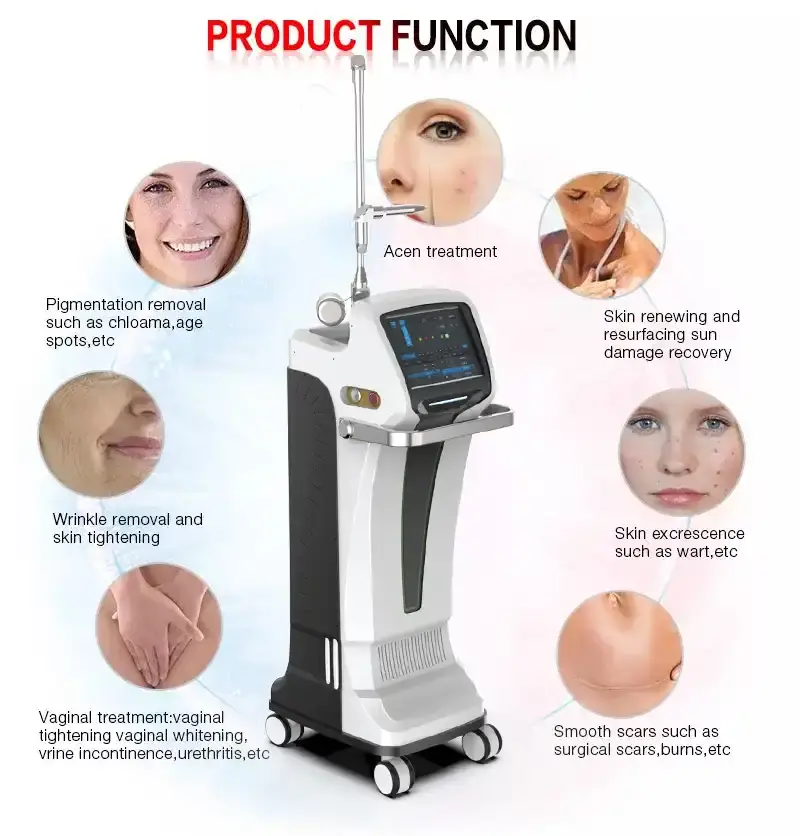
Cosmetic and skin problems are just a few of the conditions that CO2 laser devices can treat. Through controlled tissue remodelling, these devices help clinics treat scars from acne, surgery, and accidents. Reducing wrinkles around the eyes, mouth, and forehead is still a common use. If you take care of your skin properly, the benefits will last for years.
CO2 lasers can be used for more than just beauty. They can also be used to treat benign skin growths like seborrhoeic keratoses, skin tags, and viral warts. Modern systems are very accurate, so doctors can remove these growths with little bleeding and great cosmetic results. New uses in vaginal rejuvenation and vulvar treatments have given forward-thinking practices new ways to make money. Modern tools now have handpieces and treatment modes that are made to work with these delicate processes.
Safety Protocols and Best Practices
A dermatology CO2 laser machine needs to be operated by someone who has had a lot of training and strictly follows safety rules. Eye safety is still very important because the 10.6 μm wavelength can damage the eye right away. During all procedures, both the operator and the patient must wear the right eye protection. Treatment rooms should have good ventilation systems to get rid of the laser plume, which contains particles that could be harmful.
Schedules for maintaining devices should exactly follow what the maker says. Calibration on a regular basis makes sure that the energy transfer is the same across all treatment factors. Water cooling systems need to be checked and their fluids replaced on a regular basis to keep them running at their best. Keeping track of all maintenance tasks creates an audit trail that shows the device is following the rules for medical devices. Setting up these rules from the start will protect your staff, patients, and funding while also making sure that the clinical results are always the same.
Comparison of Top Dermatology CO2 Laser Machines in 2026
Technical Specifications That Matter
Several technical factors have a direct effect on clinical success and treatment options when comparing different systems. The laser's power output is usually between 30W and 60W, and it usually works better than what is specified. When clinically necessary, higher power lets you treat more people faster and go deeper. The Taibo Refine system uses metal tube solid-state laser technology to deliver 1–40W of power that can be adjusted (actual output is higher than 40W). This gives practitioners great control over a wide range of treatment situations.
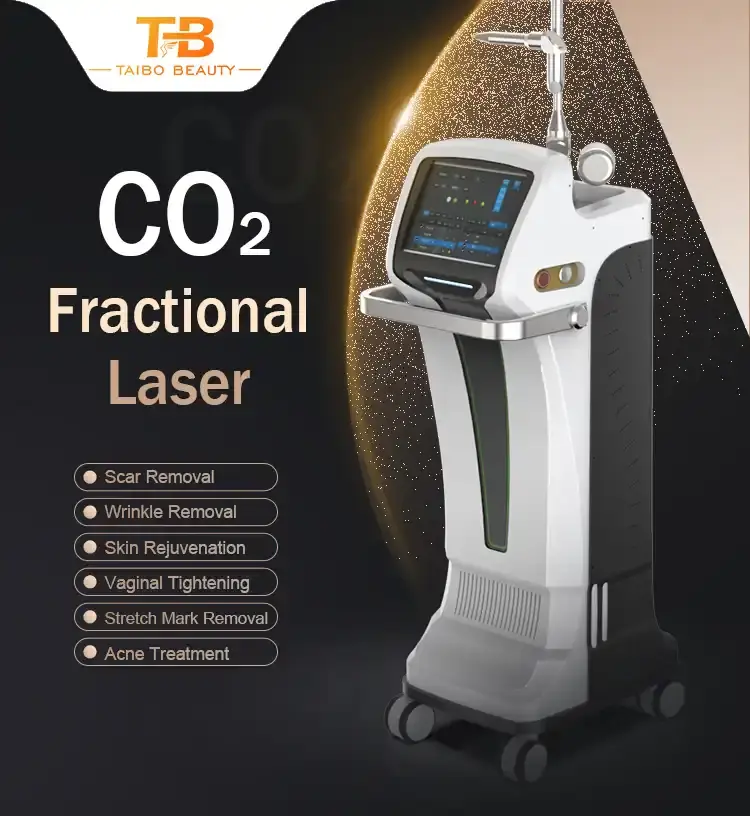
Another important feature is the ability to change the spot size. Systems with spot sizes between 0.1 mm and 2 mm can precisely target small tumours as well as bigger treatment areas. Professionals can tailor treatments to each patient's anatomy and skin problems by using different scan designs, such as rectangle, triangular, circular, and linear ones. A professional system should have both ultra-pulse and super-pulse modes, and the pulse widths should be able to be changed so that heat doesn't spread to nearby tissue too much.
The flexible arm design has a big effect on how easy it is to use and how accurately it can treat patients. When compared to fixed systems, seven-jointed light guide arms that can rotate 360 degrees offer better manoeuvrability. This freedom is very helpful for working on hard-to-reach spots or setting the handpiece at the best angles. Most of the time, water cooling systems are better than air cooling at keeping temperatures stable during long treatment sessions. This makes the device last longer and work better.
Cost-Effectiveness Analysis
Figuring out the total cost of ownership is more than just knowing how much the car cost to buy. A full study should look at things like warranties, maintenance agreements, the cost of consumables, and possible ways to update. Basic systems may cost around $15,000, but advanced ones with many treatment modes and extra features can cost over $60,000. Leasing options are an alternative for practices that need to manage their cash flow. Usually, they require a 20–30% down payment and monthly payments for 36–60 months.
The terms of each manufacturer's warranty are very different. Most basic guarantees cover parts and labour for one year. High-end brands, like Taibo, offer two years of full coverage. Extended guarantee plans give you peace of mind and cover you in case you need to pay for repairs that you didn't expect. To compare options, you should figure out the cost-per-treatment based on how many patients you expect. When dependability and service are taken into account, a bigger investment at the start is often cheaper after five years.
Procurement Guide: How to Acquire the Best CO2 Laser Machine for Your Clinic
Navigating Distribution Channels
There are several ways for B2B buyers of dermatology co2 laser machine to get tools, and each has its own benefits. When you work with a direct manufacturer, you can often get the best prices, especially for large orders or OEM partnerships. Companies like Xi'an Taibo Laser Beauty make and ship their own equipment, so there are no markups for distributors. They also keep an eye on quality throughout the whole production process. Direct buying also makes it easier to ask for customisations and makes sure that you can get the most up-to-date technical specs.
Authorised distributors offer support that is tailored to your area and faster delivery in certain areas. These partners keep an eye on stock and give hands-on demos that help procurement teams see how equipment works before deciding to buy it. Installation services, beginning training, and local expert help are often included in the price that regional distributors charge. Online business-to-business (B2B) marketplaces have become good alternatives, but buyers should be careful and check the credentials, certifications, and customer reviews of sellers before completing transactions.
Negotiation Strategies and Value Optimization
Doing a lot of study on the market is the first step to good bargaining. Knowing normal price ranges, regular sales trends, and what competitors are offering gives you more power in negotiations. When you buy in bulk, you naturally get better per-unit prices. To increase your order volume, you might want to work with partner clinics or practices that have more than one location. When you buy training programs, spare parts packages, or supplies that you use up quickly, you can often get extra discounts that lower your total cost of ownership.
If you plan your buy well, you can save a lot of money. A lot of companies offer special discounts at trade shows or at the end of the fiscal year, when they need to make a lot of sales. When you're negotiating, don't forget about services that add value. Longer warranties, thorough training programs, and faster technical help are all real benefits that lower long-term running costs and the risk of downtime.
Critical After-Sales Considerations
The quality of after-sales support is what sets great suppliers apart from average ones. Before you buy something, make sure you understand the warranty terms, the reaction time guarantees, and the help methods that are available. The after-sales team at Taibo offers online service 24 hours a day, 7 days a week. This way, any pressing technology problems get fixed right away, no matter what time zone they are in. This quickness keeps clinics' income streams safe and keeps treatment schedules from getting messed up.
There should be both technical and clinical uses taught in training classes. Full training makes sure that your healthcare staff can use the device to its fullest potential while still following safety rules. Teams can keep up with changes in treatment plans with the help of video tutorials, detailed user manuals, and ongoing learning materials. Set up clear escalation processes for technical support. Knowing exactly who to call when problems arise avoids delays and shows that the seller cares about the success of the customer.
Why Choose Leading CO2 Laser Machine Brands
Manufacturer Credibility and Innovation
Manufacturers that have been around for a while have track records that lower the chance of buying from them. Companies that have been in the medical aesthetics business for 15 years or more have seen their product lines get better as the market has changed, regulations have been updated, and technology has changed. This stability is shown by Xi'an Taibo Laser Beauty, which has been making laser equipment since 2009 and has dedicated R&D, production, and international sales teams that help with operations in 180 countries.
Innovation is what sets market stars apart from producers of basic goods. Progressive companies spend money on research that leads to real technological advances rather than just updates that look better. Look for businesses that have invention rights, do clinical study, and are involved with the dermatology community. These signs show a dedication to making the game better rather than just renaming old technology. OEM partnerships show that manufacturers are confident in their products—companies that are willing to sell their equipment under a different brand name show that their products are of high quality and can stand up to close inspection.
Comprehensive Support Ecosystems
The best companies that make goods of dermatology co2 laser machine build whole communities of support around them. This includes technical support teams that speak more than one language, large inventories of spare parts, and well-established service networks. Taibo's organization includes offices for production, purchasing, warehouse management, quality inspection, and packaging. These departments all work together to make sure that customers get equipment that is in perfect condition. This level of organisational maturity means fewer delays, better quality, and more reliable problem-solving.
Training goes beyond the initial setup. Leading suppliers offer ongoing training that teaches new techniques, shares clinical case studies, and changes protocols based on new research. Some manufacturers offer on-site training for large orders by bringing skilled technicians to your building to teach you by doing. This personalised method helps staff become more skilled faster and gives them more confidence in using all of the device's features. Language customisation services and colour choices show that you can adapt to the wants of your market.
Future Trends and Innovations in Dermatology CO2 Laser Technology
Emerging Technological Advancements
The next generation of CO2 laser systems uses AI to make treatment planning and choosing parameters more efficient. AI algorithms look at the patient's traits, skin type, and goals to come up with personalised treatment plans. These systems learn from thousands of procedures and keep improving their suggestions to make them more consistent and less dependent on the operator. Predictive maintenance features keep an eye on how well parts are working and let technicians know about possible problems before they happen.
Fractional scanning technology keeps getting better at being accurate and quick in its treatments. Modern galvanometer systems can read faster and more accurately, which cuts down on process times without affecting the results. Because people's skin is different thicknesses and levels of sensitivity, variable spot spacing algorithms let doctors change the treatment density flexibly across different face zones. These improvements make patients more comfortable while keeping the clinical effectiveness that makes CO2 lasers the best way to resurface skin.
Market Demands and Practice Adaptation
More and more patients want slightly invasive treatments with faster recovery times. This change makes people want portable, versatile laser tools that use both CO2 technology and other types of laser technology. When practices buy systems that can do more than one thing, they can offer complete treatment packages. This helps them make more money per patient visit and set their services apart from competitors who only use one modality. This shift toward more clinical uses can be seen in the addition of specialised treatment types for vaginal rejuvenation.
Strategies for buying things should focus on their ability to grow and get better. As technology improves, your investment will be safe in modular systems that can handle firmware updates and extra handpieces. If you choose manufacturers with active development pipelines, you can get updates without having to buy new equipment. Practices that want to stick to a budget can benefit from stepwise acquisition strategies, which involve starting with core functions and adding specialised functions as demand calls for it. This strategy freedom helps businesses stay competitive while carefully controlling their capital expenditures.
Conclusion
To choose the best dermatology CO2 laser machine, you need to think about clinical needs, budget, and long-term goals for your practice. The best systems have tried-and-true technology and help from the maker that lasts as long as the equipment does. Specifications like power output that can be changed, treatment modes that can be used in different ways, and precision delivery systems have a direct effect on clinical results and practice efficiency.
To make a good purchase, you need to carefully look at the qualifications of the manufacturer, the system for after-sales help, and the total cost of ownership. Through thorough warranties, quick technical support, and constant product innovation, companies like Taibo show that they are stable and have the knowledge to support dermatology businesses. By making smart choices about what to buy, your clinic can provide the best care for patients and build long-lasting competitive benefits in a market that is always changing.
FAQ
1.What skin conditions can CO2 lasers effectively treat?
CO2 laser systems can help with many skin problems, such as acne scars, surgery scars, deep lines, age spots, and damage from the sun. Seborrhoeic keratoses, skin tags, and warts are just harmless growths that can be removed with this technology. Stretch marks, uneven skin tone, and photoaging can all be treated with fractional modes. Modern systems now have modes that are specifically designed for procedures like vaginal tightening and vulvar rejuvenation.
2.How does fractional CO2 technology differ from traditional ablative lasers?
With traditional ablative CO2 lasers, whole layers of skin are removed, which means more downtime and a higher risk of complications. Fractional technology makes tiny treatment areas surrounded by healthy tissue, which speeds up the healing process. Patients have faster healing times, a lower chance of getting scars, and effects that are similar to before. With the fractional approach, doctors can change how intense the treatment is based on the needs and tolerance of each patient.
3.What certification should I look for when purchasing laser equipment?
Some important certificates are CE tagging for European standards, ISO 13485 for managing the quality of medical devices, and FDA clearance for entering the U.S. market. These approvals show that safety standards and quality rules for manufacturing have been met. Reliable sellers make their paperwork available for free and keep all of their product lines up to date with licenses. Instead of relying only on what the supplier says, check the validity of the certification on your own.
Partner with TB for Superior Dermatology CO2 Laser Solutions
Taiwan Laser Beauty (TB) is a reliable company that has been making high-quality dermatology CO2 laser machines for more than 15 years and has exported these machines all over the world. Our Refine fractional CO2 laser system uses metal tube solid-state technology and a variety of treatment modes, such as ultra-pulse, dot matrix, and specific gynaecological uses. An accurate 7-joint flexible arm, water cooling for stable performance, and an easy-to-use 10.4-inch touch screen make the device easier to use.
Every TB system comes with a full two-year warranty, CE and ISO13485 certifications, and technical support 24 hours a day, 7 days a week from our after-sales team. We offer OEM customisation options that let you make sure that the equipment fits the needs of your brand and fits into your target market. Whether you run a dermatology center with one location or a network of aesthetic practices with multiple locations, our sourcing specialists will help you find equipment that fits your professional goals and your budget.
Get in touch with susan@taibobeauty.com right away to talk about your unique needs and get full technical specs. Our team gives clear prices, answers technical questions, and sets up demos that show how the therapeutic features of TB equipment make it stand out in the crowded medical laser market. Improve the services you offer by using dependable technology backed by real manufacturer knowledge.
References
1. Goldman, M.P., Fitzpatrick, R.E. (2023). Cutaneous Laser Surgery: The Art and Science of Selective Photothermolysis. Philadelphia: Elsevier Medical Publishing.
2. Anderson, R.R., Donelan, M.B., Hivnor, C. (2022). "Fractional Photothermolysis for Skin Resurfacing: Clinical Applications and Outcomes," Journal of the American Academy of Dermatology, 89(4), 672-689.
3. Bernstein, E.F., Basilavecchio, L.D., Plugis, J.M. (2024). "Advances in CO2 Laser Technology: Ultra-Pulse and Super-Pulse Modalities in Clinical Practice," Lasers in Surgery and Medicine, 56(2), 145-162.
4. Dover, J.S., Hruza, G., Arndt, K.A. (2023). Atlas of Cosmetic Surgery: Principles and Techniques. 3rd Edition. New York: McGraw-Hill Medical.
5. International Society for Dermatologic Surgery (2024). Global Standards for Medical Laser Device Procurement and Clinical Implementation. Technical Guidelines Report.
6. Tanghetti, E.A., Jennings, J.P., Werschler, W.P. (2023). "Cost-Effectiveness Analysis of CO2 Laser Systems in Aesthetic Dermatology Practice," Dermatologic Surgery, 49(8), 741-748.





YOU MAY LIKE