
Best CO2 Fractional Laser Machines for Clinics
2026-08-19 17:55:23
co2 fractional laser machine with the metal tube solid-state laser technology for accuracy and adaptability. These modern devices operate at 10.6μm wavelength with a power output of more than 40W, offering fractional photothermolysis via minuscule heat zones that drastically improve skin resurfacing results while minimising patient downtime. For cosmetic clinics or dermatological offices that want an FDA-compliant machine with full warranty coverage, investing in a proven platform will meet key treatment needs from acne scar revision to deep wrinkle removal.
Introduction
CO2 fractional laser technology is a breakthrough in dermatology, providing an attractive investment opportunity for clinic owners and purchasing officers. As patient demand for non-invasive skin rejuvenation heats up throughout the United States, choosing equipment that offers a combination of clinical effectiveness and operational efficiency is critical. This complete handbook details the technical requirements, regulatory factors, and criteria for supplier assessment to help you make educated purchase choices. We explore the processes of fractional laser devices that generate targeted micro-injuries to activate collagen production, review the top device designs on the market in 2024, and provide practical advice for evaluating return on investment. If you own a boutique medical spa or a multi-location dermatological clinic, knowing these essential factors can help you choose technology that enhances patient results and supports sustainable company development.
Understanding CO2 Fractional Laser Technology and Its Advantages
The Science Behind Fractional Photothermolysis
The wavelength of the CO2 laser is 10,600 nanometres, where water molecules in skin tissue show maximal absorption. This feature allows for accurate thermal ablation of the epidermis and regulated heat zones in the deeper layers of the dermis. The fractional delivery system produces thousands of tiny treatment columns surrounded by untreated tissue that function as reservoirs for fast healing. This is the main difference between fractional systems and standard completely ablative lasers, which ablate the whole surface layer.
The functioning idea is based on the formation of Micro Thermal Zones to a depth of 1.5 – 2 millimetres in the dermis. In certain areas, the laser pulse vaporises, coagulates, and carbonises the tissue in a regulated way. Healthy epidermal bridges between the treatment columns promote epithelial regeneration and recovery times of five to seven days vs several weeks for complete ablation. Fractional treatment patterns are often described in dermatological publications, demonstrating equivalent therapeutic benefits but with much lower complication rates.
Clinical Benefits Driving Practice Adoption
Fractional laser resurfacing treats several cosmetic issues that drive patient demand. The method is especially effective for acne scarring, with studies indicating a 50-75% reduction in the depth and texture of scarring after a series of treatments. Over months, heat stress causes neocollagenesis, resulting in demonstrable diminution of deep rhytids around the eyes and lips. Irregular pigmentation, rough texture, and enlarged pores, all signs of photodamage, improve consistently across a range of skin types.
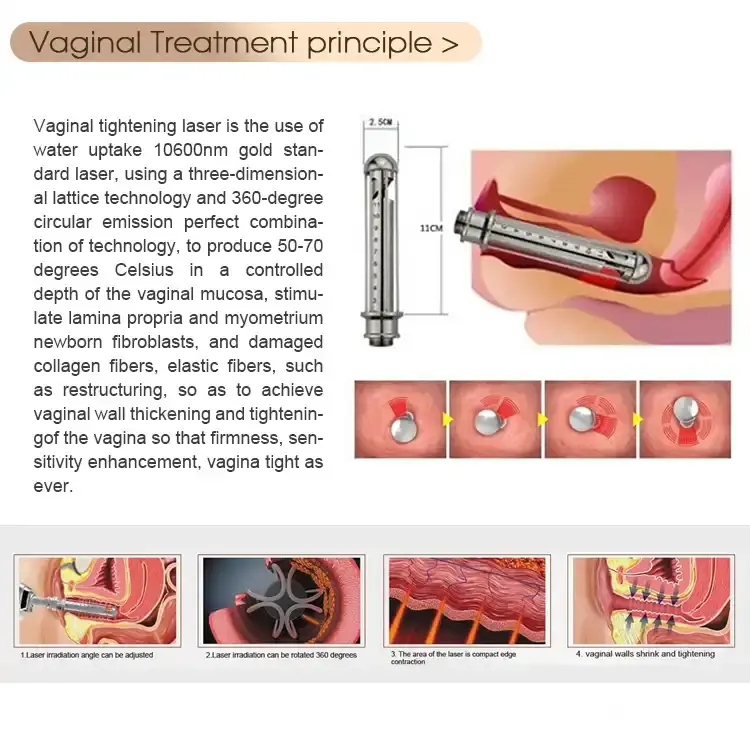
This adaptability is not limited to the face. Today, modern systems include specific modes for gynaecological treatments such as vaginal tightening and vulvar rejuvenation, which provide additional sources of income to clinics. Fractional therapy works well on body stretch marks and surgical scars, although treatment parameters must be modified. Purchase teams need to be aware of various applications to be able to justify the purchase of equipment by multiple service lines as opposed to single-purpose.
Managing Patient Expectations and Recovery
Possible transient side effects of co2 fractional laser machine treatments include erythema for two to four days, minor oedema, and dry skin texture throughout the healing period. Proper pre-treatment counselling and post-procedure guidelines minimise problems and maximise outcomes. Clinics should have a defined methodology for evaluating patient candidature, especially for Fitzpatrick skin types IV to VI, who are at a higher risk for post-inflammatory hyperpigmentation without adequate parameter changes.
Recovery management methods have a major influence on patient satisfaction and treatment success. Optimal tissue regeneration is supported by standardised wound care instructions, scheduled follow-up examinations, and the use of suitable healing products. While not part of the equipment spec itself, these operational features directly impact the perceived value of your technology investment, via patient retention and creation of referrals.
Top CO2 Fractional Laser Machines of 2026: Features and Comparisons
Critical Evaluation Criteria for Equipment Selection
Power output is a key characteristic that determines treatment capabilities and session efficiency. Systems with real output of more than 40W have shorter treatment periods yet are still effective therapeutically. The solid-state laser architecture with metal tubes has several benefits over the typical glass tube designs – a longer operating life up to 20,000 hours, very low maintenance needs, and better consistency in beam quality. This means cheaper operational expenses over the long run and less downtime.
Wavelength accuracy at 10.6μm +0.1μm for predictable tissue contact. The seven-joint articulated arms as delivery devices enable ergonomic flexibility during treatment and ensure beam path alignment. The therapy has the capacity to change the spot size to an ultra-fine 0.1mm, which means it can target a single scar or spot treatment, making it more clinically versatile than broad-area resurfacing. The 10.4-inch touch colour screen interface facilitates the selection of parameters, which reduces the training time for healthcare professionals.
Output Modes and Treatment Customization
Sophisticated systems are available with several operating modes to cater to various clinical demands. The dot matrix mode provides the usual fractional pattern for general skin resurfacing. Pulse mode variants such as long pulse and ultra pulse configurations are tuned to the thermal diffusion properties of the material, enabling practitioners to choose between forceful ablation and milder thermal remodelling. Specialised private and vulvar modes use modified scanning patterns and energy distributions optimised for gynaecological purposes.
Advances in scanning techniques are improving the accuracy of therapy. Thermal load is more equally distributed throughout treated regions by non-sequential scanning, decreasing heat build-up that might affect safety margins. Maximum separation algorithms avoid overlapping treatment zones that may cause significant tissue damage. Variable lattice density up to 200 dots/cm2 allows customisation to scar depth, wrinkle severity, or desired aggressiveness to facilitate protocol creation for a variety of patient presentations.
Regulatory Compliance and Safety Certifications
CE-certified equipment complies with European Union safety and performance criteria, which facilitates worldwide market growth. ISO 13485 certification ensures the sourcing of components, assembly procedures, and quality control methods, confirming that the manufacturer’s quality management systems are in place and effective for medical device manufacturing. These certificates decrease liability risk while streamlining credential verification during medical board reviews or facility inspections.
Safety features such as emergency stop functions, built-in cooling systems, and interlock mechanisms safeguard both practitioners and patients during treatments. During long-term operation, the water cooling systems keep the laser tubes at relatively constant temperatures. The beam quality diminishes as the laser tube heats up. The 635nm indicator light wavelength gives visual confirmation of target location without the need for test firing, sparing resources for multi-area treatments.
How to Choose the Right CO2 Fractional Laser Machine for Your Clinic
Aligning Equipment Capabilities with Practice Demographics
The choice of equipment should be guided by the characteristics of the patient group. Devices with wrinkle removal and skin-tightening qualities are advantageous for practices that target mostly ageing clientele. Clinics treating acne scarring in younger patients need accurate depth control and smaller spot sizes for focused scar correction. Platforms that allow for both facial and gynaecological applications provide a competitive advantage for medical spas with extensive cosmetic treatment offerings.
The predictions of treatment volume impact the power requirements and cooling capacity requirements. High-volume clinics benefit from equipment that can run non-stop without thermal drift, resulting in repeatable outcomes for successive patients. Smaller footprints and cheaper acquisition costs may be more appealing for lower-volume boutique settings accepting less throughput capability. Accurate demand forecasting eliminates both underutilisation of equipment and capacity constraints that would limit revenue possibilities.
Evaluating Warranty Terms and Technical Support
The industry norm is a two-year comprehensive warranty, although the conditions vary greatly from manufacturer to manufacturer. The coverage should specifically cover the replacement of the laser tube, which is the most valuable component and degrades over time. Parts availability agreements enable fast repair turnaround and minimise revenue loss due to equipment downtime. Determining if the warranty covers shipment, labour, and on-site servicing minimises surprises.
Availability of technical help has a direct influence on operational continuity. Manufacturers facilitate troubleshooting and minimise learning curves via 24-hour response methods, remote diagnostics, and extensive training tools. Staff should be trained via operating manuals, video demonstrations, and live video consultations until they are proficient. Some providers offer on-site installation and training for large orders, which may speed up your deployment schedules.
Financial Considerations and Return on Investment
Pricing for excellent fractional laser systems ranges from $18,000 to $45,000 based on features, accessories, and manufacturer positioning. To do a cost-benefit analysis, you have to make projections of your treatment volumes, typical rates for procedures, and the competitive pricing in your market. Multi-treatment application systems generate income from various service lines and provide a faster return on investment than single-purpose devices.
Practices with capital restrictions have financing choices including equipment leasing, manufacturer payment plans, and co2 fractional laser machine medical equipment loans, to offer purchase paths. Tax benefits of leasing agreements and working capital for operational requirements. Total cost of ownership accounts for consumables, maintenance contracts, and possible upgrade options as technology advances, offering a realistic basis for long-term planning.
Trusted Suppliers and Procurement Best Practices for Fractional CO2 Laser Machines
Identifying Reputable Manufacturers and Distributors
Established manufacturers with documented production histories demonstrate stability and reliability essential for long-term equipment support. Xi'an Taibo Laser Beauty, with 15 years of manufacturing experience since 2009, maintains dedicated research and development teams alongside comprehensive international sales networks. Production facilities incorporating specialized departments for quality inspection, packaging, and post-delivery support indicate mature operational capabilities.
Verification processes should include requesting certification documentation, reviewing third-party testimonials, and contacting existing customers within your professional network. Manufacturers exporting to over 180 countries demonstrate regulatory compliance across diverse jurisdictions. Patent holdings in fractional laser technology provide additional assurance regarding innovation capabilities and intellectual property protection, differentiating original manufacturers from resellers offering generic alternatives.
Critical Contract Elements and Service Agreements
Purchase agreements should explicitly define warranty coverage duration, parts replacement procedures, and technical support protocols. Service level agreements specifying maximum response times for troubleshooting inquiries protect against extended downtime. Clarifying parts availability commitments prevents scenarios where discontinued components render equipment irreparable despite remaining functional for years.
Installation support provisions ensure proper deployment of water cooling systems, electrical connections, and software configuration. Training commitments should specify the number of staff members covered, training duration, and whether refresher sessions are included. Addressing these elements during contract negotiation prevents misunderstandings that could compromise equipment utilization or generate unexpected costs.
Logistics and Supplier Training Programs
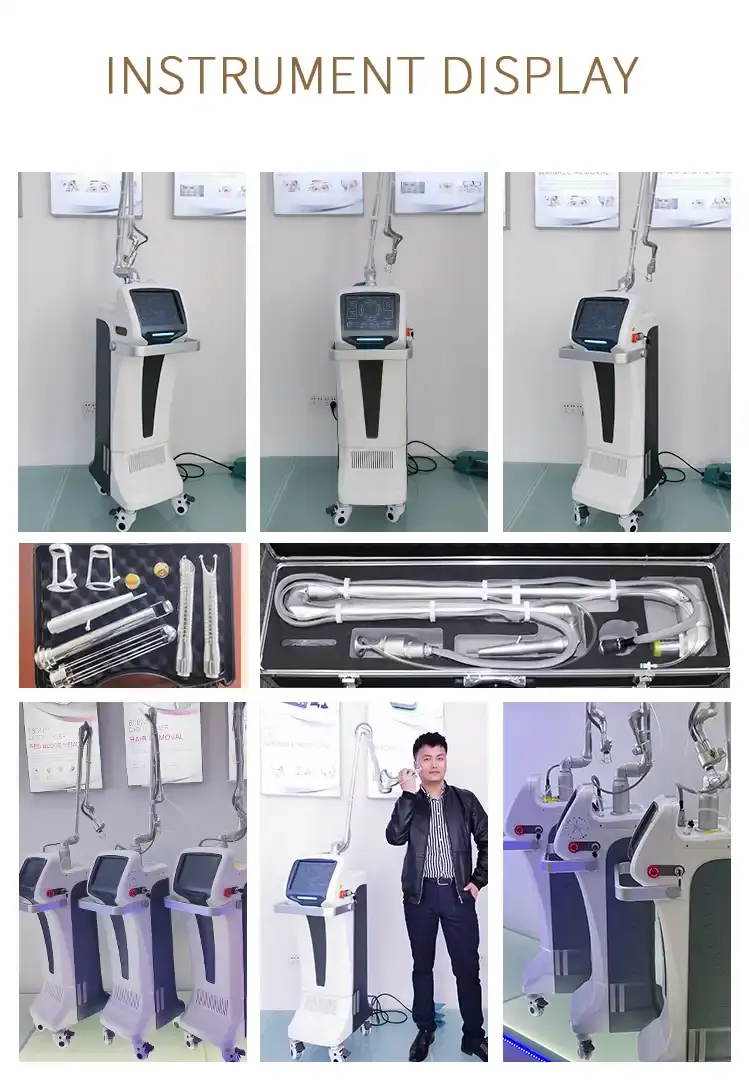
Professional packaging using customized foam-lined aluminum cases protects sensitive optical and electronic components during international shipping. Transportation options, including air freight, ocean shipping, and express courier services, offer flexibility, balancing cost and delivery speed. Understanding customs documentation requirements and import duties prevents delays at international borders.
Comprehensive training programs covering operation procedures, maintenance protocols, and basic troubleshooting empower clinical teams to maximize equipment capabilities. TB offers detailed instructional materials, video consultations, and ongoing technical support, ensuring staff competency. Language customization services accommodate diverse practice environments, particularly valuable for multi-location organizations or international clinic groups.
Real-World Clinic Results and Future Trends of Fractional CO2 Laser Technology
Documented Clinical Outcomes Validating Equipment Performance
Clinical case studies have repeatedly shown significant changes in skin texture, scar architecture, and wrinkle depth after fractional treatment methods. Patients with acne scars usually have a 60-80% improvement on standardised grading standards after three to five treatments spaced six to eight weeks apart. Periorbital wrinkles demonstrate demonstrable improvement, along with improvement in patient self-assessment ratings, which results in satisfaction and referrals.
Photographic recording, following standardised rules for lighting and location, gives objective proof of the effectiveness of the therapy. These visual recordings have two purposes: clinical evaluation tools and marketing materials to demonstrate skills to potential patients. Systematic documentation methods in equipment deployment add to the value of each therapy delivered and establish case libraries to assist promotional activities.
Emerging Technological Innovations
Artificial intelligence integration with its prototype systems analysing skin problems and providing optimised treatment settings is the frontier of fractional laser progress. These advances should help to standardise outcomes and lower the knowledge bar for great outcomes. Automated scanning patterns that react to the tissue reaction in real time might reduce human error and increase the efficiency of therapy.
Combination therapy methods combining fractional laser treatment with platelet-rich plasma, microneedling, or radiofrequency modalities show synergistic advantages greater than the sum of the individual treatment outcomes. Equipment makers are progressively developing platforms that enable multimodal techniques, enabling clinics to provide full treatment packages. Grasping these trajectory points assists clinics in anticipating future upgrade possibilities and planning technology roadmaps to enhance long-term competitive posture.
Market Expansion and Practice Opportunities
The aesthetic medicine market is growing strongly, and fractional laser therapy is a large sector. Exposure on social media and celebrity endorsements increase patient knowledge of non-surgical rejuvenation alternatives, and with it, the number of requests for consultations. This demand trend benefits current technology-based practices, and they achieve reputation leadership in their industries.
Demographic factors such as ageing baby boomers and younger generations looking for preventative care boost the potential patient pool. Patients seeking answers to post-partum alterations or age-related vaginal issues are in underdeveloped market areas that attract gynaecological applications. Clinics with these skills are providing a unique service for patients whose demands are not satisfied by the typical model of gynaecological practice.
Conclusion
Choosing the right fractional laser system, such as a co2 fractional laser machine, is a balance of clinical needs, economic concerns, and supplier dependability. Dermatology offices and medical spas will find the metal tube solid-state design meets key demands with customisable pulse modes, accurate spot size management, and full warranty coverage. Regulatory certifications like CE and ISO 13485 give vital compliance assurance for U.S. businesses. Collaborating with leading manufacturers such as TB, which has 15 years of manufacturing experience and full technical assistance, reduces procurement risks and guarantees long-term equipment performance. Clinics may achieve improved patient outcomes and sustained profitability across a wide range of therapeutic applications via strategic investments in proven technology.
FAQ
1. What recovery duration should patients expect after fractional laser treatments?
Typical recovery ranges from five to seven days for facial treatments using moderate parameters. Patients experience redness resembling sunburn for the initial two to three days, followed by dry skin texture and mild flaking as new tissue regenerates. More aggressive treatments extending deeper into the dermis may require up to ten days for complete epithelialization. Proper wound care, including gentle cleansing and appropriate moisturization, supports optimal healing while minimizing complication risks.
2. How does fractional technology compare with microneedling for scar treatment?
Both modalities stimulate collagen remodeling through controlled injury, though mechanisms differ substantially. Fractional lasers deliver precise thermal energy, creating immediate tissue ablation and coagulation, typically producing more dramatic single-session improvements. Microneedling creates mechanical channels without thermal damage, generally requiring more treatment sessions for comparable results. Laser systems offer superior precision for isolated scars and better control over treatment depth, while microneedling presents lower risks for darker skin types prone to post-inflammatory pigmentation.
3. What financing options exist for acquiring premium laser equipment?
Medical equipment lenders provide financing structures tailored to aesthetic practices, typically offering terms from 36 to 60 months with competitive interest rates. Equipment leasing arrangements preserve capital while providing tax deductions for lease payments. Some manufacturers, including TB, offer direct payment plans facilitating acquisition without third-party financing. Many practices structure financing to align monthly payments with projected treatment revenue, achieving cash-flow positive deployment from the initial operational month.
Partner with TB for Your CO2 Fractional Laser Machine Supplier Needs
TB stands ready to support your clinic's technology advancement through proven fractional laser platforms backed by comprehensive service commitments. Our manufacturing facility, operational since 2009, delivers equipment to aesthetic practices across 180 countries, supported by CE and ISO 13485 certifications ensuring regulatory compliance. The two-year warranty covering all components, including the laser tube, protects your investment while our 24-hour technical support team resolves operational questions promptly. We offer OEM customization services allowing brand integration for practices seeking proprietary equipment presentation. Reach our procurement specialists at susan@taibobeauty.com to discuss your specific clinical requirements, request detailed specifications, or arrange equipment demonstrations. Strategic partnership with an established co2 fractional laser machine manufacturer positions your practice for sustained growth through technology leadership.
References
1. Anderson RR, Donelan MB, Hivnor C, et al. "Laser Treatment of Traumatic Scars with an Emphasis on Ablative Fractional Laser Resurfacing: Consensus Report." JAMA Dermatology, 2014.
2. Hantash BM, Bedi VP, Chan KF, Zachary CB. "In Vivo Histological Evaluation of a Novel Ablative Fractional Resurfacing Device." Lasers in Surgery and Medicine, 2007.
3. Tierney EP, Kouba DJ, Hanke CW. "Review of Fractional Photothermolysis: Treatment Indications and Efficacy." Dermatologic Surgery, 2009.
4. Bloom BS, Emer J, Goldberg DJ. "Assessment of Safety and Efficacy of a Bipolar Fractional Radiofrequency Device in the Treatment of Photodamaged Skin." Journal of Cosmetic and Laser Therapy, 2012.
5. Alexiades-Armenakas M, Dover JS, Arndt KA. "Fractional Laser Skin Resurfacing." Journal of Drugs in Dermatology, 2012.
6. Sadick NS, Makino Y. "Selective Electro-Thermolysis in Aesthetic Medicine: A Review." Lasers in Medical Science, 2004.





YOU MAY LIKE