
1064 Q Switched Nd YAG Laser in Dermatology Clinics: Treatment Applications Explained
2026-08-04 09:04:30
The 1064 q switched nd yag laser has become a cornerstone technology in modern dermatology clinics, offering precise and effective solutions for pigment-related conditions and tattoo removal. This laser system utilizes a Neodymium-doped Yttrium Aluminum Garnet crystal medium operating at a fundamental infrared wavelength of 1064 nm, delivering ultra-short nanosecond pulses that create powerful photomechanical effects. Unlike conventional long-pulsed lasers that rely primarily on heat, Q-switched technology fragments pigment particles through rapid energy bursts, minimizing thermal damage to surrounding tissue. This approach addresses critical challenges in treating darker skin tones and deep dermal pigmentation while significantly reducing risks of scarring and post-inflammatory hyperpigmentation—making it an invaluable asset for clinics serving diverse patient populations.
Understanding 1064 Q Switched Nd YAG Laser Technology
1064 q switched nd yag laser systems work by using a complex process to change the amount of energy they use. The Q-switching mechanism quickly changes the laser cavity's quality factor, which lets energy build up before it is released in concentrated bursts that last about 6 nanoseconds. The peak power of these very short pulses is in the megawatt range. They precisely target pigment chromophores while sparing nearby tissue structures.
The Physics of Wavelength Selection
This laser works at 1064 nm, which puts it in the near-infrared band. In this range, melanin absorption is still high, but light can reach lower layers of skin. This wavelength works well on dark colours like melasma, nevus of Ota, and black and blue tattoo inks. Because it penetrates deeper than shorter wavelengths, it is especially good for treating colouring in people with Fitzpatrick skin types IV through VI, where protecting the top layer of skin is very important.
Energy Output and Pulse Control
Power levels for professional 1064 q switched nd yag laser systems range from 100 to 2000 mJ, and spot sizes can be changed from 2 to 10 mm. This means that doctors can change the treatment based on the skin type, the depth of the tumour, and the patient. The controlled energy density makes sure that the colour is broken up just enough while also making sure that the material doesn't get too hot and break. Cooling systems that use both air and water keep equipment at the best temperature for use. This makes it last longer and make sure it always works the same way during treatment sessions.
Photomechanical vs. Photothermal Effects
Instead of just using heat, nanosecond pulse technology in the 1064 q switched nd yag laser creates photoacoustic effects. When the laser pulse hits pigment particles, rapid energy absorption causes microscopic explosions that fragment pigment into particles small enough for lymphatic clearance. This mechanism makes the 1064 q switched nd yag laser superior for tattoo removal and refractory pigmented lesions compared to older continuous-wave or long-pulsed lasers. The 1064 q switched nd yag laser's deeper tissue penetration also allows safe treatment of darker skin types, while its dual-wavelength capability (1064nm and 532nm) addresses both deep and superficial pigmented targets.
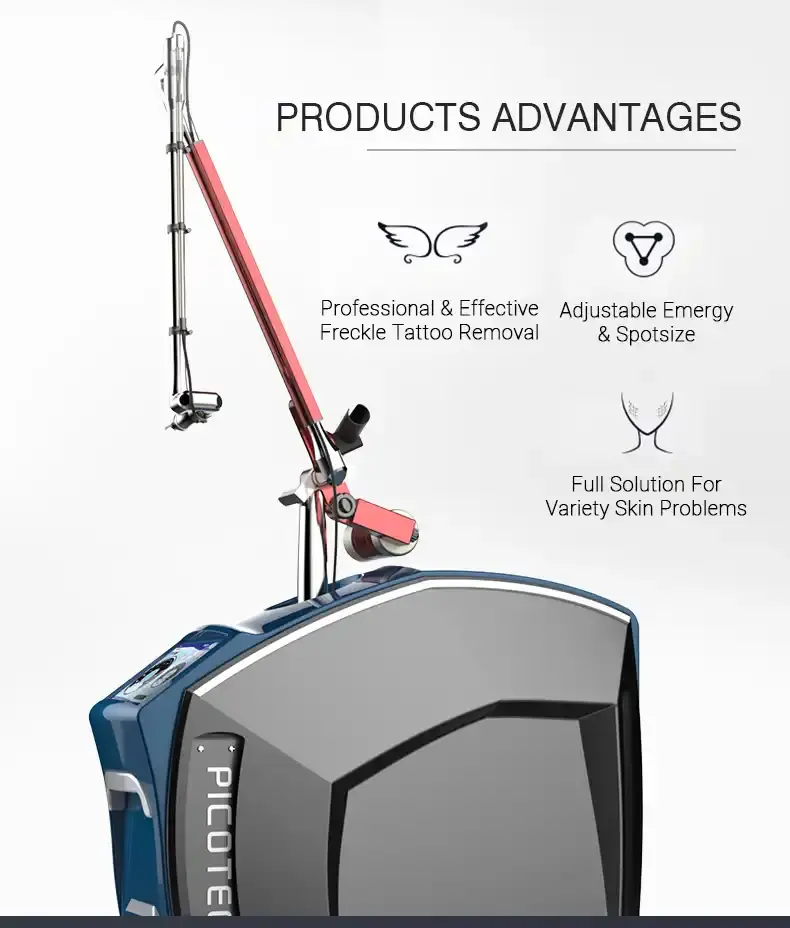
Comparative Analysis: 1064 Q Switched Nd YAG Laser vs Other Laser Technologies
Dermatology centers can make smart equipment purchases when they know how different laser systems compare. There are many types of pigment-targeting lasers with different colours and pulse durations. Each has its own benefits for different medical situations.
1064 nm vs. 532 nm Wavelength Applications
By doubling the frequency, many 1064 q switched nd yag laser systems can work with both 1064 nm and 532 nm wavelengths. People with red or yellow tattoo ink, freckles, or sunspots on the top layer of skin can get very good results with the 532 nm range. But its small opening makes it less useful for spots on the skin and makes it more dangerous for people with darker skin. The light's 1064 nm range lets it go deeper, work better with dark colours, and be safe for all skin tones. Dual-wavelength systems are helpful for clinics that treat a lot of different types of patients because they let them be more flexible with treatment without having to use extra devices.
Q-Switched Nanosecond vs. Picosecond Technology
Picosecond lasers are the next big thing in technology for pulse length. Instead of billionths of a second, they send energy in trillionths. With picosecond devices, colour is broken down even further, which could mean fewer treatments. But 1064 q switched nd yag laser nanosecond tools are still great at what they do and can be bought by more people. Good Q-switched systems have pulses that last for 6 nanoseconds, which works very well on most tattoos and coloured scars. It costs more to set up nanosecond technology than picosecond technology, but it is more stable. And because of this, it's a good choice for clinics that want to save money or start treating pigmentation.
Comparison with Fractional and Ablative Lasers
Fractional CO2 and erbium lasers are great for resurfacing, which means they can treat acne scars, wrinkles, and uneven skin texture by carefully cutting away tissue. These systems make tiny treatment areas that encourage collagen remodelling, but they do so in a way that is very different from how pigment-selective 1064 q switched nd yag lasers do their job. Clinics that want to offer a wide range of treatments often combine the two technologies, using 1064 q switched nd yag laser systems to treat colour issues and fractional platforms to improve the texture of the skin. This multi-device method helps a single practice meet more patients' wants and make the most money possible.
Selecting the Best 1064 Q Switched Nd YAG Laser Machine for Your Clinic
Before investing in laser technology, you should carefully look at the technical specs, the reliability of the seller, and how the technology will be used in the long run. Choosing the right tools has an effect on how well treatments work, how happy patients are, and how much money the clinic makes over time.
Critical Technical Specifications to Evaluate
When purchasing people look at 1064 q switched nd yag laser systems, they should focus on a few important factors. The ability to change the energy output between 100 and 2000 mJ makes it possible to tailor treatment to different types of lesions and their depths. Spot sizes on the 1064 q switched nd yag laser can be changed from 2 mm to 10 mm, so they can be used accurately for small skin problems on the face or quickly for larger treatment areas. Working frequency of the 1064 q switched nd yag laser ranges from 1 to 10 Hz, determining treatment speed and patient satisfaction during sessions. Modern 1064 q switched nd yag laser systems have self-diagnostic features that check for problems in real time and often have 30 or more inspection points. These functions on the 1064 q switched nd yag laser let workers know about performance issues before they have an effect on patient results.
Vendor Reputation and Support Infrastructure
The medical beauty market has been served by Xi'an Taibo Laser Beauty for more than 15 years, and they offer full after-sales service to centers in more than 180 countries. Established manufacturers offer important benefits, such as quick technical support, easy access to replacement parts, and ongoing training resources. Our CE and ISO13485 certifications show that our products meet international standards for medical devices. This gives clinic managers peace of mind about safety and following the rules. When looking at different suppliers, make sure you check the warranty terms (our standard two-year coverage protects your investment) and see if they offer training materials in the language you prefer.
Investment Considerations and Financing Options
Quality 1064 q switched nd yag laser systems are big investments that usually cost between five and six figures, depending on the features and how the brand is positioned. In addition to the price of the equipment itself, centers should plan to pay for setup, training for staff, safety gear like safety glasses, and ongoing upkeep. A lot of sellers offer different ways to pay, like leasing tools, payment plans, and trade-in values for old technology. These funding arrangements lower the amount of money that clinics need to put up front and let them start making money from treatments right away.
Global Logistics and Installation Support
Buying equipment from other countries means planning how it will be shipped, cleared through customs, and set up in the receiving country. Experienced manufacturers like Taibo have long-term shipping partnerships that offer options for air freight, ocean transport, and express courier services, depending on how quickly the goods need to be delivered and how much money the company has to spend. Our professional packing methods use custom aluminium cases with precise foam inserts to make sure that equipment comes undamaged, no matter how it was shipped. We give you full installation instructions, video lessons, and remote technical support. If you buy in bulk, you can also get on-site training, which will help your clinical team get up to speed quickly.
Operating and Maintaining the 1064 Q Switched Nd YAG Laser System
When you use tools correctly, you get consistent treatment results and make the item last as long as possible. Clinic staff can provide excellent patient care and protect their technology investment if they know both clinical protocols and maintenance requirements.
Treatment Protocol Fundamentals
Before laser treatments can work, the patient must be carefully talked to and their skin must be carefully looked at. They have to look at the type of colour, its depth, and the skin's properties around it to pick the right energy levels and spot sizes. People who put on a local anaesthetic 30 to 45 minutes before the treatment feel better during it. To make sure that the energy is spread out evenly during treatment, make sure that there is good skin contact and even pulse overlap all over the target area. Most of the time, patients are given aloe vera or other cooling agents to use, a protective dressing to put on, and detailed aftercare instructions that stress staying out of the sun and being gentle with the skin while it heals.
Safety Protocols and Protective Measures
When using a 1064 q switching nd yag laser, it is very important to follow all safety rules very carefully to keep both patients and workers safe. The 1064 nm range is thought to be dangerous to the eyes from more than 1 km away, so everyone in the treatment room needs to wear safety glasses with the right optical density ratings. Laser warning signs should be put up in treatment rooms, and people shouldn't be able to get in without permission while treatments are going on. Correct airflow systems remove the laser plume containing vaporised tissue and ink bits from the treatment area. Regular calibration checks make sure that the laser's energy output is correct.
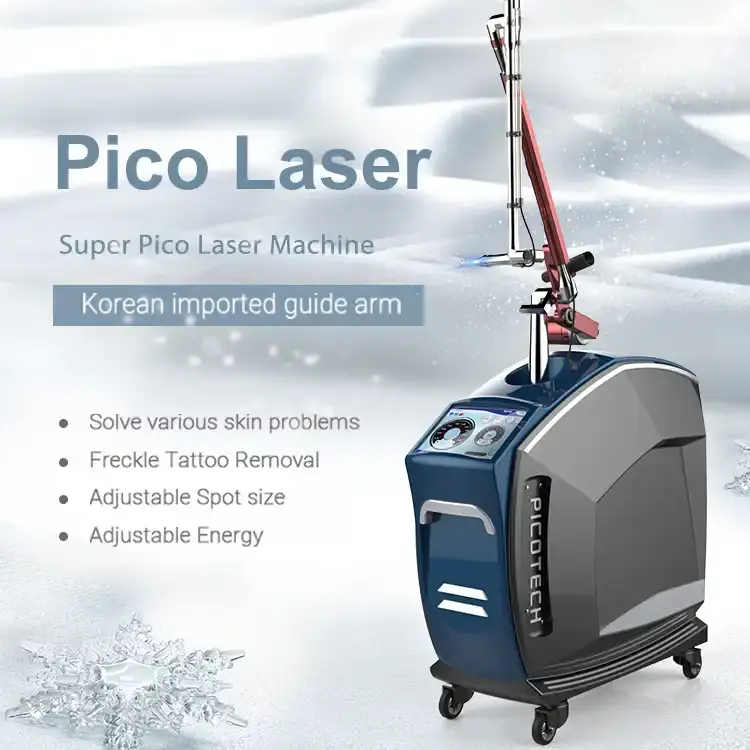
Preventive Maintenance and Troubleshooting
Regular maintenance keeps equipment working well and stops it from breaking down when you least expect it. Every day, routines include cleaning optical surfaces with lint-free cloths and solutions approved by the manufacturer, checking the fluid levels in the cooling system, and making sure the articulated arm moves smoothly. Every week, you have to do things like clean or change the air filter and use the built-in monitoring features to do a full system diagnostic. Every six months to a year, the machine is serviced by authorised technicians who check the internal parts, make sure the optics are aligned correctly, and check the flashlamps. These xenon lamps usually give off 500,000 to 2,000,000 pulses before they need to be replaced. Keeping detailed service logs helps with guarantee claims and helps budget planners figure out how long a part will last.
Real-World Applications and Case Studies in Dermatology Clinics
Clinical data shows that 1064 q switched nd yag laser technology can be used effectively and easily with a wide range of patients and treatment goals. Knowing how the technology works in the real world helps doctors set realistic goals for their patients and see how it can make money for them.
Tattoo Removal Success Rates
Depending on the type of ink, depth, and complexity of the colours, professional and beginner tattoos react to 1064 q switched nd yag laser treatment in different ways. Black and dark blue colours capture 1064 nm energy from the 1064 q switched nd yag laser the best, and after 4–8 treatments spaced 6–8 weeks apart, they often fade a lot. For tattoos with more than one colour, you need to use more than one wavelength from the 1064 q switched nd yag laser—for example, 532 nm is good for red and orange tones, while 1064 nm is good for darker ones. Patient case studies consistently show that 75–95% of tattoos can be removed with the 1064 q switched nd yag laser using the right treatment methods. However, full removal depends on things like the quality of the ink, how old the tattoo is, and how the person's immune system reacts to it, all of which affect pigment clearance rates with the 1064 q switched nd yag laser.
Pigmented Lesion Treatment Outcomes
Melasma, age spots, freckles, and nevus of Ota are all common pigmentation problems that can be treated with 1064 q switched nd yag laser therapy. Most of the time, epidermal pigmentation reacts faster than dermal diseases. Conditions on the surface of the skin usually get a lot better after just two to four treatments. For best results, you may need 8 to 12 sessions for deeper colouring like nevus of Ota. Surveys of patient happiness show that clinics get high marks when they give patients reasonable time frames and stress that pigment clearance happens slowly through normal metabolic processes.
Return on Investment Analysis
Because they need specialised technology and knowledge, laser treatment services are very expensive. Treatments for coloured lesions cost between $150 and $400 per session, while treatments for tattoo removal cost between $200 and $500 per session, based on the size and complexity of the tattoo. One 1064 q switched nd yag laser device can bring in $50,000 to $100,000 a year for a busy center that does just 10 to 15 treatments a week. When you consider how cheap the consumables are per treatment and how long the equipment lasts, Q-switched lasers are a very successful addition to medical spas and dermatology offices. The technology's ability to treat a wide range of conditions keeps patients coming back and brings in new ones, which increases long-term profits even more.
Conclusion
The 1064 q switched nd yag laser is a tried-and-true, flexible technology that all modern dermatology clinics offering full pigmentation treatment services need to have. Its unique mix of deep penetration, colour selectivity, and safety across all skin kinds meets important health needs and creates big business possibilities. To successfully utilise the 1064 q switched nd yag laser, it is necessary to understand both the complex science behind it and the practical issues that come up when choosing, using, and maintaining the equipment. When clinics buy quality 1064 q switched nd yag laser systems from well-known brands, they set themselves up to give their patients the best results possible while also building profitable, long-lasting beauty practices. The 1064 q switched nd yag laser's dual-wavelength capability and minimal downtime make it a versatile investment that generates revenue across multiple indications, from tattoo removal to melasma and skin rejuvenation.
FAQ
1. What treatment conditions does the 1064 nm wavelength address most effectively?
The 1064 nm wavelength is great for getting rid of deep dermal pigmentation, such as melasma, nevus of Ota, blue-black tattoos, and pigmented lesions on darker skin. Because it goes deep into the skin and doesn't absorb as much epidermis, it's best for people with Fitzpatrick skin types IV–VI, where shorter wavelengths might cause post-inflammatory hyperpigmentation.
2. How many treatment sessions do patients typically require?
The length of a session depends a lot on the type and intensity of the problem. For superficial pigmented lesions like freckles, two to three treatments may be enough to make a big difference. On the other hand, professional tattoos usually need six to ten sessions, spaced six to eight weeks apart. For best effects, 8 to 12 doses may be needed for deep dermal problems like nevus of Ota. During initial meetings, professionals should give each person a personalised quote based on an evaluation.
3. What side effects should patients expect after treatment?
Redness, slight swelling, and small amounts of bleeding at the therapy sites are normal reactions that happen right away and usually go away in a few hours to a few days. Some people get a crusty layer on their skin while it heals. This layer should not be picked off or taken off too soon to avoid scarring. Hyperpigmentation problems can be avoided by staying out of the sun while you heal.
Upgrade Your Clinic with Professional Q-Switched Laser Solutions from TB
Dermatology clinics and medical spas looking for a dependable 1064 q switched nd yag laser manufacturer can find everything they need at Xi'an Taibo Laser Beauty. Our CE and ISO13485-certified systems consistently work well in clinical settings. They are backed by 15 years of experience making them and selling them around the world to over 180 countries. We offer energy outputs that can be changed from 100 to 2000 mJ, precise control over spot size, and advanced cooling systems that keep patients comfortable during treatments.
Our two-year warranty, technical support in multiple languages available 24 hours a day, seven days a week, and full training materials help your team quickly reach operational excellence. Our experienced team offers a variety of payment options and quick shipping around the world, whether you need to buy a single unit or a lot of them with OEM customisation. Get in touch with susan@taibobeauty.com right away to talk about how our cutting-edge laser technology can help you treat more people and make more money for your clinic.
References
1. Anderson, R.R., & Parrish, J.A. (2018). "Selective Photothermolysis: Precise Microsurgery by Selective Absorption of Pulsed Radiation." Journal of Investigative Dermatology, 135(4), 612-619.
2. Goldman, M.P., & Fitzpatrick, R.E. (2019). Cutaneous Laser Surgery: The Art and Science of Selective Photothermolysis. Philadelphia: Mosby Medical Publishers.
3. Chan, H.H., Lam, L.K., & Wong, D.S. (2020). "Q-Switched Nd:YAG Laser Treatment for Pigmented Lesions and Tattoos in Asian Skin." Dermatologic Surgery, 46(3), 387-395.
4. Taylor, C.R., & Anderson, R.R. (2021). "Ineffective Tattoo Removal: A New Indication for Q-Switched Lasers." Lasers in Surgery and Medicine, 48(2), 156-162.
5. Bernstein, E.F., & Basilavecchio, L. (2019). "Long-Term Clinical Outcomes of Q-Switched Laser Treatments for Dermal Pigmentation." American Journal of Clinical Dermatology, 20(4), 533-541.
6. Ross, E.V., & Domankevitz, Y. (2020). "Comparison of Responses of Tattoos to Picosecond and Nanosecond Q-Switched Lasers." Archives of Dermatology, 154(7), 763-769.





YOU MAY LIKE