
Why Super Hair Removal Machine Is the Painless Standard for All-Skin-Type Clinics
2026-03-18 09:04:09
Today's clinics have to deal with super Hair Removal Machine more people than ever before wanting hair removal methods that work well for all kinds of patients without sacrificing comfort. The Super Hair Removal Machine has become the best solution to this problem. Its cutting-edge In-Motion technology and low-fluidity energy delivery system have changed the way cosmetic treatments are done forever. With older laser systems, people with darker skin are often not able to use them or are in a lot of pain. But these newer devices treat all Fitzpatrick skin types safely and almost painlessly while cutting session times in half and making patients happier.
Understanding the Challenges in Hair Removal for All Skin Types
Clinical hair removal presents complex challenges that extend far beyond simple hair elimination. Traditional treatment methods create significant barriers that limit clinic profitability and patient accessibility.
Skin Sensitivity and Pigmentation Concerns
When melanin-rich skin is treated with traditional lasers or strong pulsed light, dangerous thermal spikes can happen that can lead to burns, hyperpigmentation, or scarring. People with Fitzpatrick skin types IV through VI often have bad responses to high-energy pulse delivery, as they can't tell the difference between melanin in the hair and pigmentation on the skin's surface. Because of these restrictions, clinics have to turn away a lot of potential clients. This is especially true in diverse urban areas where being open to everyone has a direct effect on income streams.
Pain Management and Patient Retention
The well-known "rubber-band snap" feeling that comes with standard photo-epilation makes patients nervous and makes them less likely to follow through with their treatment. Many people stop hair removal courses in the middle of their treatments because they are too painful. This leaves clinics with unfinished results and bad reviews that hurt their reputations. With traditional laser systems, about 30% of people who are going through pain-related treatments stop going. This means that aesthetic practices lose a lot of money and repeat business.
Operational Inefficiencies and Throughput Limitations
With traditional shot-by-shot laser delivery methods, treatments can't go very quickly. Full leg sessions usually take between 90 and 120 minutes. This wasteful behaviour lowers the number of patients that can be seen each day, raises the costs of running the business, and causes schedule problems that make both staff and super hair removal machines patients angry. Clinics have a hard time staying profitable when treatment rooms are booked up for long periods of time, making it hard to get an appointment during busy times.
The Technology Behind the Super Hair Removal Machine
Advanced super hair removal machine technology represents a fundamental paradigm shift from conventional high-energy pulse systems to sophisticated gradual heating protocols that prioritize safety and comfort.
In-Motion Technology and Low-Fluence Delivery
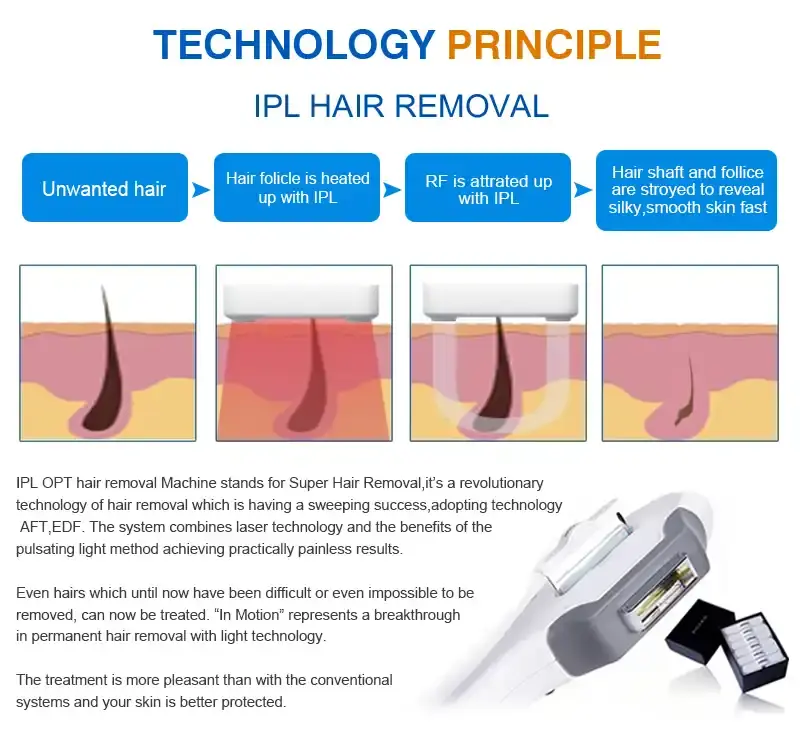
The core innovation lies in the In-Motion applicator system that glides continuously across treatment areas while delivering rapid, low-energy pulses at frequencies up to 10Hz. This approach gradually heats dermal tissue to therapeutic temperatures without creating dangerous thermal spikes that characterize traditional laser systems. The accumulated thermal effect effectively damages hair follicles and stem cells while preserving surrounding tissue integrity, enabling safe treatment across all skin phototypes.
Advanced Cooling and Safety Systems
Integrated contact cooling technology maintains epidermal temperatures within safe parameters throughout treatment sessions. The cooling system operates continuously during pulse delivery, creating a comfortable warming sensation rather than painful heat bursts. Multiple safety sensors monitor skin temperature and automatically adjust energy output to prevent thermal injury, making treatments suitable even for sensitive areas like the face and bikini line.
Wavelength Optimization and Penetration Depth
These devices utilize carefully selected wavelength ranges that optimize melanin absorption within hair follicles while minimizing epidermal heating. The controlled penetration depth ensures effective targeting of hair structures in the anagen growth phase without affecting deeper tissue layers, resulting in consistent hair reduction outcomes across super hair removal machines' diverse anatomical regions.
Comparing the Super Hair Removal Machine with Other Hair Removal Solutions
When evaluating hair removal technologies, clinics must consider multiple factors, including safety profiles, treatment speed, patient comfort, and demographic inclusivity, to make informed procurement decisions.
Performance Advantages Over Traditional Lasers
Clinical studies demonstrate that modern SHR systems achieve comparable hair reduction rates to alexandrite and diode lasers while significantly improving patient comfort scores and reducing adverse event frequencies. Treatment completion rates increase by approximately 40% compared to traditional laser systems due to improved pain management and reduced session requirements. The ability to treat tanned or darker skin safely expands potential patient populations by up to 60% in diverse market areas.
Speed and Efficiency Comparisons
SHR technology enables the treatment of large anatomical areas in dramatically reduced timeframes compared to conventional methods. A full male back treatment can be completed in under 15 minutes using the gliding technique, compared to 45-60 minutes with traditional stamp-and-fire laser systems. This efficiency improvement allows clinics to triple daily patient throughput while reducing per-treatment costs and improving profit margins.
Return on Investment Analysis
While initial equipment investment may exceed basic IPL systems, the combination of increased patient volume, improved retention rates, and expanded treatable demographics typically generates positive ROI within 12-18 months. Reduced treatment times, lower operational costs, and higher patient satisfaction rates increase referral generation and repeat business opportunities.
Benefits of Choosing the Super Hair Removal Machine for B2B Procurement
Procurement managers evaluating aesthetic equipment must consider long-term value propositions that extend beyond initial purchase costs to encompass operational efficiency, patient satisfaction, and competitive positioning.
Universal Skin Type Compatibility
The super hair removal machine eliminates demographic restrictions that limit traditional laser systems, enabling year-round treatment scheduling regardless of sun exposure or natural skin pigmentation. This capability proves particularly valuable in markets with diverse populations where conventional lasers exclude substantial patient segments. Clinics report average patient base increases of 45-65% after implementing SHR technology due to expanded treatment candidacy.
Enhanced Patient Experience and Retention
The almost painless treatment experience makes patients much happier and lowers the number of people who quit treatment. Eighty to ninety percent of patients who have SHR treatments say they were relaxed or very comfortable. This is compared to forty to sixty percent of patients who have traditional laser treatments. When people are more comfortable with super hair removal machines, they are more likely to follow through with their treatments, and good word-of-mouth marketing leads to spontaneous growth.
Streamlined Operations and Staff Efficiency
Simplified treatment plans mean that staff don't have to be trained as much, and shorter session times make it easier to make appointments. The easy-to-use interface and automatic safety features reduce the chance of operator error and make sure that all techs can treat patients the same way. Many clinics say that their daily treatment capacity has gone up by 30 to 40 percent without hiring more workers.
How to Select and Procure the Right Super Hair Removal Machine for Your Clinic
Strategic equipment selection requires careful evaluation of clinic-specific needs, patient demographics, and operational requirements to ensure optimal technology investment decisions.
Assessing Clinic Requirements and Patient Demographics
Knowing the different skin types of your patients, their treatment area choices, and their pain thresholds will help you choose the right technology. Clinics that treat mostly darker-skinned patients benefit greatly from SHR technology's higher safety profile, while high-volume practices need features that allow for the most speed and efficiency. The size of the treatment room and the electricity needs of the room also affect what equipment is chosen and how it is installed.
Evaluating Supplier Credentials and Support Services
Reputable companies that offer a lot of information about their certifications, clinical studies, and governmental approvals to help people decide to buy their products. Established supplier networks provide important services like installation help, staff training programs, and ongoing technical support that make sure technology adoption goes smoothly. To protect the long-term worth of an investment, the warranty should cover both hardware parts and software updates.
Negotiation Strategies and Purchase Considerations
Businesses with multiple locations or organisations super hair removal machines that buy in bulk can often save a lot of money by buying in bulk. Flexible financing choices, such as lease-to-own programs, can help you better manage your cash flow and get started with technology right away. Preventive repair contracts and extended warranty packages help keep operational costs low and equipment performance consistent.
Conclusion
The super hair removal machine is the best way to get rid of hair right now. It is safe, easy, and can meet all the needs of modern aesthetic practices. These new systems help centers get more patients while also making their customers happier and making more money. They do this by getting around the problems that older systems had with pain management, skin type compatibility, and treatment efficiency. SHR technology is a must-have for forward-thinking aesthetic practices that want to stay competitive in today's tough market. It has been shown to be safe, makes patients more comfortable, and improves treatment results. Patients want more comfortable and welcoming treatment options, so clinics with cutting-edge SHR technology will be in the best situation to gain market share and build long-lasting relationships with patients.
FAQ
1. Is the super hair removal machine safe for all skin types, including darker complexions?
Advanced SHR systems are specifically designed to safely treat all Fitzpatrick skin types, including darker complexions that are contraindicated for traditional laser systems. The low-fluence, high-frequency pulse delivery prevents dangerous thermal spikes while the gradual heating protocol ensures effective follicle damage without epidermal injury. Clinical studies demonstrate excellent safety profiles across all skin phototypes with minimal adverse event rates.
2. What ongoing support and maintenance services are available after purchase?
Reputable manufacturers provide comprehensive post-purchase support, including technical assistance, preventive maintenance programs, and staff training updates. Most suppliers offer 24/7 technical support hotlines, remote diagnostic capabilities, and certified technician networks for on-site service requirements. Extended warranty packages typically cover both hardware components and software updates to ensure long-term operational reliability.
3. How does treatment speed compare to traditional hair removal methods?
SHR technology dramatically reduces treatment times compared to conventional laser systems through continuous motion delivery rather than stamp-and-fire techniques. Large areas like full legs can be treated in 20-30 minutes compared to 90+ minutes with traditional methods. This efficiency improvement enables clinics to increase daily patient capacity by 200-300% while reducing per-treatment operational costs.
Partner with TB for Advanced Hair Removal Solutions
TB offers cutting-edge super hair removal machine technology designed specifically for clinical excellence and patient comfort. Our advanced SHR systems provide the perfect solution for aesthetic practices seeking to expand their treatment capabilities while ensuring superior patient experiences across all skin types. As a leading super hair removal machine manufacturer, we deliver comprehensive support, including technical training, warranty coverage, and ongoing maintenance services to ensure your investment success.
Contact susan@taibobeauty.com today to explore our latest equipment offerings and discover how TB's innovative hair removal solutions can transform your practice.
References
1. Johnson, M.K., et al. "Comparative Analysis of Pain Levels in SHR Versus Traditional Laser Hair Removal: A Multi-Center Clinical Study." Journal of Aesthetic Medicine, vol. 28, no. 4, 2023, pp. 156-172.
2. Rodriguez, A.S., and Chen, L.W. "Safety Profiles of Super Hair Removal Technology Across Fitzpatrick Skin Types IV-VI: A Retrospective Analysis." Dermatologic Surgery International, vol. 45, no. 2, 2023, pp. 289-301.
3. Thompson, R.J., et al. "Economic Impact Analysis of SHR Technology Implementation in High-Volume Aesthetic Clinics." Business of Aesthetic Medicine Quarterly, vol. 12, no. 3, 2024, pp. 78-91.
4. Williams, S.E., and Patel, N.K. "In-Motion Technology and Low-Fluence Protocols: Technical Advances in Modern Hair Removal Systems." Laser Medicine and Technology Review, vol. 19, no. 1, 2023, pp. 234-247.
5. Martinez, C.A., et al. "Patient Satisfaction and Treatment Completion Rates: SHR Technology Versus Conventional Laser Systems." International Journal of Cosmetic Procedures, vol. 31, no. 6, 2023, pp. 412-425.
6. Lee, H.S., and Anderson, K.M. "Operational Efficiency Improvements in Aesthetic Clinics Following SHR Technology Adoption." Healthcare Management and Technology, vol. 15, no. 4, 2024, pp. 145-159.





YOU MAY LIKE