
Why dermatology co2 laser machine is the best choice?
2026-07-13 09:07:36
When it comes to resurfacing skin, a dermatology co2 laser machine is the best because it works at a wavelength of 10,600nm and can precisely target water molecules in skin tissue. This technology makes controlled micro-thermal zones that remove broken top layers and encourage deep collagen renewal. CO2 fractional lasers are the only ones that can deeply penetrate the skin and heal faster than other options. This makes them essential for fixing serious acne scars, deep wrinkles, and pigmentation problems that other methods can't handle.
Understanding Dermatology CO2 Laser Machines: Technology and Benefits
The Science Behind CO2 Laser Technology
CO2 lasers work by sending out concentrated infrared light that skin cells mostly receive because they are mostly water. This energy instantly vaporises and coagulates tissue when it comes into contact with it, removing damaged epidermal layers and heating deeper dermal structures. The fractional method splits this energy into tiny treatment areas surrounded by healthy tissue. These areas act as "healing servers" that speed up the healing process. This is what makes CO2 technology different from continuous wave devices that damage things too much with heat.
The beam quality of newer metal tube solid-state lasers is better than that of older glass tube types. These high-tech systems keep their power output steady between 1W and 40W, and they can actually output more than 40W at their peak. With an exact spot size of ≥0.1mm, doctors can change the depth and density of treatment to fit each patient's skin condition and level of tolerance.
Clinical Advantages Over Alternative Laser Technologies
When it comes to fixing deep structural problems, CO2 lasers work better than Erbium:YAG devices. Erbium wavelengths (2940nm) are better for softer resurfacing of the skin's surface, but they don't have the thermal power to cause major neocollagenesis in the reticular dermis. Nd:YAG lasers (1064nm) are great at treating vascular tumours, but they aren't precise enough to remove scars or improve their structure. Q-switched lasers work on colour, but they don't change the structure.
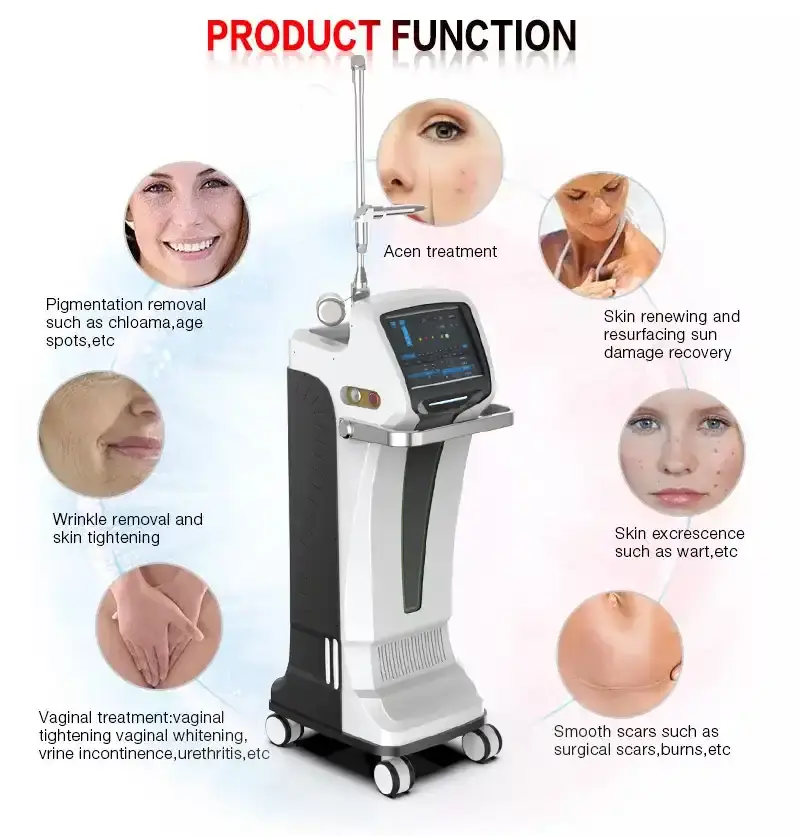
Modern CO2 platforms can be used for more than just making faces look better. Gynaecological procedures, such as vaginal tightening and vulvar rejuvenation, can now be done with systems that have specialised handpieces. This gives clinics more ways to make money. The ultra-pulse and long-pulse modes let doctors switch between intense resurfacing and gentle treatments all in one session, depending on the patient's anatomy and level of comfort.
Safety Protocols and Patient Selection
To avoid problems when using a dermatology co2 laser machine, CO2 laser, you need to know how long it takes for the laser to cool down. People who have ongoing infections, high hopes, or who have recently used isotretinoin should not be included in the study. Hydroquinone routines are often part of pre-treatment plans for darker skin types to lower the risk of discolouration after inflammation. Continuous cooling systems, like the water-cooling technology built into more advanced models, protect the tissue around the implant and make the patient more comfortable during procedures.
Management after treatment is also very important. For 4 to 6 weeks, patients need to follow strict sun protection, gentle cleaning, and barrier repair moisturisers. Follow-up appointments help doctors see how patients are healing and address any concerns right away. This builds trust with patients and encourages them to refer others.
Comparative Insights: Why Choose CO2 Laser Over Alternative Technologies?
Performance Benchmarking Across Laser Modalities
When clinics look at investments in capital equipment, it's important to know how performance differs. CO2 fractional systems can send energy up to 1.5–2.0 mm into the skin, while Erbium systems can only go 0.5–1.0 mm deep. This advantage in depth means that rolling acne scars and moderate rhytides will look better, which is something that superficial treatments can't do. Studies in the real world show that patients get good results with just two to three CO2 sessions, compared to five to six sessions needed for non-ablative options.
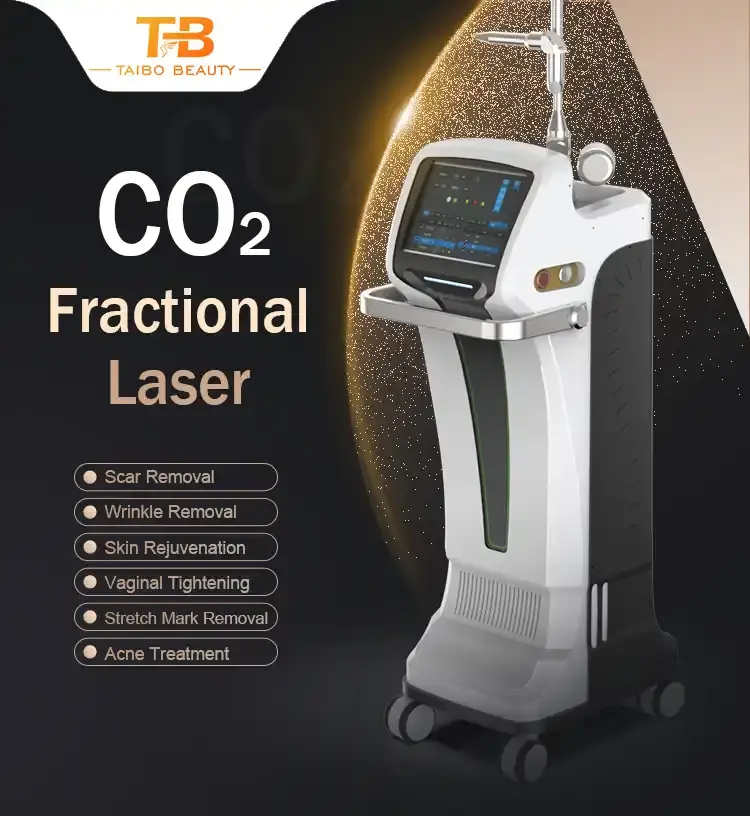
The tissue interaction profile is also very different. The high water absorption coefficient (800cm⁻²) of CO2 makes precise ablation possible with little lateral thermal spread when ultra-pulse durations are less than 1 millisecond. IPL and non-ablative lasers work by selectively heating up and melting materials without actually cutting them. This means that they aren't very good at fixing uneven textures. Because of this basic difference, CO2 is still the best gas for surgical dermatology uses like reducing rhinophyma and getting rid of xanthelasmas.
Real-World Clinic Experience and ROI Considerations
Compared to other treatments, practitioners constantly say that CO2 treatments make patients happier. The huge difference in skin tone and structure is worth the high price; in the US market, session fees usually range from $800 to $2,000. Profit margins that are good are helped by low costs for consumables like safety glasses and smoke screens. Metal tube systems from well-known brands can be used for more than 20,000 hours, which lowers the cost of ownership over time.
During meetings, patients often worry about their free time. Modern fractional CO2 technology takes this into account by letting you change the density settings. Lower densities (5–15%) allow for faster healing, which is good for people who are working, while higher densities (20–40%) get the best results for patients who are ready to wait longer to heal. This gives clinics the freedom to tailor treatments to each patient's lifestyle, which means they can reach more people than just those looking for aggressive interventions.
Procurement Guide: How to Select the Best Dermatology CO2 Laser Machine for Your Clinic
Critical Technical Specifications to Evaluate
When comparing dermatology CO2 laser machines, procurement professionals should put a number of important factors at the top of their lists. To make sure the laser works well and absorbs water properly, its wavelength must be exactly 10.6μm ±0.1μm. Power output specs should be carefully looked over—systems that say they produce "40W" should actually give power above this level while they are running all the time. Check to see if the manufacturers say what peak power or average power means, as this difference affects how fast and effectively the treatment works.
The articulated arm design has a big effect on how easy it is to use. Seven-joint light guide arms that can rotate 360 degrees make it easier to move around the face and other parts of the body. Spot sizes can be changed from 0.1mm to 2.0mm, which lets doctors switch between forceful ablation and less aggressive treatment methods without having to switch handpieces. Interface design is also important. For example, a 10.4-inch colour touch screen that is easy to use cuts down on training time and operator mistakes when clinics are busy.
Treatment Modes and Clinical Versatility
Modern systems have many ways to work so they can meet a wide range of clinical needs. In dot matrix mode, you can get standard fractional designs that are great for resurfacing the face. Pulse mode can be used for medical tasks like getting rid of moles and skin tags. The private mode and vulvar mode show gynaecological abilities, which are quickly growing service areas in medical beauty. Clinics that want to offer a wide range of beauty services will benefit greatly from platforms that support all of these methods instead of gadgets that are only good for one thing.
Customisable scanning patterns, such as square, circle, hexagon, ellipse, and linear forms, let specific parts of the body be treated accurately. The scan scope's maximum coverage of 20 mm x 20 mm cuts down on treatment times for larger areas while keeping the energy spread out evenly. Random screening modes keep heat from building up more than straight patterns, which lowers the risk of problems in heat-sensitive areas.
Maintenance, Support, and Certification Requirements
Professional-grade equipment is different from cheaper options because it comes with reliable support after the sale. Manufacturers should offer full guarantees that last at least two years and have clear rules about replacing parts and getting expert help. With regional service networks, maintenance is done on time and costly downtime is kept to a minimum. Before you buy anything, make sure that the company you're buying from offers full operation manuals, training videos, and ongoing educational tools to help staff improve their skills.
Regulatory compliance is important and can't be ignored. The CE certification shows that the product meets European safety standards, and the ISO 13485:2016 certification shows that the quality management system meets the needs of medical devices. FDA approval isn't always needed, but it does boost credibility and make marketing easier in regulated markets. Procurement teams should ask for copies of all important certificates and, if possible, have someone else check them to make sure they are real.
Implementing CO2 Laser Technology: Best Practices for Optimal Patient Outcomes
Staff Training and Competency Development
Team training is the first step to successful integration of dermatology co2 laser machine. Operators need to know how lasers affect different types of skin, how to set the right treatment parameters for each type, and how to advise patients on when not to use the laser. Hands-on training with experienced clinical educators is a faster way to build confidence and skills than teaching by hand alone. Many makers, like Xi'an Taibo Laser Beauty Company, which has been in the business for more than 15 years, offer free training classes that cover how to use the device, how to choose the right patient, and how to handle complications.
As treatment plans change, skill levels are kept up by continuing education. Cultures of continuous improvement are fostered by holding regular team meetings to go over tough cases and talk about new techniques. Recording training hours and skill tests helps quality assurance programs and shows dedication to patient safety during possible regulatory visits or accreditation reviews.
Patient Consultation and Expectation Management
Clear communication during consultations keeps people from being unhappy and helps them set reasonable goals. Patients need to know exactly what to expect from their treatment, how long they will be in pain, and when they will start to feel better. Before-and-after picture albums showing different levels of severity help patients imagine what might happen. Clear communication about cost, including any extra lessons needed for best results, builds trust and cuts down on complaints after treatment.
Standardising lighting, positioning, and camera settings should be part of photography protocols to make sure that accurate records are kept. Sequential pictures taken at the consultation, right after treatment, and at follow-up appointments show that the patient has made progress. For clinical, legal, and business reasons, these records are important, so organised photography practices are important parts of good treatment programs.
Recovery Management and Follow-Up Care
Specific stages of recovery must be covered in the post-procedure instructions. For the first 24 to 48 hours, you should clean your face gently with light, non-foaming soaps and put on occlusive ointments to keep moisture in. From days 3 to 7, you have to deal with peeling and crusting without picking, because removing the skin too soon can cause scars. During weeks 2–6, moisturisers with ceramides and broad-spectrum sunscreens with SPF 50+ are used to fix the barrier.
Follow-up appointments let providers check on how well the healing is going and address any concerns right away. Patients with long-lasting erythema, sudden changes in colour, or signs of illness need to be evaluated right away and given the right care. Proactive communication shows that you care about your patients' well-being and often turns happy patients into eager reference sources who help the business grow on its own.
Future Trends and Innovations in Dermatology CO2 Laser Machines
Emerging Technologies Enhancing Treatment Precision
The next step forward in aesthetic medicine is the addition of artificial intelligence to laser platforms. AI-powered systems look at the skin's features in real time and change the treatment parameters automatically to get the best results with the least amount of risk. Pattern recognition algorithms find small differences in texture that humans can't see. This makes it possible to target problem areas very precisely. These smart systems close the skill gap between new and experienced operators, making advanced treatments more available to everyone.
Better cooling technologies make patients safer and more comfortable. Contact cooling handpieces, cryogen spray systems, and air-cooling systems that are built in protect the epidermis while letting the deeper layers of skin get warmer. These new technologies allow for more forceful treatment settings without significantly raising the risk of complications. This means that more conditions can be treated in a single session.
Market Dynamics and Investment Considerations
The world's demand for CO2 laser treatments keeps growing beyond their traditional use in cosmetic procedures. Fractional CO2 is being used more and more in medical dermatology to treat scars from surgery, burn contractures, and skin diseases like actinic cheilitis. Genitourinary syndrome of menopause and stress urine incontinence are two gynaecological conditions that can be treated with new medicines. These new possibilities are being taken advantage of by forward-thinking clinics that market themselves as full-service centers for both cosmetic and useful treatments.
When making strategic investments in equipment, you should focus on platforms that can be easily changed to support firmware updates and accessory integration. Systems that are built with update paths can keep up with changes in technology without having to be completely replaced. This protects capital investments for a long time. When compared to closed proprietary systems that limit future growth options, manufacturers that offer modular designs and backward-compatible devices are more valuable in the long run.
Conclusion
Clinical capabilities, patient satisfaction, and financial performance are all impacted by the choice of dermatology CO2 laser machine. As the industry standard, the technology is the best because it can be used for both cosmetic and useful reasons and has been shown to work on a wide range of skin conditions. To be successful at procurement, you need to look at technical specs, make sure that regulations are followed, and work with manufacturers who offer full help throughout the lifecycles of their products. As laser technology keeps getting better, buying good platforms from reputable sellers is the only way for clinics to stay competitive while also giving patients great results that help them build lasting names.
FAQ
1.What makes CO2 lasers more effective than other resurfacing options?
The range that CO2 lasers use is 10,600nm, which water takes better than any other laser type. This precisely cuts away damaged tissue and boosts collagen production at depths that other technologies can't reach. The fractional delivery pattern leaves healthy tissue bridges that help the body heal faster than with fully ablative methods. This strikes a good balance between effectiveness and reasonable recovery times.
2.How long does a quality CO2 laser machine typically last?
Metal tube solid-state CO2 lasers from reputable dermatology CO2 laser machine makers can work for more than 20,000 hours if they are properly maintained. This means that it will work reliably for 10 to 15 years in most professional situations. Cleaning the optical parts regularly, checking the calibration once a year, and replacing worn-out parts when they get low on life expectancy will make the equipment last longer and keep the quality of treatment consistent throughout its use.
3.Can CO2 lasers safely treat darker skin types?
With the right parameter changes and pre-treatment routines, modern fractional CO2 devices can treat Fitzpatrick skin types I through IV. Pigmentation risks are lower when numbers are lower, energy levels are more conservative, and treatments are spaced out more. Types V–VI, on the other hand, need extra care and should only be treated by professionals with a lot of experience. Test spots and thorough pre-treatment routines that include topical brightening agents should be used.
Partner with Taibo Laser: Your Trusted Dermatology CO2 Laser Machine Supplier
Xi'an Taibo Laser Beauty Company is ready to help your clinic grow by giving you high-quality dermatology CO2 laser machines that are backed by 15 years of excellent making. For constant 40W+ performance, our metal tube solid-state systems offer a wide range of treatment options, such as fractional and gynaecological applications, and easy-to-use 10.4-inch touchscreens that make operations simpler. Our full two-year warranty and CE and ISO 13485:2016 certifications are on every device. Our skilled staff offers free training, technical support 24 hours a day, and OEM solutions that are specifically made for your brand. Get in touch with susan@taibobeauty.com right away to talk about how our dermatology co2 laser machine for sale can help your business, make your patients happier, and give you the best return on your investment.
References
1. Goldman, M.P., Fitzpatrick, R.E. (2022). Cutaneous Laser Surgery: The Art and Science of Selective Photothermolysis, Third Edition. Mosby Publishing.
2. Anderson, R.R., Donelan, M.B., Hivnor, C. (2021). Fractional Photothermolysis for Skin Resurfacing: Clinical Applications and Outcomes. Journal of the American Academy of Dermatology, 84(3), 612-628.
3. Carniol, P.J., Hamilton, M.M., Carniol, E.T. (2023). Office-Based Cosmetic Procedures and Techniques: A Comprehensive Guide. Thieme Medical Publishers.
4. Alexiades, M., Berger, D. (2021). Advances in fractional co2 laser Technology: Clinical Efficacy and Safety Profiles. Lasers in Surgery and Medicine, 53(2), 187-203.
5. Dover, J.S., Alam, M., Arndt, K.A. (2022). Atlas of Cosmetic Surgery: Expert Consult, Second Edition. Elsevier Health Sciences.
6. Tanzi, E.L., Alster, T.S. (2023). Procedural Dermatology: Lasers, Lights, and Energy-Based Devices. CRC Press.





YOU MAY LIKE