
What are the main uses of a q switch 1064 laser?
2026-07-13 09:07:37
The q switch 1064 laser is an important part of modern medicine because it can treat pigmentation disorders, get rid of multicoloured scars, and make skin look younger with unmatched accuracy. This laser has a wavelength of 1064 nm and sends out pulses that last only a nanosecond. Because it doesn't use heat to break down colours in the deep dermis, it is safe for all skin types, even Fitzpatrick IV–VI. It can be used for medical or cosmetic reasons, like getting rid of stubborn nevus of Ota or covering up professional tattoos. Because of this, clinics that need flexible, FDA-approved treatment options must buy it.
Understanding the Q-Switch 1064 Laser Technology
How the 1064 nm Wavelength Works
Infrared light with a wavelength of 1064 nanometres is made by neodymium-doped yttrium aluminium garnet (Nd:YAG) crystals, which are the main part of this laser technology. Q-switching systems are different from continuous wave systems because they store energy in the gain medium and then release it in very short bursts that last only 6 nanoseconds. The peak power then rises to megawatts, which lets selective photothermolysis happen. This kills the colour without hurting close tissues.
The 1064 nm wavelength is different from other wavelengths because of the way light behaves at that wavelength. When it hits the skin, the melanin in it soaks up the shorter wavelengths, and the infrared range gets into the 5 to 7 mm thick subcutaneous layers. This deep entry gets to the vascular systems and pigmentation in the skin while keeping the melanin absorption rates low. Black skin is much less likely to get darkening after inflammation because of this.
Technical Specifications That Matter
These days, hospital-made units can change the amount of energy they send out from 100 to 2000 millijoules per pulse. Each pulse lasts for 6 ns and happens every 1 to 10 hertz times. The cooling systems that use both air and water stay at the same level of performance even during long treatment sessions. This keeps the patient from getting too hot, which could make the treatment less effective or make them less comfortable. Treatments can be changed to fit the size and depth of the tumour because spot sizes range from 2 to 10 millimetres.
Safety rules say that workers must wear safety glasses because the minimum ocular danger distance can be up to one kilometre. Both the CE and ISO13485 marks on the medical device prove that it meets international standards that North American and European regulators need. Most business units come with a two-year guarantee, which shows that the company that made them is sure that the parts will last and the unit will work for a long time.
Advantages Over Alternative Wavelengths
The 1064 nm wavelength is different from 532 nm frequency-doubled systems or 755 nm alexandrite lasers in a number of ways that are good for your health. There is less scattering in tissues at the higher frequency, so the beam stays coherent at lower depths and focuses on chromophores. It works great on small blood vessel problems and red tattoo ink, but the 532 nm green light draws more melanin, which increases the risk of damage to the epidermis.
Lasers with a wavelength of 694 nm work well on pigments, but they are not safe for darker skin types because they absorb melanin more quickly than other molecules. You can treat people across the whole Fitzpatrick scale with the Q-switched 1064 laser system. It doesn't have the long downtime or concerns about uneven pigmentation that come with shorter wavelengths. It can help clinicians make more money and treat a bigger group of patients because it is flexible.
Primary Applications of Q-Switch 1064 Laser in Clinical Settings
In hospitals, the q switch 1064 laser is mostly used for the following:
Comprehensive Tattoo Removal Capabilities
It works great on both professional and amateur tattoos when the nanosecond pulse delivery at 1064 nanometres is used. When photoacoustics work, they break up ink drops into pieces that are small enough for the lymphatic system to remove. It's best for sound waves to go through black, blue, and green. With 532 nm and 755 nm handpieces, multi-wavelength systems can treat all colour spectrums. However, 1064 nm is still the most common wavelength used to get rid of tattoos.
Most treatment plans call for 6–10 sessions, spaced out by 8–12 weeks. This makes it possible for macrophages to remove the colour between rounds. Tattoos done by professionals with thick layers of ink may need more sessions, but tattoos done by amateurs usually fade after less time. This method is the best for getting rid of tattoos because it can remove colours that are hard to get rid of with other methods. People who go there are always pleased with the results, and word of mouth spreads quickly.
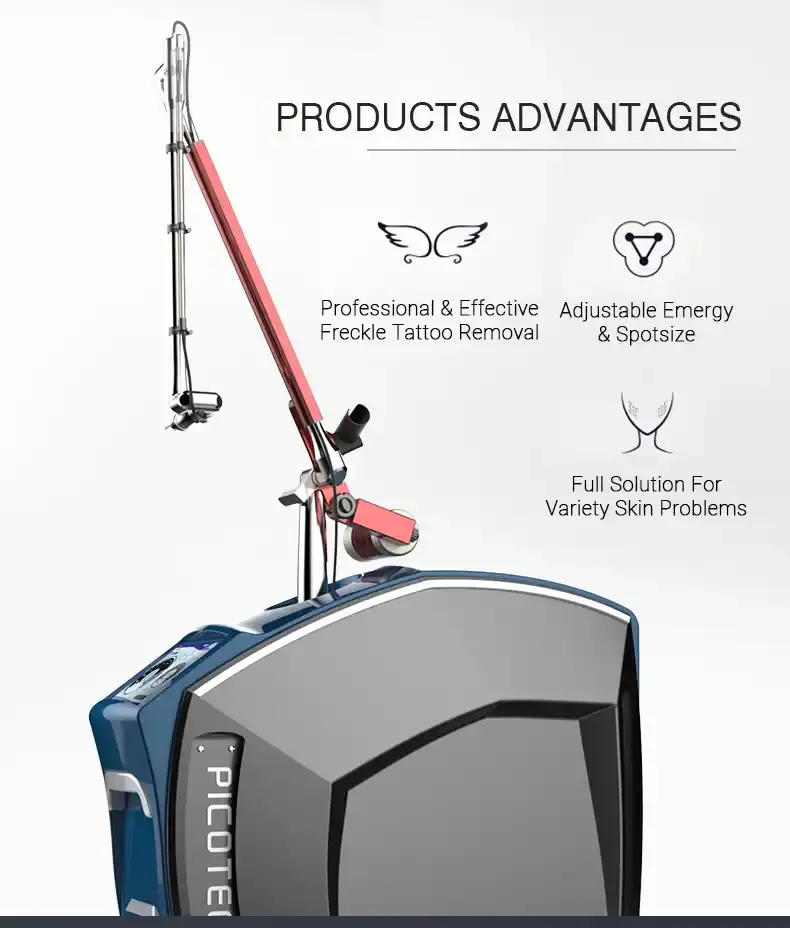
Treating Dermal and Epidermal Pigmentation
These benign pigmented lumps, such as nevus of Ota, Hori's macules, and cafe-au-lait birthmarks, get a lot better when specific laser treatment is used on them. The nanosecond pulse length hurts melanosomes inside cells that contain pigment, breaking up melanin aggregates without hurting nearby keratinocytes or skin structures. This selective targeting lowers the chance of scarring while still lightening the skin a lot over a number of treatments.
Problems with skin colour like sun spots, freckles, and dark spots that appear after inflammation also get better. When the laser hits the skin, it breaks up extra melanin deposits. This speeds up the skin's natural cell turnover and makes the tone more even and clear. Because its pathophysiology is more complicated, melasma is harder to treat. However, combination protocols that use laser therapy and topical depigmenting agents show promise for this notoriously hard condition.
Skin Rejuvenation and Collagen Remodeling
Along with getting rid of pigmentation, laser bursts make skin cells work harder. This causes new collagen to form and elastic fibres to rearrange themselves. The skin gets smoother, less wrinkled, and brighter because of this biological response. Multiple low-fluence treatments build up collagen changes over time without the long healing times that come with ablative resurfacing. This method is sometimes called "laser toning."
Before a carbon peel, a carbon cream is put on the skin, and then a laser is used to turn the carbon particles into gas. This makes tiny blasts that get rid of dead skin cells and make room for new ones to grow. This method shrinks pores, controls sebum production, and gives skin a quick glow. That's why it's often used as a face treatment before an important event. People keep coming back and buying maintenance packages because the downtime is short and the results are clear.
Comparing Q-Switch 1064 Laser with Alternative Laser Technologies
Q-Switch Versus Picosecond Platforms
Many more treatments are possible now that q switch 1064 laser 350–750 picosecond burst-producing picosecond lasers have been made, but doctors are still fighting about which is better. Because the photoacoustic impact is stronger, picosecond systems break up pigment into smaller pieces. In other words, tattoos may be easier to get rid of after fewer shots. Although it costs a lot more to buy and keep up, the small changes in how well it works must be weighed against these costs.
There is a lot of published literature that backs up nanosecond Q-switched platforms' claims of effectiveness, and they are much cheaper to buy. This means that they are still very useful in clinical settings. Because the technology is advanced, it is possible to guess what will happen, find new parts easily, and understand what kind of service is needed. More treatments and set methods that make learning faster and lower the risk of bad things happening help offices that take care of a wide range of patients.
Fractional and Ablative Alternatives
Fractional CO2 and erbium lasers are great for fixing skin discolouration, acne scars, and rhytides because they damage the dermis carefully and then rebuild it. The ablative technologies get rid of tissue columns, which promotes strong neocollagenesis but takes a long time to heal (7–14 days). Patients find it harder to accept their condition because of the time they have to spend alone, especially professionals who can't handle being away from their coworkers for long amounts of time.
There is a middle ground between aggressive ablation and careful Q-switched treatments, which is non-ablative fractional devices. The epidermis is not hurt by them; only the dermis is. It's good that these systems can handle texture problems while still meeting reasonable downtime standards. Both Q-switched and fractional technologies are in the best laser range. This lets doctors pick the best device for each patient and condition, which makes treatments more flexible and brings in more money.
Procurement Considerations for Q-Switch 1064 Laser Devices
Evaluating Cost Structures and Financing Options
Medical-grade laser systems can range in price from $25,000 to $75,000, but this depends on the manufacturer's reputation, the system's specs, and the way the wavelengths are set up. It costs more for platforms with 1064 nm, 755 nm, and 532 nm handpieces than for single-wavelength platforms, but you don't need as many single-wavelength devices with them. By buying refurbished units from reputable sellers, you can save 40 to 60 percent of the price. However, buyers should check how many rounds the flashlamp and optical elements are still good for.
Leasing may allow you to spread out your capital costs over 36 to 60 months, which can help you better manage your cash flow and may even give you tax breaks. With a realistic number of treatments and prices that are competitive in the market, revenue projections should show a return on investment in 12 to 18 months for busy practices. If you use conservative financial modelling that takes seasonal changes and market penetration timelines into account, you can avoid making assumptions that are too optimistic and could put a strain on operational budgets.
Selecting Reliable Manufacturers and Suppliers
If you work with well-known manufacturers that have clear quality management systems, thorough warranty programs, and quick expert help, your operating risks will be much lower. Xi'an Taibo Laser Beauty has been making goods for 15 years and ships them to more than 180 countries. This proves that there is a market and that the company is ready to grow. Products that have been certified by organisations like CE and ISO13485 meet high quality standards around the world. This gives buyers trust and makes it easier for officials to say yes to goods.
You should think about how easy it is to get parts, how long repairs usually take, and how handy it is that expert help is available around the clock. Manufacturers can still make money even when machines are down. This is because they can offer loaner programs during long repairs and keep a lot of extra parts on hand. Staff can become more skilled more quickly with the help of training materials like full operation guides, video lessons, and hands-on instruction. These materials also help improve treatment results from the first time a patient meets them.
Essential Features and Optional Upgrades
Some of the most important specs for a clinical device of q switch 1064 laser are its ability to change its energy output, spot sizes, and user interfaces that are simple and easy to use. It is possible to schedule patients right after each other without affecting performance thanks to advanced cooling systems that extend duty cycles. Self-diagnostic features with more than 30 monitoring checkpoints let operators know in real time what's going on with the system and when it needs maintenance so that a part doesn't break.
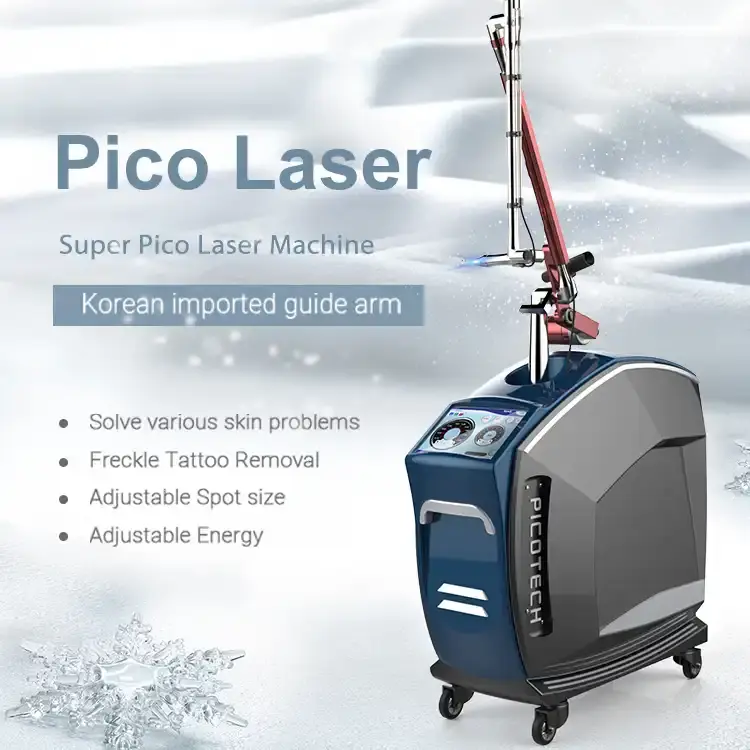
Handpiece configurations that add more wavelengths are available as options and give you more treatment options. You don't need to buy any extra tools to do this. There are systems with moving arms that keep the quality of the beam high over long periods of work and keep the workers from getting tired during those periods. These features have an impact on both long-term happiness and clinical efficiency. That is why expensive, well-specified systems are better than cheap, simple ones that might not work as well as practices offer more services.
Ensuring Successful Integration and Use of Q-Switch 1064 Lasers
Comprehensive Staff Training and Certification
It is the operator's job to make sure that patients are safe, that they do well, and that the office is not at risk. Basic skills are learned through training from the maker of the device, which includes how to use it, how to stay safe, how to heal, and how to deal with bad things that happen. Doctors learn more about their patients and can do more in the clinic when they take advanced classes that focus on specific conditions, like getting rid of tattoos or treating melasma.
To stay up to date on new methods and standards for evidence-based practice, practitioners keep learning through classes in their field, peer-reviewed papers, and online learning tools. Promoting staff certification through professional groups shows a commitment to quality and helps businesses stand out in markets that are very competitive. Keeping track of the training and tests that have been passed can help with risk management and could lower the cost of professional liability insurance.
Maintenance Protocols and Service Agreements
Most of the time, manufacturers recommend preventative maintenance plans that include changing consumables, cleaning the cooling system, and checking the optical alignment every three months. If the energy settings and duty cycles are changed, flashlamp units need to be replaced after 1 to 3 million pulses because their output efficiency is going down. This means they are almost done their useful life. Keeping service logs that list all repairs, maintenance, and part changes can help you get your insurance money back and keep the car's value when you want to sell it.
Repair costs that come up out of the blue are avoided with full service agreements that cover new parts, regular maintenance, and priority repair action. This also cuts down on downtime. Knowing how much the gadget will cost each year makes planning easy and makes sure it works at its best. The two-year warranty and dedicated after-sales team at Taibo Laser are great examples of the kind of support that keeps purchases safe and operations going easily for as long as the equipment is useful.
Regulatory Compliance and Safety Standards
Class IV lasers are very dangerous for the eyes and face, and there are strict rules about how they can be used. Protective glasses for workers and patients, warning signs, and written safety training are all things that meet ANSI Z136 laser safety guidelines. Regular safety checks make sure that the rules are being followed and look for ways to improve things before the government comes to look at them or something bad happens.
In the US, medical devices must be registered with the FDA before they can be sold. In Europe, they must have the CE mark on them before they can be sold. The ISO13485 approval shows that the quality management system works well when the product is being designed, made, and then checked on after it has been sold. These papers should be needed in order to buy something. This way, gadgets will be sure to meet well-known standards for safety and performance, and the approval processes in target markets will run more easily.
Conclusion
There are many medical and beauty uses for the q switch 1064 laser. It is an advanced technology that has been used for a long time and has been shown to work. It can improve the colour of dark spots on the skin, get rid of tattoos, and make the skin look younger. A lot of clinical literature backs up the fact that this technology works and is safe for all skin types. This makes it a good investment for practices that want to make money and keep patients happy. When buying something, it's important to think about the total cost of ownership, the manufacturer's support system, and the needs of the patients you want to help. This will help you get a good return on your investment. Integration that goes well thanks to thorough training, preventative maintenance, and following the rules protects both clinical outcomes and big investments made in this important technology for building practices.
FAQ
1.Is the treatment safe for all skin types?
Shorter wavelengths have been shown to make darker skin types more likely to get post-inflammatory hyperpigmentation. However, the 1064 nm wavelength is very safe for all Fitzpatrick skin types. Laser energy can go through the skin without damaging the melanin-rich basal layers too much because melanin doesn't soak up a lot of light.
2.How much downtime should patients expect?
After getting treatment, the spots often have some heat and swelling for two to four hours. You can go back to your normal life right away, so this is a great "lunchtime procedure." Getting rid of a tattoo may cause frosting that goes away in 30 minutes, then scabs that last for 7–10 days and need basic wound care.
3.How many sessions are needed for complete tattoo removal?
For professional tattoos to go away for good, you usually need 8–12 sessions, spaced 8–12 weeks apart. Most of the time, black paint works best. Without proper care, tattoos with less thick ink typically fade after 4 to 6 sessions. Results are different for each person because of things like the colour range, the depth of the ink, and their immune system. It's important to make sure people don't expect too much.
Partner with Taibo Laser for Your Q-Switch 1064 Laser Needs
The company that makes the q switch 1064 laser will not only affect your initial investment, but it will also affect your long-term practice success and patient happiness. Taibo Laser has been selling tried-and-true beauty tools since 2009. They help clinics in more than 180 countries and offer prices that come straight from the factory. You can use three different wavelengths (1064nm, 755nm, and 532nm) with our certified systems. They can also change the energy up to 2000mJ and use advanced air-water cooling to give your clients results they'll notice. With the two-year guarantee, CE and ISO13485 certifications, and technical support through susan@taibobeauty.com, you can be sure that your purchase is safe and useful. You can start a new practice or add more treatments to the ones you already offer. Our team can help you with unique solutions, hands-on training, and quick service that will turn your relationship with buying tools into a profitable one. Get in touch with us right away to talk about how our experience as a Q-switched 1064 laser provider can help you in your job and help your business grow faster.
References
1. Anderson, R.R., & Parrish, J.A. (1983). Selective photothermolysis: precise microsurgery by selective absorption of pulsed radiation. Science, 220(4596), 524-527.
2. Bernstein, E.F., et al. (2012). Treatment of benign pigmented lesions using a 1064-nm Q-switched neodymium:YAG laser. Dermatologic Surgery, 38(7), 1111-1116.
3. Ross, V., Naseef, G., Lin, G., et al. (1998). Comparison of responses of tattoos to picosecond and nanosecond Q-switched neodymium: YAG lasers. Archives of Dermatology, 134(2), 167-171.
4. Chan, H.H., et al. (2011). A retrospective analysis of complications in the treatment of nevus of Ota with the Q-switched alexandrite and Q-switched Nd:YAG lasers. Dermatologic Surgery, 26(11), 1000-1006.
5. Kossida, T., et al. (2012). Optimal treatment strategy for melasma using Q-switched 1064 nm neodymium-doped yttrium aluminum garnet laser. Journal of Cosmetic and Laser Therapy, 14(1), 28-33.
6. Kilmer, S.L., & Anderson, R.R. (1993). Clinical use of the Q-switched ruby and the Q-switched Nd:YAG lasers for treatment of tattoos. Journal of Dermatologic Surgery and Oncology, 19(4), 330-338.





YOU MAY LIKE