
Why Choose a Portable RF Fractional Microneedling Machine for Your Business
2026-06-16 15:53:09
Getting a compact rf fractional microneedling machine for your business is a smart move that will help you keep up with the changing needs of modern aesthetics. This cutting-edge technology blends radiofrequency energy transfer with precise microneedling to remodel deep dermal collagen while keeping the device portable for use in multiple places. The market wants more and more adaptable, space-saving options that get practical results without lowering the effectiveness of treatment. Spas, dermatology clinics, and fitness centers can offer more services by putting portable devices in more treatment areas or even on wheels. This helps them reach more customers and make more money. Since CE and ISO13485 certifications have become industry standards, purchasing managers now look for devices that offer a good mix between therapeutic performance and operating flexibility. In 2024, portable systems will be the best choice for businesses that want to stay ahead of the competition.
Understanding RF Fractional Microneedling Technology
How does the Technology Works?
Gold-plated ultrafine microneedles make controlled micro-channels in the skin at levels that can be adjusted up to 3.5 mm. This is how the treatment works. At the same time, 10W to 200W of bidirectional radiofrequency energy passes through these pathways and reaches the reticular dermis. This two-step method targets specific layers of tissue and heats them up while protecting the skin from heat damage. The shielded needle design makes sure that the RF energy stays right where collagen synthesis happens, so you don't get the minor burns that can happen with older laser systems.
Clinical Applications and Treatment Scope
Devices with different capsule configurations—10-pin probes for sensitive areas around the eyes, 25-pin probes for face treatments, and 64-pin probes for body applications—address a range of cosmetic issues. This technology works especially well for changing the shape of acne scars because it uses partial coagulation zones to boost fibroblast activity and extracellular matrix renewal. For Fitzpatrick skin types I through VI, clinical studies show big changes in skin laxity around the neck and chin, the look of stretch marks getting less noticeable, and hyperpigmentation getting better. Adding nano-needle cartridges to your service menu lets you offer non-invasive treatments for clients who need little break. This lets you cater to a wider range of client tastes and tolerance levels.
By knowing these technical basics, business-to-business buyers can figure out if the RF fractional microneedling machine fits with their target audience and treatment plans. This way, they can make sure that the investment meets both short-term operating needs and long-term goals for service growth.
Why Portability Matters in RF Fractional Microneedling Machines for Business?
Operational Flexibility and Market Expansion
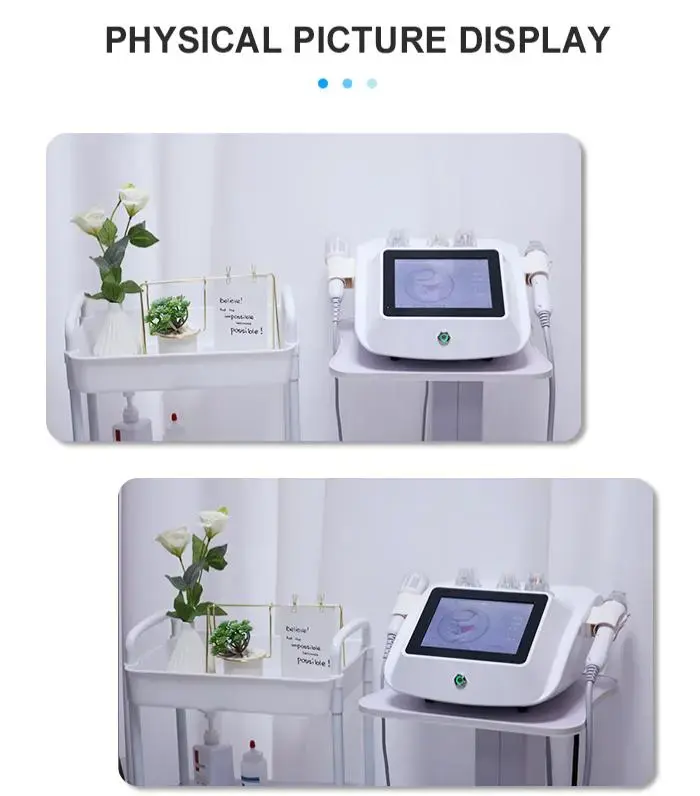
Fixed, fixed devices only allow treatments to happen in one place, which means you can't help clients in more than one place. Portable units that weigh less than 30 kg and take up little space can get around this problem by letting doctors move tools between office locations, health retreats, or special events. With its two handles—an RF application and an ice hammer for quick cooling after treatment—the dual-handle design fits into normal carrying cases, so there's no need for special installation areas. This portability is very helpful for companies that offer pop-up beauty services or work with hotels and workplace health programs.

Real-World Business Impact
A California spa chain set up portable systems in three sites so that therapists could switch out tools based on the number of appointments each day. Within six months, they said that treatment plans had gone up by 34% and equipment rest time had gone down by 40%. Being able to quickly set up in different treatment rooms meant that the number of clients could be adjusted without having to buy more than one gadget. In a different example, a mobile beauty service provider who worked with senior communities was able to reach clients who had trouble moving around. This gave them a whole new source of income that made up 28% of their yearly income.
The plan that saves room is also good for clinics in cities where rent is expensive. Instead of giving each technology its own room, professionals can store movable units and use them as needed, which makes the best use of space. This freedom directly leads to a better return on investment, especially for companies that are still growing.
Comparing Portable RF Fractional Microneedling Machines with Alternative Skin Treatment Solutions
Efficacy and Downtime Considerations
Ablative CO2 lasers have amazing effects, but you need to rest for 7–14 days afterward, which makes them less appealing for pros. Portable RF fractional microneedling machines give the same collagen stimulation but cause mild redness for only two to three days. This makes them more useful for people who can't take long vacations. Chemical peels only work on the top layer of skin. The changeable depth control (0.5mm to 3.5mm) lets the treatment reach the mid- to deep dermis, where structural changes happen. While microdermabrasion can improve the structure of the skin's surface, it can't fix inner problems like atrophic scars or a lot of skin laxity.
Cost-Effectiveness and Client Suitability
Portable systems can cost anywhere from $8,000 to $18,000 to buy, while medical-grade RF platforms that stay in one place usually cost more than $45,000. Smaller offices can now get advanced treatments because the cost is cheaper, but the results are still good. Treatment plans usually include three to four lessons, spaced out four to six weeks apart. Within three weeks, you should be able to see changes. This plan fits well with what clients expect based on an aesthetic culture shaped by social media, where small improvements over time seem more normal than big changes all at once.
The safety rating of the technology for all skin types fills in a major gap in the aesthetics market. When melanin-rich skin is treated with traditional laser hair removal and resurfacing systems, the chance of post-inflammatory hyperpigmentation is higher. This problem is not present when RF energy is given through insulated needles. Clinics that serve a variety of areas can safely treat groups that weren't getting enough care before, which greatly increases the size of the market they can serve.
How to Choose the Best Portable RF Fractional Microneedling Machine for Your Business?
Certification and Compliance Standards
Medical devices with the current Medical Device Regulation (MDR) and ISO13485 certification must be given priority when purchasing. ISO13485 certification shows that the maker keeps quality management systems throughout production. These credentials show that the equipment meets strict electrical safety standards set by IEC 60601-1 and goes through electromagnetic compatibility testing to make sure it doesn't mess up other medical devices. The systems made by Taibo Beauty have both CE and ISO13485 standards, which show that they follow international safety rules. While FDA approval is still the best for U.S. markets, devices that have been cleared under similar regulatory systems show that the company is committed to making reliable products and keeping users safe.
Supplier Evaluation Criteria
Check out more than just the device itself. Also, look at the company's production ability and track record. Established suppliers, such as Taibo Beauty, which has been making products since 2009 and has over 15 years of experience, show that they are stable in their operations and have the technical know-how that comes from working on many product development cycles. Their in-house research and development (R&D) teams are always improving needle designs and energy delivery methods based on clinical feedback. This makes sure that the equipment you get uses the newest therapeutic insights.
Shipping logistics should be carefully thought out. Manufacturers that offer air freight, sea transport, and fast courier choices (DHL, FedEx) give you options that fit your needs and budget. Taibo's custom foam interlayers and aluminum alloy wrapping protect fragile electronic parts during shipping, which lowers the risk of delays caused by damage. Having different ways to pay, like bank payments, credit cards, and PayPal, makes doing business across different banking systems easier.
Matching Features to Business Models
Medical spas with a lot of patients need strong systems that can handle 15 to 20 treatments a day without losing their effectiveness. This means that the motors need to be able to handle longer job cycles. Boutique centers that offer high-end services may put an emphasis on quiet operation and beautiful industrial design that supports their brand image. With OEM/ODM services, you can change the devices' interface languages, color schemes, and even their brand names. This way, all of your equipment will have the same look. Treatment flexibility is also important. Systems that offer both invasive microneedling and non-invasive nano-needle choices let you treat clients with a wide range of pain tolerances without having to buy two different devices.
Using and Maintaining Your Portable RF Fractional Microneedling Machine
Pre-Treatment Protocol
First, carefully check the skin to see if there are any reasons why it shouldn't be used, like current illnesses, a history of keloid, or recent use of isotretinoin. To make the client as comfortable as possible, clean the treatment areas with antiseptics that don't contain alcohol and put on skin anesthetic cream 30 to 45 minutes before the process. Set up the RF fractional microneedling machine according to the treatment plan. For example, 25-pin cartridges at a depth of 2.0 to 2.5 mm and 40 to 60W of power are usually used for face renewal, while 64-pin cartridges at a depth of 3.0 to 3.5 mm and 80 to 120W of power are used for body applications. The two-handle system makes it easy to switch between using RF and immediately cooling with the ice hammer, which reduces soreness and improves the client's tolerance.
Operational Best Practices
To make fractional coagulation zones that are evenly spread out during treatment, keep the needle entry angles and spacing the same. In auto mode, the machine works like a robot to get consistent results. In manual mode, on the other hand, experienced therapists can change the strength in real time based on feedback from clients and tissue reaction. After a treatment, care directions should stress the importance of gentle cleaning, broad-spectrum SPF 50+ sunscreen, and staying away from harsh active ingredients for 72 hours. Telling clients what to expect, like slight swelling and pinpoint bleeding, sets reasonable goals and builds trust through open communication.
Maintenance and Longevity
Regular repair greatly increases the life of tools. Follow the instructions for sterilizing reuse parts in a sterilizer after each session, and check needle cartridges for any deformation that could affect the consistency of treatment. System diagnostics should be done once a week to make sure that the RF output is consistent and that the temperature tracking is correct. Deviations from baseline readings could mean that the calibration is drifting and needs expert attention. When software makers release updates, they often include better safety features and treatment methods. Making sure you run these updates right away will make sure you benefit from ongoing technological changes.
Taibo Beauty offers a full one-year guarantee that covers damage caused by things other than people. You can get technical help 24 hours a day at susan@taibobeauty.com. Their after-sales team offers online training classes until operators become proficient. This gets rid of the learning curve that comes with adopting new technology. Within 48 hours, replacement parts are sent out, so there isn't much downtime that could mess up appointments or make clients unhappy.
Conclusion
By buying a portable RF fractional microneedling machine, beauty businesses can meet the growing demand for treatments that are slightly invasive and get results for a wide range of clients. These devices are great for practices at any stage of growth because they have been shown to work in clinical settings, can be used in a variety of ways, and are less expensive to get started with than fixed systems. Your investment will continue to pay off as long as you carefully choose your suppliers based on their licenses, manufacturing experience, and full support networks. As the global market for aesthetic devices continues to grow, companies that have flexible, portable technology will be able to get a bigger part of it by providing easy-to-use, effective solutions that meet the needs of current customers who want quick results that look natural.
FAQ
What is the typical treatment duration and client downtime?
Each exercise lasts between 30 and 60 minutes, based on the size of the treatment area. Procedures on the face take about 45 minutes, which includes time for numbing, and treatments on the whole neck take about 30 minutes. Mild redness and stiffness last for two to three days, but most clients can go back to their normal routines right away. This is better than ablative laser treatments, which need a week of healing time.
How do portable models compare to stationary systems in treatment effectiveness?
Modern travel systems work just as well as fixed ones for therapy as long as they have the same power output (10–200W range) and depth control (up to 3.5mm). The main difference is not in how well it works clinically, but in how it is built. Gold-plated insulated needles and bipolar RF delivery mechanisms work the same way no matter how mobile the device is. This makes sure that collagen stimulation and tissue regeneration are the same in both types of equipment.
Can this technology integrate into existing service menus easily?
Of course. Facials, chemical peels, and laser services are already available, and this treatment doesn't replace them. Many centers advertise RF microneedling as a top-of-the-line way to fight age or treat scars. With so many cartridge choices, ranging from 10-pin eye area probes to 64-pin body applicators, services can be slowly expanded as staff learn new skills and customer demand rises.
Partner with Taibo Beauty for Your RF Fractional Microneedling Machine Supplier Needs
With 15 years of experience, Taibo Beauty is a reliable producer that sends high-tech beauty tools to more than 180 countries around the world. Our compact RF fractional microneedling machine comes with CE and ISO13485 standards and Morpheus 8 technology. It also has two handles and can be used in different ways. We offer full OEM/ODM services that let you change the device's colors, display languages, and logos to fit the look of your clinic. Each system comes with full instructions on how to use it, video training materials, and access to our technical support team 24 hours a day, 7 days a week. When you buy in bulk, you get on-site installation services and reasonable prices. Contact susan@taibobeauty.com right away to talk about your unique needs and get personalized suggestions from our purchasing experts. You are welcome to visit our Xi'an plant to see our quality control procedures and test tools for yourself. Our dedication to manufacturing excellence is driven by your success in achieving transformative aesthetic results.
References
1. American Society for Dermatologic Surgery. (2023). Radiofrequency Microneedling: Clinical Applications and Treatment Protocols in Aesthetic Medicine.
2. Journal of Clinical and Aesthetic Dermatology. (2023). Comparative Analysis of Fractional RF Devices: Efficacy and Safety Across Skin Phototypes.
3. International Association for Physicians in Aesthetic Medicine. (2024). Portable Medical Devices in Multi-Location Practice Management: Operational Efficiency Study.
4. Dermatologic Surgery Journal. (2022). Collagen Remodeling Mechanisms in Radiofrequency-Assisted Microneedling: A Histological Review.
5. Aesthetic Business Quarterly. (2024). Investment Analysis: Portable vs. Stationary Aesthetic Equipment in Growing Practice Models.
6. Medical Device Regulation Compliance Guide. (2023). CE Marking and ISO13485 Standards for Aesthetic Medical Equipment: Procurement Best Practices.





YOU MAY LIKE