
Why Choose a Diode Laser Hair Growth Machine for Best Results?
2026-07-01 09:16:30
A diode laser hair growth machine is a smart purchase for clinics, salons, and health centers that want to offer hair restoration methods that have been tested and shown to work. Low-level laser treatment (LLLT) at a specific 650nm wavelength is used in these high-tech systems. This wavelength goes deep into the head to speed up cellular metabolism without hurting or damaging the skin. This technology, not cosmetic treatments or invasive surgeries, gives people a safe and effective way to stop hair loss and encourage hair growth. There is scientific proof that these devices can stop hair loss in up to 85% of people who use them. This means that beauty workers who want to give cutting-edge treatments can make money from these devices for a long time.
Understanding Diode Laser Hair Growth Technology
How Low-Level Laser Therapy Works
At the heart of hair regrowth that works is a deep knowledge of how light affects living things. Low-level laser treatment works by photobiomodulation, which means that coherent light with a frequency of 650nm can reach the scalp surface without making it hot. This specific frequency goes straight for hair cells, increasing blood flow by up to 55% in the treated areas. The extra blood flow brings important substances like adenosine triphosphate (ATP) to follicles that are dormant or weak, and it also gets rid of dangerous substances like dihydrotestosterone (DHT), which makes the follicles smaller.
Core Components and Technical Specifications
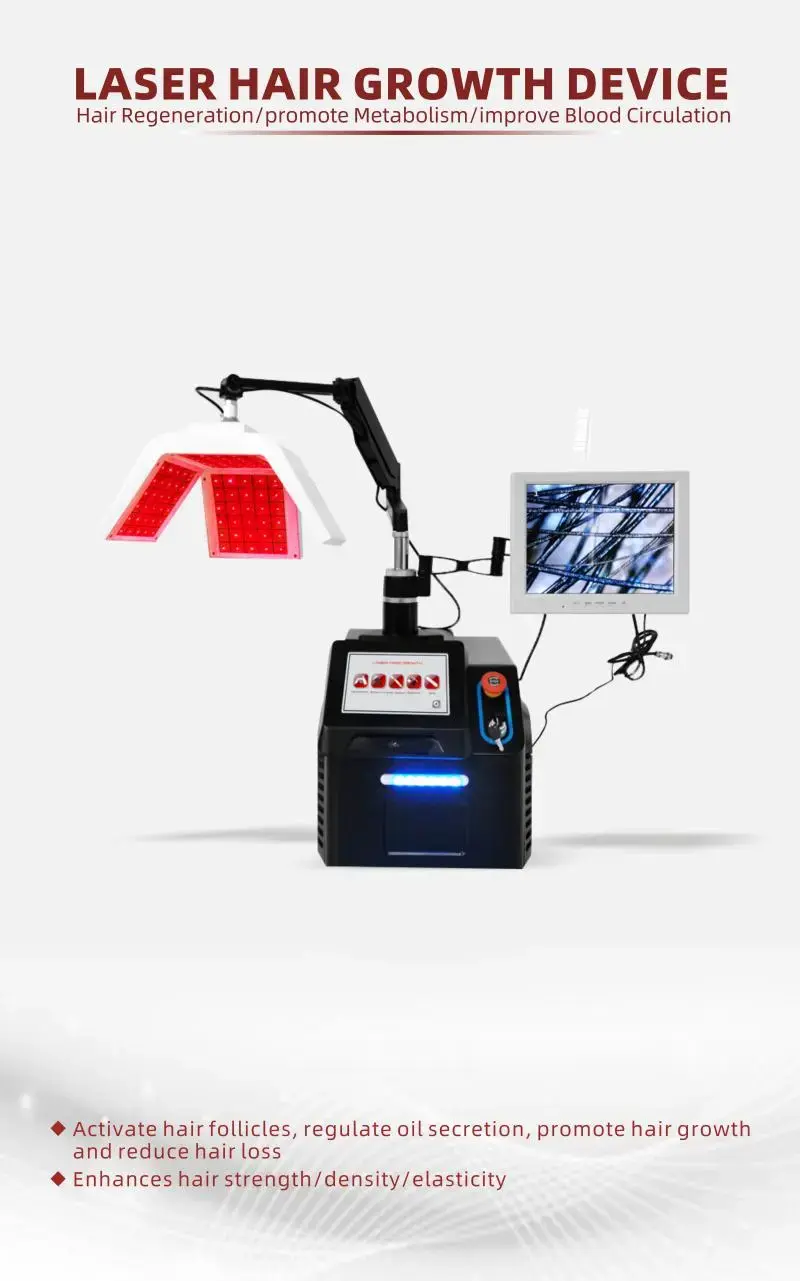
Professional systems have groups of 262 separate laser diodes, and each one gives off 10mW of continuous light energy. This setup makes sure that the whole head is covered and that the energy is delivered evenly across all treatment zones. The 200W power capacity lets practitioners change the strength levels to meet the needs of each client, and the built-in 200X skin detection systems let them check the health of the head before and during treatment rounds. Temperature control features keep the machine from getting too hot, and emergency stop functions keep clients safe during lessons.These gadgets are better than consumer-grade ones because they are more precise in terms of technology. When compared to LED-based systems, coherent laser light is very different because it stays at the same wavelengths and penetrates deep, hitting the hair bulb where follicle regrowth really starts. Thus, this is the reason why clinical studies repeatedly show that laser systems work better than non-coherent light sources.
Evidence-Based Treatment Protocols
Treatment plans call for lessons that last between 15 and 20 minutes and happen two to three times a week for at least three months. In line with the normal pattern of hair growth, this frequency lets the treatment work on follicles while they are actively growing. There is clinical evidence that regular use improves the thickness of each hair shaft by up to 25%. This makes the hair look bigger even before new growth starts to show.Professionals like how these methods work with current service menus without any problems. Patients can get treatments along with other health services, and the hands-free feature lets staff do more than one thing at a time. Because it's non-invasive, there is no break, so clients can go back to their normal tasks right away.
Key Benefits of Using Diode Laser Hair Growth Machines
Proven Clinical Effectiveness
Several studies that were reviewed by experts in the field show that 650nm laser treatment works to help hair grow back. Researchers have found that this wavelength specifically turns on the biological processes that keep the follicle healthy. This causes the mitochondria in follicle cells to work harder and make more proteins. This causes inactive cells to wake up and start growing again, which makes hair thicker and healthier.The fact that results can be measured makes this especially useful for clinic owners. The first month is usually when clients notice less hair loss, and between months two and four, they can see regrowth. This schedule helps professionals set reasonable goals for their clients while also boosting their confidence as things get better over time.
Safety Profile and Non-Invasive Nature
You can't say enough good things about this technology's safety benefits. Low-level laser therapy doesn't pose as many risks as pharmaceutical treatments with widespread side effects or surgical transfers that need time to heal. The treatment does not damage the skin thermally, is not painful, and does not need anesthesia or care directions afterward. This safety rating makes business owners much less worried about liability while also letting people who can't handle other hair loss treatments become possible customers.Regulatory approvals add to the proof of safety. Devices that are approved with CE and ISO13485 standards meet strict international quality standards, giving clients and practitioners peace of mind. These certificates show that the medical gadget meets the rules for electromagnetic compatibility, electrical safety, and quality control during production.
Versatile Application Scenarios
These methods are useful in more than one professional setting, not just for treating hair loss with diode laser hair growth machine. Post-transplant care is a very profitable area of use because laser treatment speeds up healing, lowers shock loss of transplanted grafts, and encourages new blood vessels to grow around newly inserted follicles. Dermatology clinics say that patients heal faster when laser treatment is added to their transplant aftercare plans.The method also works well with other ways of restoring hair. When laser therapy is paired with platelet-rich plasma (PRP) injections or microneedling treatments, it makes it easier for external growth factors to be absorbed and makes treatments last longer. Because these two things work together so well, doctors can make complete hair restoration kits that cost a lot but get great results.
Comparing Diode Laser Hair Growth Machines With Alternative Solutions
Diode Laser Versus LED-Based Devices
A question that buying workers often have is how laser and LED technologies are different. Both give off light, but the main difference is in how well it works and how deep it goes. Laser light has consistent wavelengths and a focused beam that can go straight to the hair bulb, where hair cell regrowth takes place. LEDs give off light that isn't coherent and spreads before it can reach healing depths. This makes them less effective.Clinical studies show big differences in how well people are doing. Studies that track changes in hair density show that laser therapy works 40–60% better than LED treatments over the same amount of time. This difference in effectiveness has a direct effect on client happiness and treatment success measures, which in turn affect referrals and repeat business.
Traditional Laser Combs and Handheld Units
Handheld laser combs are an example of early technology that has some problems. These devices have to be operated by hand, which makes it hard to get even covering and makes the user tired during treatment sessions. Because portable units only have a few diodes—usually seven to twelve—it takes longer to treat the whole head, which is inconvenient for both the practitioner and the client.Professional systems get around these problems with hemispherical treatment heads that cover the whole hair at the same time. The hands-free design lets clients relax during lessons and makes sure that energy is spread evenly. This practical efficiency lets clinics help more people every day without lowering the level of care.
Comparison With PRP and Pharmaceutical Options
Platelet-rich plasma treatment is very good at restoring hair, but it costs more per session and requires needle shots and blood processing. Some clients want non-invasive options or want to mix PRP with other treatments that help the body heal itself. Laser treatment is a great alternative to PRP because it doesn't require needles and works better when used together.Pharmaceutical treatments like minoxidil and finasteride need to be used every day and may cause side effects that keep some patients from getting them. Systemic problems are avoided with laser treatment, which often gives the same or better benefits. The treatment is also good for people who don't want to use drugs or who aren't getting good results from external meds alone.
Choosing the Right Diode Laser Hair Growth Machine for Your Business
Evaluating Technical Specifications
Technical parameters have a direct effect on treatment outcomes and operating efficiency when choosing tools for diode laser hair growth machine. There is a lot of clinical study that backs up the 650nm range as the gold standard. Systems with 200 or more laser diodes make sure that the hair is properly covered without the sessions lasting too long. A power level of 200W is strong enough to have a healing effect while still staying within safe exposure limits.Skin detection features improve diagnostic value by letting doctors keep track of standard scalp conditions and changes over treatment courses. This feature boosts the clinical authority and gives real proof that the treatment works, which helps keep clients and bring in new leads.
Compliance and Certification Requirements
Qualified brands from around the world protect both your company and your customers. If something has a CE mark, it means it meets European health and safety standards for safety. If it has an ISO13485 mark, it means it follows quality control systems that are specific to making medical devices. These qualifications lower regulatory risks and improve the professional image of your clinic.If U.S. clinics are going to make specific treatment claims, they should make sure that the gadgets they use meet FDA standards. Working with well-known makers who keep their certifications up to date makes compliance management easier and makes sure that regulatory checks can access up-to-date paperwork.
Supplier Reliability and Support Services
Your relationship with the company that sells you tools goes far beyond the buy itself. Manufacturers you can trust offer thorough training programs that teach staff how to use gadgets with confidence and teach clients about treatment plans. Look for providers that offer support in more than one language, clear training videos, and quick technical help that is available around the clock.Another important thing to think about is warranty support. Manufacturers of high-quality goods back their products with long warranties—at least one year for parts and labor. This shows that they trust the quality of the build and the dependability of the parts. After-sales service should include help with fixing problems, access to spare parts, and upkeep tips to make sure that technology lasts as long as possible and isn't down for long periods of time.This seller loyalty is shown by Taibo Laser Beauty. With more than 15 years of experience making things and exports to more than 180 countries, we've built a full support system with dedicated after-sales teams, professional training programs, and customization services that make sure the specs of your equipment fit the needs of your specific business.
Maximizing ROI: Best Practices in Using Diode Laser Hair Growth Machines
Implementing Effective Treatment Schedules
Strategic treatment schedule is the first step in increasing revenue. It is suggested that the first three months be intense, with three classes a week, and then maintenance lessons every two months after that. This method fits with the cycles of hair growth and sets up reliable, ongoing sources of income.Package price models make it easier to predict cash flow and get customers to commit to a plan. When you offer reduced bundles of 24 sessions, which is the average length of the first treatment, you make more money up front and have a higher completion rate than with pay-per-session plans. Maintenance deals keep long-term clients coming back and keep your monthly income steady.
Integrating Complementary Treatments
Creating complete hair regrowth plans increases results and increases the amount of money made per client. When you combine laser therapy with scalp treatments, nutritional vitamins, or specialized hair care products, you can offer a wider range of services that set your business apart from others in the same field. This method takes care of hair health from many directions, and the better results make the higher price worth it.Combination treatment plans also reduce changes in income. While laser treatments brings in money on a regular basis, selling related goods in stores makes money right away with every sale. This fair mix of income makes the business more stable financially and more resistant to problems.
Monitoring Outcomes and Gathering Testimonials
Systematic result tracking turns happy customers into powerful marketing tools. By taking pictures of treatment areas at the start of the treatment and every month, you can see how things are going and be sure that the treatment is working. If the client agrees, these examples of "before" and "after" can be used as appealing marketing materials on websites, social media, and during consultations.Once a person has finished treatment, ask them to give written or video feedback. People who are looking for hair regrowth choices online are more likely to trust reviews that are based on real experiences. Positive feedback also helps train staff by showing them what parts of the service clients like best.
Conclusion
Adding a diode laser hair growth machine to your list of treatments can help your business in many ways. The technology meets the growing need for non-invasive hair restoration options thanks to its strong clinical basis, excellent safety profile, and proven success. Modern systems are very efficient, covering the whole head, being easy to use without using your hands, and having low per-session supply costs. This helps businesses make good profits while also helping clients. When choosing tools, give more weight to makers with long histories, thorough certifications, and strong support networks. These relationships make sure that you don't just get a device, but a full business solution that includes technical support and quick response times. This protects your investment and helps you succeed in the competitive aesthetics market over the long run.
FAQ
1.What are the potential side effects of laser hair growth treatment?
Low-level laser treatment has a great safety record, with almost no known side effects. During treatment, clients may sometimes feel a light warmth on their scalps, which goes away right away when the session is over. Like medicines or surgery, the therapy doesn't have side effects, allergic responses, or recovery times like those other options. The 650nm frequency is non-thermal, which means it doesn't damage tissue. This means it's safe for almost all clients, even those with sensitive skin.
2.How does diode laser technology compare to LED systems?
The main difference is in how well light can pass through and how well it can stay coherent. When diode lasers are turned on, they send out coherent, colorless light that travels through tissue at beneficial depths and keeps its wavelength qualities. LEDs make light that doesn't travel through a material smoothly. This light splits before it can reach its target, which lowers its clinical usefulness. Research constantly shows that laser systems have better results, which is why clinics that prioritize treatments based on evidence have to pay more for them.
3.What should I consider when purchasing equipment for bulk orders?
When you buy a lot of something, you need to think about more than just the unit price. Make sure that the warranty covers all units the same way, and make sure that the technical help can handle installations of multiple devices. Talk to training services about getting your whole organization's staff ready. Talk about the customization choices, such as language settings, branding features, and color schemes that fit with your company's image. Set clear dates for delivery, installation, and staff training to make sure that the new system works well with the old one.
Partner With TB for Professional Diode Laser Hair Growth Machine Solutions
Taibo Laser Beauty is a reliable company that makes diode laser hair growth machines. They have been making them for 15 years and offer full support services for people who work in the beauty business. Our factory keeps its CE and ISO13485 certifications up to date, which means that every device meets international quality standards before it gets to your office. We know that buying equipment is a big investment. That's why we offer in-depth pre-purchase consultations to make sure that the specifications match your operational needs. We also offer competitive wholesale pricing for large orders, and our two-year warranty coverage goes above and beyond what's required by the industry.
Our dedication goes beyond the sale. After-sales teams are available 24 hours a day, seven days a week through a variety of methods to help you with technical questions fast and with as few interruptions as possible. We give your staff thorough training through educational videos, live examples, and video talks that give them the skills they need to easily use tools and teach clients well. Our OEM/ODM services can help you add your first laser hair growth system or grow an existing service line. We can handle requests for customizations like language interfaces, color choices, and branded elements.
Are you ready to step up your hair regrowth services? You can talk about your needs, get full product specs, or set up a meeting with our expert team by emailing susan@taibobeauty.com right now. We welcome clinic trips to our Xi'an facility, where you can see how things are made, try out the tools for yourself, and get free training. Our goal is for you to be successful, so let's work together to get great results for your clients and long-term growth for your business.
References
1. Avci, P., Gupta, G.K., Clark, J., Wikonkal, N., & Hamblin, M.R. (2014). Low-level laser therapy for hair growth: mechanisms and efficacy. Lasers in Medical Science, 29(4), 1217-1228.
2. Jimenez, J.J., Wikramanayake, T.C., Bergfeld, W., Hordinsky, M., Hickman, J.G., Hamblin, M.R., & Schachner, L.A. (2014). Efficacy and safety of a low-level laser device in the treatment of male and female pattern hair loss. American Journal of Clinical Dermatology, 15(2), 115-127.
3. Lanzafame, R.J., Blanche, R.R., Bodian, A.B., Chiacchierini, R.P., Fernandez-Obregon, A., & Kazmirek, E.R. (2013). The growth of human scalp hair mediated by visible red light laser and LED sources. Lasers in Surgery and Medicine, 45(8), 487-495.
4. Barikbin, B., Khodamrdi, Z., Kholoosi, L., Yousefi, M., Lotfi, N., Hajabbasi, M., & Akbarpour, F. (2018). Comparison of the effects of 665 nm low level diode laser and placebo on hair regrowth in androgenetic alopecia. Journal of Cosmetic and Laser Therapy, 20(3), 181-185.
5. Suchonwanit, P., Chalermroj, N., & Khunkhet, S. (2019). Low-level laser therapy for the treatment of androgenetic alopecia in Thai men and women. Lasers in Medical Science, 34(6), 1107-1114.
6. Gupta, A.K., Mays, R.R., Dotzert, M.S., Versteeg, S.G., Shear, N.H., & Piguet, V. (2019). Efficacy of non-surgical treatments for androgenetic alopecia: a systematic review and network meta-analysis. Journal of the European Academy of Dermatology and Venereology, 33(12), 2112-2125.





YOU MAY LIKE